
Here’s something that’ll make most Indian dog parents cringe — chicken feet. Those gnarly, scaly things your butcher tosses into a pile at the corner of the shop. Most of us wouldn’t touch them. And when it comes to our dogs? Forget it. Straight into the garbage.
But what if I told you that those “useless” chicken feet sitting in every wet market from Chandni Chowk to T. Nagar are one of the most powerful natural joint supplements for dogs supplements you can give your dog? No fancy imported pills. No overpriced vet-recommended chondroitin capsules. Just a humble chicken foot, dehydrated to crunchy perfection.
I’ve been feeding these to dogs for years now, and the results speak for themselves. Stiff senior dogs moving better within weeks. Puppies building stronger joints from the start. And the best part? Your dog will absolutely lose their mind over the taste.
The Quick Answer: Are Dehydrated Chicken Feet Good for Dogs?
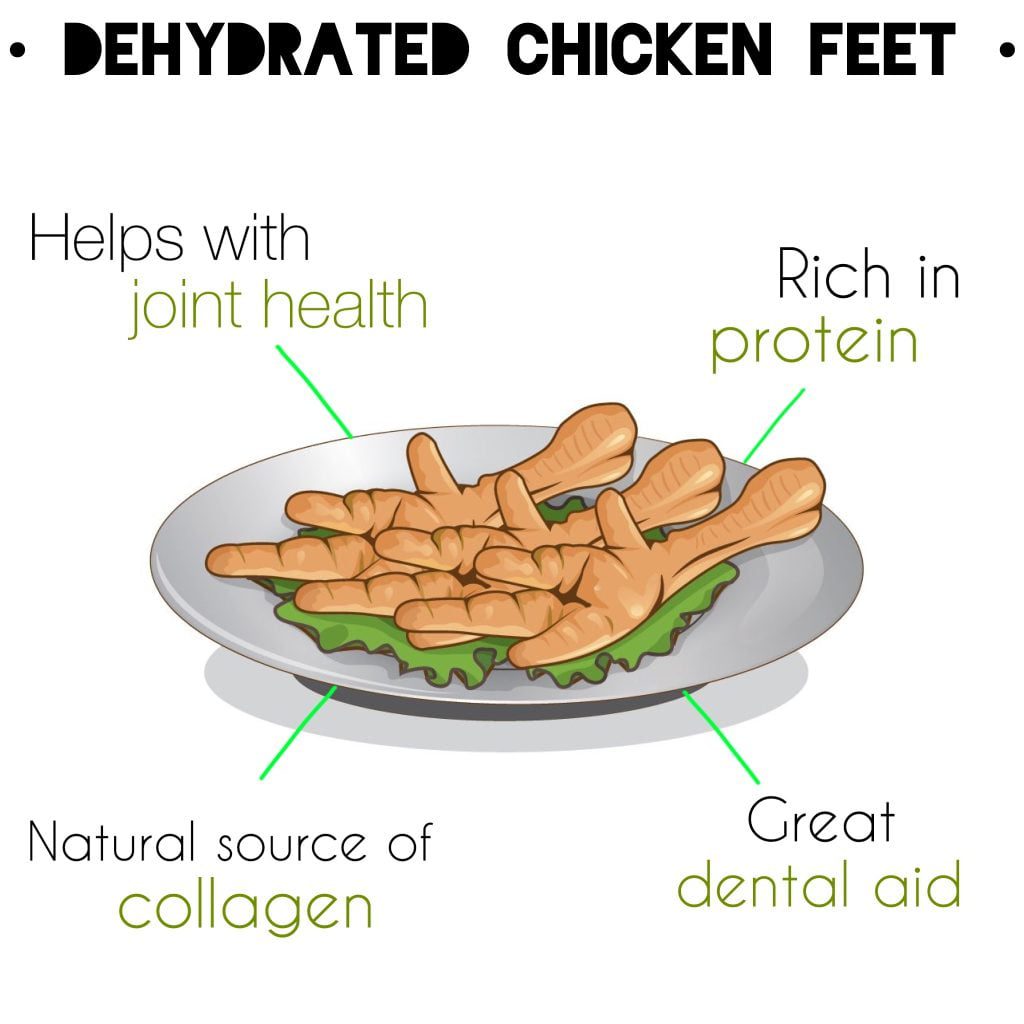
Yes — dehydrated chicken feet are one of the best natural treats you can give your dog. They’re loaded with glucosamine (approximately 450-500 mg per foot), chondroitin (around 200-250 mg per foot), and collagen — the same compounds found in expensive joint supplements, except here they come in a form your dog’s body actually recognises and absorbs efficiently. They also double as a natural dental chew, scraping plaque off teeth as your dog crunches through them.
No fillers. No chemicals. No grains. Just 100% chicken foot, dried low and slow.
What’s Actually Inside a Chicken Foot? (The Numbers Matter)
Most people look at a chicken foot and see… well, a foot. But from a nutritional standpoint, chicken feet are dense little packages of connective tissue, cartilage, skin, tendons, and small pliable bones. That’s exactly what makes them so valuable.
Here’s what you’re really giving your dog when you hand over a single dehydrated chicken foot:
- Glucosamine: 450-500 mg per foot. This is the compound that helps rebuild and maintain cartilage — the protective cushion between joints. For reference, most commercial glucosamine supplements for dogs provide 500-750 mg per tablet. So a single chicken foot gets your dog nearly there, in a completely natural, bioavailable form.
- Chondroitin: 200-250 mg per foot. Works alongside glucosamine to improve cartilage elasticity and joint fluid thickness. Together, they reduce friction, stiffness, and inflammation in the joints.
- Collagen: Chicken feet are roughly 70% collagen by dry weight. This is the protein that holds your dog’s body together — skin, coat, gut lining, tendons, ligaments, everything. It’s not just a joint thing; collagen supports the entire structural framework.
- Calcium & Phosphorus: From the small, soft bones. Essential minerals for bone density and skeletal health, especially in growing puppies and ageing dogs.
Nutritional Breakdown: Dehydrated Chicken Feet (Per 100g)
| Nutrient | Amount (approx.) | Why It Matters |
|---|---|---|
| Protein | 60-70g | Primarily collagen-based protein for connective tissue |
| Fat | 12-18g | Healthy animal fats for energy and coat health |
| Calcium | 2.5-3.5g | Bone density and skeletal development |
| Phosphorus | 1.5-2g | Works with calcium for strong bones and teeth |
| Glucosamine | ~5,000 mg | Cartilage repair and joint cushioning |
| Chondroitin | ~2,500 mg | Joint elasticity and anti-inflammatory support |
| Collagen | ~70% of protein | Skin, coat, gut, tendons, ligaments |
| Calories | ~350-400 kcal | Moderate — treat accordingly |
Compare that to your average commercial dental chew: corn starch, wheat gluten, glycerin, “poultry flavour” (whatever that means), and a laundry list of preservatives. There’s no contest here.
Nature’s Joint Supplement — No Capsule Required
Let me be blunt about something. The pet supplement industry in India is booming, and a lot of dog parents are spending Rs. 800-1500 a month on joint supplements for their dogs. Glucosamine tablets, chondroitin capsules, collagen powders — the works.
And look, those supplements aren’t bad. But here’s the thing most people don’t realise: the glucosamine and chondroitin in a chicken foot are already in their natural matrix — surrounded by the same proteins, minerals, and connective tissue they were designed to work with. Your dog’s gut absorbs them far more efficiently than isolated compounds pressed into a tablet.
This is what we mean by bioavailability. It’s not just about what goes in; it’s about what actually gets used. And natural sources win that battle every single time.
Think about it this way — would you rather take a Vitamin C pill or eat an amla? The amla gives you the vitamin along with fibre, antioxidants, and a dozen other compounds that help your body use it properly. Same principle here.
Who Should Be Getting Chicken Feet? (Spoiler: Almost Every Dog)
Senior Dogs with Joint Stiffness
This is the most obvious one. If your 8-year-old Lab is struggling to get up from the floor, or your senior Indie takes a while to warm up on morning walks — chicken feet should be a regular part of their routine. The glucosamine-chondroitin combination directly supports cartilage repair and reduces joint inflammation. I’ve seen dogs show noticeable improvement in mobility within 3-4 weeks of regular feeding.
Large Breeds Prone to Hip and Joint Issues
German Shepherds, Rottweilers, Great Danes, Rajapalayams, Mudhol Hounds — these breeds carry serious weight on their joints. Starting joint support early (not waiting until they’re already limping) makes a massive difference. Prevention is always easier than repair.
Growing Puppies (4+ Months)
Puppies are building their entire skeletal framework from scratch. The calcium, phosphorus, and collagen in chicken feet support healthy bone and joint development during this critical growth phase. Plus, the chewing action helps with teething discomfort. Start with one foot, 2-3 times a week, once they have their adult teeth coming in.
Active and Working Dogs
Dogs that run hard, play rough, or have physically demanding routines put extra stress on their joints. Regular chicken feet help maintain joint integrity and speed up recovery from the daily wear and tear.
Any Dog That Needs Better Dental Health
The crunchy, abrasive texture of dehydrated chicken feet works like a natural toothbrush. As your dog chews through the skin, cartilage, and soft bone, it mechanically scrapes plaque and tartar off their teeth. Way more effective than those so-called “dental sticks” that are basically cookies shaped like toothbrushes.
How Dehydration Preserves the Good Stuff
This is where a lot of confusion happens, so let me clear it up.
Dehydration is NOT cooking. It’s a low-temperature drying process — typically between 60-70°C — that slowly removes moisture from the chicken feet over 18-24 hours. The result is a dry, crunchy treat that’s shelf-stable and safe, but with its nutritional profile largely intact.
Here’s why this matters:
- Proteins and amino acids (including collagen) are preserved because the temperature stays well below the point where these compounds break down.
- Glucosamine and chondroitin remain bioactive since they’re heat-sensitive but stable at dehydration temperatures.
- The bone structure stays soft and pliable. Unlike cooking, which makes bones brittle and dangerous, dehydration keeps them crumbly and digestible. This is the critical difference.
- No preservatives needed. Removing moisture eliminates the environment bacteria need to grow, so the treats stay fresh without any chemical additives.
This is exactly why we always recommend dehydrated treats over cooked or baked alternatives. The process respects the raw ingredients instead of destroying them.
Safety First: Choking Hazards and Size Guide
Let’s address the elephant in the room — or rather, the chicken foot in the room. Are they safe?
Yes, but with common sense.
Dehydrated chicken feet are NOT the same as cooked chicken bones. Cooked bones splinter into sharp fragments that can puncture the gut. That’s genuinely dangerous, and I’ve written about this extensively in my guide on whether dogs can eat bones.
Dehydrated chicken feet, on the other hand, crumble when chewed. The bones are soft enough that they break down into small, digestible pieces. That said, here are the safety rules:
- Always supervise. Especially the first few times. Watch how your dog handles the chew. Some dogs are careful chewers; others are gulpers. Know your dog.
- Match the size. For very small dogs (under 5 kg), you might want to hold the chicken foot for them or choose smaller feet. For medium to large dogs, standard chicken feet are perfectly fine.
- Don’t give them frozen or semi-thawed. Always offer fully dehydrated feet at room temperature.
- Introduce gradually. If your dog has never had chicken feet before, start with one and see how their stomach handles it. Some dogs with sensitive guts might have loose stools initially — that’s normal and usually settles within a day or two.
How Many Chicken Feet Per Day? Feeding Guide by Dog Size
This is probably the question I get asked most. Here’s a straightforward guide:
| Dog Size | Weight Range | Chicken Feet Per Serving | Frequency |
|---|---|---|---|
| Small (Pomeranian, Indian Spitz, Shih Tzu) | Under 10 kg | 1 foot | 2-3 times per week |
| Medium (Indie, Beagle, Cocker Spaniel) | 10-25 kg | 1-2 feet | 3-4 times per week |
| Large (Labrador, GSD, Rajapalayam) | 25-40 kg | 2-3 feet | 4-5 times per week |
| Giant (Great Dane, Rottweiler, Mastiff) | 40+ kg | 3-4 feet | Daily or near-daily |
Important: Treats — including chicken feet — should not exceed 10% of your dog’s daily caloric intake. A single dehydrated chicken foot has roughly 30-40 calories, so even for small dogs, this fits comfortably within treat limits.
For dogs with active joint issues, you can be slightly more generous with frequency. The glucosamine and chondroitin have a cumulative effect — consistency matters more than quantity.
Common Mistakes Dog Parents Make with Chicken Feet
- Confusing dehydrated with cooked. Cannot stress this enough. Cooked chicken bones are dangerous. Dehydrated chicken feet are safe. They are fundamentally different products. If you’re unsure about this distinction, read our detailed piece on feeding bones to dogs.
- Throwing chicken feet away at the butcher shop. This one hits close to home. Millions of Indian dog parents buy chicken for their dogs and toss the feet. You’re literally throwing away the most nutritious part. Next time you’re at your local wet market, ask the butcher to keep the feet aside. They’ll probably give them to you for free or next to nothing.
- Overfeeding because the dog loves them. Yes, your dog will go absolutely mental for these. That doesn’t mean you empty the entire bag. Stick to the guide above. Overfeeding can lead to digestive upset or too much calcium, especially in puppies.
- Buying poorly dehydrated or chemically treated products. Not all dehydrated treats are created equal. Some brands use high heat (essentially cooking them) or add preservatives. Look for single-ingredient, low-temperature dehydrated products. The ingredient list should say “chicken feet” — that’s it.
- Not considering them as part of the diet. Chicken feet aren’t just treats. They can be a functional part of your dog’s nutrition plan, especially if you’re feeding raw or home-cooked. Similar to how mutton trotters serve as both a treat and a joint supplement, chicken feet pull double duty.
Frequently Asked Questions
Can puppies eat dehydrated chicken feet?
Yes, once they’re around 4-6 months old and their adult teeth are coming in. The soft, crumbly bones are safe for puppies, and the collagen, calcium, and glucosamine support healthy growth. Start with one foot, 2-3 times per week, and always supervise. For very young pups still on their milk teeth, hold off — their jaws aren’t ready yet.
My dog swallowed a whole chicken foot without chewing. Should I worry?
If it was dehydrated, probably not — the stomach acid will break it down. But this is exactly why supervision matters. If your dog is a gulper, hold the foot for them so they’re forced to chew, or choose a slightly larger size that they can’t swallow whole. If you notice any signs of discomfort, vomiting, or difficulty passing stool in the following 24 hours, consult your vet.
How do dehydrated chicken feet compare to glucosamine supplements?
A single chicken foot provides roughly 450-500 mg of glucosamine in its natural form. Most commercial supplements provide 500-750 mg per tablet of isolated glucosamine. The difference? Bioavailability. The glucosamine in chicken feet comes embedded in its natural connective tissue matrix, which means your dog’s body absorbs and utilises it more efficiently. Two chicken feet can match or exceed what a supplement tablet provides, with the added bonus of chondroitin, collagen, calcium, and phosphorus — none of which you get from a pill.
Are chicken feet too high in fat for overweight dogs?
Not really. A single dehydrated chicken foot has about 30-40 calories and 2-3g of fat. That’s quite modest as far as treats go. For overweight dogs, the bigger concern is usually their main meals and overall calorie intake, not the occasional chicken foot. That said, if your dog is on a strict calorie-restricted plan, count the chicken feet as part of their daily allowance.
The Desi Carnivore’s Take
Here’s what bothers me most about the Indian pet industry right now. We import expensive joint supplements from abroad, we buy overpriced dental chews made of corn and wheat, and we completely ignore what’s sitting right there at our neighbourhood butcher’s shop.
Chicken feet are available in practically every Indian wet market for a few rupees per kilo. They’re one of the most nutrient-dense parts of the chicken for dogs. And yet, most dog parents don’t even know they exist as a viable treat option.
If you’re feeding your dog a natural, species-appropriate diet — or even if you’re just looking to add something genuinely beneficial to their routine — dehydrated chicken feet should be a staple. Not an occasional novelty. A staple.
Start simple. Pick up some chicken feet from your local market, dehydrate them at home if you have a dehydrator, or grab a pack from us. Give your dog one, watch their face light up, and know that you’re doing something real for their joints, teeth, and overall health.
No gimmicks. No fancy packaging. Just good food, the way nature intended it.