Is Roti Good for Dogs? No. Here’s Why.
In most Indian households, the question isn’t whether dogs can eat roti—it’s assumed they will. Leftover rotis go into the dog’s bowl as naturally as breathing. It’s cheap, it’s convenient, and “dogs have always eaten it.”
I grew up watching neighbourhood dogs survive on roti and milk. My grandparents fed their dogs this way. Yours probably did too.
So let me answer the question directly: No, roti is not toxic to dogs. It won’t poison them or cause immediate harm.
But here’s what I need you to understand: your dog has absolutely zero biological need for roti, wheat, or any carbohydrate. None. And feeding it to them—no matter how traditional or convenient—is working against their biology, not with it.
The Fundamental Truth About Dogs and Carbs
This is the core principle of the Desi Carnivore philosophy, and it’s not opinion—it’s biology:
Dogs have no nutritional requirement for carbohydrates. Zero.
Dogs are facultative carnivores. Their bodies are designed to derive energy and nutrition from animal protein and fat. They can:
- Generate all the glucose they need from protein through gluconeogenesis
- Thrive entirely without grains, wheat, rice for dogs, or any carbohydrate source
- Process and utilise animal protein far more efficiently than plant matter
- Obtain every essential nutrient from a meat-based diet
When you feed your dog roti, you’re not giving them something they need. You’re giving them something their body has to deal with—calories without purpose, filler without function.
What Roti Actually Is (From Your Dog’s Perspective)
Let’s break down what you’re putting in your dog’s bowl:
- Wheat flour (atta): A refined carbohydrate that converts directly to glucose—sugar—in the body
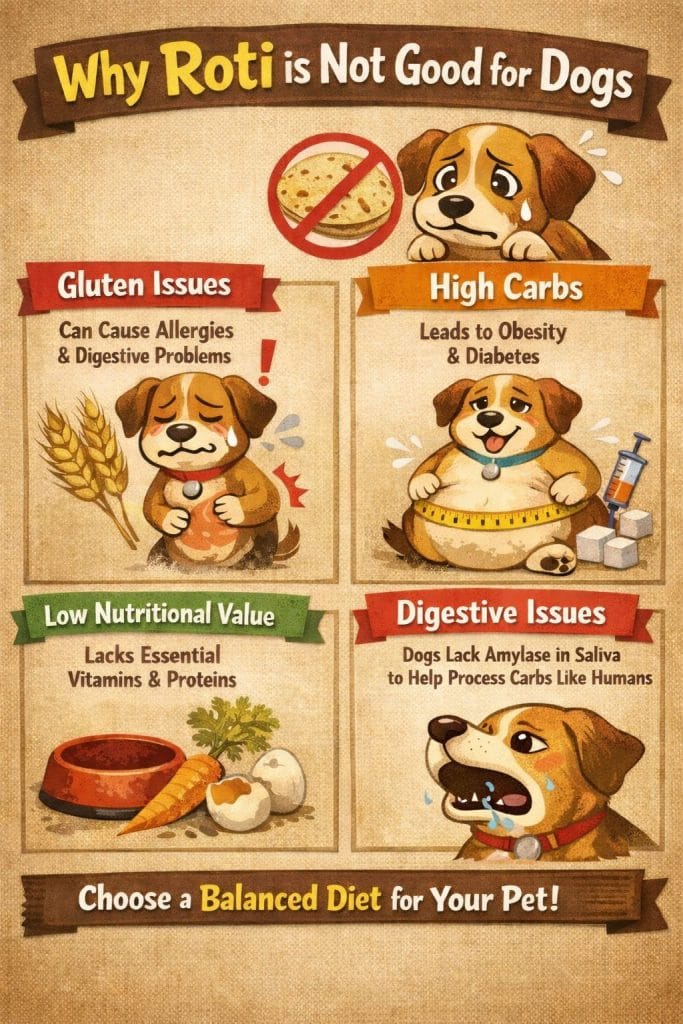
- Gluten: A protein your dog doesn’t need and many dogs can’t tolerate well
- Empty calories: Energy without the essential amino acids, fatty acids, vitamins, or minerals dogs require
- Stomach filler: Something that makes your dog feel full while providing almost nothing nutritionally
One medium roti contains roughly 70-100 calories, 15-20g of carbohydrates, and maybe 2-3g of incomplete plant protein. Compare this to what your dog actually needs: complete animal protein, essential fatty acids, and bioavailable nutrients. Roti provides virtually none of this.
From a nutritional standpoint, roti is not food for your dog. It’s filler.
The Gluten Problem
Beyond the carbohydrate issue, wheat comes with another problem: gluten.
Gluten is one of the more common food sensitivities in dogs. While not every dog will show obvious reactions, many develop issues that pet parents don’t connect to the roti in the bowl:
- Chronic itchy skin, especially around ears, paws, and belly
- Recurring ear infections that never seem to fully resolve
- Digestive issues—gas, bloating, inconsistent stools
- Dull, dry coat that never quite looks healthy
- Excessive shedding beyond normal seasonal changes
- Low energy, lethargy, “that’s just how he is” syndrome
These symptoms develop gradually. They become “normal.” Pet parents accept them as part of having a dog. But they’re not normal—they’re often signs that the diet is wrong.
The Real Damage: Displacement
Here’s where roti does its real damage, and it’s not about toxicity—it’s about displacement.
Every bite of roti your dog eats is a bite of meat they’re not eating.
Dogs have a finite appetite. When you fill that appetite with carbohydrates, you’re crowding out the animal protein they actually need. The maths is brutal:
- Roti fills the stomach
- Dog feels satisfied
- Less room—and appetite—for actual nutrition
- Protein intake drops
- Essential nutrient intake drops
This is how you end up with dogs that are technically fed but fundamentally malnourished. They’re not starving—they have full bellies. But they’re running on the wrong fuel entirely.
The Classic Indian Dog Diet: A Breakdown
Let me paint a picture that’s probably familiar.
A typical “home food” meal for an Indian dog:
- 2-3 rotis (carbohydrates, gluten)
- Some dal or sabzi (more carbs, minimal usable protein)
- Maybe a little curd (dairy your dog doesn’t need)
- Occasionally some chicken (finally, actual food)
What percentage of this meal is species-appropriate? Maybe 10-20% on a good day. The rest is filler your dog’s body has to process without benefit.
The dog looks fed. The dog seems satisfied. But the dog is running on carbohydrates when their body is built for protein and fat.
This isn’t a criticism of Indian pet parents—it’s what we’ve all been taught. But tradition doesn’t equal nutrition. The dogs who “thrived” on roti decades ago were also outdoor dogs with shorter lifespans who supplemented by scavenging. Today’s pets can—and should—do better.
What Happens Long-Term
Dogs can survive on carb-heavy diets. Survival is a low bar.
Here’s what chronic carbohydrate feeding does over time:
- Muscle wasting: Without adequate protein, dogs lose lean muscle mass—especially as they age
- Obesity: Excess carbohydrates convert to fat. Indian dogs have epidemic levels of obesity.
- Weakened immunity: Protein is essential for immune function. Deficiency means more infections, slower healing, more vet visits.
- Poor coat and skin: The dull coats and skin issues we’ve normalised are often diet-related
- Blood sugar dysfunction: Constant carbohydrate intake creates glucose spikes and crashes, stressing the metabolic system
- Dental disease: Starchy foods stick to teeth and feed the bacteria that cause plaque and decay
- Chronic inflammation: High-carb diets are linked to systemic inflammation—the root of many chronic diseases
These aren’t dramatic, sudden problems. They’re slow, creeping declines that pet parents attribute to “aging” or “breed characteristics.” But they’re often the result of feeding a carnivore like an omnivore for years.
The Hard Truth: Roti Doesn’t Belong in Your Dog’s Bowl
I’m not going to tell you that “a little roti is fine” or “everything in moderation.” That’s the kind of wishy-washy advice that keeps dogs eating species-inappropriate diets because it makes pet parents feel better about not changing anything.
Here’s what I believe: Roti has no place in a dog’s diet.
Not as a meal. Not as a filler. Not as a treat. Your dog doesn’t need it, doesn’t benefit from it, and is actively harmed by it when it displaces actual nutrition.
Is roti going to kill your dog immediately? No. But neither does smoking kill humans immediately. We understand that chronic exposure to something your body isn’t designed for leads to long-term damage. The same logic applies here.
Your dog’s biology doesn’t care about tradition, convenience, or what’s cheap. It cares about getting the nutrients it evolved to thrive on. And those nutrients come from meat, not wheat.
What to Feed Instead
Removing roti from your dog’s diet isn’t about deprivation—it’s about replacement with foods that actually serve their body:
- Muscle meat: Chicken, mutton, goat, fish—this is what your dog’s body is designed to process and thrive on
- Organ meats: Liver, kidney, heart—incredibly nutrient-dense, often cheaper than muscle meat, and exactly what dogs would eat in a natural setting
- Eggs: A complete protein source with excellent bioavailability—the perfect dog food
- Bone broth: Rich in collagen, amino acids, and minerals—supportive for joints, gut, and overall health
- Raw meaty bones (appropriate sizes): Dental health, mental stimulation, and species-appropriate nutrition in one
Notice what’s not on this list: grains, wheat, rice, roti. Because your dog doesn’t need them.
“But Meat Is Expensive”
I hear this constantly, and I understand. Roti is cheap. Meat costs more.
But here’s what I’d ask you to consider:
- Organ meats are affordable: Liver, kidney, and heart are often the cheapest parts at the butcher—and they’re nutritional powerhouses
- Eggs are economical: A few eggs a day provides excellent nutrition at minimal cost
- Vet bills add up: The skin issues, digestive problems, and chronic conditions caused by poor diet cost far more than feeding properly in the first place
- Less food needed: When you feed nutrient-dense meat instead of filler carbs, dogs actually need smaller portions to meet their needs
Feeding species-appropriate food isn’t always more expensive than it appears—especially when you factor in the long-term health costs of getting it wrong.
The Bottom Line
Is roti good for dogs? No.
Not “in moderation.” Not “as an occasional treat.” Not “as long as they also get some meat.”
Roti is a carbohydrate your dog has no biological need for. It fills their stomach without nourishing their body. It displaces the animal protein they actually require. And when fed chronically, it contributes to the obesity, skin issues, low energy, and chronic health problems we’ve come to accept as normal in Indian dogs.
Your dog is a carnivore living in a culture that feeds them like an omnivore. That’s the challenge Indian pet parents face, and solving it requires letting go of traditions that don’t serve our dogs’ health.
I know this is hard to hear. Feeding roti is what we’ve always done. It’s easy, it’s cheap, and it feels like sharing our food with our dogs is an act of love.
But real love is feeding them what their bodies need—even when it requires changing our habits.
Ready to feed your dog like the carnivore they are?
Explore The Desi Carnivore — our comprehensive guide to species-appropriate, biology-based nutrition designed specifically for Indian pet parents. Learn what your dog actually needs and how to provide it.
────────────────────────────────────────────────────────────
About the Author: Mahiv Chhabra is a certified canine nutritionist and founder of The Doggos. Through the Desi Carnivore philosophy, he advocates for species-appropriate, carbohydrate-free nutrition that aligns with canine biology—challenging conventional pet feeding practices in India.
Better Than Roti: Real Dog Food
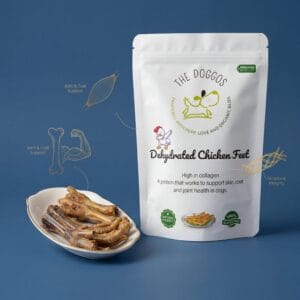
- Dehydrated Chicken Feet — Actual protein and nutrition — not empty carbs
- Hemp Meal Balancer — Add this to roti meals for nutritional balance
- Dehydrated Sardines — Omega-3 and protein your dog needs but roti lacks