![Best Grooming & Skin Care for Rajapalayam in India [2026]](https://thedoggos.in/wp-content/uploads/2026/03/best-grooming-skin-care-rajapalayam-india-featured.jpg "Best Grooming & Skin Care for Rajapalayam in India [2026] 1")
That regal, snow-white coat of a Rajapalayam isn’t just for show, is it? It’s a testament to their strength and endurance, an ancient Indian breed built for the harsh South Indian sun. But beneath that short, fine fur lies sensitive skin. If you don’t care for it holistically, it can quickly become a battleground for allergies, dry patches, and those infuriating hot spots. Honestly, a lot of Indian pet parents focus solely on external grooming, completely missing the crucial link between what goes *into* their dog’s bowl and what shows *on* their skin.
So, what’s the best grooming and skin care for a Rajapalayam in India? **A truly effective approach involves a species-appropriate, Omega-3 balanced diet, gentle yet consistent external grooming, and targeted natural remedies for specific skin concerns. Forget the “heat” myth. Instead, focus on balancing Omega fats, making sure they get enough calcium, and using nature’s own solutions for their sensitive skin.**
Understanding Your Rajapalayam’s Unique Skin and Coat
The Rajapalayam, a majestic sighthound from Tamil Nadu, has a short, fine coat that lies close to the body. This means their skin is pretty exposed. This breed typically has pink skin, especially on the nose and paw pads, which can be more likely to get sun damage and environmental irritants than darker-skinned breeds. And their minimal undercoat? It means they don’t shed excessively, but it also means less natural protection against the elements.
Why does this matter? Because a Rajapalayam’s skin is their main defence against India’s tropical humidity, dust, pollens, and intense sun. Any imbalance, be it from their diet or the environment, often shows up as skin issues: redness, itching, dryness, or even fungal infections.
The Desi Carnivore Method for Rajapalayam Skin Health: Diet First!
You can put on all the creams and balms in the world, but if your Rajapalayam’s diet is off, their skin will tell the tale. As a certified canine nutritionist, I can tell you that **90% of skin issues I see in Indian dogs, including Rajapalayams, stem from a diet that is either too high in inflammatory Omega-6s or lacking essential nutrients like calcium and specific fatty acids.** It’s a game-changer when you get this right.
1. Balancing the Omega-6:3 Ratio: The “Heat” Myth Debunked
This is probably the biggest thing for Indian pet parents. We’ve all heard it: “Chicken gives my dog ‘heat’,” leading to paw licking, rashes, and ear infections. But let me tell you, that’s not thermal heat. **What you’re seeing is an inflammatory response to an imbalanced Omega-6:3 ratio.**
Commercial Indian chicken is typically corn and soy-fed. This results in a disastrous Omega 6:3 ratio of 20:1 or even 30:1. Dogs, though? They’re biologically designed for a ratio closer to 7:1. When their bodies are flooded with excessive Omega-6s, it sets off a whole chain reaction of inflammatory markers, showing up as skin irritation, itching, and hot spots.
**The Fix:** You absolutely *must* add a rich source of Omega-3s to every chicken meal. My top recommendations are:
* **Hemp Seed Oil (/product/hemp-seed-oil-for-dogs/):** This is the king of GLA (Gamma-Linolenic Acid), a rare Omega-6 that acts as an *anti-inflammatory*. It converts to Prostaglandin E1, directly reducing inflammation and keeping the skin barrier moist. If your Rajapalayam has atopic dermatitis, dry, cracking paws, or dandruff, Hemp Seed Oil is direct medicine. It’s also plant-based, making it a favourite for vegetarian households.
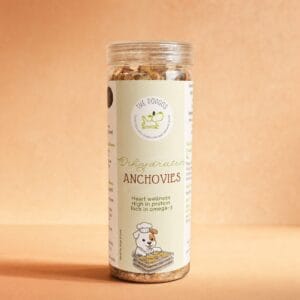
* **Dehydrated Anchovies (/product/dehydrated-anchovies/):** Small, short-lived fish that are rich in DHA and EPA (the most bioavailable forms of Omega-3). “Eating low on the food chain” means no heavy metal bioaccumulation, unlike larger fish. They’re not just a topper; they’re a balancer, super important for brain health and healthy skin.
| Omega-3 Source | Key Benefits for Skin | Why it matters for Rajapalayams |
|---|---|---|
| Hemp Seed Oil | High GLA (anti-inflammatory Omega-6), skin barrier repair, moisture retention, reduces itching. | Goes right after the inflammation from bad diets, soothes dry/itchy skin common in sensitive breeds. |
| Dehydrated Anchovies | Rich in EPA & DHA (powerful anti-inflammatory Omega-3s), boosts coat shine, supports overall immune function. | Key for dialling down whole-body inflammation and making their skin’s natural defences stronger. |
2. The Calcium:Phosphorus Ratio: Beyond Bones
A boneless home diet (just chicken and rice, a common sight in Indian homes) is a disaster waiting to happen. Meat is rich in phosphorus, but without a calcium source, your Rajapalayam’s body will start stealing calcium from its own bones. This leads to osteopenia and “Rubber Jaw” syndrome over time. Plus, it messes with overall cellular health, including skin and coat quality.
**The Fix:** You need a calcium source that balances the 1.2:1 Ca:P ratio.
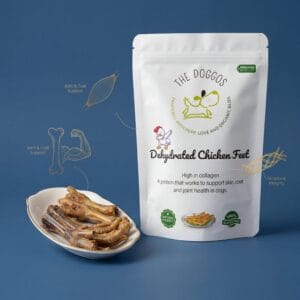
* **Dehydrated Bones (/can-dogs-eat-bones/):** Our “Cook the Meal, Dehydrate the Bone” philosophy is super important here. **NEVER feed cooked bones** as they become brittle and shatter into deadly splinters. Our dehydrated bones, like our Dehydrated Chicken Feet (/product/dehydrated-chicken-feet/) or Dehydrated Whole Quail (/product/dehydrated-whole-quail/), retain their porous structure, crumbling safely for digestion. They provide natural, easy-to-absorb calcium and phosphorus. That’s key for strong bones and a good metabolism, which, surprise, helps with healthy skin too.
* **Eggshell powder or Calcium Citrate:** If dehydrated bones aren’t an option for every meal, these are good alternatives.
3. The Right Protein: Cooked Meat, Not Raw
I’m a Desi Carnivore, and I believe dogs are carnivores by nature. Their pH 1-2 stomach acid is built for raw meat and bone. But let’s be real about India. Our wet markets, combined with high humidity, are perfect places for bacteria like Salmonella and E.coli to grow. Bringing raw wet-market meat (even from your neighbourhood butcher) into your home is a cross-contamination risk that I, as a nutritionist, cannot ethically endorse. Sure, your Rajapalayam might be able to handle those bugs. But what about your family? Their health is on the line.
The Doggos Method is simple: **Cook the Meal, Dehydrate the Bone.** Gently pressure cook the meat (like in our “Golden Chicken Bowl” recipe), then **DEBONE it completely** before feeding. This kills off any bad stuff without making the bones dangerous. This cooked meat, balanced with the right fats and calcium, is what a healthy Rajapalayam is built on.
External Grooming Essentials for Your Rajapalayam
Sure, diet is super important. But consistent external grooming is also key for keeping your Rajapalayam looking and feeling great, especially in India’s climate.
1. Bathing: Less is More (with the Right Products)
Rajapalayams don’t actually need baths all that often. Perhaps once a month, or as needed if they get particularly dirty, is usually enough. Bath too much, and you’ll strip away their natural oils. Hello, dry, itchy skin.
* **Use a pH-balanced, natural shampoo:** Stay away from harsh chemicals, fake smells, and dyes. Think natural stuff like neem, aloe vera, or tea tree oil (just make sure it’s in safe amounts).
* **Lukewarm water:** Always use lukewarm water, especially in colder months.
* **Thorough rinse:** Seriously, make sure you rinse all the shampoo out. Any left behind can really irritate their skin.
* **Towel dry thoroughly:** Rajapalayams’ short coats dry quickly, but ensure they are completely dry to stop fungus from growing, particularly between their paw pads or in those little skin folds.
2. Brushing: Daily Ritual for Health and Bonding
A short-bristled brush or a rubber curry comb is just right for a Rajapalayam’s coat.
* **Removes loose hair and dirt:** Stops matting (not common for Rajapalayams, thankfully) and keeps their coat clean.
* **Stimulates blood circulation:** That gentle brush massage boosts blood flow to the skin, helping their hair grow strong and spreading those natural oils around.
* **Spreads natural oils:** Keeps their coat healthy and shiny. Easy.
* **Checks for skin issues:** And honestly, brushing every day means you’ll spot any rashes, bumps, ticks, or fleas way sooner.
3. Paw and Nose Care: The Often-Forgotten Areas
Rajapalayams’ paw pads and noses are often pink and sensitive. This makes them tend to get dry, cracked, or even hyperkeratosis (that’s thickened skin).
* **Regular inspection:** Check them regularly. After walks, look for any cuts, thorns, or irritation.
* **Moisturise with Baobab Paw & Nose Balm (/product/baobab-paw-nose-balm/):** Unlike heavy oils that just sit on the surface, Baobab Oil absorbs deep into the skin, mimicking its natural lipid barrier. Our Baobab Paw & Nose Balm is an absolute lifesaver for cracked paws and crusty noses. It heals from the inside out. Put it on before walks for a protective layer, and at night for some serious healing.
* **Nail trimming:** Regular nail trims stop discomfort and help their paws stay shaped right. Long nails can hurt and even cause joint problems. Nobody wants that.
Addressing Common Rajapalayam Skin Issues in India
Even when you do everything right, some Rajapalayams might still have some skin problems. Maybe it’s their genes, the environment, or those stubborn allergies. Here’s how to tackle them the Desi Carnivore way.
1. Itching and Hot Spots: Beyond the “Heat” Myth
If your Rajapalayam is always scratching, licking their paws, or getting those red, angry patches we call hot spots, it’s a sure sign of inflammation. And usually, it’s those Omega-6s causing trouble.
* **Dietary Review:** Time for a diet check. Are you *really* adding Omega-3s every day? And are they getting enough calcium?
* **Hemp Seed Oil (/product/hemp-seed-oil-for-dogs/):** A daily dose does wonders for reducing inflammation throughout their body. Start with the recommended dosage and just observe.
* **Baobab Oil (/product/baobab-oil-for-dogs/):** For localised hot spots, Baobab Oil is a miracle worker. Its unique fatty acid profile (high Palmitic and Oleic acid) lets it soak right *into* the skin, instead of just sitting on top. Honestly, I’ve seen hot spots dry up in just 24 hours with regular use. It’s pretty amazing. It calms things down, heals, and works like a natural anti-inflammatory. Win-win-win.
* **Elimination Diet (/itchy-dog-reset/):** If the itching persists, maybe try an elimination diet. Introduce a novel protein like our Dehydrated Whole Quail (/product/dehydrated-whole-quail/) with very few other ingredients. That way, you can figure out what might be bothering them. (I’ve seen this work wonders with even the most sensitive Indie dogs). Feathers in the quail also provide insoluble keratin, acting as a natural “colon sweep.” This can even help with anal gland issues, which, believe it or not, sometimes cause scooting and itching.
2. Dry, Flaky Skin and Dandruff
This usually means they’re not getting enough good fats or proper hydration.
* **Hemp Seed Oil (/product/hemp-seed-oil-for-dogs/):** Its GLA content directly helps their skin’s natural barrier, keeping moisture locked in.
* **Baobab Oil (/product/baobab-oil-for-dogs/):** Can be gently massaged into dry patches to give them deep hydration and help them heal.
* **Ensure proper hydration:** While fresh food (70% water) naturally hydrates, always make sure they have fresh water available. Dogs on kibble (10% water) need a lot more.
3. Fungal Infections and Body Odour
India’s humidity can be a perfect spot for yeast and fungus to grow, especially in skin folds or between paw pads. And if they smell persistently yeasty? That’s usually a red flag for an underlying fungal problem.
* **Baobab Therapy Mask (/product/baobab-therapy-mask/):** This detox clay mask, made with Baobab, is amazing at pulling out toxins and fighting off fungal growth. Mix with water to a paste, apply to affected areas, leave for 15-20 minutes, then rinse. Seriously, I’ve seen fungal infections completely gone in about 90 days with regular use of this. It works.
* **Dietary support:** A strong immune system, supported by a balanced diet (including Omega-3s), helps stop those pesky opportunistic infections.
Practical Skincare Checklist for Your Rajapalayam
So, here’s a simple checklist to keep your Rajapalayam’s skin and coat looking their best:
1. **Daily Diet Check:**
* **Cooked meat (DEBONED):** Always. Non-negotiable.
* **Calcium Source:** Dehydrated bones (/product/dehydrated-chicken-feet/ or /product/dehydrated-whole-quail/) or eggshell powder in every meal.
* **Omega-3 Balance:** A few drops of Hemp Seed Oil (/product/hemp-seed-oil-for-dogs/) or a sprinkle of Dehydrated Anchovies (/product/dehydrated-anchovies/) with every chicken meal.
* **Adequate Protein:** Make sure they’re getting enough high-quality protein for cell repair.
2. **Daily Brushing:** 5-10 minutes with a soft brush or curry comb.
3. **Paw & Nose Care (Daily/Alternate Days):** Apply Baobab Paw & Nose Balm (/product/baobab-paw-nose-balm/) to protect and heal.
4. **Monthly Bath:** With a natural, pH-balanced shampoo.
5. **Regular Nail Trims:** As needed, usually every 2-4 weeks.
6. **Spot Treatment (As Needed):**
* For hot spots/rashes: Baobab Oil (/product/baobab-oil-for-dogs/).
* For fungal issues/yeasty smell: Baobab Therapy Mask (/product/baobab-therapy-mask/).
7. **Hydration:** Always fresh water, especially important if you’re still giving them kibble sometimes. Remember, fresh food is 70% water, kibble is 10%.
Common Mistakes Indian Pet Parents Make with Rajapalayam Skin Care
Honestly, I see these mistakes all the time, and they often mess up even the most well-meaning efforts:
1. **Feeding Boneless Chicken + Rice:** This is the fastest way to cause a calcium shortage, which leads to long-term bone problems and other health issues. Bad skin included. **Remember: Meat gives phosphorus, bone gives calcium. A 1.2:1 ratio is non-negotiable.**
2. **Believing the “Chicken Heat” Myth:** Avoiding chicken due to perceived “heat” means your dog misses out on a highly digestible protein. It’s not the chicken. It’s that Omega-6 imbalance. Seriously, fix the fats, not the protein!
3. **Using Human Products or Heavy Oils:** Coconut oil, mustard oil, or human lotions are often just too heavy. They sit on the skin, trap heat, clog pores. That just makes skin problems worse, na? Use stuff made just for dog skin, like Baobab Oil. It actually soaks in.
4. **Ignoring the Gut-Skin Axis:** Here’s the thing: skin issues often just mirror what’s going on in their gut. Too many carbs (think kibble, or too much roti and rice) can crank up their stomach pH. That makes them more open to bacterial infections and means they don’t absorb nutrients properly. But a fresh, species-appropriate diet? That helps their gut, and a happy gut means happy skin.
5. **Not Understanding Dehydrated Bones vs. Cooked Bones:** This is a life-or-death mistake. Many well-meaning parents pressure-cook chicken, bones and all, and feed it. Big mistake. **Cooked bones splinter and can be fatal.** Dehydrated bones, like our Dehydrated Chicken Feet (/product/dehydrated-chicken-feet/) or Dehydrated Mutton Trotters (/product/dehydrated-mutton-trotters/), are the safe, digestible answer for calcium and good teeth. Read our full guide on bones here: /can-dogs-eat-bones/.
For more insights on common itching causes, check out my full guide: /why-is-my-dog-always-itching/. And for a full feeding plan, read: /what-should-i-feed-my-dog/.
Frequently Asked Questions About Rajapalayam Grooming & Skin Care
Q1: How often should I bathe my Rajapalayam?
A1: Rajapalayams have short, fine coats and don’t really need a lot of baths. Once a month, or as needed if they get dirty, is usually enough. Over-bathing can strip their natural oils, leaving their skin dry and irritated.
Q2: Can I use coconut oil for my Rajapalayam’s dry skin?
A2: While coconut oil has some good points, for real skin healing and absorption, I recommend Baobab Oil (/product/baobab-oil-for-dogs/). Coconut oil can sit on the surface, potentially clogging pores and trapping heat, especially in India’s climate. Baobab Oil’s unique fatty acid profile absorbs into the epidermis, mimicking the skin’s natural lipid barrier for better healing.
Q3: My Rajapalayam is constantly itching. What could be the cause?
A3: Constant itching in Rajapalayams is often a sign of inflammation deep down, usually due to an Omega-6:3 ratio that’s off-balance in their diet. Commercial Indian chicken is packed with inflammatory Omega-6s. Balance their diet with Omega-3s from sources like Hemp Seed Oil (/product/hemp-seed-oil-for-dogs/) or Dehydrated Anchovies (/product/dehydrated-anchovies/). Environmental allergies, parasites, or fungal infections can also be culprits, so a full approach is always best.
Q4: Are Rajapalayams prone to sun sensitivity?
A4: Yes, many Rajapalayams have pink skin, especially on their noses and paw pads, making them more prone to sunburn. Try to keep them out of the sun during the hottest parts of the day and consider using a dog-safe balm like our Baobab Paw & Nose Balm (/product/baobab-paw-nose-balm/) to provide a protective layer on exposed areas.
Q5: What are the benefits of dehydrated treats for my Rajapalayam’s skin?
A5: Dehydrated treats aren’t just snacks; they’re like functional medicine. Dehydrated Anchovies (/product/dehydrated-anchovies/) provide super important Omega-3s for fighting inflammation and a healthy coat. Dehydrated Whole Quail (/product/dehydrated-whole-quail/) offers a new protein for dogs with allergies, plus essential calcium. These treats contribute to overall health, which shows up directly in better skin and a nicer coat.