The Chicken Trap: Why Your “Clean” Diet Is Making Your Dog Itch
You’ve done everything right.
You stopped feeding kibble. You switched to home-cooked food. You’re buying fresh chicken from the market, boiling it yourself, mixing it with rice or giving it plain. No preservatives, no additives, no mysterious ingredients.
And yet… your dog is still why your dog is always itching. Still licking their paws. Still getting ear infections.
You take them to the vet. “Chicken allergy,” they say. “Switch to a hypoallergenic diet.” So you spend a fortune on prescription food, and maybe it helps a little. Or maybe it doesn’t.
Here’s what most vets in India won’t tell you:
The problem usually isn’t chicken. It’s what the chicken ate.
The Omega Imbalance Epidemic
Understanding the Chicken Trap
To understand what’s happening to your dog’s skin, you need to understand two types of fats:
Omega-6 fatty acids are pro-inflammatory. They trigger the immune system to react—inflammation is part of healing, but too much creates chronic problems. Found in: chicken fat, soybean oil, corn oil.
Omega-3 fatty acids are anti-inflammatory. They “cool down” the immune response. Found in: fish, hemp.
Both are essential. But the ratio between them matters enormously. For dogs, the ideal ratio is somewhere between 4:1 and 10:1 (Omega-6 to Omega-3).
Now here’s where it gets alarming.
The Indian Chicken Problem
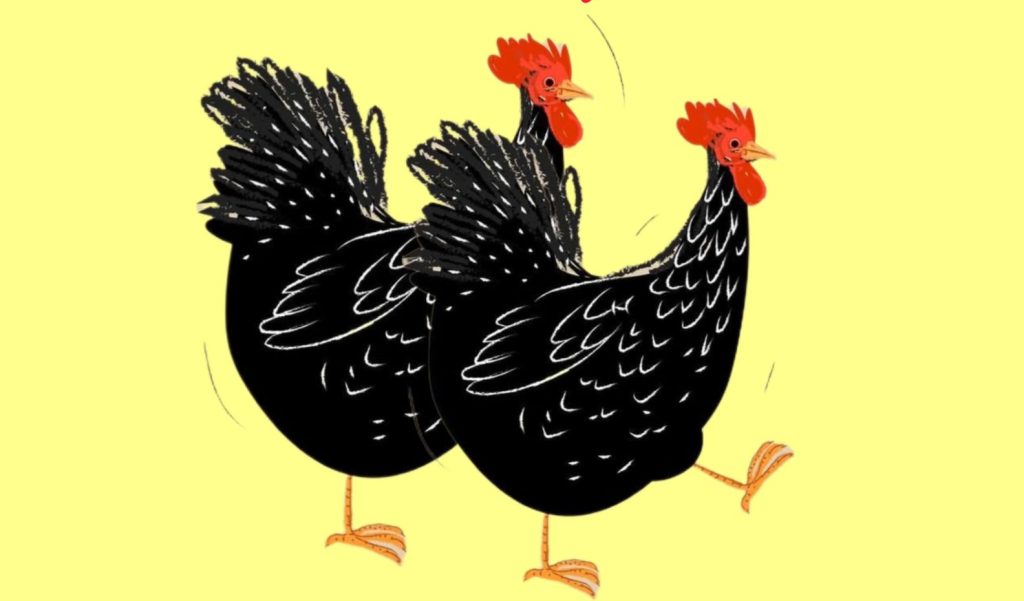
Commercial broiler chickens in India are fed corn and soy to fatten them up quickly—reaching slaughter weight in just 40 days. This diet fundamentally alters the fatty acid profile of the meat.
Let’s look at the numbers:
- Pasture-raised chicken: Omega-6 to Omega-3 ratio of approximately 7:1
- Commercial corn-fed Indian chicken: Ratio can be as high as 20:1 or even 30:1
Read that again. The chicken you’re buying from your local market may have three to four times the inflammatory potential of properly raised chicken.
The Math of Itch
Now imagine what happens when you feed this chicken day after day, month after month, year after year.
If your dog’s bowl is 90% commercial chicken and rice (which adds nothing to help), you’re flooding their body with inflammatory omega-6 markers. The body is constantly in a state of low-grade inflammation.
This manifests as:
- Paw licking (the classic sign)
- Hot spots that appear “out of nowhere”
- Chronic ear infections that keep coming back
- Red, inflamed skin
- Dull, dry coat
- Brown/red tear staining
These symptoms get blamed on “allergies.” And sometimes true allergies are involved. But far more often, it’s simply an omega imbalance creating systemic inflammation.
The “Heat” Myth — An Important Note
In India, we often hear that chicken or eggs generate “heat” in the body—a concept from Ayurveda and Traditional Chinese Medicine.
While scientifically, meat does have a high Thermic Effect of Food (TEF), the “heat” that pet parents observe—rashes, itching, redness—is often not thermal heat at all.
It’s an Omega-6 inflammation spike.
This distinction matters because the solution is different. If you believe chicken is “heating,” you might stop feeding it entirely and switch to something less nutritious. But if you understand it’s an omega imbalance, you can fix the chicken rather than eliminate it.
The Fix: You Don’t Need to Stop Chicken
Chicken is affordable, available everywhere, highly digestible, and dogs love it. You don’t need to stop feeding it.
You need to balance it.
Since you cannot easily change what Indian chickens are fed, you must ADD Omega-3s to every chicken meal to neutralise the inflammatory load.
Option 1: Hemp Seed Oil
Hemp is the perfect solution for Indian households—especially vegetarian families who don’t want fish in their kitchen.
Hemp seed oil has a naturally balanced Omega-6 to Omega-3 ratio of approximately 3:1—almost ideal. But what makes it truly special is GLA (Gamma-Linolenic Acid).
GLA is a rare form of Omega-6 that actually acts as an anti-inflammatory. It converts into Prostaglandin E1 (PGE1), a hormone-like substance that reduces inflammation and keeps the skin barrier moist.
Studies show that dogs with atopic dermatitis (eczema) often have a deficiency in the enzyme needed to process normal fats. GLA bypasses this enzymatic step—making hemp oil a direct “medicine” for dogs with dry, cracking paws or chronic dandruff.
Add it to every chicken meal. It smells like nutty sunflower seeds—no fishy odour, no kitchen drama.
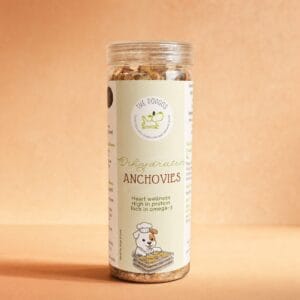
Option 2: Dehydrated Anchovies
If you’re comfortable with fish, dehydrated anchovies are Omega-3 bombs.
Anchovies are small, short-lived plankton eaters—low on the food chain, which means they don’t accumulate heavy metals like tuna or king mackerel. They’re clean, rich in protein, and packed with EPA and DHA.
A handful of dehydrated anchovies crumbled over a chicken meal instantly balances the omega ratio. And because they’re dehydrated, they’re odour-controlled and shelf-stable—no raw fish mess in your kitchen.
The Complete “Fix Your Chicken” Protocol
Here’s how to feed chicken correctly:
- Wash: Rinse chicken thoroughly with turmeric water (a natural antiseptic)
- Cook: Pressure cook or boil until fully cooked. Salmonella dies at 74°C.
- Debone: This is non-negotiable. NEVER feed cooked bones—they splinter and can cause fatal internal injuries.
- Balance: Add hemp seed oil OR crumbled dehydrated anchovies to every single chicken meal.
- Include organs: Add chicken liver (5% of meal) for Vitamin A and other micronutrients.
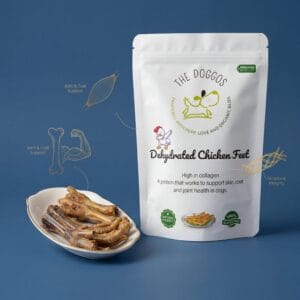
Don’t Throw Away the Feet
If you’re buying whole chicken and discarding the feet, stop.
Chicken feet are naturally rich in glucosamine (~450mg per foot) and chondroitin—the exact same compounds found in expensive joint supplements.
You can’t cook and feed them (cooked bones are dangerous). But you can dehydrate them—or buy them already dehydrated.
A dehydrated chicken foot daily is like giving your dog a natural joint pill that also cleans their teeth. The crunching action scrapes plaque, and the collagen supports their cartilage.
How Long Until You See Results?
If your dog’s itching is omega-related (and most chronic itching in Indian dogs is), balancing the fats produces visible results:
- Week 2-3: Reduction in itching intensity
- Week 4-6: Skin redness decreasing, coat starting to improve
- Week 8-12: Full transformation—shinier coat, calmer skin, fewer infections
This isn’t instant. The inflammation took years to build; it takes weeks to resolve. But unlike steroids and antihistamines that suppress symptoms while you’re giving them, this actually fixes the root cause.
The Bottom Line
Your “clean” home-cooked chicken diet might be making your dog itch—not because chicken is bad, but because Indian commercial chicken has an inflammatory omega profile that must be balanced.
The fix is simple: add omega-3s to every chicken meal. Hemp seed oil for vegetarian households, dehydrated anchovies if you’re comfortable with fish.
Don’t eliminate chicken. Don’t spend thousands on “hypoallergenic” diets. Don’t accept that your dog is just “allergic to everything.”
Balance the bowl. Watch the itch disappear.
Ready to fix your dog’s chicken diet?
Explore our Hemp Seed Oil and Dehydrated Anchovies to balance your dog’s omega ratio. For the complete science, download The Desi Carnivore.
────────────────────────────────────────────────────────────
About the Author: Mahiv Amit Chhabra is a certified canine nutritionist and founder of The Doggos. He has helped thousands of Indian dogs overcome chronic skin issues through dietary correction.