
Why Is My Dog Always Itching? The Root Causes Most People Miss
The scratching starts and doesn’t stop. Your dog’s going at their ears, their paws, their belly. They’re rubbing against furniture, biting at their skin, keeping you awake at night with the constant scratch-scratch-scratch.
You check for fleas. Nothing obvious. You give them a bath. It helps for a day. You try a different shampoo. Maybe a week of relief. Then it’s back.
Sound familiar?
Chronic itching is one of the most common complaints Indian dog parents bring to vets. And while there are many possible causes, the root cause that most people miss is diet.
Not allergies. Not fleas. Not “sensitive skin.” The food in the bowl.
Let me explain.
The Usual Suspects: What You’ve Probably Already Considered
When a dog itches, most people immediately think of:
- Fleas and ticks: The obvious culprits, especially in Indian climates where they thrive year-round
- Environmental allergies: Pollen, dust mites, mould—things in the air that trigger reactions
- Contact allergies: Reactions to grass, cleaning products, or fabrics
- Fungal or bacterial infections: Secondary issues that cause itching and discomfort
- Dry skin: Especially during winter or from over-bathing
These are all real causes of itching, and they should be ruled out. If your dog has visible fleas, treat the fleas. If there’s an active skin infection, address it.
But here’s what I see constantly: dogs who’ve been treated for everything on this list, who’ve been put on antihistamines and steroids, who’ve had countless medicated baths—and they’re still itching.
That’s when you need to look deeper.
The Cause Most People Miss: Chronic Inflammation From Diet
Here’s the truth that will change how you think about your dog’s skin:
Skin problems are often a symptom of internal problems. And the most common internal problem is chronic, diet-driven inflammation.
Your dog’s skin is their largest organ. When something is wrong internally—when the body is in a constant state of low-grade inflammation—it shows up on the skin. Itching, redness, hot spots and fungal infections, recurring infections. These aren’t random. They’re signals.
And the biggest driver of chronic inflammation in dogs? What they eat.
The Omega Imbalance Problem
Let’s get specific about what’s happening inside your itchy dog’s body.
Dogs need two types of essential fatty acids: omega-6 and omega-3. Both are necessary, but the ratio between them matters enormously.
- Omega-6 fatty acids are pro-inflammatory. They’re necessary for immune response and healing, but in excess, they drive chronic inflammation.
- Omega-3 fatty acids are anti-inflammatory. They help balance the inflammatory response and support healthy skin.
The ideal ratio for dogs is around 4:1 or 5:1 (omega-6 to omega-3). This allows for healthy immune function without tipping into chronic inflammation.
Here’s the problem: most dogs in India are eating diets with ratios of 10:1, 15:1, even 20:1 or higher.
That’s a recipe for chronic inflammation. And chronic inflammation means chronic itching.
Why Indian Dogs Are Especially Affected
The omega imbalance problem is especially severe in India for a few reasons:
chicken-based diet causing itching-Heavy Diets
Chicken is the most common protein Indian dogs eat—whether in homemade food or commercial kibble. And chicken is extremely high in omega-6.
Commercial chicken in India (broiler chicken) has an omega-6 to omega-3 ratio of roughly 10:1 to 20:1. This is partly due to what the chickens themselves are fed—corn and soy-based feed that’s high in omega-6.
A dog eating chicken as their primary protein, day after day, is accumulating inflammatory omega-6 with almost no omega-3 to balance it. The inflammation builds. The skin reacts. The itching starts.
Lack of Omega-3 Sources
The best sources of omega-3 for dogs are fatty fish (sardines, mackerel, salmon) and certain plant sources. But most Indian dogs eat little to no fish. And the plant sources of omega-3 that dogs can actually utilise are rarely part of their diet.
So you have dogs eating high omega-6 chicken, with almost nothing to provide the balancing omega-3. The ratio gets worse and worse.
Carbohydrate-Heavy Diets
As I’ve written about elsewhere, many Indian dogs eat diets heavy in roti, rice, and other carbohydrates. Beyond the nutritional problems this causes, high-carb diets can contribute to inflammation and feed the wrong gut bacteria, further compromising skin health.
A dog eating chicken and roti—the classic Indian “home food” combination—is getting a double hit: high omega-6 from the chicken, inflammatory carbohydrates from the roti, and almost no omega-3 from anything.
Signs Your Dog’s Itching Is Diet-Related
How do you know if your dog’s itching is coming from diet rather than environmental factors? Look for these patterns:
- Chronic, year-round itching: Environmental allergies tend to be seasonal. Diet-driven inflammation is constant.
- Itching focused on paws, ears, and belly: These areas are particularly affected by systemic inflammation.
- Recurring ear infections: Ear problems that keep coming back despite treatment often have a dietary component.
- Dull, dry, or greasy coat: Coat quality is a direct reflection of nutritional status.
- Brown/red staining on paws and around eyes: Often a sign of chronic inflammation and yeast overgrowth.
- Treatments provide only temporary relief: Steroids and antihistamines suppress symptoms but don’t address the root cause.
- No visible fleas but constant scratching: The classic “itching with no obvious cause” scenario.
If several of these apply to your dog, diet should be your primary focus—not another round of medications that treat symptoms.
The Two-Front Solution: Inside and Out
Addressing chronic itching requires working on two fronts: fixing the internal inflammation through diet, and supporting the skin externally while it heals.
Front 1: Fix the Diet
The most important change you can make is addressing the omega imbalance:
Reduce omega-6 intake:
- Don’t rely solely on chicken. Rotate with other proteins—mutton, goat, fish, eggs.
- Avoid vegetable oils high in omega-6 (sunflower, corn, soybean).
- Check your kibble’s ingredients—chicken and corn dominate most brands.
Increase omega-3 intake:
- Add fatty fish to the diet—sardines are affordable and excellent.
- Consider fish oil supplementation (ensure it’s high quality and not rancid).
- Add hemp seed oil: This is one of the most effective options for dogs. Hemp oil has an omega-6 to omega-3 ratio of approximately 3:1—close to ideal. It also contains GLA (gamma-linolenic acid), an omega-6 that actually has anti-inflammatory properties. A daily addition of hemp oil can help shift your dog’s internal balance toward healthy inflammation levels.
Eliminate unnecessary carbohydrates:
- Remove roti, rice, and other grains from the diet.
- Focus on animal protein as the foundation of every meal.
- This reduces the inflammatory load and supports healthier gut bacteria.
Front 2: Support the Skin Externally
While you’re fixing things internally, your dog’s skin needs support. The skin barrier is likely compromised, making it vulnerable to further irritation and infection.
What to look for in topical support:
- Moisturising without clogging: Dry, irritated skin needs hydration, but heavy products can trap bacteria.
- Antimicrobial properties: Itchy skin is prone to secondary infections. Gentle antimicrobial support helps prevent them.
- Skin barrier repair: The goal is to rebuild the protective barrier that keeps irritants out.
- Quick absorption: You don’t want products sitting on top of the skin where they’ll be licked off.
baobab oil for skin relief is one of the most effective natural options for itchy, compromised skin. It’s rich in vitamins A, D, E, and F (essential fatty acids), absorbs quickly without leaving a greasy residue, and has natural antimicrobial properties. For dogs with chronic itching, hot spots, or damaged skin barriers, applying baobab oil to affected areas can provide relief while the skin heals from the inside out.
“But What If It Really Is Allergies?”
Food allergies in dogs are real, but they’re far less common than most people think. The pet food industry has promoted “hypoallergenic” diets and “novel proteins” so aggressively that many pet parents assume allergies are behind every skin issue.
True food allergies involve an immune response to specific proteins—usually proteins the dog has been exposed to repeatedly over time. The most common culprits are chicken, beef, dairy, and wheat.
But here’s the thing: a dog can be reacting to chicken not because they’re “allergic” to chicken, but because they’re in a state of chronic inflammation from the omega imbalance that chicken-heavy diets create.
Fix the inflammation, and the “allergy” often disappears.
If you suspect a true food allergy, the gold standard is an elimination diet: feed a single novel protein (something your dog has never eaten) for 8-12 weeks and see if symptoms resolve. But before you go down that road, try addressing the omega balance first. You may find that’s all your dog needed.
How Long Until You See Results?
Diet changes don’t produce overnight miracles. The inflammation in your dog’s body took time to build up, and it takes time to resolve.
Typical timeline:
- Week 1-2: You may not see obvious changes yet. The internal shift is beginning, but the skin hasn’t caught up.
- Week 3-4: Some dogs show early improvement—less intense scratching, calmer skin. Others are still in the adjustment phase.
- Week 6-8: This is typically when significant improvement becomes visible. Coat quality improves, itching decreases noticeably, skin looks healthier.
- Month 3+: Full results. The chronic inflammation has resolved, the skin barrier has rebuilt, and your dog is no longer living in constant discomfort.
Be patient. The deeper the problem, the longer the healing takes. But the results are lasting—unlike medications that only suppress symptoms while you’re giving them.
What Won’t Solve the Problem
Let me save you some time and money:
- More frequent bathing: Over-bathing strips natural oils and makes skin issues worse. Once every 2-4 weeks is enough for most dogs.
- Switching to another chicken-based kibble: If the omega ratio is the problem, switching brands doesn’t help if both brands have the same fundamental issue.
- Long-term steroids: Steroids suppress inflammation but don’t fix the cause. Long-term use has serious side effects.
- Antihistamines alone: They may reduce symptoms but won’t resolve chronic, diet-driven inflammation.
- “Skin and coat” supplements with the wrong ratios: Many products marketed for skin health still have poor omega ratios. Check the actual numbers.
The India Factor: Climate and Environment
Indian dogs face additional challenges that make skin health harder to maintain:
- Humidity: Hot, humid conditions promote fungal and bacterial growth on the skin. A compromised skin barrier in Indian weather is constantly under assault.
- Monsoon season: Wet conditions, damp environments, and increased parasites make monsoon the worst time for dogs with skin issues.
- Year-round parasites: Fleas and ticks don’t take winter off in most of India. Constant vigilance is required.
- Dust and pollution: Especially in cities, environmental irritants are ever-present.
This is why fixing the internal foundation is so important. A dog with healthy, balanced inflammation levels and a strong skin barrier can handle environmental challenges much better than a dog whose immune system is already in overdrive from diet-driven inflammation.
The Bottom Line
Why is your dog always itching? In most cases, the answer is simpler—and more fixable—than you might think:
Their diet is creating chronic inflammation, and the skin is paying the price.
The solution isn’t more medications, more medicated baths, or more “hypoallergenic” foods. It’s addressing the omega imbalance that most Indian dogs are living with: too much omega-6 from chicken-heavy diets, not enough omega-3, and a carbohydrate load that makes everything worse.
Fix the diet. Add omega-3 through fish or hemp oil. Remove unnecessary carbohydrates. Support the skin topically while it heals. Give it time.
Your dog doesn’t have to live in constant discomfort. Chronic itching isn’t “just how some dogs are.” It’s a solvable problem—once you understand what’s actually causing it.
Ready to address your dog’s skin issues from the inside out?
Explore our Hemp Seed Oil for omega balance and Baobab Oil for topical skin support. Or dive deeper into species-appropriate nutrition with The Desi Carnivore.
────────────────────────────────────────────────────────────
About the Author: Mahiv Amit Chhabra is a certified canine nutritionist and founder of The Doggos. He believes most chronic health issues in dogs—including skin problems—trace back to diet, and that addressing root causes beats treating symptoms every time.
Products That Help With Itching
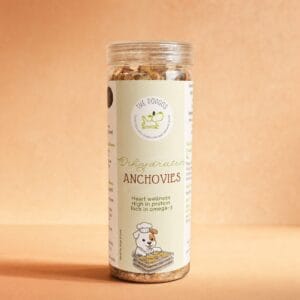
- Dehydrated Sardines — Omega-3 reduces inflammation and itching from inside
- Baobab Oil — Topical relief for dry, itchy, irritated skin
- Baobab Paw & Nose Balm — Soothes cracked, dry skin on paws and nose