Can Dogs Eat Bones? The Truth About Raw, Cooked, and Dehydrated
“Can I give my dog a bone?”
The answer depends entirely on how that bone has been prepared. The same chicken bone can be completely safe dog chews guide or potentially fatal, depending on what you’ve done to it.
This is one of the most confusing and dangerous areas of dog nutrition in India. Well-meaning pet parents routinely feed bones that could kill their dogs—not out of negligence, but out of misinformation.
Let me clear this up once and for all.
Why Bones Matter: The Calcium Crisis
First, let’s understand why we’re even talking about bones. It’s not just about giving your dog something to chew—it’s about preventing a serious nutritional deficiency.
The Calcium:Phosphorus ratio is the single most critical metric in canine nutrition. The ideal ratio is approximately 1.2:1.
- Phosphorus comes from meat (muscle meat, organs)
- Calcium comes from bone
If you feed a diet of only boneless chicken and rice—high phosphorus, zero calcium—the blood phosphorus levels spike. To correct this, the dog’s body leaches calcium from their own skeleton to buffer the blood.
Over months or years, this creates weak, brittle bones (Osteopenia) and can lead to “Rubber Jaw” syndrome—a condition where the jaw bones become so soft they can no longer support teeth.
So yes, your dog needs calcium. The question is: how do you provide it safely?
COOKED BONES: Never. Ever. Under Any Circumstances.
Let me be absolutely clear: Cooked bones are dangerous. They can kill your dog.
This is the trap many well-meaning Indian parents fall into. They pressure-cook the chicken with the bones and feed it all together. After all, the meat is safe when cooked, so why not the bones?
Here’s what happens when you cook a bone:
When you subject a bone to high heat—boiling, roasting, pressure cooking—the collagen matrix inside the bone dries out. The bone loses its natural flexibility and becomes a hard, glass-like structure.
If a dog crunches down on a cooked chicken bone, it doesn’t crush into powder like a raw bone would. It shatters into sharp, jagged splinters.
These shards can:
- Puncture the oesophagus
- Tear the stomach lining
- Perforate the intestines
- Cause life-threatening peritonitis (infection of the abdominal cavity)
This applies to ALL cooked bones—whether boiled, fried, roasted, baked, or pressure-cooked. There is no safe way to cook a bone for a dog to eat.
THE RULE: If you cook the meat, REMOVE THE BONES before feeding. No exceptions.
RAW BONES: Biologically Ideal, but Complicated in India
In the West, the “raw feeding” movement advocates for raw bones. And biologically, they’re right.
A raw bone retains its natural collagen structure. When a dog crunches it, it crushes into a chalky, digestible powder—not dangerous splinters. The dog’s stomach acid (pH 1-2, comparable to industrial hydrochloric acid) dissolves the calcium and phosphorus into absorbable minerals.
So why don’t I recommend raw bones in India?
The Hygiene Gap:
We don’t live in Europe or America. Our wet markets are not sterile supermarkets. Our humidity levels in Mumbai, Chennai, or Kolkata turn bacteria into a breeding ground within minutes.
When you hand your dog a raw bone:
- They don’t just eat it—they drag it across your floor
- They hold it between their paws on your rug
- Raw meat juice seeps into your carpet
- Then they jump up and lick your face (or your child’s face)
Our dogs don’t live in outdoor kennels—they sleep on our beds. The cross-contamination risk in an Indian household is something I cannot ethically ignore.
Yes, a dog’s stomach can handle pathogens that would hospitalise a human. But can your toddler? Can your elderly parents who live with you?
DEHYDRATED BONES: The “Goldilocks” Solution
This is why the Desi Carnivore approach uses dehydrated bones—the solution that’s just right for Indian households.
What is dehydration?
Dehydration is a preservation process that removes moisture at low temperatures over a long period—often 20+ hours. This is fundamentally different from cooking.
Why Dehydrated Bones Are Safe:
- Structure preserved: Because the bone is never subjected to high heat, it retains its porous, collagen-rich structure. When your dog bites a dehydrated chicken foot, it crumbles into a safe, chalky powder—just like a raw bone—rather than splintering like a cooked one.
- Bacteria eliminated: Bacteria need moisture to survive. By removing water activity (aw), we create a shelf-stable chew that won’t harbour Salmonella or E. coli.
- No mess: A dehydrated bone doesn’t leave wet, bacterial residue on your sofa. It’s dry, clean, and contained.
You get the nutritional benefits of bone (calcium, minerals, glucosamine) with the safety of a cooked environment and the structural integrity that prevents splintering.
The Best Dehydrated Bone Options for Indian Dogs
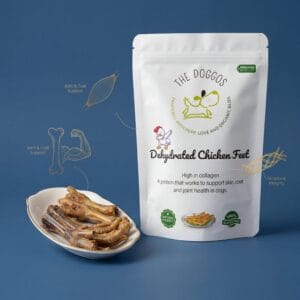
Dehydrated dehydrated chicken feet
The everyday calcium and joint solution.
Chicken feet are naturally rich in glucosamine (~450mg per foot) and chondroitin—the exact compounds in expensive joint supplements. They’re also packed with collagen for skin health and calcium for bones.
One dehydrated chicken foot daily is like giving your dog a natural joint pill that also cleans their teeth.
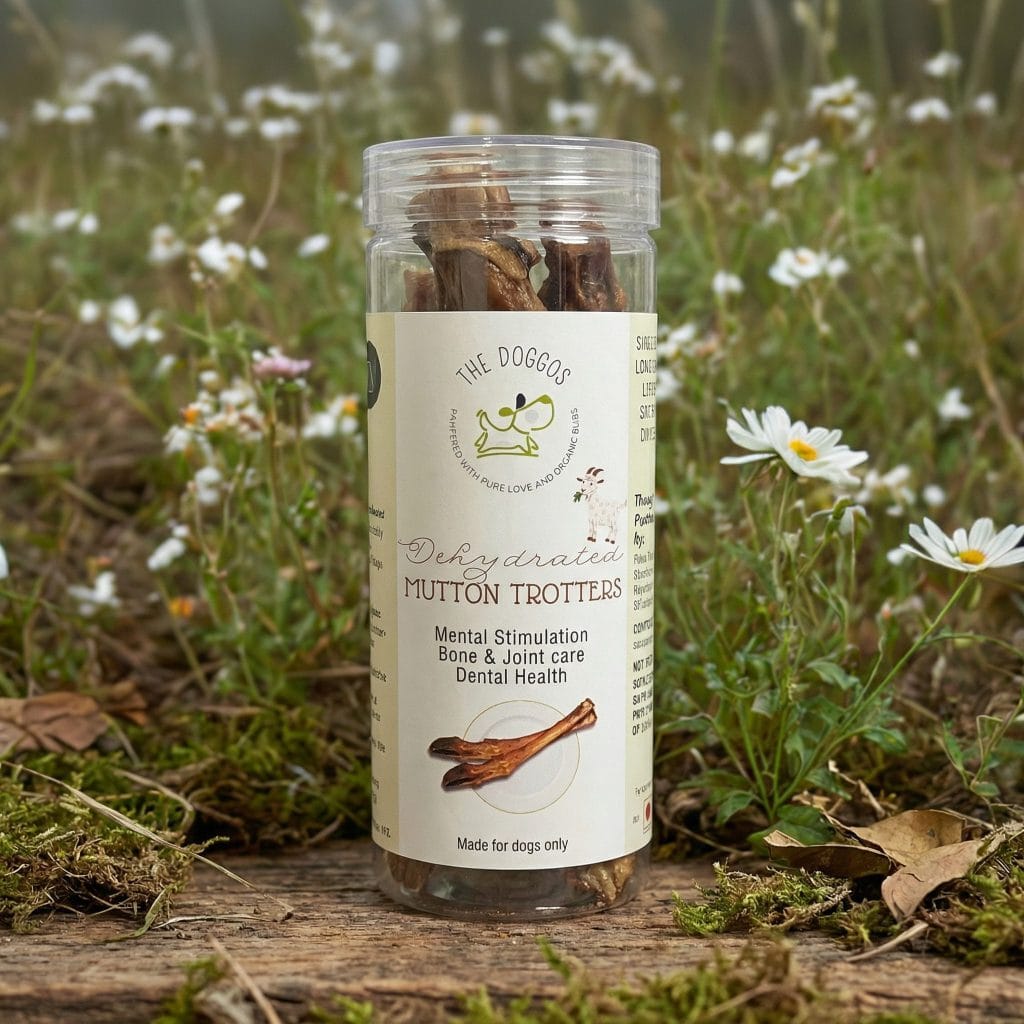
Dehydrated mutton trotters (Paya)
The heavy-duty mental health and dental chew.
Mutton trotters are the toughest natural chew available. They take time and effort to work through, which has significant benefits:
- Mental health: Chewing releases dopamine and serotonin in the dog’s brain. 20 minutes of chewing a trotter can be more mentally tiring than a 45-minute walk.
- Dental health: The hard exterior acts as a scraper, removing plaque from the back molars that toothbrushes can’t reach.
Whole Dehydrated Quail
The complete whole-prey experience.
This is a whole bird—feathers, head, feet, guts, and bones—dehydrated into a shelf-stable chew. It provides:
- Novel protein: Quail is hypoallergenic—most dogs have never been exposed to it, so it won’t trigger sensitivities
- Manganese: Found in feathers and bone, essential for ligament strength (prevents CCL tears)
- The “Colon Sweep”: Feathers are insoluble keratin. They pass through the digestive tract intact, scrubbing the intestinal walls and expressing anal glands naturally. Scooting dog? Try a feather.
Bones to Avoid (Even Raw or Dehydrated)
- Large weight-bearing bones: Leg bones from cows, buffalo, or large goats are too hard and can crack teeth. Stick to softer bones like chicken, quail, or fish.
- Bones from old animals: Older animals have denser, harder bones. Younger poultry bones are safer.
- Any cooked bone: Cannot stress this enough. NEVER.
If You Don’t Want to Feed Bones At All
Some pet parents are simply uncomfortable with bones in any form. That’s okay—but you still need to provide calcium.
Eggshell powder: Wash eggshells, dry them, and grind to a fine powder. About half a teaspoon per 500g of meat provides adequate calcium. It’s effective, but boring.
Calcium citrate: A supplement option. Follow dosing guidelines based on your dog’s weight.
But honestly? Dehydrated bones are so much better. They provide calcium in its natural lattice structure (with magnesium and boron for better absorption), plus all the joint, dental, and mental health benefits. A calcium pill just gives you calcium.
The Bottom Line
Can dogs eat bones? It depends entirely on the bone.
- Cooked bones: They splinter and can kill.
- Raw bones: Biologically ideal, but hygiene complications in Indian households.
- Dehydrated bones: The Goldilocks solution. Safe, clean, nutritionally complete.
Your dog needs calcium. Dehydrated chews—chicken feet, mutton trotters, whole quail—give them that calcium safely while also supporting their joints, cleaning their teeth, and satisfying their primal need to chew.
Cook the meal. Dehydrate the bone. That’s the Desi Carnivore way.
Ready to give your dog safe, nutritious bones?
Explore our Dehydrated Chicken Feet, Mutton Trotters, and Whole Quail. For the complete feeding guide, download The Desi Carnivore.
────────────────────────────────────────────────────────────
About the Author: Mahiv Amit Chhabra is a certified canine nutritionist and founder of The Doggos. The Desi Carnivore philosophy—Cook the Meal, Dehydrate the Bone—is built on making species-appropriate nutrition safe and practical for Indian households.
Safe Bone & Chew Alternatives
- Dehydrated Pig Bone — The safest long-lasting bone chew — no splintering
- Dehydrated Mutton Trotters — Natural bone with glucosamine and collagen
- Dehydrated Chicken Feet — Soft, safe bone alternative for smaller dogs