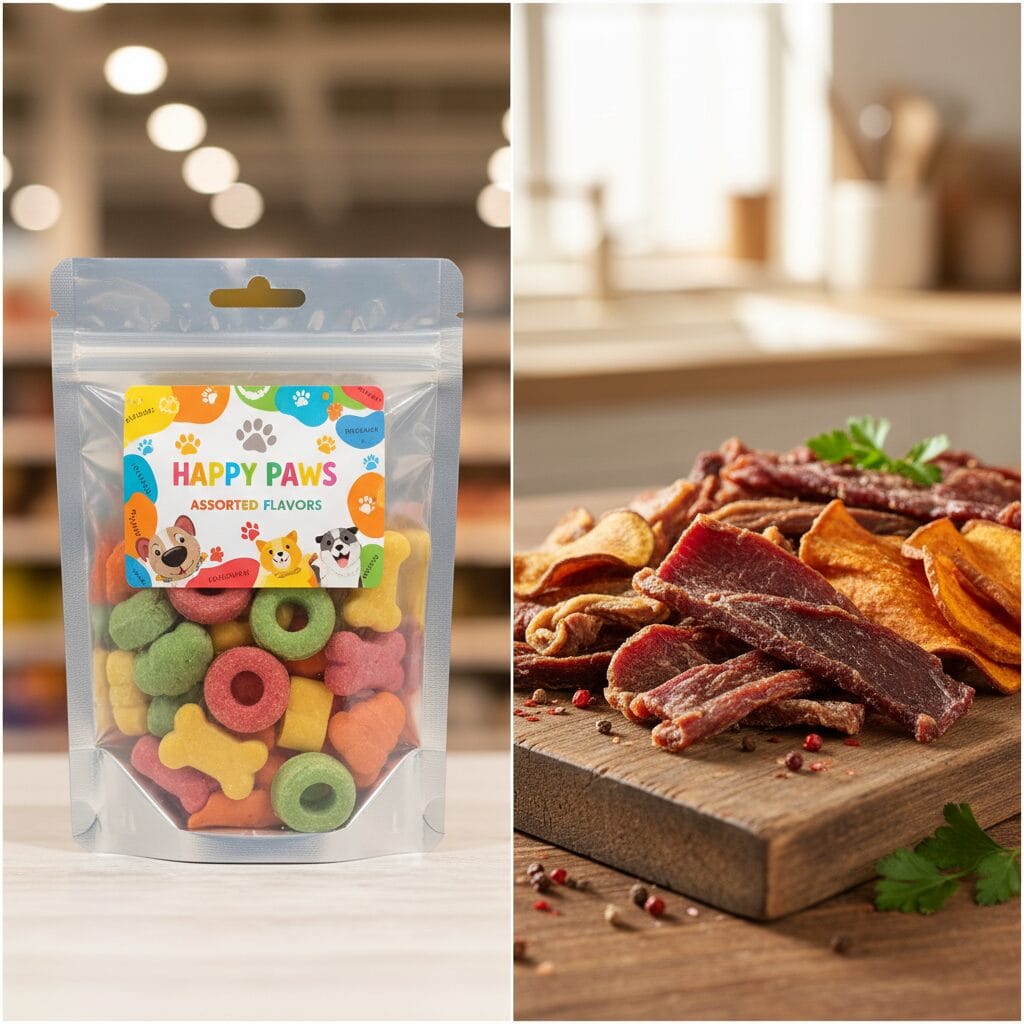
Is your dog’s treat jar overflowing with colourful, crunchy bits that promise health but deliver… well, mostly marketing hype? Look, as a certified canine nutritionist and a fellow Indian pet parent, I’ve seen countless dogs struggling with unexplained itching, dull coats, and even tummy upsets. And all this happens while their well-meaning humans dole out “healthy” commercial treats. Seriously, it’s time we talked about what’s truly going into our dogs’ mouths.
Here’s the thing: single-ingredient, gently dehydrated dog treats are hands down the best. They are the safer, more species-appropriate choice for your Desi Carnivore, especially when you compare them to those highly processed commercial alternatives. These aren’t just snacks; they’re like functional medicine, packed with easy-to-absorb nutrients, and completely free from the junk that causes so many common canine issues right here in India.
The Commercial Treat Trap: What’s Really in Your Dog’s Snack?
Walk into any pet store in India, and you’ll be bombarded with an array of commercial dog treats. They come in fancy packaging, boast about added vitamins, and often feature pictures of happy, healthy dogs. But, seriously, flip that packet over and read the ingredient list closely. What you’ll often find is a messy cocktail of stuff no carnivore should ever eat regularly.
The Hidden Dangers of Processed Treats
* **Maida, Sugar, and Fillers:** A lot of commercial treats are basically just biscuits for dogs. They’re loaded with refined flour (maida), sugar, and cheap fillers like corn, soy, or wheat. Just like Parle-G and Marie biscuits rot our dogs’ teeth and strain their pancreas, these treats cause blood sugar spikes, contribute to obesity, and provide zero nutritional value. And remember, dogs don’t have amylase in their saliva to pre-digest these carbs. They hit their stomach effectively “whole.”
* **Artificial Preservatives and Colours:** To give them a super long shelf life and make them look pretty for us humans, these treats are often packed with synthetic preservatives (BHA, BHT, ethoxyquin) and artificial colours. These chemicals have been linked to allergies, skin issues, and even behavioural problems in dogs. Do we really want that for our furry friends?
* **Unknown Meat Sources and By-products:** Many commercial treats use vague terms like “meat meal,” “animal by-products,” or “meat derivatives.” This can include anything from beaks and feathers to hooves and diseased parts, often sourced from big, low-quality operations. You honestly have no idea what you’re truly feeding your dog.
* **Omega-6 Overload:** Even if a commercial treat says “chicken,” it’s probably from corn-fed commercial poultry. That kind of chicken has an Omega-6:3 ratio of 20:1 or even 30:1. This just floods your dog’s system with stuff that causes inflammation, leading to that “heat” many Indian pet parents mistakenly blame on chicken itself. You know, paw licking, hot spots, chronic ear infections, and that “unexplained” itching. It’s a real pain, yaar.
Why “Added Vitamins” Are Often a Gimmick
When ingredients get processed at high temperatures (like extrusion or baking), a lot of those natural vitamins and minerals just get destroyed. So, what do commercial manufacturers do? They “fortify” treats by basically spraying synthetic vitamins back on. But here’s the catch: these isolated, synthetic nutrients often aren’t as easily used or effective as the natural ones you find in whole foods. Your dog’s body just struggles to recognise and use them efficiently.
Why Dehydrated Treats Are the Desi Carnivore’s Choice: Functional Medicine, Not Just a Snack
At The Doggos, we really believe in feeding dogs the way nature intended: with real meat and whole foods. Our philosophy, “Cook the Meal, Dehydrate the Bone,” doesn’t just apply to meals; it extends to our treats too. Dehydrated treats offer such a powerful alternative to all that commercial junk, giving your dog not just a tasty snack, but really important functional benefits.
The Magic of Dehydration: Nutrient Retention and Safety
Dehydration is a low-temperature, slow-drying process (we’re talking 20+ hours) that gently removes moisture from fresh meat and bone. This is super important because:
* **Nutrient Preservation:** Unlike high-heat cooking or processing, dehydration keeps most of the vitamins, minerals, enzymes, and amino acids in their natural, easy-to-absorb form. Your dog gets the full nutritional punch.
* **Pathogen Control (Without Splinters):** We live in India, right? And raw meat, especially from wet markets, carries a big risk of bacterial contamination (Salmonella, E.coli) thanks to our humidity and how it’s handled. While a dog’s stomach pH of 1-2 is designed to handle pathogens, the cross-contamination risk in an Indian home is just too high to ignore. Dehydration, though, makes ingredients shelf-stable and safe without any of the dangers you get with cooked bones.
* **Bone Safety:** This is a life-or-death distinction. **NEVER feed cooked bones.** High heat, like pressure cooking, makes bones brittle. They shatter into sharp, jagged splinters that can literally perforate your dog’s intestines, leading to fatal peritonitis. Dehydrated bones, on the other hand, keep their porous structure. When your dog chews them, they crumble into a safe, chalky powder that’s easily digestible and gives them essential calcium. This is truly the “Goldilocks” solution for Indian homes: not raw (too much hygiene risk), not cooked (splintering risk).
The Two Golden Rules, Applied to Treats
Our philosophy isn’t just for main meals; it applies to treats too:
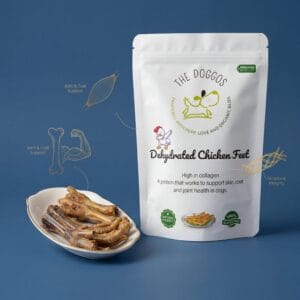
1. **Calcium:Phosphorus Ratio (Ca:P):** Here’s a common mistake Indian pet parents make: feeding boneless home diets (like just chicken and rice) for years. This leads to a severe calcium deficiency, because meat gives them phosphorus but hardly any calcium. Then, the body leaches calcium from the dog’s own skeleton, causing osteopenia and that awful “Rubber Jaw” syndrome. Dehydrated treats like /product/dehydrated-chicken-feet/, /product/dehydrated-mutton-trotters/, or /product/dehydrated-whole-quail/ are excellent natural sources of calcium. They really help balance that critical 1.2:1 Ca:P ratio.
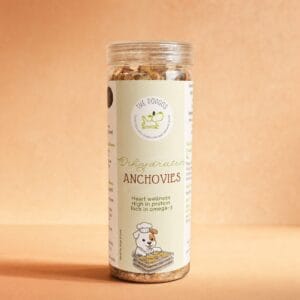
2. **Omega-6:3 Balance:** A lot of treats are just more commercial chicken, which further worsens that Omega-6 imbalance. Treats like /product/dehydrated-anchovies/ or /product/dehydrated-sardines/ are powerhouses of Omega-3s (DHA, EPA). They act as balancers to reduce inflammation, improve skin and coat health, and support brain function. They aren’t just “toppers” for meals; they’re “balancers” in treat form. And honestly, they’re fantastic for your dog’s overall well-being.
Understanding the Science: Why Dehydrated is Best for Your Dog’s Biology
Let’s get a little scientific for a moment. Your dog isn’t some miniature human or a vegetarian. Internally, they’re 99.9% wolf, and their physiology just screams “carnivore.”
* **Stomach pH 1-2:** A dog’s stomach is incredibly acidic, way more so than a human’s (which is pH 4-5). This super-acidic environment is designed to dissolve bone into absorbable calcium and phosphorus, and to kill bacteria efficiently. Dehydrated bones really tap into this natural ability without the raw risk. High-carb diets (like kibble or too much roti) actually raise stomach pH, making it less acidic and more vulnerable to bacterial infection.
* **No Salivary Amylase:** Unlike us, dogs don’t produce any amylase enzyme in their saliva. This means they can’t even start to digest carbohydrates or starches in their mouth. So, when you give them a carb-heavy commercial treat, it hits their stomach effectively “whole,” putting a huge strain on their pancreas. Dehydrated meat treats, though, are pure protein and fat, needing no such pre-digestion.
* **Short Intestinal Transit (12-30 hours):** Dogs have short, simple digestive tracts. They’re built for rapid processing of meat and fat, not for fermenting grains or complex plant matter. Fresh food, including dehydrated treats, boasts 90-94% digestibility. That means more nutrients absorbed and smaller, firmer stools. Commercial treats, often with low digestibility (around 80%), result in large, smelly waste because so much passes undigested. It’s a clear difference.
Beyond the Crunch: The Functional Benefits of Specific Dehydrated Treats
Dehydrated treats from The Doggos are truly functional medicine. Each one offers unique benefits that go far beyond just being a tasty reward.
* **Dehydrated Chicken Feet:** (/product/dehydrated-chicken-feet/)
* **Joint Health:** Each chicken foot contains about 450mg of natural glucosamine and chondroitin. That makes them a powerful natural joint supplement. Perfect for growing puppies, active adults, and senior dogs with stiff joints.
* **Dental Cleaner:** The natural chewing action helps scrape plaque and tartar off teeth, promoting better oral hygiene.
* **Calcium Source:** A fantastic, easy-to-absorb source of calcium to balance that Ca:P ratio in boneless meals. (My Lab goes crazy for these.)
* **Dehydrated Mutton Trotters:** (/product/dehydrated-mutton-trotters/)
* **Recovery Meat:** Mutton is considered a “warming” protein in Ayurveda/TCM. It’s packed with 3x the iron and 4x the zinc of chicken. Ideal for dogs recovering from tick fever (to rebuild platelets and red blood cells), during winter, or for lethargic seniors.
* **Long-Lasting Chew & Mental Enrichment:** These are fantastic, long-lasting chews that really satisfy your dog’s natural urge to chew. That chewing releases endorphins and serotonin, which can help reduce stress and anxiety.
* **Collagen Boost:** Rich in collagen for healthy skin, coat, and ligaments.
* **Dehydrated Anchovies/Sardines:** (/product/dehydrated-anchovies/, /product/dehydrated-sardines/)
* **Brain Food:** Bursting with DHA, which is crucial for puppy brain development (making them easier to train, trust me!) and preventing Cognitive Dysfunction Syndrome in senior dogs.
* **Anti-inflammatory Omega-3:** Balances those inflammatory Omega-6s you find in commercial chicken, helping to alleviate issues like paw licking, hot spots, and chronic itching.
* **Safe Fish:** We “eat low on the food chain.” These small, short-lived fish don’t accumulate heavy metals like larger predators (tuna, mackerel).
* **Odour-Controlled:** Our dehydrated anchovies are specially processed to reduce that fishy smell, making them perfect for vegetarian households.
* **Dehydrated Whole Quail:** (/product/dehydrated-whole-quail/)
* **Hypoallergenic Super-Prey:** A novel protein, great for elimination diets. If your dog is allergic to common proteins like chicken, their immune system has likely never encountered quail.
* **Whole Prey Nutrition:** Provides calcium, phosphorus, and manganese (crucial for protecting ligaments from CCL tears).
* **Natural Colon Sweep:** The feathers are insoluble keratin, acting as a “colon sweep” to scrub intestinal walls and bulk stool, naturally expressing anal glands. Got a scooting dog? Try a feather!
* **Dehydrated Goat Ears:** (/product/dehydrated-goat-ears/)
* **Dental Health & Fibre:** The fur on goat ears provides natural fibre, aiding digestion and acting as a gentle abrasive for teeth cleaning.
* **Novel Protein Chew:** Another great option for dogs with sensitivities to more common proteins. (I’ve seen this work with Indie dogs especially.)
* **Bone and Organ Boost:** (/product/dehydrated-bone-and-organ-boost/)
* **Nutrient Powerhouse:** A blend of dehydrated bone and organ meats (like liver, heart, kidney) to provide a concentrated source of taurine, iron, B vitamins, and essential minerals. These are often missing from home-cooked boneless meals. Essential for vitality and recovery.
Making the Switch: How to Introduce Dehydrated Treats Safely
Transitioning to dehydrated treats is usually quite straightforward, but a little common sense goes a long way.
1. **Start Slow:** While dehydrated treats are super digestible, any new food can cause a mild tummy upset if introduced too quickly. Start with just a small piece, especially if your dog has a sensitive stomach.
2. **Portion Control is Key:** These are nutrient-dense, remember? A little goes a long way. Always check the packaging for feeding guidelines based on your dog’s size and activity level. And don’t forget, treats should make up no more than 10% of your dog’s daily calorie intake.
3. **Variety is the Spice of Life (and Nutrition):** Don’t stick to just one type! Rotate different protein sources and benefits. One day a chicken foot for joints, the next day some anchovies for Omega-3s.
4. **Always Supervise:** Especially with chews like Mutton Trotters or Pig Bones, always, always supervise your dog to make sure they’re chewing safely.
5. **Water is Important:** Even though fresh food adds moisture to their diet, always make sure your dog has access to fresh water, especially after a good chew.
If your dog is used to sugary, maida-laden commercial treats, they might initially sniff at a single-ingredient, natural treat. Be patient! Their palate just needs to adjust to real food.
Common Mistakes Indian Dog Parents Make with Treats
* **Treating all treats equally:** Not understanding the huge difference between a highly processed commercial biscuit and a single-ingredient dehydrated chew.
* **Overfeeding:** Thinking “just one more won’t hurt.” Calories really do add up, and even healthy treats can lead to weight gain if you overdo it.
* **Ignoring Calcium:** Feeding homemade chicken and rice daily with no bone source, then giving a boneless commercial treat. This just worsens that crucial Ca:P imbalance.
* **Falling for Marketing Gimmicks:** Believing vague claims like “all-natural” or “holistic” without actually checking the ingredient list. Honestly, most vets won’t tell you this, but you have to be your dog’s advocate.
* **Using treats as a meal replacement:** Treats are supplements, plain and simple. They’re not substitutes for a balanced main meal.
* **Believing the “Heat” Myth:** Avoiding chicken treats due to “heat” (which, again, is actually Omega-6 inflammation) instead of choosing balanced options like chicken feet with Omega-3 added to the main meal.
Frequently Asked Questions About Dehydrated Dog Treats
Are dehydrated treats safe for puppies?
Yes, absolutely! Dehydrated treats are excellent for puppies. Chicken feet are especially good as they provide natural glucosamine and chondroitin for healthy joint development in growing pups. Just make sure they’re appropriate for your puppy’s size and chewing ability, and always supervise.
How often can I give my dog dehydrated treats?
It really depends on the treat and your dog’s size. Generally, treats should make up no more than 10% of your dog’s daily calorie intake. Smaller, nutrient-dense treats like anchovies can be given daily in moderation, while larger chews like mutton trotters might be given a few times a week. Always, always refer to the product’s feeding guidelines.
Do dehydrated treats help with dental health?
Yes, many do! Chews like /product/dehydrated-chicken-feet/, /product/dehydrated-mutton-trotters/, and /product/dehydrated-pig-bone/ provide mechanical abrasion. This helps scrape plaque and tartar off teeth, promoting healthier gums and reducing bad breath. They are a much, much better option than those sugary dental sticks, na?
What’s the difference between dehydrated and raw treats?
Dehydrated treats have had most of their moisture removed through a low-temperature, slow-drying process. This makes them shelf-stable and a lot safer from bacterial risk, all while preserving nutrients. Raw treats are simply raw meat or bone, with no processing. While biologically beneficial, feeding raw meat from Indian wet markets carries a high cross-contamination risk in our homes. That’s precisely why we advocate for “Cook the Meal, Dehydrate the Bone.”
Can dehydrated treats cause allergies?
While any food can potentially cause an allergy, single-ingredient dehydrated treats are far less likely to cause issues than multi-ingredient commercial treats with fillers, artificial additives, and low-quality proteins. For dogs with known allergies, opt for novel protein sources like /product/dehydrated-whole-quail/ or /product/dehydrated-bombay-duck/ to reduce risk. If your dog is always itching, definitely check out our guide on /why-is-my-dog-always-itching/.
The Desi Carnivore’s Verdict
The choice is clear. When it comes to your dog’s health and happiness, just ditch those cheap, processed commercial treats. They offer little more than empty calories and potential health problems. Instead, embrace the goodness of single-ingredient, gently dehydrated treats. They are functional medicine, designed to nourish your Desi Carnivore from the inside out, providing essential nutrients, promoting dental health, and offering vital mental enrichment. It’s a no-brainer, really.
Want to learn more about feeding your dog the Desi Carnivore way? Dive into our full guide on /what-should-i-feed-my-dog/ or explore our full range of /dog-treats/ that are truly good for your best friend.
**Disclaimer:** While I am a certified canine nutritionist and this information is based on extensive research and experience, it is not a substitute for veterinary advice. If your dog has a pre-existing medical condition, please consult your vet before making big dietary changes.
If the comparison above convinced you, our entire dehydrated dog treats range is built on the single-ingredient side of that table.