Let me guess. You’re standing in the pet store aisle, staring at rows of brightly coloured treat packets — each one screaming “natural!” and “healthy!” in bold letters. Meanwhile, your dog couldn’t care less about the marketing. He just wants something that actually tastes like food.
I get it. I’ve been there. Before I became a certified canine nutritionist, I was that dog parent buying whatever had the cutest packaging. Dentastix? Sure. Those rainbow-coloured biscuits? Why not. And honestly? I was slowly wrecking my dog’s gut without even knowing it.
Here’s the quick answer if you’re in a rush: the best dog treats in India are single-ingredient, dehydrated or air-dried animal proteins — think chicken feet, mutton trotters, beef liver, anchovies. No fillers. No preservatives. No nonsense. Just real food, dried down to a crunchy, shelf-stable treat your dog will lose their mind over.
But if you’ve got five minutes, stick around. I’m going to break down exactly why most treats on the Indian market are garbage, what you should be feeding instead, and how to pick the right treat for your dog’s size and age.
Why Most Dog Treats in India Are Absolute Rubbish
I’m not going to sugarcoat this. The Indian pet treat market is a mess. Walk into any pet shop in Mumbai, Delhi, or Bangalore, and you’ll find shelves stacked with treats that are essentially junk food for dogs. We’re talking wheat flour, sugar, artificial colours, “chicken flavour” (notice — not actual chicken), and preservatives you can’t pronounce.
The worst part? They’re marketed as “premium” and priced accordingly. You’re paying Rs 300-500 for a packet of glorified maida biscuits. Your dog deserves better. Your wallet deserves better.
The Ingredient List Test
Here’s a simple rule I tell every dog parent: flip the packet over. If the first ingredient isn’t a named animal protein (chicken, mutton, fish — not “meat meal” or “animal derivatives”), put it back on the shelf. If there are more than 3-4 ingredients, it’s probably overcomplicated. The best treats? They have ONE ingredient. That’s it.
Dehydrated Treats vs Commercial Treats: Why There’s No Contest
If you’ve read my piece on whether dehydrated treats are good for dogs, you already know where I stand. But let me spell it out for the uninitiated.
Dehydrated treats are made by slowly removing moisture from raw animal protein at low temperatures. This preserves the nutrients — the amino acids, the enzymes, the natural flavour — while making the treat shelf-stable without any chemical preservatives. It’s basically what your grandmother did with sun-dried fish or meat, just with more precise temperature control.
Commercial treats, on the other hand, are typically extruded (cooked at insanely high temperatures), then sprayed with flavour coatings to make them palatable again. By the time they reach your dog’s bowl, most of the nutritional value has been cooked out. You’re left with empty calories and a lot of marketing.
The Numbers Don’t Lie
A typical commercial dog biscuit has 50-60% carbohydrates. Dogs have zero biological requirement for carbs. Zero. Meanwhile, a dehydrated chicken foot is almost entirely protein and collagen — stuff your dog’s body actually needs. It’s not even a fair comparison.
But Aren’t Dehydrated Treats More Expensive?
Per gram? Sometimes, yes. Per unit of actual nutrition? Not even close. You’d need to feed 10 commercial biscuits to match the protein in one dehydrated anchovy. Plus, because dehydrated treats are nutrient-dense, your dog needs fewer of them. Most dogs are satisfied with one or two pieces. Try saying that about those wheat-based cookies — your Lab will inhale the entire packet and still look at you like you’ve betrayed him.
The Best Natural Dog Treats in India: A Complete Comparison
Alright, let’s get into the specifics. Here’s my honest breakdown of the best natural treats available in the Indian market right now.
| Treat Type | Key Benefits | Best For | Watch Out For | Rating |
|---|---|---|---|---|
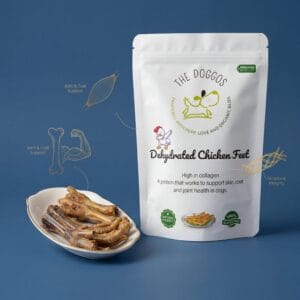
| Chicken Feet | Loaded with glucosamine & chondroitin. Great for joints. Natural dental chew. | Medium to large breeds, senior dogs | Can be too tough for very small puppies | ⭐⭐⭐⭐⭐ |
| Mutton Trotters | Excellent joint support. High collagen. Long-lasting chew. | Power chewers, large breeds | Supervise always — can splinter if low quality | ⭐⭐⭐⭐⭐ |
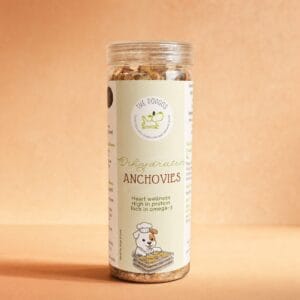
| Dehydrated Anchovies | Omega-3 rich. Tiny & perfect for training. Whole prey nutrition. | All sizes, especially puppies & small breeds | Smelly (your dog considers this a feature, not a bug) | ⭐⭐⭐⭐⭐ |
| Liver Treats (Chicken/Goat) | Extremely high-value reward. Packed with Vitamin A, iron, B12. | Training, picky eaters | Feed in moderation — Vitamin A can accumulate | ⭐⭐⭐⭐ |
| Chicken/Duck Neck | Edible bone content. Natural calcium source. Dental benefits. | Medium breeds, raw-fed dogs | Not for gulpers — size appropriately | ⭐⭐⭐⭐ |
| Lung Puffs | Low fat, low calorie. Light & crunchy. Great texture. | Overweight dogs, senior dogs | Not very long-lasting for aggressive chewers | ⭐⭐⭐⭐ |
For a deeper dive on bones specifically, check out my guide on whether dogs can eat bones — there’s a lot of misinformation out there, and I’ve tried to set the record straight.
How to Choose the Right Treat for Your Dog’s Size and Age
This is where most people mess up. They buy one type of treat and give it to every dog in the house — the 3-month-old Beagle pup and the 8-year-old Rottweiler. That’s like giving the same meal to a toddler and a grown adult. It doesn’t work.
For Puppies (Under 6 Months)
Stick to soft, small treats. Dehydrated anchovies are perfect — they’re tiny, packed with omega-3 for brain development, and soft enough that puppy teeth can handle them. Freeze-dried liver bits work brilliantly for training too. Avoid hard chews like trotters at this age; their teeth and jaws aren’t ready.
For Adolescent Dogs (6-18 Months)
This is the phase where your dog is teething, full of energy, and destroying everything in sight. (Your favourite chappal? Gone.) Introduce chicken feet and duck necks — they’re satisfying to chew, help with teething discomfort, and the collagen supports their growing joints. You can also start with smaller mutton trotters under supervision.
For Adult Dogs (1.5-7 Years)
The world is their oyster. Or rather, their anchovy. Adult dogs can handle the full range — trotters, chicken feet, organ treats, the lot. Match the treat size to your dog’s size. A Labrador gets a full mutton trotter. A Dachshund gets a chicken foot. Common sense, really — but you’d be surprised how many people get this wrong.
For Senior Dogs (7+ Years)
Joint support becomes crucial here. Chicken feet and mutton trotters are your best friends — the natural glucosamine and chondroitin are genuinely therapeutic. For more details on why trotters are so brilliant for joint health, I’ve written a full guide to mutton trotters for dogs. Also consider lung puffs if your senior is on the heavier side — low calorie, still satisfying.
The “Treats” Indian Dog Parents Need to Stop Giving — Yesterday
Okay, I know this section is going to ruffle some feathers. But someone’s got to say it. Here are the most common treats Indian dog parents give that are actively harming their dogs.
Parle-G and Other Human Biscuits
I cannot stress this enough: Parle-G is not a dog treat. I know, I know — your grandfather fed Parle-G to his dog and that dog “lived to 15.” But here’s the thing: that dog lived to 15 despite the biscuits, not because of them. Parle-G is pure sugar, maida (refined wheat flour), and hydrogenated vegetable oil. It spikes blood sugar, contributes to obesity, and over time can lead to pancreatitis. Just because your dog loves it doesn’t make it okay. My dog would love to eat an entire pizza too — doesn’t mean I’m going to let him.
Packaged “Dog Biscuits” from Local Shops
Those generic dog biscuits you get in loose quantities from the neighbourhood pet shop? The ones that look suspiciously like human cookies? They’re barely a step above Parle-G. Most are made with wheat flour, corn starch, and “meat flavouring.” Your dog is a carnivore. Feeding them wheat biscuits is like feeding a lion a roti. (Okay, slight exaggeration, but you get my point.)
Rawhide Chews
These are everywhere in Indian pet shops and they terrify me. Rawhide is basically the inner layer of cow or horse hide, processed with chemicals (sometimes formaldehyde and bleach), shaped into bones or rolls, and sold as “natural chews.” They’re a choking hazard, a blockage risk, and chemically processed to boot. There is no reason to buy rawhide when dehydrated natural chews exist. None.
Milk and Paneer
This is a very Indian thing. “My dog loves paneer!” Sure. But most adult dogs are lactose intolerant to some degree. That paneer treat might be giving your dog the runs, and you might not even be connecting the dots. Occasional curd (dahi) is fine — the fermentation process breaks down most of the lactose. But regular milk and paneer? Skip it.
Bread (Roti/Chapati)
I’ve lost count of the number of people who tell me they mix roti into their dog’s food. Wheat is one of the most common allergens in dogs. Even if your dog isn’t allergic, it’s empty calories — no nutritional value whatsoever. You’re basically filling your dog’s stomach with something that contributes nothing and potentially causes inflammation. Feed that roti to someone who’ll appreciate it. Your dog wants meat.
How to Store Natural Treats (India’s Humidity Is Not Your Friend)
Quick note on storage because I see people mess this up all the time, especially in humid cities like Mumbai, Chennai, and Kolkata. Dehydrated treats need to stay dry. That’s literally the whole point — you removed the moisture to prevent bacterial growth. If you let humidity creep back in, you undo all of that.
Store them in airtight containers or resealable bags. Keep them in a cool, dry place — not on top of the fridge where heat rises, and definitely not in an open basket on the kitchen counter. During monsoon season, I personally toss in a food-safe silica gel packet for extra protection. Paranoid? Maybe. But I’ve never had a treat go mouldy.
Frequently Asked Questions
How many natural treats can I give my dog per day?
Treats should make up no more than 10% of your dog’s daily caloric intake. For a medium-sized dog (15-20 kg), that’s roughly 2-3 dehydrated treats per day. For smaller dogs, 1-2. For larger dogs, 3-4. But honestly, use common sense — if your dog is gaining weight, cut back. These aren’t meal replacements; they’re supplements and rewards.
My dog has never had raw or dehydrated treats. How do I introduce them?
Start slow. Give a small piece and wait 24 hours. Watch for any digestive upset (loose stools, vomiting). Most dogs take to dehydrated treats immediately — it’s real food, and their bodies recognise it. But if your dog has been on a processed diet for years, their gut might need a few days to adjust. That’s normal. Don’t panic.
Are dehydrated chicken feet safe? Won’t the bones splinter?
Raw and dehydrated poultry bones are flexible and digestible. It’s COOKED bones that splinter dangerously. When you cook a bone, the structure changes — it becomes hard and brittle. Dehydrated chicken feet retain the flexibility of raw bones (because dehydration uses low heat, not cooking heat). They crunch, they break apart, and they digest. Millions of dogs eat them every day without issue. Supervise the first few times if you’re nervous — totally valid.
Can I dehydrate treats at home?
Absolutely! If you’ve got a food dehydrator, you can make chicken jerky, liver chips, and even fish treats at home. Set the temperature between 65-75°C and dehydrate for 8-12 hours depending on thickness. The key is getting them dry enough — they should snap, not bend. Homemade treats don’t last as long as commercially dehydrated ones (no preservatives, less precise moisture control), so make small batches and refrigerate what you don’t use within a week.
The Bottom Line
Your dog is a carnivore. Not a biscuit-ivore. Not a Parle-G-ivore. A carnivore. The best treats you can give them are the simplest ones — real animal protein, dehydrated or air-dried, with nothing added and nothing taken away.
It’s not complicated. It’s not expensive (not when you factor in fewer vet bills down the line). And the look on your dog’s face when they get a proper chicken foot instead of a wheat biscuit? That alone is worth making the switch.
At The Doggos, we’ve built our entire treat range around this philosophy — single-ingredient, ethically sourced, dehydrated treats made right here in India. No fillers, no preservatives, no apologies. Because your dog deserves food that’s actually food.
Got questions about which treats are right for your dog? Drop us a message — I personally reply to every query.
— Mahiv Chhabra, Certified Canine Nutritionist & Founder, The Doggos