
“What should I feed my dog in India?” This is the question I hear most often as a canine nutritionist. Many loving pet parents, despite investing in expensive imported kibble, hesitate at the thought of fresh meat for fear of worms or bone splinters. In 2026, the answer remains clear: **The best thing you can feed your dog in India is a gently home-cooked, species-appropriate meal combined with safe, dehydrated raw chews for dental health and essential bone nutrition.** This is The Desi Carnivore method, perfectly suited for our unique Indian environment and local markets.
What to Feed a Dog in India: The Desi Carnivore Answer
For optimal health in India, feed your dog a diet of gently home-cooked, species-appropriate meats (like chicken, mutton, or fish) balanced with essential nutrients from organs, select vegetables, and healthy fats. Crucially, supplement with safe dehydrated bones and chews for calcium and dental hygiene, avoiding all cooked bones. This approach addresses both biological needs and local hygiene challenges.
Understanding Your Dog’s Diet: Why Fresh Food Matters
Let’s be brutally honest. That bag of kibble, no matter how shiny the packaging or how many exotic ingredients it claims to have, is a highly processed, carbohydrate-heavy product. What is it really? It’s the fast food of the dog world. And just like for us humans, a steady diet of fast food leads to all sorts of health issues. Think about it.
The Kibble Lie: What’s Really in That Bag?
Most commercial kibble is primarily made up of grains, fillers, and rendered animal by-products – not the fresh, whole meat your dog’s body actually craves. Seriously, a wolf in the wild isn’t munching on corn, wheat, or rice. Their diet is meat, bones, and organs. And our dogs, genetically speaking, are 99.9% wolf. Their digestive system is just wired for exactly that. It’s built for meat.
What’s typically in kibble?
- High Carbohydrates: Grains like corn, wheat, rice, and soy. Dogs have no biological requirement for these in such high quantities. They lead to inflammation, obesity, and diabetes. It’s a recipe for trouble.
- Rendered By-Products: Often mystery meat from slaughterhouse waste, stuff not fit for human consumption. Basically, the leftovers.
- Synthetic Vitamins & Minerals: Added back in after high-heat processing destroys natural nutrients. Your dog’s body actually struggles to absorb these. It’s like putting a bandage on a broken arm.
- Preservatives & Artificial Colours: Just to extend shelf life and make it look appealing to *you*, not your dog. Who cares what colour it is if it’s unhealthy?
The Indian Climate Factor: How Kibble Worsens Health Issues
Here in India, our climate – especially the humid coastal regions like Mumbai or Chennai – can really make kibble-related problems worse. High carb diets promote inflammation, which, as we see all the time, shows up as skin allergies, hot spots, and yeast infections. These are super common woes for so many Indian dog parents. Add that to the heat, and you’ve got yourself a recipe for chronic discomfort. We see countless Indie dogs, Labradors, and Golden Retrievers suffering from persistent itching and dull coats, often a direct result of their kibble diet. Honestly, I get so many DMs about this specific issue.
Want to dive deeper into why kibble is a no-go? Read our post: The Raw Food Diet for Dogs in India: Our Stance.
The Best Food for Dogs in India: Our Home-Cooked Method
This is exactly where The Desi Carnivore approach shines, it’s a hybrid method designed specifically for Indian households. We acknowledge the hygiene challenges of raw meat in our climate while still honouring your dog’s carnivorous biology. It’s about cooking the main meal and safely providing essential raw bone nutrition through dehydration. It’s the smart way to do it, and it’s the best food for dogs in India.
The Main Meal: Gently Cooked, Species-Appropriate Goodness
Your dog’s main meal should be gently home-cooked meat (chicken, mutton, fish) mixed with functional superfoods. Cooking kills common pathogens like Salmonella and E. coli, which makes the meat safe for your family to handle and for your dog to consume without cross-contamination risks right there in your home. That’s a big win.
What to include:
- Meats: Chicken (boneless or with meat attached to raw bones you *don’t* feed), mutton, goat, various fish (sardines, mackerel, hilsa – local is best!). Rotate protein sources to ensure a wide spectrum of nutrients and prevent sensitivities. If your dog is itchy, consider rotating away from chicken. We’ve seen many dogs thrive on mutton or fish when chicken was the culprit for their allergies. (I’ve seen this work with Indie dogs especially!)
- Organs: These are nature’s multivitamins, truly! Liver, heart, kidney are powerhouses of essential nutrients. You can gently cook these with the meat. For an easy, nutrient-dense boost, consider our Bone and Organ Boost as a daily superfood supplement.
- Small Amounts of Specific Vegetables/Fruits: Not as fillers, never as fillers, but for phytonutrients. Think small portions of finely grated carrot, pumpkin, green beans, or a seasonal treat like mango (in moderation!).
- Healthy Fats: A drizzle of cold-pressed oil like coconut oil, olive oil, or our Hemp Seed Oil for its anti-inflammatory properties and Omega-3s.
- Herbs & Spices (Ayurvedic Touch): A pinch of turmeric for its anti-inflammatory benefits (mix with a tiny bit of black pepper for absorption), a tiny bit of ginger for digestion. These are staples in our kitchens and can be beneficial for our dogs too, in canine-appropriate amounts, of course.
Comparison: Home-Cooked Desi Carnivore vs. Commercial Kibble
| Feature | Desi Carnivore (Home-Cooked) | Commercial Kibble |
|---|---|---|
| Main Ingredients | Fresh, whole meat, organs, minimal veggies | Rendered meat meals, grains (corn, wheat, soy), fillers |
| Nutrient Source | Naturally occurring, highly bioavailable | Synthetic, added after processing, lower bioavailability |
| Carbohydrate Content | Low (from minimal veggies) | High (up to 60-80% from grains/fillers) |
| Moisture Content | High (essential for hydration & kidney health) | Low (dry food contributes to chronic dehydration) |
| Processing | Gently cooked at home, minimal heat | High-heat extrusion, destroys natural enzymes & nutrients |
| Digestibility | Excellent, high absorption (90-94%) | Poor, leads to larger, smellier stools (approx. 80%) |
Key Numbers: Fresh food offers a digestibility of 90-94%, meaning more nutrients are absorbed and less waste is produced, compared to kibble’s approximately 80%.
The Crucial Chews: Dehydrated Bones for Dental & Bone Health
So, the logical answer is to cook the food, right? Yes, for the meat. **ABSOLUTELY NOT, for the bones.** This, my friends, is the trap many well-meaning Indian parents fall into. They pressure-cook the chicken with the bones and feed it all. And that’s incredibly dangerous.
When you subject a bone to high heat, boiling, roasting, pressure cooking, the collagen matrix inside the bone simply dries out. The bone loses its flexibility and becomes a hard, glass-like structure. If a dog crunches down on a cooked chicken bone, it doesn’t crush into powder, it shatters into sharp, jagged splinters. These shards can perforate the stomach or intestines, leading to life-threatening peritonitis. **I cannot stress this enough: NEVER feed cooked bones. Ever.**
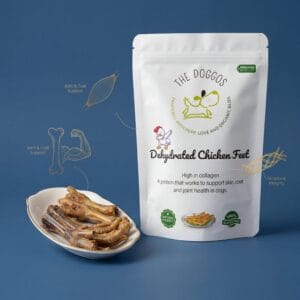
This is where dehydration comes in as the “Goldilocks” solution. Dehydration removes moisture at low temperatures over a long period (often 20+ hours). Because the bone is never “cooked” at high heat, it keeps its porous structure. When your dog bites a Dehydrated Chicken Foot, it crumbles into a safe, chalky powder rather than splintering. And because bacteria need moisture to survive, dehydrated chews are shelf-stable and don’t leave a wet, bacterial mess on your sofa. (My Lab goes crazy for this!)
**Benefits of Dehydrated Chews:**
- Dental Health: Natural abrasive action scrapes away plaque and tartar, helping prevent dental disease. No more expensive, often ineffective, dental sticks!
- Calcium & Phosphorus: Essential for strong bones and overall skeletal health, absorbed naturally from the bone matrix. The ideal Calcium:Phosphorus ratio for dogs is 1.2:1.
- Joint Health: Chews like our Dehydrated Chicken Feet are a fantastic natural source of glucosamine and chondroitin, vital for healthy joints.
- Mental Stimulation: Chewing is a natural, calming behaviour for dogs. It helps reduce stress and boredom.
Want to know more about safe bones? Read: Can Dogs Eat Bones? And for more on dehydration, check out Are Dehydrated Treats Good For Dogs?
Building Your Dog’s Meal: What Should I Feed My Dog Daily?
Ready to make the switch? Here’s how you can do The Desi Carnivore method at home. It’s easier than you think, and it directly answers what should I feed my dog for daily nourishment.
Ingredient Selection: Sourcing Quality in Indian Markets
This is crucial. India’s local markets are a treasure trove of fresh, quality ingredients, if you know where to look, that is.
- Meat: Build a relationship with your local butcher (the goshtwala). Ask for fresh cuts, bone-in chicken (for the meat, remember, not the cooked bones!), mutton pieces, or even whole fish. Explain it’s for your dog; they often have great suggestions. If you’re buying from Crawford Market in Mumbai or Russell Market in Bengaluru, you’ll find excellent options.
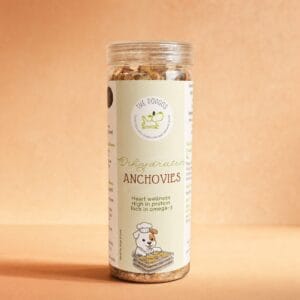
- Fish: Visit local fish markets. Smaller, oily fish like anchovies, sardines, or mackerel are fantastic. Our Dehydrated Anchovies and Dehydrated Sardines are excellent for those days you can’t get fresh, or when you’re just short on time.
- Vegetables: Stick to organic whenever possible. Wash them thoroughly. Common sense, really.
Sample Meal Plan: A Week of Desi Carnivore Goodness for 2026
Variety is key! Don’t feed the exact same thing every single day. That’s boring for them, and not great nutritionally.
Daily Feeding Guide (Approximate, adjust for activity level & individual dog)
| Dog Weight | Adult (2-3% of body weight) | Puppy (5-10% of body weight) |
|---|---|---|
| 5 kg | 100-150g | 250-500g |
| 10 kg | 200-300g | 500-1000g |
| 20 kg | 400-600g | 1000-2000g |
| 30 kg | 600-900g | 1500-3000g |
Divide the daily amount into 2 meals for adults, 3-4 for puppies.
Example Weekly Rotation:
- Monday/Tuesday: Gently cooked chicken mince with a spoonful of pumpkin and a pinch of turmeric. Easy.
- Wednesday/Thursday: Gently cooked mutton keema with finely grated carrot.
- Friday/Saturday: Cooked sardines/mackerel (bones removed if large, small bones are fine) with a dash of Hemp Seed Oil.
- Sunday: Cooked chicken with liver and heart, maybe a few green beans.
- Daily: Offer a Dehydrated Chicken Foot or Dehydrated Mutton Trotter for chewing and bone nutrition.
DIY Recipe: A Simple Desi Carnivore Meal
Golden Chicken Bowl (Cooked)
Ingredients:
- 500g boneless chicken (thigh or breast), cut into small pieces or minced
- 100g chicken liver, finely chopped
- 50g pumpkin, finely chopped or grated
- 50g green beans, finely chopped
- 1/4 teaspoon turmeric powder (optional, but good for anti-inflammatory benefits)
- 1 cup water or bone broth
Instructions:
- In a pan, add chicken, liver, pumpkin, green beans, and water/broth.
- Bring to a gentle boil, then reduce heat and simmer for 15-20 minutes, or until chicken is thoroughly cooked and vegetables are soft.
- Stir in turmeric powder (if using) in the last few minutes.
- Let it cool completely before serving. Store leftovers in an airtight container in the fridge for up to 2-3 days.
- Serve with a daily dehydrated chew like a Dehydrated Chicken Foot or a Dehydrated Mutton Trotter.
From Mahiv’s Practice: The Indie Dog Transformation
I recently worked with a 2-year-old Indie dog in Bengaluru, a beautiful female named Tara, who suffered from chronic paw licking and dull fur. Her owner was feeding her a popular kibble brand and occasional rice. After transitioning Tara to The Desi Carnivore method, focusing on gently cooked chicken and mutton, alongside daily Dehydrated Chicken Feet for calcium and adding a teaspoon of Hemp Seed Oil to her meals, we saw a remarkable change. Within 60 days, her paw licking significantly reduced, her coat became shiny, and her energy levels stabilised. It’s a testament to how quickly a species-appropriate diet can heal and rejuvenate.
Transitioning Your Dog: A Step-by-Step Approach
Don’t switch cold turkey! A gradual transition over 7-10 days is best to avoid digestive upset. Nobody wants that.
- Day 1-3: Replace 1/4 of their current food with the new cooked meal.
- Day 4-6: Replace 1/2 of their current food with the new cooked meal.
- Day 7-9: Replace 3/4 of their current food with the new cooked meal.
- Day 10 onwards: Full Desi Carnivore meal! Introduce dehydrated chews separately as treats.
Common Mistakes Indian Dog Parents Make (and How to Avoid Them)
As a canine nutritionist, I’ve seen it all, trust me. Here are the most frequent pitfalls I encounter with well-meaning Indian dog parents:
- Feeding Cooked Bones: I’ll say it again: **NEVER feed cooked bones.** This is the number one most dangerous mistake. It’s a trip to the vet, and potentially surgery, waiting to happen. Stick to safe, dehydrated options. Please.
- Excessive Rice or Roti: “Thoda sa roti de do, yaar.” We love our carbs, of course, but our dogs don’t process them well. A little rice or roti occasionally won’t kill them, but making it a staple is a recipe for inflammation, gut issues, and nutrient deficiencies. Remember, dogs lack salivary amylase! For more on this, check out our blogs: Can Dogs Eat Rice? and Is roti good for dogs?
- Only Feeding Chicken: Chicken is accessible and affordable, yes, but relying solely on it can lead to sensitivities (the infamous “chicken allergy”) and nutritional imbalances. Rotate proteins! Explore mutton, fish, and other meats. Your dog will thank you.
- Treating Dogs Like Vegetarian Humans: Just because *you* can thrive on a vegetarian diet, doesn’t mean your dog can. They are carnivores. Feeding large quantities of paneer, curd, or only plant-based foods will harm their long-term health. While a little paneer or curd as a treat is fine, it’s not a meal. And frankly, it’s biologically inappropriate.
- Ignoring Dental Health: Many Indian parents neglect dental hygiene. Kibble does *not* clean teeth. Brushing is ideal, absolutely, but natural chewing on appropriate dehydrated bones is a fantastic, species-appropriate way to keep those pearly whites clean. It’s a win-win.
- Overfeeding or Underfeeding: It’s easy to get this wrong. Follow the 2-3% body weight guideline for adults, and observe your dog’s body condition. You should be able to feel their ribs easily, but not see them prominently (except for very lean breeds like Mudhols). When in doubt, consult a canine nutritionist!
Beyond the Bowl: The Doggos Hemp Meal Balancer for Optimal Health in 2026
Even with a fantastic natural diet, certain supplements can give your dog an extra edge, especially considering the environmental stressors we deal with here in India. This is where the Hemp Meal Balancer truly shines, transforming a simple home-cooked meal into a thriving meal.
The Hemp Meal Balancer is formulated to provide a complete spectrum of amino acids, essential fats, and prebiotic fibre that might be missing or insufficient in a basic home-cooked chicken and rice bowl. It ensures your dog receives balanced nutrition, helping to stabilise blood sugar, reduce inflammation, and support a healthy gut. It’s particularly vital for dogs on chicken-heavy diets to balance the Omega-6:3 ratio, which is often skewed in commercial Indian chicken.
- Omega-3 Fatty Acids: Crucial for skin & coat health, brain function, and reducing inflammation. While fresh fish is great, our Dehydrated Anchovies and Dehydrated Sardines are concentrated, natural sources of these vital oils. Super convenient, too.
- Joint Support: For breeds prone to joint issues (think large breeds like Rajapalayams, or older dogs), natural sources of glucosamine and chondroitin are invaluable. Our Dehydrated Chicken Feet are packed with natural collagen, providing excellent joint support.
- Skin & Coat Health: If your dog struggles with dry skin, fungal infections, or dull fur (common in our humid climate), consider external and internal support. Our Baobab Oil is amazing for topical skin healing and anti-fungal properties, while Hemp Seed Oil, taken orally, provides powerful anti-inflammatory benefits for a healthy coat from within.
For more about me and my philosophy, visit About Mahiv Amit Chhabra.
Frequently Asked Questions About What to Feed Your Dog in India
Q1: Is raw meat safe for my dog in the Indian climate?
A1: Directly feeding raw meat from local markets can carry cross-contamination risks, given our climate and common handling practices. The Desi Carnivore method recommends gently cooking the main meat portion, it eliminates pathogens. Supplement with safe, shelf-stable dehydrated raw chews (like Dehydrated Chicken Feet or Dehydrated Mutton Trotters) for essential bone nutrition and dental health. This approach minimises risk while still honouring your dog’s carnivorous needs.
Q2: Can I feed my dog a vegetarian or vegan diet in India?
A2: No, dogs are carnivores. Their digestive system is specifically designed to process and thrive on animal protein and fats, not plant-based diets. Trying to feed them a vegetarian or vegan diet will lead to severe nutritional deficiencies, numerous health problems, and ultimately, a miserable life for your dog. Their biology is 99.9% wolf, and wolves don’t graze fields.
Q3: Why can’t I feed my dog cooked bones, especially chicken bones?
A3: Cooking bones, especially chicken bones, makes them brittle. They shatter into sharp, jagged splinters that can cause severe internal damage, such as perforations of the stomach or intestines, which are life-threatening emergencies. Always avoid cooked bones. Instead, offer safe, dehydrated raw bones like Dehydrated Chicken Feet or Dehydrated Mutton Trotters, which crumble safely when chewed.
Q4: How much food should I feed my adult dog daily?
A4: A general guideline for adult dogs is to feed about 2-3% of their ideal body weight daily, typically divided into two meals. For example, a 10 kg dog would need roughly 200-300g of food per day. Puppies need more, usually about 5-10% of their body weight, split into 3-4 meals. Always monitor your dog’s body condition and adjust amounts based on their activity level, metabolism, and individual needs.
Q5: Where can I source good quality ingredients for my dog’s natural diet in India?
A5: Look for trusted local butchers for fresh, human-grade meat and organs, and visit local fish markets for fresh, oily fish like sardines or mackerel. Choose organic vegetables whenever possible and wash them thoroughly. Building relationships with local vendors ensures quality ingredients. For safe, natural chews and supplements like the Hemp Meal Balancer, The Doggos offers ethically sourced and carefully prepared options.
The journey to natural feeding might seem daunting at first, I get it. But trust me, it’s the most rewarding step you can take for your dog’s health. By understanding their true carnivorous nature and adapting it safely to our Indian context, you’re not just feeding them; you’re unleashing their natural vitality. Ditch the kibble, embrace The Desi Carnivore way, and watch your doggo thrive! They deserve it.
Natural Treats & Supplements from The Doggos
- Hemp Meal Balancer, Complete nutritional supplement for homemade diets
- Dehydrated Sardines, Omega-3 rich treat for skin and coat health
- Dehydrated Chicken Feet, Natural source of glucosamine and chondroitin for joint health
Find Products for Your Breed
We have breed-specific guides for 15 Indian breeds, treats, supplements, and grooming: