The Desi Carnivore · Field Notes
The Field Guide.
Everything we know about feeding a dog in India: the ratios, the safety rules, the seasons. Written down. No fluff, no fear-mongering. Just the science from The Desi Carnivore, in plain Hinglish. Every note ends on the real food that fixes it.
Field Note 01 · The Itch
Your dog isn’t “heaty”. It’s inflamed.
Why the itch, the paw-licking and the hot spots usually trace to one ratio in the bowl. Not to “heat”.
In short Commercial Indian chicken runs an omega-6 to omega-3 ratio of 20:1–30:1; a pasture bird runs about 7:1. Fed daily with nothing to balance it, that excess omega-6 is the inflammation behind most “heaty” skin. Add a real omega-3 source and you feed your way out of it.
The number nobody reads
Corn- and soy-fed broilers carry up to 20:1 or 30:1 omega-6 to omega-3. Omega-6 is the inflammatory side of the fat equation; omega-3 is the calming side. A chicken-only bowl is almost all of the first and barely any of the second.
Why “heaty” is a misread
In Ayurveda chicken gets called “heating”, and the dog scratches, licks its paws, grows hot spots and recurring ear infections. That isn’t thermal heat. It’s omega-6 inflammation wearing a cultural name. Balance the fats and it settles.
The fix is one ratio
Add an omega-3 source to every chicken meal: hemp seed oil (a clean plant ratio plus GLA) or dehydrated sardines and anchovies: small, short-lived fish, low in mercury, rich in EPA and DHA. Skin and coat turn over slowly, so give it 4–6 weeks of a daily habit.
What omega-6 to omega-3 ratio should a dog actually eat?
About 7:1, the ratio of a pasture-raised bird. A 40-day commercial broiler runs 20:1–30:1: far too much omega-6, with almost no omega-3 to answer it.
How fast does the itch settle?
Give it 4–6 weeks of a daily omega-3 source. Skin and coat turn over slowly, so the change shows over weeks, not days. A daily habit beats an occasional capsule.
The omega-3 fix, on a shelf
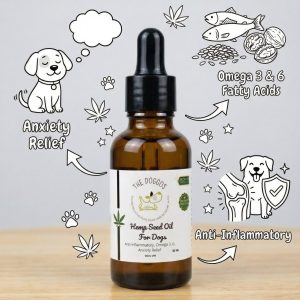
Hemp Seed Oil For Dogs
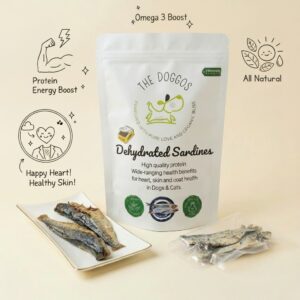
Dehydrated Sardines
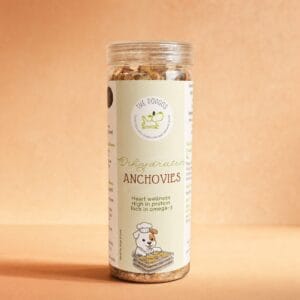
Dehydrated Anchovies
Field Note 02 · The Foundation
Two ratios decide everything in the bowl.
Calcium-to-phosphorus, and omega-6-to-omega-3. Get these two right and most problems never start.
In short Rule 1: calcium to phosphorus, about 1.2:1. Chicken-and-rice is high phosphorus and zero calcium, so the body strips calcium from its own skeleton. Rule 2: omega-6 to omega-3, about 7:1, not the 20:1–30:1 of commercial chicken. Fix both and the foundation holds.
Rule 1. Calcium : Phosphorus (≈1.2:1)
Phosphorus comes from meat; calcium comes from bone. A boneless home diet of chicken and rice is all phosphorus and no calcium, so the body leaches calcium out of its own skeleton to balance the blood. Over months that means weak, brittle bone and “rubber jaw”. The fix is bone: dehydrated chicken feet, whole quail, or eggshell powder.
Rule 2. Omega-6 : Omega-3 (≈7:1)
Commercial chicken runs 20:1–30:1 omega-6 to omega-3: chronic low-grade inflammation that surfaces as paw-licking, hot spots and red skin. Add hemp seed oil or dehydrated anchovies and sardines to every chicken meal to pull the ratio back.
Why this is the whole game
Almost every “mystery” problem is one of these two ratios out of balance: soft bones, the endless itch. Cover them and you’ve built the floor everything else stands on.
What’s wrong with chicken and rice?
It’s high in phosphorus and has zero calcium, so the body pulls calcium from the skeleton to balance its blood, weakening bone over time. Add a bone source to correct it.
How do I add calcium safely?
Through dehydrated bone (chicken feet or whole quail), or eggshell powder. Never cooked bone, which turns brittle and shatters.
Bone for calcium, oil for omega
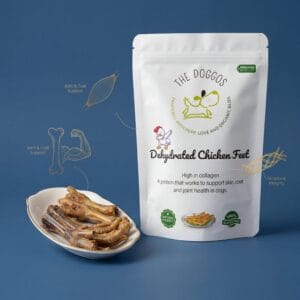
Dehydrated Chicken Feet
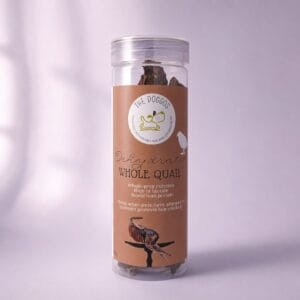
Dehydrated Whole Quail
Hemp Seed Oil For Dogs
Field Note 03 · The Safety Rule
Never feed a cooked bone.
Why heat turns a bone into glass, and why low-temp dehydration is the safe middle path.
In short High heat dries out a bone’s collagen matrix and turns it brittle: cooked bones shatter into sharp splinters that can perforate the gut. Low-temp dehydration keeps the porous structure, so it crumbles to safe, chalky powder. That’s the whole reason our chews are dehydrated, never cooked.
What heat does to a bone
Boiling, roasting, frying or pressure-cooking dries the collagen matrix out. The bone becomes brittle glass and splinters into sharp shards that can perforate the stomach or intestine. Fatal peritonitis. This is the single most important safety rule in feeding: never a cooked bone, ever.
Why not raw, in India
A dog’s stomach acid (pH 1–2) can handle pathogens, but Indian wet markets, humidity and cross-contamination make raw bone impractical at home. We respect the raw-feeding science and adapt it to Indian reality.
The Goldilocks solution
Low-temperature dehydration keeps the bone’s porous structure, so it crumbles into safe chalky powder instead of splintering, while removing the moisture bacteria need. Chicken feet, mutton trotters, whole quail: minerals in their bioavailable form, none of the danger.
Are cooked bones ever safe?
No. Any cooked bone turns brittle and can splinter into the gut, whether it was boiled, fried, roasted or pressure-cooked. Use dehydrated chews instead.
Why dehydrated rather than raw?
Dehydration keeps the safe porous structure and removes the moisture bacteria need. Practical for Indian homes, where raw handling and humidity raise contamination risk.
Safe dehydrated chews
Dehydrated Chicken Feet
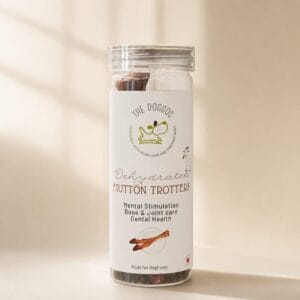
Dehydrated Whole Quail
Field Note 04 · The Transition
Switch food over seven days, not overnight.
The exact day-by-day ramp from kibble to fresh, and how to read the stool.
In short Move in quarters over a week: 75/25 → 50/50 → 25/75 → 100%. Some stool softening is normal; if diarrhoea runs past two days, slow down. A little curd or kefir steadies the gut through the change. Dehydrated treats can start on day one.
The ramp
Day 1–2: 75% old food, 25% new. Day 3–4: half and half. Day 5–6: 25% old, 75% new. Day 7: fully on the new food. The slow ramp lets the gut’s bacteria shift without a crash.
Read the stool
Some softening during the switch is normal. If diarrhoea persists beyond two days, drop back a step and go slower. A probiotic, curd or kefir, supports the gut lining through the change.
Treats don’t wait
Dehydrated chews and toppers can be introduced immediately, separate from meals. They’re not part of the ramp. A hemp meal balancer over the bowl helps cover the amino-acid and fat gaps as you transition.
Why not switch food immediately?
An overnight change shocks the gut microbiome and usually causes diarrhoea. A 7-day ramp lets the bacteria adjust.
Loose stool during the switch: normal?
Some softening is expected. If it persists beyond two days, slow the transition and add a probiotic like curd.
What helps the switch
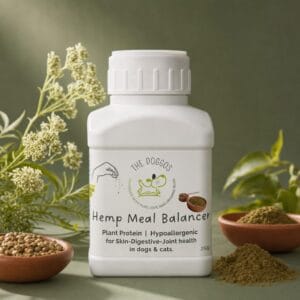
Hemp Meal Balancer
Dehydrated Chicken Feet
Dehydrated Sardines
Field Note 05 · Skin
Every rash is a message from the inside.
Skin is the body’s largest eliminatory organ. Fix the gut and the fats first, then treat the surface.
In short The itch is usually inside-out: an inflammatory diet, a stressed gut, missing omega-3. Work the order: clean the diet, restore the gut, add omega-3, then treat the surface with topical baobab. In the monsoon, dry completely to keep Malassezia yeast down.
Inside-out, not surface-first
Skin is the largest eliminatory organ. Every rash is the inside talking. Over 90% of serotonin and 70% of immune tissue live in the gut, so a stressed gut shows up on the coat. Treat the gut-skin axis, not just the itch.
The protocol, in order
Remove processed and high-carb food → add probiotics (curd, kefir) → add omega-3 (hemp seed oil’s GLA converts to an anti-inflammatory directly, bypassing the enzyme step atopic dogs lack) → then topical baobab oil, which absorbs into the skin barrier instead of sitting on top.
The monsoon trap
Humidity feeds Malassezia yeast: greasy skin, dark pigment, a yeasty smell. Bathe no more than every 4–6 weeks with a pH-balanced shampoo, and dry completely. A baobab therapy mask helps between baths.
Why treat the gut for a skin problem?
The gut-skin axis: most of the immune system and serotonin live in the gut, so dysbiosis surfaces as itch and a dull coat. Fixing diet and gut often clears skin that creams couldn’t.
How often should I bathe an itchy dog?
Every 4–6 weeks at most, with a pH-balanced shampoo, and dry completely. Over-bathing and trapped monsoon moisture both make it worse.
The inside-out skin kit
Hemp Seed Oil For Dogs
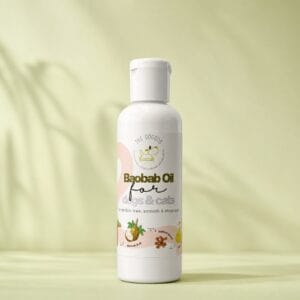
Baobab Oil For Dogs
Dehydrated Anchovies
Field Note 06 · The Seasons
Feed the season your dog is actually in.
Summer, monsoon, winter, Diwali: what to change in the bowl through the Indian year.
In short Summer: lighter, water-rich, cooling proteins like fish; trim portions 10–15%. Monsoon: gut issues and yeasty skin peak. Add probiotics, store treats dry. Winter: 10–15% more calories, warming proteins like mutton, more omega-3 for stiff joints. Diwali: start hemp about a week early for a calm buffer.
Summer (Mar–Jun)
Heat kills appetite and raises dehydration risk. Lean on water-rich foods and cooling proteins (fish), keep meals lighter, and trim portions 10–15%. A little coconut water is fine.
Monsoon (Jul–Sep)
Gut problems peak and Malassezia yeast thrives in the humidity. Add probiotics (curd), store treats extra-carefully against moisture, and use a baobab therapy mask for damp-season skin.
Winter & Diwali
Cold stiffens joints: add 10–15% more calories, warming proteins like mutton and eggs, and extra omega-3. For Diwali, start hemp seed oil about seven days ahead for its mild calm buffer, and keep long chews on hand for distraction during the fireworks.
Should portions change with the season?
Yes. Trim 10–15% in summer when activity and appetite drop, and add 10–15% in winter when dogs burn more to stay warm.
How do I prepare a nervous dog for Diwali?
Start hemp seed oil about 7 days before for its mild calming effect, and keep long-lasting chews ready. The chewing itself releases serotonin and distracts through the fireworks.
Stock the season
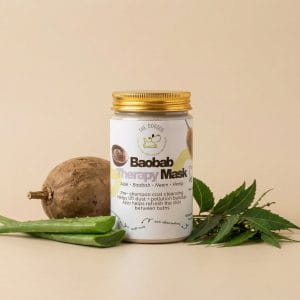
Baobab Therapy Mask
Hemp Seed Oil For Dogs
Field Note 07 · The Breed
Feed the breed in front of you.
What nine of India’s most common breeds actually need in the bowl.
In short Labs and Rotties carry joints that need glucosamine early (chicken feet). GSDs need easily-digestible protein and omega-3 for the coat. Goldens are cancer- and allergy-prone: antioxidants and hemp. Indies are hardy but often start with poor nutrition. Match the bowl to the breed’s known weak points.
The big joints: Lab, Rottweiler
Both carry hip and joint stress (and Labs trend to obesity). Start joint support early with dehydrated chicken feet for natural glucosamine, and watch portions. A Lab’s food drive makes peanut butter great for training.
Coat & gut: GSD, Golden, Husky
GSDs have sensitive stomachs (and EPI risk): keep protein easily digestible and omega-3 high for the coat. Goldens are cancer- and allergy-prone: antioxidants (baobab) and hemp seed oil. Huskies overheat here and run low on zinc, and shed heavily. Hemp helps.
Small & hardy: Pug, Shih Tzu, Beagle, Indie, Doberman
Brachycephalic Pugs and small Shih Tzus need lean bodies, small chews and baobab for skin folds. Beagles need strict portion control. Indies are hardy but often rescued with a poor nutrition history. Transition slowly. Dobermans need taurine-rich quail for heart health.
Which breeds need joint support earliest?
Large, joint-stressed breeds, Labradors and Rottweilers especially, benefit from early glucosamine (dehydrated chicken feet), often from a few years old.
My dog is an Indie: anything different?
Indies are hardy and evolved for Indian conditions, but rescues often arrive with a poor nutrition history. Transition slowly; smaller Indies do well on sardines and anchovies.
Breed-staples to start
Dehydrated Chicken Feet
Hemp Seed Oil For Dogs
Dehydrated Sardines
Field Note 08 · Hemp
The one omega-6 that fights inflammation.
Why hemp’s GLA is the rare omega-6 that cools the itch instead of feeding it.
In short Hemp seed oil carries GLA, a rare anti-inflammatory omega-6 that converts to prostaglandin E1 and calms inflammation directly, bypassing the enzyme step atopic dogs are missing. No fishy smell, no CBD, no THC. Give it 4–6 weeks; dose by weight.
Not all omega-6 inflames
Most omega-6 is the inflammatory side of the fat equation: the imbalance behind the itch. GLA is the exception: it converts to prostaglandin E1, which directly reduces inflammation and keeps the skin barrier moist.
Why it works when other oils don’t
Allergy-prone (atopic) dogs are missing an enzyme step that would make their own anti-inflammatory fats. Hemp’s GLA bypasses that step. So it acts like direct medicine for dry, cracking paws and dandruff, not just a coat-shine oil.
The dose, and the calm
By weight: 1.5ml/day for 5–10kg, 2ml for 10–20kg, 3ml for 20kg+. Give it with a meal that has some fat, and allow 4–6 weeks for the coat to turn over. Bonus: a mild calming effect, so start it about a week before Diwali. It works through fat, not cannabinoids: no CBD, no THC.
Does hemp oil contain CBD, and is it safe?
No CBD and no THC. Hemp seed oil is a food-grade oil that works through GLA, an anti-inflammatory fat. Completely legal and safe.
How much hemp oil should I give?
By weight: about 1.5ml/day for 5–10kg, 2ml for 10–20kg, 3ml for 20kg+. Give it with a fatty meal, and allow 4–6 weeks to see the coat change.
Hemp for the bowl
Hemp Seed Oil For Dogs
Hemp Meal Balancer
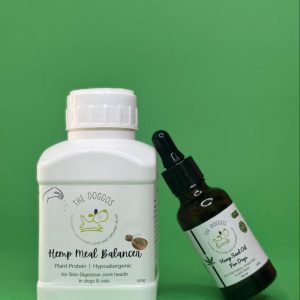
Hemp Hamper
Field Note 09 · Baobab
The oil that sinks in, instead of sitting on top.
Why baobab absorbs into the skin barrier where coconut and olive oil just clog the surface.
In short Baobab carries 5–6× the vitamin C of oranges, collagen fuel for skin and ligaments. Its oil is rich in palmitic and oleic acid, so it absorbs into the skin barrier instead of sitting on top like coconut or olive. A skin tool, inside and out.
Inside: collagen fuel
Baobab has 5–6 times more vitamin C than oranges: the raw material the body uses to build collagen, for stronger ligaments and more elastic skin.
Outside: it actually absorbs
Coconut and olive oil mostly sit on the surface and can clog pores. Baobab oil is high in palmitic and oleic acid, so it sinks into the epidermis and mimics the skin’s own lipid barrier, which is why it works on dry, cracked noses and paws rather than just coating them.
What it has cleared
On real dogs: hot spots dried in 24 hours, a cracked hyperkeratotic nose in 2 weeks, alopecia reversed in 2 months, a fungal infection cleared in 90 days. The therapy mask (neem, aloe, Dead Sea clay and rose) is a pre-shampoo or between-bath reset.
Why baobab oil over coconut oil?
Coconut and olive oil mostly sit on the surface and can clog pores. Baobab’s palmitic and oleic acid let it absorb into the skin barrier itself. So it repairs dry, cracked skin instead of just coating it.
What can baobab help with?
Dry, cracked noses and paws, hot spots, dull coats and skin resilience: inside via vitamin C for collagen, outside via an oil that actually penetrates.
The baobab kit
Baobab Oil For Dogs
Baobab Therapy Mask
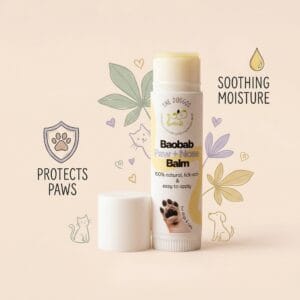
Baobab Paw + Nose Balm
Field Note 10 · Protein
Rotate the protein. It’s not just variety.
Mutton for recovery, quail for allergies, small fish for the brain. Each meat does a different job.
In short Rotating proteins isn’t about boredom. Each does a specific job. Mutton is the recovery meat (3× the iron of chicken). Quail is the hypoallergenic reset. Small fish carry the DHA that builds brain and calms skin. Match the meat to the need.
Mutton: the recovery meat
Goat has 3× the iron of chicken (critical for Tick Fever recovery) and 4× the zinc for skin and immunity. It’s a “warming” protein for seniors and winter, and many chicken-allergic dogs do fine on it. A different protein structure.
Quail: the hypoallergenic reset
A novel protein most dogs have never eaten, so it’s the top pick for elimination diets. It’s rich in manganese for ligaments (helps prevent cruciate tears), and the feather keratin acts as a natural “colon sweep.”
Fish: eat low on the food chain
Skip the big predators (tuna, king mackerel) that accumulate mercury. Small, short-lived sardines and anchovies are clean and packed with DHA: the building block of brain tissue that makes puppies easier to train and helps seniors dodge cognitive decline.
My dog is allergic to chicken. What protein?
Quail is the top choice, a novel protein the immune system hasn’t reacted to, ideal for elimination diets. Many chicken-allergic dogs also do well on goat (mutton), which has a different protein structure.
Which fish is safe for dogs?
Small, short-lived fish: sardines and anchovies. Avoid apex predators like tuna, king mackerel and shark, which bio-accumulate mercury.
Rotate the bowl
Dehydrated Whole Quail
Dehydrated Sardines
Field Note 11 · Life Stage
Feed the age, not just the dog.
Puppy, adult, senior: the bowl should change three times over a lifetime.
In short A puppy eats 8–10% of its body weight and needs DHA for its brain; an adult settles to 2–3% with rotation and gut focus; a senior needs more protein, not less, plus omega-3 and joint support. Same dog, three different bowls.
Puppies: build the brain
Feed 8–10% of body weight a day early on, dropping toward 4–6% by 6–12 months, and step meals from four a day down to two by a year. DHA (from anchovies or sardines) is critical for brain development. High-DHA puppies are measurably easier to train.
Adults: protect the gut
Settle to 2–3% of ideal body weight, rotate proteins to prevent allergies, and treat the gut as the control room: 90% of serotonin and 70% of immune tissue live there. Aim for a body where you can feel the ribs with light pressure.
Seniors: more protein, not less
The old advice to cut protein is wrong; seniors need more to hold muscle. Add omega-3 for brain and joints, glucosamine (chicken feet), softer textures, and smaller, more frequent meals. Watch for the DISHAA signs of cognitive decline.
How much should I feed a puppy?
About 8–10% of body weight a day from 8–16 weeks, tapering toward 4–6% by 6–12 months: four meals early, down to two by a year. Include DHA (sardines or anchovies) for the brain.
Should I reduce protein for my senior dog?
No. That’s outdated. Seniors need more protein to hold muscle, plus extra omega-3 for joints and brain, and joint support like chicken feet.
By life stage
Dehydrated Sardines
Dehydrated Chicken Feet
Hemp Seed Oil For Dogs
Field Note 12 · Gut-Brain
The mood might start in the gut, not the head.
Over 90% of serotonin is made in the gut. So behaviour and coat both trace back to the microbiome.
In short More than 90% of a dog’s serotonin is made in the gut, so a stressed microbiome shows up as anxiety, reactivity, a dull coat and recurring infections. Antibiotics wipe it out. Always rebuild after with fermented foods, prebiotic fibre and probiotics.
The gut makes the mood
Over 90% of serotonin is produced in the gut, not the brain. So when the gut’s bacterial balance is off, it surfaces as anxiety, reactivity and compulsive behaviour, alongside the poor coat and recurring infections.
Antibiotics are a reset button: the hard way
A course of antibiotics is a nuclear weapon to the microbiome: it clears the good with the bad. Always rebuild afterward with probiotics, or the gut (and the behaviour and coat that ride on it) stays fragile. Kibble doesn’t help; it lacks the fibre diversity good bacteria feed on.
The rebuild protocol
Remove inflammatory, high-carb food, add fermented foods (curd, kefir), add prebiotic fibre (pumpkin), use bone broth to seal the gut lining, then a quality probiotic. Skin, stools and temperament usually move together.
Can food really affect my dog’s behaviour?
Yes. Over 90% of serotonin is made in the gut, so an unbalanced microbiome commonly shows up as anxiety, reactivity and a dull coat. Fixing the gut often settles the mood.
My dog just finished antibiotics: what now?
Rebuild the microbiome: antibiotics clear the good bacteria with the bad. Add fermented foods (curd, kefir), prebiotic fibre (pumpkin) and a quality probiotic.
Rebuild the gut
Dehydrated Whole Quail