
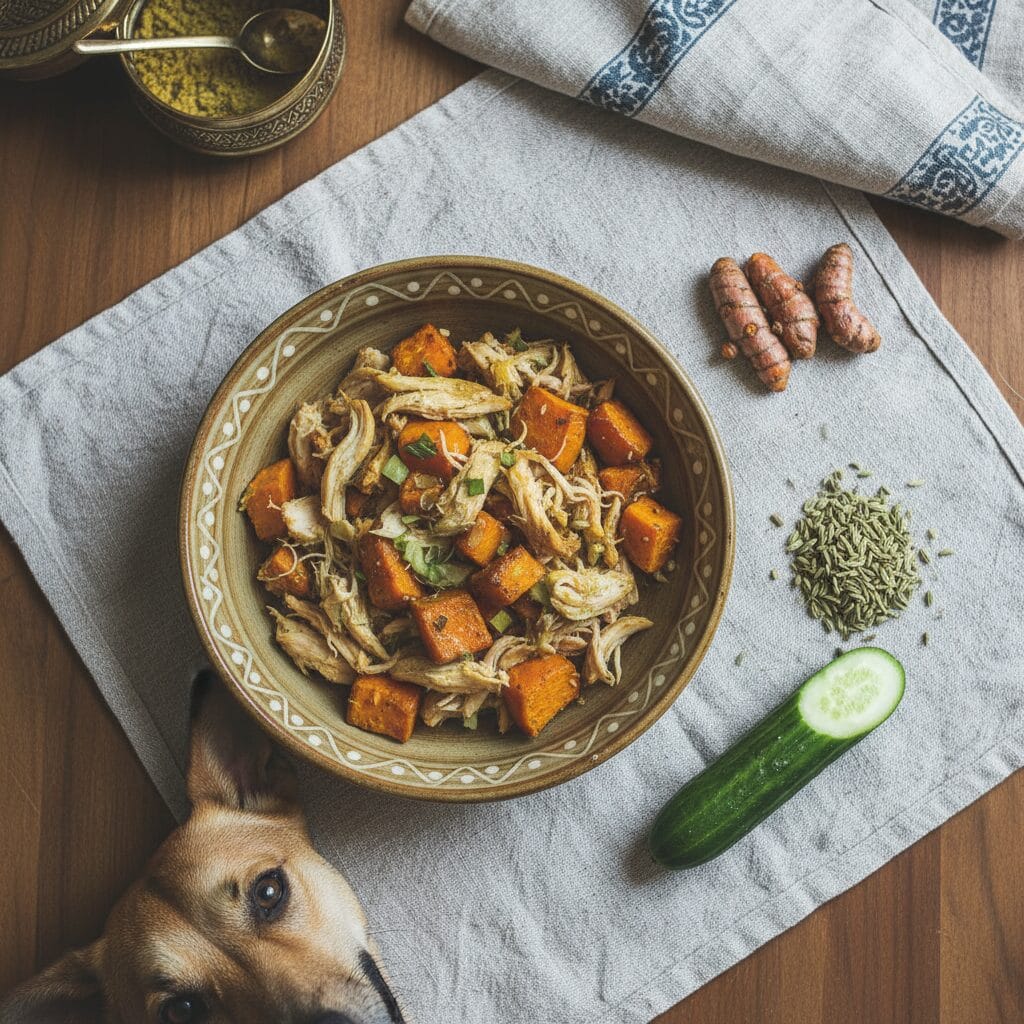
As Indian pet parents, we’re always looking for healthy, natural snacks to share with our furry family members. With the summer heat often intense across cities like Delhi and Chennai, a crisp, hydrating vegetable like cucumber often comes to mind. But can cucumber for dogs in India be a safe and beneficial addition to their diet?
Quick Answer: Yes, Cucumber is Safe for Dogs in India
Yes, dogs can safely eat plain cucumber in India. It’s a low-calorie, hydrating, and nutrient-rich snack packed with vitamins K, C, and B1, along with potassium and copper. Cucumber is an excellent choice for overweight dogs or those needing extra hydration, especially during the hot Indian summer months, as it’s over 95% water.
Cucumber for Dogs at a Glance
| Safe? | Yes: plain, raw cucumber (kheera), English or desi |
|---|---|
| Calories | About 15 kcal per 100 g; roughly 95% water |
| How much | Small dogs: 1 to 2 slices. Medium: 3 to 5 slices. Large: up to half a cucumber. |
| How often | A few times a week; treats stay under 10% of daily food |
| Serve | Washed and sliced thin; peel waxed or very bitter-skinned ones |
| Never | Raita with salt or onion, kachumber with chaat masala, or achaar |
The Goodness of Cucumber for Dogs in India
Cucumber, known as kheera in many parts of India, is more than just a watery vegetable. It offers several benefits that make it a smart choice for your dog’s diet, especially when offered as a treat.
Packed with Hydration and Nutrients
With over 95% water content, cucumber is a fantastic way to boost your dog’s hydration, which is crucial in India’s humid and hot climate. Beyond water, cucumbers contain:
- Vitamin K: Essential for blood clotting and bone health.
- Vitamin C: An antioxidant that supports the immune system.
- B Vitamins: For energy metabolism.
- Potassium: Important for nerve and muscle function.
- Copper: Contributes to healthy bones, connective tissue, and red blood cell formation.
- Manganese: Crucial for bone health and metabolism.
Compared to processed commercial treats loaded with sugar and artificial ingredients, cucumber is a natural, guilt-free option. It provides a satisfying crunch without the empty calories.
The “Cooling” Effect: An Indian Perspective
In Ayurvedic principles, cucumber is often considered a ‘cooling’ food, helping to balance body heat. While dogs don’t experience ‘heat’ in the same way humans do (what many Indians attribute to chicken ‘heat’ is actually Omega-6 inflammation), the hydrating and refreshing properties of cucumber can certainly provide comfort during a sweltering Mumbai afternoon or a dry Delhi summer.
For dogs prone to seasonal skin issues or general discomfort in the heat, offering a cooling, hydrating snack like cucumber can be part of an overall strategy to keep them comfortable.
How to Serve Cucumber Safely to Your Dog in India
While cucumber is generally safe, proper preparation and portion control are key to ensuring it’s a beneficial snack for your dog.
Preparation is Key
- Wash Thoroughly: Always wash the cucumber thoroughly under running water to remove any pesticides or dirt.
- Peel (Optional but Recommended): The skin can be tough and might contain more pesticide residue. Peeling reduces this risk and makes it easier for some dogs to digest.
- Seeds: cucumber seeds are not toxic and most dogs digest them fine. For toy breeds or sensitive stomachs, scoop them out to keep the portion lighter.
- Slice into Manageable Pieces: Cut the peeled, deseeded cucumber into small, bite-sized pieces or thin slices. This prevents choking, particularly for enthusiastic eaters or smaller breeds. Avoid large chunks that could be a hazard.
Portion Control Matters
Even healthy treats should be given in moderation. Treats should constitute no more than 10% of your dog’s daily caloric intake.
- Small Dogs (e.g., Pomeranian, Pug): 1-2 small slices per day.
- Medium Dogs (e.g., Beagle, Indie): 3-5 slices per day.
- Large Dogs (e.g., Labrador, German Shepherd): Up to half a cucumber, sliced, per day.
Always introduce new foods slowly. Start with a tiny piece and observe your dog for any signs of digestive upset like diarrhoea or gas. If all goes well, you can gradually increase the quantity over a few days.
Taste-Test First: Why a Bitter Cucumber Goes in the Bin
An unusually bitter cucumber contains high levels of cucurbitacins, the same compounds behind the bitter bottle-gourd (lauki) juice poisonings reported in India. They cause vomiting and diarrhoea in people and animals. Before you share, taste a thin sliver yourself. If it is noticeably bitter, throw the whole cucumber away. The same rule applies to lauki for dogs.
Common Mistakes When Feeding Cucumber to Dogs
Many well-meaning pet parents make simple errors that can turn a healthy snack into a problem. Avoid these common pitfalls:
- Feeding Whole or Large Chunks: This is a major choking hazard, especially for fast eaters. Always slice cucumber into small, appropriate pieces.
- Adding Seasonings: Never give your dog cucumber with salt, pepper, chilli powder, or any other spices. These can be harmful and upset their digestive system.
- Cucumber Pickles: Avoid feeding pickled cucumber. Pickles are high in salt, vinegar, and often contain spices like garlic or onion, which are toxic to dogs.
- Overfeeding: Too much of a good thing can still cause an upset stomach, gas, or diarrhoea due to the high fibre and water content. Stick to recommended portion sizes.
- Ignoring Allergies: While rare, some dogs can be allergic to cucumber. Watch for signs like itching, facial swelling, or digestive upset after initial introduction.
FAQ: Cucumber for Dogs in India
Here are some common questions Indian pet parents ask about feeding cucumber to their dogs?
Q: Can puppies eat cucumber?
A: Yes, puppies can eat small, peeled, and deseeded pieces of cucumber. Start with very tiny amounts to ensure no digestive upset. Cucumber can be a refreshing and safe teething snack when chilled.
Q: Is cucumber good for overweight dogs?
A: Absolutely! Cucumber is extremely low in calories, making it an ideal snack for overweight or obese dogs. It provides a satisfying crunch and helps them feel full without adding extra pounds, especially when replacing higher-calorie treats.
Q: Can cucumber help my dog with bad breath?
A: While cucumber itself doesn’t cure bad breath, its high water content can help wash away some food particles and bacteria in the mouth, offering a temporary improvement. For persistent bad breath, consult your vet to rule out dental issues.
Q: Can dogs eat cucumber skin and seeds?
A: While not toxic, it’s generally recommended to peel cucumber skin, as it can be tough to digest and may carry pesticide residues. Removing seeds, especially for smaller dogs, can prevent potential digestive upset if consumed in large quantities.
Q: How much cucumber can I give my dog daily?
A: Treats, including cucumber, should make up no more than 10% of your dog’s daily caloric intake. For small dogs, 1-2 slices; for medium dogs, 3-5 slices; and for large dogs, up to half a cucumber, sliced, is generally a safe guideline. Always introduce slowly.
Cucumber is a snack, not a meal: it adds water and crunch but almost no protein. Build your dog’s bowl around species-appropriate protein first. Our guide on what to feed your dog in India covers the basics.
Keep reading
Can dogs eat cucumber raita?
Not the way most homes make it. Raita usually has salt, roasted jeera, chilli and sometimes onion or garlic. A spoon of plain, unsalted curd mixed with grated cucumber is fine for most adult dogs.
Can dogs eat frozen cucumber?
Yes. Chilled sticks or small frozen pieces make a good summer chew and can soothe teething puppies. Supervise, and cut pieces to a size your dog cannot gulp whole.
Related Reading
- Shop the anchor product: Dehydrated Anchovies in the catalog.
- Read more: Indian dog feeding guide.
- About the author: Mahiv Chhabra, certified canine nutritionist.