
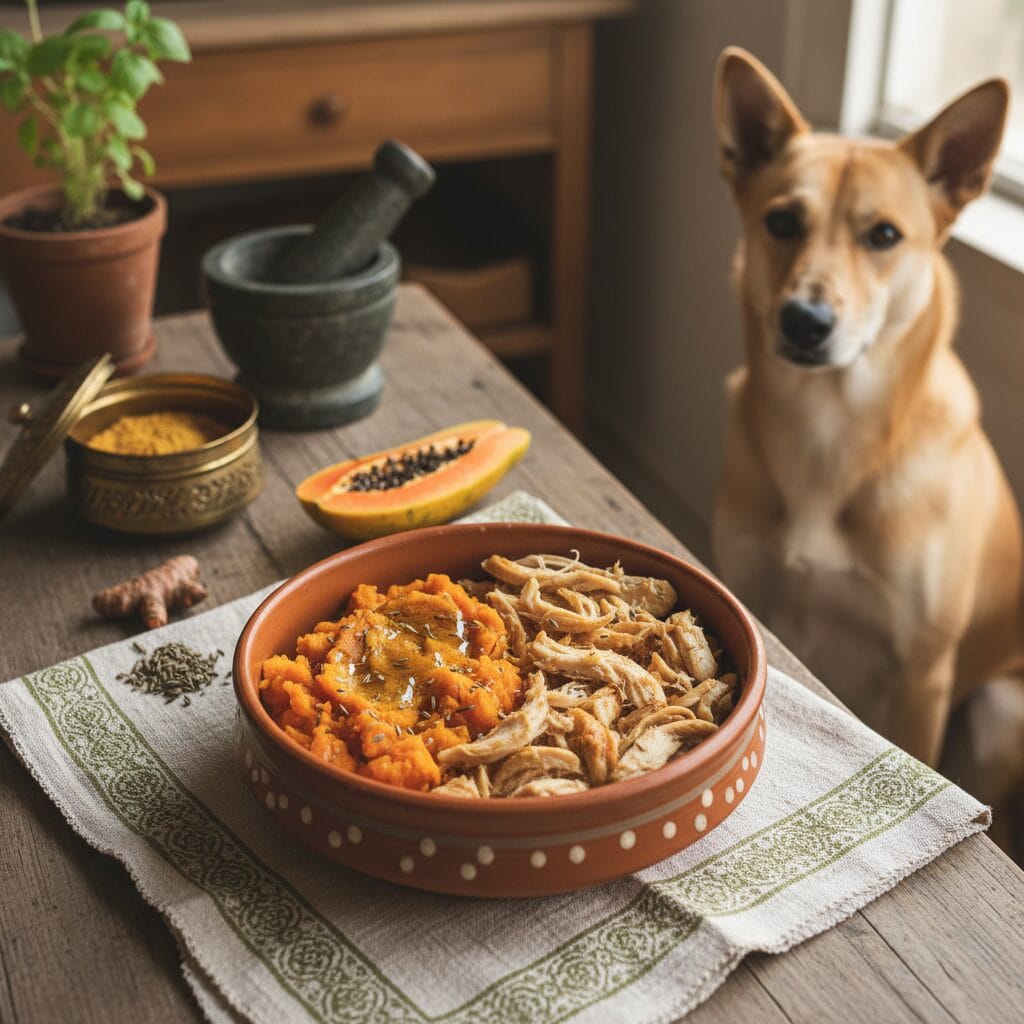
Walk through any Indian market, from Crawford to KR Market, and you will see piles of ripe, golden papaya. It is a staple in our diets, but for our dogs? The question of whether our canine companions can enjoy the same bounty often comes up. As a canine nutritionist, I can tell you that papaya is not only safe for dogs in India but also offers remarkable papaya benefits for dog digestion in India.
Quick Answer: Papaya Benefits for Dog Digestion in India
Yes, dogs can safely eat papaya in India. This tropical fruit is packed with digestive enzymes like papain and chymopapain, which aid in breaking down proteins and improving nutrient absorption. Its high fibre content also supports healthy bowel movements, making papaya an excellent natural remedy for mild constipation and promoting overall gut health in dogs.
The Tropical Truth: Papaya Benefits for Dog Digestion in India
Papaya is more than just a sweet treat. For our dogs, it is a powerhouse of digestive support and vital nutrients. Understanding what makes it so beneficial can help you integrate it wisely into your dog’s diet.
Why Papaya Stands Out for Digestion
The primary reason papaya is celebrated for its digestive properties lies in its unique enzymatic composition:
- Papain and Chymopapain: These proteolytic enzymes are fantastic for breaking down proteins. For dogs, whose diets are primarily protein-based, these enzymes can significantly ease the workload on their digestive system, leading to better nutrient absorption and reduced indigestion. This is particularly helpful for dogs on home-cooked diets where enzymatic activity might be lower than raw, or for older dogs whose natural enzyme production may be declining.
- Fibre Power: Papaya is a good source of dietary fibre. Both soluble and insoluble fibres work together to regulate bowel movements. Soluble fibre helps feed beneficial gut bacteria and can firm up loose stools, while insoluble fibre adds bulk, which is excellent for dogs prone to constipation. This is a gentle, natural way to keep your dog’s gut moving smoothly.
- Water Content: At about 88% water, papaya also contributes to your dog’s hydration, which is crucial for healthy digestion and overall well-being, especially in India’s often hot climate.
Beyond Digestion: Other Nutritional Perks
While digestion is a key benefit, papaya offers more:
- Vitamins A, C, E, and K: These are powerful antioxidants that support immune function, skin and coat health, and vision. Vitamin C, especially, is a strong immune booster, and while dogs produce their own, supplemental sources are always welcome, particularly during periods of stress or illness.
- Folate and Potassium: These minerals are essential for cell function, nerve health, and maintaining proper fluid balance.
- Antioxidants: Beyond vitamins, papaya contains other antioxidants like beta-carotene and lycopene, which combat free radicals and reduce oxidative stress, contributing to long-term health and disease prevention.
How to Safely Feed Papaya to Your Dog in India
Introducing any new food to your dog’s diet requires a thoughtful approach. Papaya is no exception.
Preparation is Key
Before offering papaya to your dog, remember these vital steps:
- Remove Skin: The skin of papaya can be tough to digest and may contain traces of pesticides if not organic. Always peel it thoroughly.
- Deseed Completely: Papaya seeds contain trace amounts of cyanide and are not safe for dogs. They can also be a choking hazard. Scoop out all the black seeds before serving.
- Cut into Small Pieces: Especially for smaller breeds or enthusiastic eaters, chop the papaya flesh into bite-sized chunks to prevent choking.
Portion Control and Frequency
Moderation is crucial. Too much papaya can lead to an upset stomach, gas, or diarrhoea due to its high fibre content.
- Small Dogs (e.g., Pug, Indie pup): 1-2 small cubes (about 1 teaspoon) a few times a week.
- Medium Dogs (e.g., Beagle, smaller Labs): 3-4 small cubes (about 1-2 tablespoons) a few times a week.
- Large Dogs (e.g., German Shepherd, bigger Labs): 5-6 small cubes (about 2-3 tablespoons) a few times a week.
Always start with a tiny amount and observe your dog for any adverse reactions. If their stool remains normal and they show no signs of discomfort, you can gradually increase the quantity over a week or two.
In my practice, I often recommend papaya as a natural digestive aid for dogs with mild, intermittent constipation. I recall a senior Indie from Chennai struggling with hard stools. Adding 1 tablespoon of deseeded, peeled papaya to her evening meal, three times a week, combined with adequate water intake, brought relief within a week. It’s about finding that natural balance without relying on harsh laxatives. For complex issues, a holistic approach is always best.
Optimising Gut Health with The Doggos Hemp Meal Balancer
At The Doggos, our philosophy is about providing species-appropriate, real food. While papaya is a great addition, it is not a complete meal. It works best as a supplement to a balanced, meat-rich diet. We advocate for the ‘Cook the Meal, Dehydrate the Bone’ method. This ensures hygiene and safety, especially with Indian wet market conditions. Our approach focuses on gently cooking meat to kill pathogens, then deboning it completely. For calcium and phosphorus balance, we use dehydrated bones and chews.
A well-balanced diet also considers the Omega-6:3 ratio. Commercial Indian chicken often has an inflammatory Omega-6 profile. Adding Omega-3s from sources like Dehydrated Anchovies or Hemp Seed Oil is essential to counteract this and prevent skin issues or inflammation, often mistaken for ‘heat’ or allergies.
This is where our Hemp Meal Balancer shines. It’s designed to fix the amino acid and fat profile of typical chicken-rice bowls, turning a simple survival meal into a thriving one. The prebiotic fibre in the Hemp Meal Balancer works synergistically with papaya’s enzymes, promoting a robust gut microbiome. It ensures your dog is getting a complete spectrum of nutrients, supporting healthy digestion and overall vitality, making it an ideal daily addition for complete gut support.
Common Mistakes Indian Pet Parents Make with Papaya
Even with good intentions, some common pitfalls can turn a beneficial fruit into a digestive upset:
- Feeding Seeds or Skin: As mentioned, papaya seeds contain cyanide and are a choking hazard. The skin is indigestible and can cause stomach upset. Always peel and deseed thoroughly.
- Overfeeding: More is not always better. The high fibre content, while good in moderation, can cause diarrhoea, gas, or stomach cramps if given in large quantities. Stick to the recommended portion sizes.
- Using Unripe Papaya: Unripe papaya contains a higher concentration of latex, which can irritate a dog’s mouth and digestive tract. Always choose ripe, soft papaya.
- Ignoring Individual Sensitivities: Just like humans, some dogs might have a sensitivity to papaya, even when prepared correctly. Always introduce it slowly and observe your dog for any signs of discomfort like vomiting, diarrhoea, or lethargy.
FAQ: Papaya Benefits for Dog Digestion in India
Can puppies eat papaya?
Yes, puppies can eat small, deseeded, and peeled pieces of ripe papaya, but in very tiny amounts. Introduce it slowly (a pea-sized piece) to ensure they do not have any adverse reactions. Papain can aid their developing digestive systems.
Is papaya good for dogs with constipation?
Absolutely. Papaya’s high fibre and water content make it an excellent natural remedy for mild constipation in dogs. The enzymes also help break down food, easing digestion. Always ensure adequate hydration alongside papaya for best results.
How often can I give my dog papaya?
Papaya can be given to your dog a few times a week. For most dogs, 2-3 times a week is sufficient to reap the digestive benefits without causing any gastrointestinal upset due to excessive fibre.
Can papaya help with anal gland issues?
While papaya directly helps digestion, its fibre content can contribute to firmer, bulkier stools. This can naturally aid in expressing anal glands during defecation, potentially reducing issues for dogs prone to impacted anal glands. However, it’s a supportive measure, not a cure for chronic problems.
Are there any side effects of feeding papaya to dogs?
When fed in moderation and correctly prepared (peeled, deseeded, ripe), side effects are rare. However, overfeeding can lead to diarrhoea, gas, or stomach upset. Some individual dogs might also have sensitivities or allergies, so always introduce new foods slowly.
Boost Your Dog’s Digestive Health Holistically
Integrating natural elements like papaya into your dog’s diet offers wonderful digestive support. But true gut health comes from a balanced, species-appropriate diet. Our ‘Cook the Meal, Dehydrate the Bone’ philosophy, combined with essential supplements, provides the complete picture.
Consider adding our Hemp Meal Balancer to your dog’s home-cooked meals. It’s a simple, effective way to ensure they receive a full spectrum of amino acids, healthy fats, and prebiotic fibre, complementing the enzymatic benefits of papaya and fostering a truly thriving digestive system. For more ways to enhance your dog’s diet, explore our range of natural dog treats and hemp supplements for dogs.