That irresistible aroma of a freshly cooked Indian curry wafting through your home? Pure bliss for you, yes. But for your dog? It’s a silent danger zone. I see countless well-meaning Indian pet parents unknowingly offering spoonfuls of curry, not realising the hidden toxicity of common ingredients like onion and garlic.
Quick Answer: Can Dogs Eat Indian Curry?
No. Dogs cannot safely eat Indian curry. Most Indian curries contain onion and garlic. These are highly toxic to dogs, causing red blood cell damage and anaemia. They also often include excessive oil, salt, and spices. This can lead to digestive upset, pancreatitis, or long-term health issues. Always avoid feeding your dog curry. Instead, opt for a balanced, species-appropriate diet. Perhaps enhance it with a supplement like The Doggos Hemp Meal Balancer.
The Spice of Life, or a Silent Danger? Understanding Indian Curry for Dogs
Indian cuisine is a vibrant tapestry of flavours. It’s often built on a base of onion, garlic, ginger, and a medley of spices. These are culinary staples for us. But they pose significant health risks to our canine companions. Dogs are biologically carnivores. Their digestive systems are simply not equipped to handle the complex, often irritating, components of our curries.
Think about a typical chicken curry from your local kitchen. It’s likely to contain finely chopped or pureed onion and garlic. There’s rich ghee or oil, salt, and spices like red chilli powder, garam masala, and turmeric. Each of these, in varying degrees, can be problematic for a dog.
Why Onion and Garlic Are Toxic to Dogs
The primary culprits in Indian curry are **onion** and **garlic**. Both belong to the Allium family. They contain thiosulphates and N-propyl disulfide. These compounds cause oxidative damage to a dog’s red blood cells. This leads to a condition called haemolytic anaemia. Their red blood cells burst. This reduces their ability to carry oxygen throughout the body. Symptoms can range from lethargy and weakness to pale gums, rapid breathing, and even collapse.
The toxicity isn’t dose-dependent in a simple linear way. A large amount consumed at once is dangerous. But even small, regular exposures can accumulate and cause chronic issues. This is particularly concerning because onions and garlic are so ubiquitous in Indian cooking. Whether it’s raw, cooked, powdered, or dehydrated, the toxic compounds remain active.
Toxic Dose of Onion and Garlic Explained
While any amount should be avoided, it’s important to understand the general toxicity thresholds. For onions, approximately **15-30 grams per kilogram of body weight** can cause toxic effects. For garlic, it’s even lower, around **5 grams per kilogram of body weight**. This means a medium-sized onion (around 150g) could be toxic for a 10kg dog. Just a couple of garlic cloves could be dangerous for a small breed.
| Dog Weight (Approx.) | Onion (Approx. Toxic Amount) | Garlic (Approx. Toxic Amount) |
|---|---|---|
| 5 kg (e.g., Pug) | 75g – 150g (1 small onion) | 25g (5-6 cloves) |
| 15 kg (e.g., Indie) | 225g – 450g (1-2 medium onions) | 75g (15-20 cloves) |
| 30 kg (e.g., Labrador) | 450g – 900g (2-4 medium onions) | 150g (30-40 cloves) |
Remember, these are general guidelines. Some dogs are more sensitive than others. The effects can be cumulative. It’s always safest to assume **no amount is safe**.
Beyond Onion and Garlic: Other Problematic Ingredients in Indian Curry
Even if you were to somehow remove all onion and garlic, Indian curries still present other challenges for dogs:
- Excessive Oil/Ghee: The rich fat content can trigger pancreatitis. This is a painful and potentially life-threatening inflammation of the pancreas. Symptoms include vomiting, diarrhoea, abdominal pain, and lethargy.
- High Salt Content: Too much salt can lead to sodium ion poisoning. This causes vomiting, diarrhoea, tremors, seizures, and even death.
- Spices (Chillies, Garam Masala, etc.): While not necessarily toxic in small amounts, spices like red chilli powder can cause severe gastrointestinal upset, irritation, and discomfort for dogs. What’s ‘mild’ for us can be excruciating for them.
- Artificial Colours and Preservatives: Some commercially prepared curries or spice mixes might contain additives that are best avoided in a dog’s diet.
The ‘Heat’ Myth and Omega-6 Imbalance
Many Indian pet parents observe that feeding chicken or certain foods causes ‘heat’ in their dogs. This leads to rashes or itching. While traditional beliefs link this to the food’s thermal properties, as a canine nutritionist, I explain it differently. What’s often perceived as ‘heat’ is actually an inflammatory response. This is frequently driven by an **Omega-6:3 imbalance**.
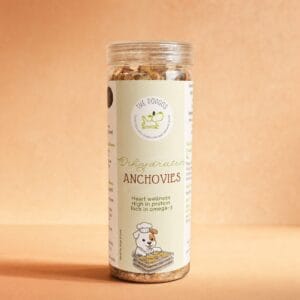
Commercial Indian chicken, often fed corn and soy, has an Omega-6:3 ratio as high as 20:1 or even 30:1. This floods the body with inflammatory markers. Adding extra fats from curry only exacerbates this. The solution isn’t to stop feeding protein, but to balance the fats. This is where high-quality Omega-3 sources like Dehydrated Anchovies or anti-inflammatory Omega-6 sources like Hemp Seed Oil come in.
Mahiv’s Take: My Experience with Desi Dogs and Kitchen Scraps
I once had a client in Bengaluru whose Indie dog, Rani, suffered from chronic itching and dull coat. The owner was lovingly feeding her daily portions of homemade chicken curry (minus the chilli, but with plenty of onion and garlic paste). After explaining the silent damage of the alliums and the inflammatory impact of unbalanced fats, we transitioned Rani to a simple cooked chicken and pumpkin diet, balanced with The Doggos Hemp Meal Balancer. Within just four weeks, Rani’s itching significantly reduced, and her coat regained its shine. It’s a common story: what we think is healthy for us isn’t always healthy for them.
What Can Your Dog Eat Instead of Indian Curry? Safe Home-Cooked Alternatives
The good news is that you can still prepare delicious, home-cooked meals for your dog. Do it without resorting to dangerous curry ingredients. The key is simplicity and understanding canine nutritional needs.
The Doggos Method: Cook the Meal, Dehydrate the Bone
Our philosophy is simple: **Cook the meat, dehydrate the bone.** This ensures hygiene. It eliminates splintering risks from cooked bones. And it provides vital calcium.
- Protein Base: Gently pressure-cook boneless chicken, goat, or fish. Ensure it’s plain, without any onion, garlic, salt, or spices. You can use turmeric in the cooking water for its anti-inflammatory benefits.
- Vegetables: Add dog-safe vegetables like red pumpkin, green beans, or carrots. Mash them into the meal after cooking.
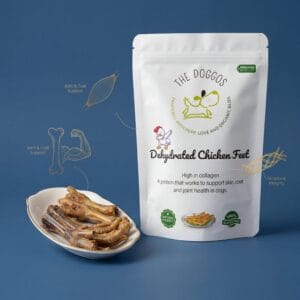
- Calcium Source: Since you’re deboning cooked meat, you must add a calcium source. Dehydrated Chicken Feet or finely ground eggshell powder are excellent options.
- Fat Balance: Crucially, balance the Omega-6 fats in commercial chicken with Omega-3s from Dehydrated Anchovies or a plant-based source like Hemp Seed Oil.
For detailed, safe recipes, refer to our guide on homemade dog food recipes in India.
Balancing Your Dog’s Desi Meal with Hemp Meal Balancer
Even with carefully prepared home-cooked meals, achieving the perfect balance of amino acids, vitamins, and minerals can be a challenge. This is where The Doggos Hemp Meal Balancer becomes an invaluable addition.
The Hemp Meal Balancer is specifically formulated to turn a simple home-cooked chicken-and-rice bowl from a ‘survival meal’ into a ‘thriving meal’. It provides a complete amino acid profile. It balances essential fatty acids. And it adds prebiotic fibre to support gut health. It’s an easy way to ensure your dog gets all the necessary nutrients. No more relying on guesswork or risking harmful ingredients.
Common Mistakes Indian Dog Parents Make with Curry
- Assuming small amounts are safe: The cumulative effect of onion and garlic can be just as dangerous as a single large dose.
- Believing ‘no chilli’ makes it safe: Onion and garlic are the main culprits, not just the spice.
- Feeding ‘gravy only’: The toxic compounds leach into the gravy, making it just as dangerous as the solid components.
- Ignoring the ‘heat’ myth: Misinterpreting inflammatory responses as simple thermal ‘heat’ prevents addressing the root cause, often an Omega-6 imbalance.
- Thinking dogs can just ‘handle it’: While a dog’s stomach pH is very acidic, it doesn’t make them immune to the cellular damage caused by onion and garlic toxicity.
Frequently Asked Questions About Dogs and Indian Curry
Can dogs eat turmeric in Indian curry?
Turmeric itself is generally safe and beneficial for dogs. It has anti-inflammatory properties. However, it’s usually mixed with other toxic ingredients like onion and garlic in Indian curry. This makes the curry unsafe. If you want to give your dog turmeric, do so in small, plain doses. Mix it with a safe food, not as part of a curry.
What are the symptoms of onion and garlic poisoning in dogs?
Symptoms of onion and garlic poisoning can include lethargy, weakness, pale gums, vomiting, diarrhoea, loss of appetite, rapid breathing, and dark urine. These symptoms may not appear immediately. They can develop a few days after ingestion. If you suspect your dog has eaten onion or garlic, contact your vet immediately.
Is cooked onion or garlic less toxic for dogs?
No, cooking does not significantly reduce the toxicity of onion and garlic for dogs. The toxic compounds (thiosulphates and N-propyl disulfide) remain active. This is true whether they are raw, cooked, dried, or powdered. Always avoid feeding any form of onion or garlic to your dog.
Can my dog have plain cooked chicken from my curry?
Only if the chicken was cooked entirely separately and plainly. It must be without any onion, garlic, salt, oil, or spices from the curry. If it was cooked within the curry, even if you remove it, the toxic compounds will have leached into the meat, making it unsafe.
Nourish Your Desi Dog the Right Way
While the temptation to share your favourite Indian curry with your furry family member is strong, it’s a risk not worth taking. Prioritise their health. Understand what truly nourishes their carnivorous biology. Opt for simple, home-cooked meals. Always free of onion and garlic. Ensure they receive a balanced nutrient profile.
To simplify your home-cooked meals and ensure your dog gets all the essential nutrients without the guesswork, consider adding The Doggos Hemp Meal Balancer. It’s designed to provide the complete amino acid profile and healthy fats your dog needs to thrive. It makes every meal a truly nourishing one.
For more insights into optimal canine nutrition, you can learn more about my philosophy and approach.