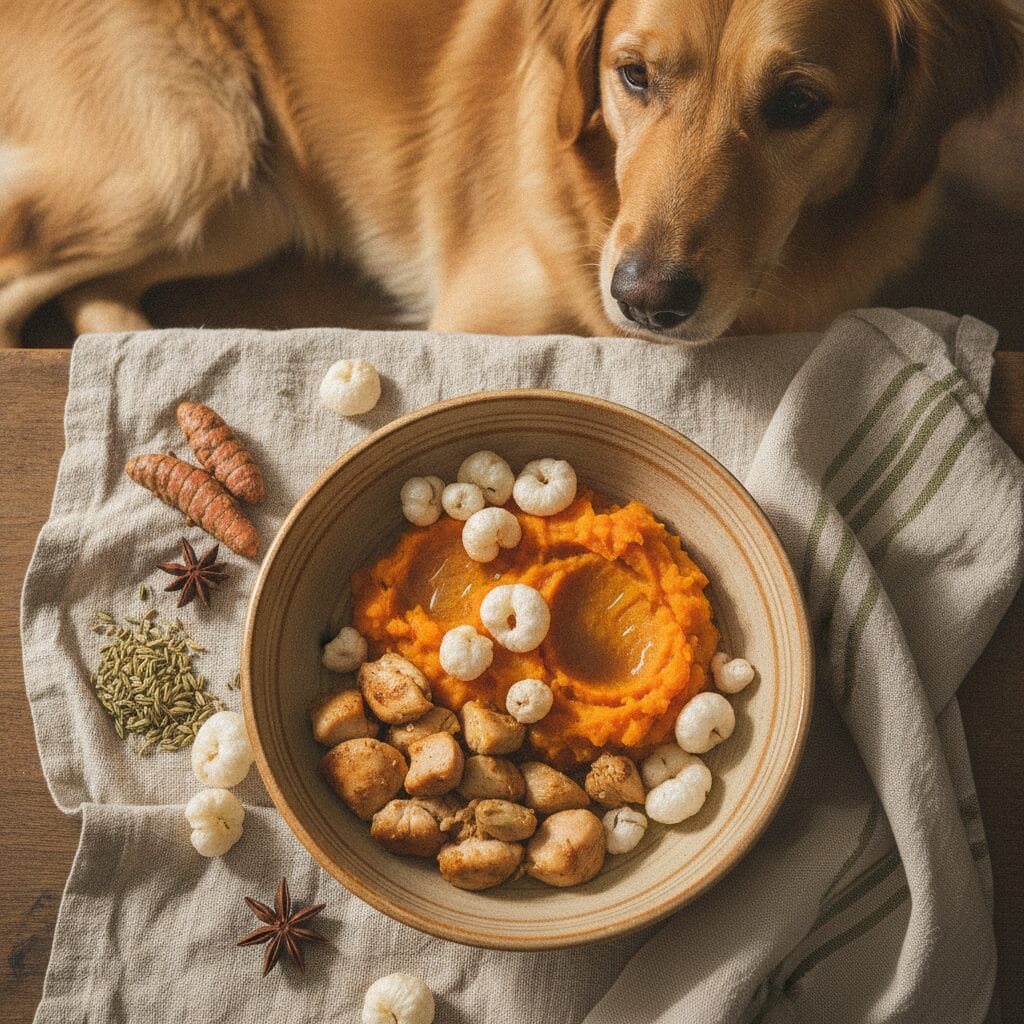
Walk into any Indian home, especially during fasting seasons or festivals, and you’ll likely find a bowl of makhana. These light, crunchy fox nuts are a staple for us, but as pet parents, we often wonder if our furry friends can share in our favourite snacks. So, can dogs eat makhana safely in India?
Quick Answer: Can Dogs Eat Makhana?
Yes, dogs can eat plain, roasted makhana in moderation as an occasional treat. They are not toxic. However, makhana offers very little nutritional benefit for a dog, a biological carnivore. It’s crucial to only offer them unsalted, unseasoned, and unflavoured makhana. For truly beneficial and species-appropriate nutrition that truly supports your dog’s health, I always recommend balancing their home-cooked meals with something like Hemp Meal Balancer.
What is Makhana and Why is it Popular for Humans?
Makhana, also known as fox nuts or lotus seeds, comes from the Euryale ferox plant. They’re cultivated extensively in states like Bihar and are renowned for their light texture and supposed health benefits for humans. They’re low in calories, gluten-free, and contain some protein and fibre, making them a popular fasting food and a ‘healthy’ alternative to fried snacks for people.
For humans, makhana is a decent plant-based snack. But a dog’s digestive system is fundamentally different. Their short intestines and highly acidic stomach (pH 1-2) are designed to process meat and bone, not plant matter. While some plant fibre is acceptable, relying on plant-heavy snacks for a carnivore is akin to giving a lion a salad. It simply doesn’t provide the building blocks they need.
Nutritional Profile of Makhana for Dogs: Benefits and Risks
Let’s break down what makhana offers, and more importantly, what it lacks, for our canine companions.
Potential Benefits (Limited)
- Low Calorie: If you’re looking for a very low-calorie treat for a dog on a diet, plain makhana can fit the bill in tiny amounts.
- Fibre: It contains some dietary fibre, which can aid digestion in small quantities.
- Minerals: Makhana has trace amounts of calcium, magnesium, and phosphorus, but not in bioavailable forms or significant quantities for a dog’s needs compared to meat and bone.
Significant Risks and Downsides
- Choking Hazard: While light, makhana can be dry and expand slightly when wet. For small dogs or enthusiastic eaters, it can pose a choking risk if given in large pieces. Crush them if offering to smaller breeds.
- Seasonings and Flavours: This is the biggest danger. Most makhana sold or prepared in India is roasted with oil, salt, spices, or even sugar.
- Salt: Excessive salt can lead to sodium ion poisoning, causing vomiting, diarrhoea, tremors, and even seizures.
- Oil: While some healthy fats are good, makhana often comes roasted in unhealthy vegetable oils, which can cause pancreatitis or gastrointestinal upset.
- Spices: Indian spices like chilli, garlic, and onion powder are toxic or highly irritating to dogs.
- Sugar: Unnecessary sugar contributes to obesity, dental problems, and can upset blood sugar levels.
- Nutritional Emptiness for a Carnivore: For a dog, makhana is largely ’empty calories’ from a carnivore’s perspective. It offers none of the essential amino acids, fatty acids (like DHA or EPA), or bioavailable calcium and phosphorus that meat and bone provide.
- Digestibility: Dogs lack the salivary amylase to break down starches effectively. While makhana is relatively simple, it still puts a strain on their pancreas compared to easily digestible meat proteins.
In my years of practice, I’ve seen countless Indian pet parents reach for convenient human snacks, thinking they’re harmless. A client in Bengaluru once fed her Indie dog heavily salted makhana during a festival, leading to severe dehydration and vomiting. It’s a classic example of how well-meaning intentions can go wrong without understanding canine biology. Always remember, what’s good for us isn’t always good for them.
The “Heat” Myth and Makhana
Many Indian pet parents worry about certain foods causing ‘heat’ in their dogs. As I’ve explained before, what we often perceive as ‘heat’ from foods like chicken or eggs is usually an inflammatory response due to an imbalance of Omega-6 and Omega-3 fats, not thermal heat. Makhana itself is unlikely to cause ‘heat’ in this sense, but if it’s prepared with inflammatory oils, it can certainly contribute to systemic inflammation. Balancing fats with beneficial Omega-3s or GLA-rich Hemp Seed Oil is always key.
Better Alternatives: Why Hemp Meal Balancer is a Superior Choice
Instead of nutritionally empty snacks, focus on providing real, species-appropriate nutrition. If you’re making home-cooked meals, especially those with chicken and rice, you’re likely missing crucial nutrients. This is where a proper balancer becomes indispensable.
Hemp Meal Balancer is specifically designed to bridge the nutritional gaps in typical home-cooked Indian dog diets. It provides a complete amino acid profile that chicken alone often lacks, along with essential fatty acids and prebiotic fibre. This isn’t just a ‘topper’; it’s a ‘balancer’ that transforms a basic meal into a truly nourishing one, addressing deficiencies that a snack like makhana simply cannot.
| Nutrient | Plain Makhana (per 100g) | Balanced Home Meal (with Hemp Meal Balancer) |
|---|---|---|
| Protein | ~10-12g (incomplete) | ~25-30g (complete amino acids) |
| Fats (Omega-3:6) | Minimal (imbalanced if cooked in oil) | Balanced (optimal 3:1 to 5:1 ratio) |
| Fibre | ~15g (basic) | Prebiotic & Soluble (optimised for gut health) |
| Calcium:Phosphorus | Low, imbalanced | Balanced 1.2:1 ratio (if combined with bone meal) |
| Digestibility | Moderate (starch-heavy) | High (optimised for carnivore digestion) |
Remember, dogs are carnivores. Their bodies thrive on meat, organ, and bone. While a tiny piece of plain makhana won’t harm them, it won’t help them either. For genuine health benefits, look towards foods that align with their biology. If you’re exploring other plant-based additions for specific benefits, consider powerful superfoods like Moringa for Indian Dogs, which offers a much richer nutrient profile than makhana.
How to Safely Offer Makhana (If You Must)
If you absolutely insist on sharing makhana with your dog, follow these rules:
- Plain Only: Absolutely no salt, oil, spices, or any other flavouring.
- Small Quantity: A few pieces, strictly as an occasional treat. For a medium dog (15-25 kg), 3-5 pieces max.
- Crush for Small Dogs: To prevent choking, crush the makhana into smaller, manageable pieces, especially for puppies or smaller breeds.
- Monitor for Upset: Watch for any signs of gastrointestinal distress like vomiting, diarrhoea, or bloating.
Common Mistakes Indian Pet Parents Make with Snacks
I often see Indian pet parents making similar mistakes when it comes to human snacks:
- Sharing Everything: The biggest mistake is assuming what’s safe for us is safe for them. Our digestive systems and nutritional needs are vastly different.
- Ignoring Seasonings: Most Indian snacks are heavily seasoned. Salt, sugar, and spices are rampant and dangerous for dogs.
- Believing ‘Natural’ Means Healthy: Just because a food is natural (like makhana or even fruits) doesn’t mean it’s nutritionally appropriate or beneficial for a carnivore in large quantities.
- Using Snacks as Meal Replacements: Treats should be less than 10% of their daily caloric intake. Snacks like makhana should never replace a balanced meal.
Focus on providing a balanced, meat-rich diet and functional treats. That’s the foundation of true canine health.
Final Thoughts on Makhana
While plain makhana isn’t toxic, it’s a nutritionally insignificant snack for your dog. Your focus should always be on providing a diet rich in high-quality protein, balanced fats, and bioavailable minerals. If you’re home-cooking, ensuring your dog gets a complete nutritional profile is paramount. That’s why I created products like Hemp Meal Balancer – to help you effortlessly upgrade your dog’s daily meals from ‘just eating’ to ‘truly thriving’.