
Look, as a certified canine nutritionist and the voice behind The Doggos, I’ve seen countless Indian pet parents really struggling with the ‘raw vs. home-cooked’ dilemma. On one side, there’s the seductive promise of a ‘species-appropriate’ raw diet, you know, mimicking what wolves eat. And on the other, the comfort and control of a home-cooked meal. But here’s the thing, in India, the rules are just different. What works abroad often throws up serious risks here. So, when it comes to raw dog food vs home cooked in India, which option truly helps your dog’s health and keeps your household safe?
Honestly, for dogs in India, a home-cooked diet following The Desi Carnivore Method, where we gently cook meat for safety and add dehydrated bones for calcium, is just way better than a raw diet. Why? Big hygiene risks from our local wet markets, for starters. Plus, the dangers of feeding cooked bones if you’re not balancing the diet properly.
The Raw Dog Food Dream: A Biological Ideal Meets Indian Reality
Let’s get one thing straight: biologically, dogs are carnivores. Their stomach acid? Super powerful (pH 1-2, compared to a human’s pH 4-5). It’s built to break down raw meat and bone, and yes, even kill off a lot of bacteria. Their short intestinal tract is all about processing protein fast, not sitting around fermenting grains. So, the idea of feeding raw, whole prey actually makes a lot of sense, scientifically speaking.
The Hygiene Gap: Why Raw Feeding is a Risk in Indian Homes
But, the idea of raw feeding often bumps up against the reality of our Indian environment. Here’s what I call the Hygiene Gap:
- Wet Market Woes: Our local wet markets are not European supermarkets. No, really. The humidity, especially in cities like Mumbai or Chennai, basically creates a breeding ground for bacteria like Salmonella and E.coli within minutes. Buying meat from these sources and feeding it raw? That’s just too risky.
- Cross-Contamination is Real: Your dog might be able to handle pathogens in their gut, but what about your kitchen counters, your rugs, your children’s hands, or even your own face when your dog gives you a loving lick after dragging a raw bone around? (My Lab, bless his heart, would totally do this). The risk of cross-contamination in an Indian household is just too high. Period. I can’t ethically recommend raw feeding using locally sourced meats.
- Storage Challenges: Maintaining that ‘cold chain’ for raw meat? Tough and pricey, yaar. Fluctuating power, small refrigerators, and the huge amount of raw meat needed can quickly turn a good idea into a health hazard.
So, while the *concept* of raw feeding totally aligns with a dog’s biology, the *practicality* and safety in Indian households mean it’s just a non-starter for most of us. Want a deeper dive? You can read my full take on raw food diets for dogs in India.
The Home-Cooked Reality: A Double-Edged Sword
A lot of Indian pet parents naturally gravitate towards home-cooked food, which, honestly, is a great step away from processed kibble. Fresh food is 70% water (compared to kibble’s measly 10%), which means better hydration and kidney health for your pup. Its digestibility is also way up there, 90-94% (versus about 80% for kibble). So, more nutrients get absorbed, and you get smaller, firmer stools. Win-win!
The Hidden Pitfalls of Unbalanced Home Cooking
But home cooking, if not done correctly, can lead to its own set of problems:
The Cooked Bone Trap: This is the absolute biggest danger. So many well-intentioned Indian parents pressure-cook chicken with bones and feed it all, thinking it’s ‘natural,’ you know? But high heat makes bones brittle and sharp. They shatter into jagged splinters that can totally perforate intestines, leading to a deadly infection. Trust me, I get so many DMs about this. NEVER feed cooked bones.
Calcium:Phosphorus Imbalance: A common home diet of just chicken and rice, or chicken and roti, is really lacking in calcium. Meat’s rich in phosphorus, sure. But without bone, that super important 1.2:1 Calcium:Phosphorus ratio gets totally messed up. And what happens then? Over time, this basically steals calcium from your dog’s own bones, leading to problems like osteopenia, ‘Rubber Jaw’ syndrome, and other skeletal issues. You can learn more about bones and safety here.
Omega-6 Overload: Commercial chicken in India is usually corn/soy-fed, let’s be real. So you end up with an Omega 6:3 ratio as crazy high as 20:1 or even 30:1 (Ideally, we want it around 7:1). This just floods your dog’s body with inflammatory markers, showing up as paw licking, hot spots, chronic ear infections, and that ‘unexplained’ itching. This is what many traditionally call ‘heat’ from chicken, but guess what? It’s actually inflammation.
The Desi Carnivore Method: Our Goldilocks Solution for India
This is exactly where The Doggos method, ‘Cook the Meal, Dehydrate the Bone,’ steps in. Honestly, it’s the science-backed, super safe, and nutritionally full middle path for Indian pet parents.
Finally, a solution that just *works*.
How ‘Cook the Meal, Dehydrate the Bone’ Works:
COOK the Meat: We gently home-cook meat (usually in a pressure cooker, right?) to kill off Salmonella, E.coli, and all those other pathogens that are all over our local wet markets. This keeps food safe without messing with how digestible it is. Genius, na?
DEBONE After Cooking: Once the meat’s cooked, we carefully take out all the bones. This totally gets rid of any risk from those brittle, splintering cooked bones.
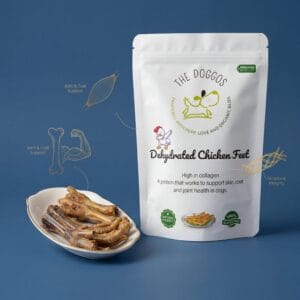
DEHYDRATED Bones for Calcium + Dental Health: This is the real fix. Dehydration means low-temp, super long drying (20+ hours) that keeps the porous, safe structure of bones. Unlike cooked bones, dehydrated bones just crumble into a chalky, digestible powder, giving your dog essential calcium and phosphorus in exactly the right ratio. And get this, they make fantastic natural dental chews too. Our Dehydrated Chicken Feet, for example, are packed with glucosamine and chondroitin. They’re like a natural joint supplement that cleans teeth at the same time.
This method really lets us get all the good biological stuff from fresh, meat-based food, and at the same time, sidestep the unique hygiene risks and nutritional imbalances so common in India. It’s a smart approach, isn’t it?
Balancing the Bowl: More Than Just Meat
Beyond just safety, achieving a truly balanced home-cooked diet? You gotta pay attention to two golden rules:
1. The Calcium:Phosphorus Ratio (1.2:1)
Like we talked about, boneless meat gives you phosphorus. But to balance it, you absolutely HAVE to add calcium. The safest, easiest-for-their-body way? Dehydrated bones. Options like Dehydrated Whole Quail actually give a full prey experience, bones, feathers, and organs included. If dehydrated bones just aren’t an option, pharmacy-grade calcium citrate or finely ground eggshell powder can work, but always, always consult a canine nutritionist for those exact amounts.
2. The Omega-6:3 Balance
To fight off that inflammatory Omega-6 overload from commercial chicken, you really need to add Omega-3. It’s not just a ‘topper,’ you know? It’s a ‘balancer.’ My favourites are:
Hemp Seed Oil: The absolute king of GLA (Gamma-Linolenic Acid), a rare anti-inflammatory Omega-6 that really helps with skin issues like atopic dermatitis, dry paws, and dandruff. Plus, it has a mild calming effect. Our Hemp Seed Oil is a great plant-based option, perfect for vegetarian households (and my Indie dog, Maya, loves it!).
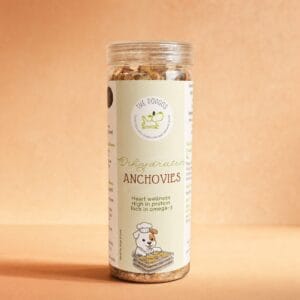
Dehydrated Anchovies/Sardines: These small, short-lived fish are low on the food chain, so you don’t get all that heavy metal build-up. They’re loaded with DHA for brain development and cognitive function. Our Dehydrated Anchovies are odour-controlled and a super powerful Omega-3 source.
By nailing these two main things, you can totally turn a simple home-cooked meal into a powerhouse of nutrition. It’s that impactful.
Raw Dog Food vs Home Cooked India: A Comparison
Let’s just break down the options clearly for Indian pet parents:
| Feature | Raw Food (Western Ideal) | Raw Food (Indian Reality) | Home Cooked (Traditional Indian – Unbalanced) | The Desi Carnivore Method (Cook the Meal, Dehydrate the Bone) |
|---|---|---|---|---|
| Meat Safety | High (controlled sourcing, cold chain) | Low (wet market pathogens, humidity) | High (cooking kills pathogens) | Highest (cooking kills pathogens) |
| Bone Safety & Calcium Source | Raw bone is safe, provides calcium | Raw bone is safe, but hygiene risk of handling/storage | DANGEROUS (cooked bones splinter), Calcium Deficient | SAFEST (dehydrated bones, no splintering, ideal Ca:P) |
| Omega-6:3 Balance | Often good if pasture-raised meat, but may need supplementing | Likely imbalanced if commercial meat used | Poor (commercial chicken), leads to inflammation | Excellent (balanced with Hemp Seed Oil/Anchovies) |
| Digestibility | Excellent | Excellent | Excellent | Excellent (90-94%) |
| Household Hygiene | Moderate (requires strict protocols) | Very Low (high cross-contamination risk) | High | Highest |
| Overall Health Impact | Excellent (if done perfectly) | High risk of illness, nutritional gaps | Risk of skeletal issues, inflammation | Optimal health, safety, and balance |
Practical Section: Crafting The Desi Carnivore Bowl
Let’s make this real with a staple recipe that shows what we’re all about:
The Golden Chicken Bowl (Daily Staple)
This recipe provides a balanced, safe, and delicious meal for your dog. Simple, right?
- 500g chicken thighs (bone-in, skin-on for taurine)
- 50g liver (a powerhouse of Vitamin A)
- 100g red pumpkin (for fibre and gentle digestion)
- 1 tsp turmeric paste (natural antiseptic, anti-inflammatory)
- A dash of Hemp Meal Balancer (for amino acids, fats, prebiotics)
Instructions:
- Wash chicken and liver really well, maybe even with some turmeric water for extra antiseptic action.
- Place chicken, liver, pumpkin, and turmeric paste in a pressure cooker with just enough water to cover.
- Cook for 2-3 whistles.
- Once cooled, carefully DEBONE the chicken. Seriously, this step is non-negotiable.
- Mash the cooked pumpkin into the broth, to make a rich, nutrient-packed base.
- Once the meal has cooled to lukewarm, stir in the Hemp Meal Balancer.
- Serve alongside a Dehydrated Chicken Foot or other dehydrated bone for calcium and dental health.
Transitioning to a Fresh Diet
If your dog is currently on kibble or an unbalanced home diet, a slow transition is super important. Use our 7-Day Transition Protocol:
- Days 1-2: 75% old food + 25% new Desi Carnivore meal.
- Days 3-4: 50% old food + 50% new meal.
- Days 5-6: 25% old food + 75% new meal.
- Day 7: 100% fresh Desi Carnivore meal.
Expect some mucus in the stool around Day 3-4. Totally normal. It just means their gut is shedding its old lining and getting used to the new food. A pinch of Baobab powder or extra pumpkin can really help settle their tummy during this phase.
Common Mistakes Indian Dog Parents Make
Here are the common traps I often see Indian pet parents fall into:
Feeding Cooked Bones: As I’ve stressed, this is super, super dangerous. Don’t do it. Always debone after cooking.
Chicken & Rice/Roti Only: This leads to a really bad calcium deficiency over time, causing serious health issues like osteopenia and ‘Rubber Jaw’ syndrome. Plus, rice and roti contain starches that dogs have a tough time digesting because they don’t have amylase in their saliva. Read more about roti for dogs here.
Ignoring Omega-6:3 Balance: Thinking chicken causes ‘heat’ and just cutting it out completely, instead of balancing it with anti-inflammatory Omega-3s like Hemp Seed Oil or Dehydrated Anchovies. This just keeps that cycle of inflammation and discomfort going. It’s a common misconception, honestly.
Treating Dehydrated Chews as Just ‘Snacks’: Our dehydrated treats are functional medicine, plain and simple! A Dehydrated Mutton Trotter isn’t just a chew. It’s a dental tool, a source of collagen and minerals, and a stress-reliever all rolled into one. And a Bone & Organ Boost? It provides essential taurine and iron, super vital for recovery or senior dogs.
Frequently Asked Questions About Raw vs. Home Cooked in India
Choosing the best diet for your dog is a huge decision, especially with so much conflicting info out there. Here are some common questions I get asked by Indian pet parents:
For more full guidance, explore our complete feeding guide.
Related Reading
- Read the complete Indian dog feeding guide.
- About the author: Mahiv Chhabra, certified canine nutritionist.