Your dog is scratching again. The belly is red, there is a patchy hot spot behind the ear, and the coat looks like it has not seen a good day in weeks. You have tried coconut oil, neem sprays, medicated shampoos — and nothing sticks.
Here is the thing most pet parents in India do not know: baobab oil might be the single most effective natural oil for dog skin problems — better than coconut, more versatile than neem, and perfectly suited for the humidity swings, monsoon fungal flare-ups, and brutal summer dryness that Indian dogs deal with year-round.
At The Doggos, we have spent years formulating with this oil, and we have watched it transform skin that veterinary steroids could not fix. This guide covers exactly what baobab oil is, why it works on dog skin at a cellular level, and how to apply it for every common skin issue — with real timelines so you know what to expect.
What Is Baobab Oil and Where Does It Come From?
Baobab oil is cold-pressed from the seeds of the African baobab tree (Adansonia digitata), often called the “Tree of Life.” These trees grow across the dry savannahs of Sub-Saharan Africa and can live for over 1,000 years. The seeds sit inside a hard, gourd-like fruit, and the oil extracted from them has been used in African traditional medicine for centuries — for human skin healing, wound care, and sun protection.
What makes baobab oil remarkable for dogs is its absorption profile. Unlike heavier oils that sit on the fur and attract dirt (a real problem in Indian dust and humidity), baobab oil absorbs into the skin layers without leaving a greasy residue. It penetrates. It does not just coat.
The Fatty Acid Profile: Why Baobab Oil Actually Works on Dog Skin
Baobab oil is not just “another natural oil.” Its fatty acid composition is uniquely balanced for skin repair:
- Oleic acid (33-39%): Deep penetration carrier. Gets the oil past the surface layer and into the dermis where inflammation actually lives.
- Linoleic acid (23-34%): This is the big one. Dogs with skin problems are almost always deficient in linoleic acid. It strengthens the skin barrier, reduces transepidermal water loss, and directly reduces inflammatory responses.
- Palmitic acid (20-27%): Creates a protective, breathable layer on the skin surface. Critical during monsoon season when fungal spores are everywhere.
- Vitamin E (tocopherols): Powerful antioxidant that accelerates healing of damaged tissue.
- Vitamin A & C: Support collagen production and cell turnover — meaning new, healthy skin grows faster.
The key insight: baobab oil has almost a 1:1 ratio of oleic to linoleic acid. Most oils lean heavily one way or the other. This balance means it moisturises deeply without clogging pores or disrupting the skin’s natural oil production. For Indian dogs dealing with seasonal skin chaos, this balance is everything.
Specific Use Cases: Step-by-Step Application Guide
1. Hot Spots (Acute Moist Dermatitis)
Hot spots are one of the most common skin emergencies in Indian dogs, especially during and right after monsoon. The combination of humidity, moisture trapped in the coat, and bacterial overgrowth creates those angry, weeping red patches that seem to appear overnight. Learn more about what causes hot spots and fungal infections in dogs.
How to apply:
- Gently clip or trim the fur around the hot spot so air can reach the skin. Do not shave — just trim close.
- Clean the area with lukewarm water and pat completely dry with a clean cloth.
- Place 3-4 drops of baobab oil on your fingertip.
- Dab (do not rub) the oil directly onto the hot spot and about 1 cm around the edges.
- Apply twice daily — morning and night.
- Do NOT bandage or cover. The area needs air circulation.
The anti-inflammatory fatty acids calm the redness while the antimicrobial properties fight the bacterial overgrowth causing the weeping. Most hot spots show visible improvement within 3-5 days.
2. Dry, Flaky Patches and Dandruff
Indian summers are brutal on dog skin. The combination of 40°C+ heat, AC indoors, and low humidity strips moisture from the skin. You will see white flakes on their bedding, dull coat texture, and sometimes cracking skin on the flanks and back.
How to apply:
- Part the fur to expose the skin directly over the dry patch.
- Apply 4-5 drops of baobab oil directly to the skin (not the fur).
- Massage gently in circular motions for 30 seconds to help absorption.
- For full-body dandruff, add 8-10 drops to your palms, rub together, and massage through the coat focusing on the skin layer.
- Apply every other day until flaking stops, then once a week for maintenance.
3. Post-Bath Moisturiser
Bathing strips natural oils from your dog’s skin. This is especially problematic if you are bathing frequently during monsoon to manage mud and that wet-dog smell.
How to apply:
- After bathing, towel-dry your dog until the coat is damp (not dripping).
- Place 6-8 drops of baobab oil in your palms (adjust for dog size — 6 for medium breeds, 8-10 for large breeds like Indian Pariahs or Labs).
- Rub palms together to warm the oil.
- Massage through the coat, working from the skin outward. Focus on areas that dry out fastest: belly, inner thighs, behind the ears, and the base of the tail.
- Let air dry. Do not blow-dry immediately after oiling.
This locks moisture back into the skin before it has a chance to dehydrate. Your dog’s coat will feel noticeably softer within one bath cycle.
4. Tick Bite Healing
After you remove a tick (or after a tick drops off naturally), you are left with a small wound that is prone to infection — especially in warm, humid Indian conditions. These bites can turn into secondary infections fast if not managed.
How to apply:
- Clean the bite area with an antiseptic solution first.
- Once dry, apply 1-2 drops of baobab oil directly on the bite mark.
- Apply twice daily for 5-7 days.
- The vitamin E and linoleic acid in baobab oil accelerate tissue repair and prevent scarring or bald patches at the bite site.
5. Cracked Paw Pads
If you have walked your dog on hot Indian roads in May, you know what cracked paw pads look like. The asphalt can reach 60°C+ and literally burns the pads. Winter dryness causes cracking too — different cause, same painful result.
How to apply:
- Clean the paws with lukewarm water after walks.
- Pat dry thoroughly (moisture between pads causes fungal issues).
- Apply 2-3 drops of baobab oil per paw, massaging into the pad surface and between the toes.
- If your dog licks their paws, apply right before a meal — distraction works.
- For severe cracking, apply before bedtime and put on light cotton socks for 20 minutes to help absorption.
Baobab oil is safe if ingested in small quantities, so occasional licking is not a concern. If your dog’s paw-licking is constant, it may be an itching issue — read more here.
Baobab Oil vs Coconut Oil vs Neem Oil: Which One Should You Use?
Every Indian dog parent has a jar of coconut oil and a bottle of neem something. Here is how baobab oil genuinely compares:
| Property | Baobab Oil | Coconut Oil | Neem Oil |
|---|---|---|---|
| Absorption rate | Fast — absorbs into dermis | Slow — sits on surface | Medium — partially absorbs |
| Greasy residue | Minimal | High (attracts dust/dirt) | Moderate |
| Linoleic acid content | 23-34% (skin barrier repair) | 1-3% (very low) | 6-16% |
| Anti-inflammatory | Strong (fatty acid balance) | Mild | Strong (azadirachtin) |
| Antimicrobial | Moderate | Good (lauric acid) | Excellent |
| Insect repellent | None | None | Yes (ticks, fleas, mites) |
| Safe if licked | Yes | Yes | No — can cause vomiting in large amounts |
| Best for | Skin repair, deep moisturising, hot spots, coat health | Light surface conditioning, minor cuts | Pest control, fungal infections |
| Monsoon suitability | Excellent — non-greasy, will not trap moisture | Poor — traps humidity against skin | Good for fungal prevention |
The bottom line: Coconut oil is a decent general-purpose oil but it is terrible for dogs with actual skin problems — it does not penetrate deep enough and the greasiness makes things worse in humid weather. Neem oil is your go-to for pest-related issues but should not be used as a daily moisturiser. Baobab oil is the only one of the three that genuinely repairs damaged skin from the inside out. Read our full breakdown of baobab oil science here.
How Much Baobab Oil to Use (Dosage by Dog Size)
More is not better. Over-application does not speed up healing — it just wastes oil and can make the coat limp.
- Small breeds (under 10 kg): 3-5 drops per application for spot treatment. 5-6 drops for full-body post-bath.
- Medium breeds (10-25 kg): 5-7 drops for spot treatment. 8-10 drops for full-body.
- Large breeds (25-40 kg): 7-10 drops for spot treatment. 12-15 drops for full-body.
- Giant breeds (40+ kg): 10-12 drops for spot treatment. 15-20 drops for full-body.
Always apply to skin, not fur. Part the coat, get to the skin, and let the oil do its work from there.
Results Timeline: What to Expect and When
We are not going to promise overnight miracles. Skin repair takes time. But here is what consistent baobab oil use (applied as directed above) typically delivers:
- Days 1-3: Immediate relief from dryness and surface-level itching. Skin feels less tight and irritated. Hot spots stop spreading.
- Days 4-7: Flaking reduces noticeably. Hot spots begin drying up and scabbing over (this is good — it means healing). Coat starts showing a slight sheen.
- Weeks 2-3: Coat texture transforms — softer, smoother, less brittle. Dry patches are mostly resolved. Tick bite wounds are healed or nearly healed. Paw pad cracks close up.
- Weeks 4-6: Full coat health restoration. Consistent shine, reduced shedding, and the skin barrier is rebuilt. Seasonal flare-ups become less severe because the skin is starting from a healthy baseline.
- Ongoing (weekly maintenance): Once-a-week application or post-bath application keeps the skin in peak condition. Prevention is always easier than repair.
Important note: If you see no improvement after 10 days of consistent application, or if the condition worsens at any point, consult your veterinarian. Baobab oil is powerful but it is not a replacement for medical treatment of severe infections or autoimmune skin conditions.
Indian Climate-Specific Skin Issues: When to Reach for Baobab Oil
India throws everything at your dog’s skin across the year. Here is a quick seasonal guide:
- Summer (March-June): Dry, cracking skin from heat and AC exposure. Paw pad burns from hot surfaces. Apply baobab oil as a daily moisturiser and paw protector.
- Monsoon (July-September): Fungal infections, hot spots, bacterial skin issues from constant dampness. Use baobab oil on hot spots and as a post-bath sealant. Its non-greasy formula will not trap moisture against the skin like coconut oil does.
- Post-monsoon (October-November): Tick season peak. Apply baobab oil to tick bite wounds for faster healing. Combine with neem-based tick prevention.
- Winter (December-February): Cracking skin, especially on paws and nose. Dandruff increases as humidity drops. Regular baobab oil application prevents winter skin breakdown.
Frequently Asked Questions
Can I use baobab oil on puppies?
Yes. Baobab oil is gentle and non-toxic. For puppies under 6 months, halve the recommended drops. Always do a small patch test first — apply 1 drop behind the ear and wait 24 hours to check for any reaction.
Will baobab oil help with my dog’s constant itching?
If the itching is caused by dry skin, minor irritation, or environmental factors, yes — baobab oil’s linoleic acid content directly repairs the skin barrier that is causing the itch. If the itching is caused by allergies, mites, or internal issues, baobab oil will provide surface relief but you will need to address the root cause with your vet.
Can I mix baobab oil with other oils?
You can, but you do not need to. Baobab oil’s fatty acid profile is already balanced. If you want to add pest-repelling properties, mix with a small amount of neem oil (3 parts baobab to 1 part neem). Do not mix with coconut oil — it defeats the purpose of baobab’s fast-absorption benefit.
How should I store baobab oil?
Keep it in a cool, dark place. Away from direct sunlight. Baobab oil has a naturally long shelf life (up to 2 years) thanks to its high vitamin E content. In Indian summers, storing it in the fridge is fine — just bring it to room temperature before applying.
Is baobab oil safe if my dog licks it off?
Completely safe. Baobab oil is food-grade and non-toxic. Small amounts ingested through licking will not cause any issues. This is one of its advantages over neem oil, which can cause gastrointestinal upset if ingested in significant amounts.
Give Your Dog’s Skin What It Actually Needs
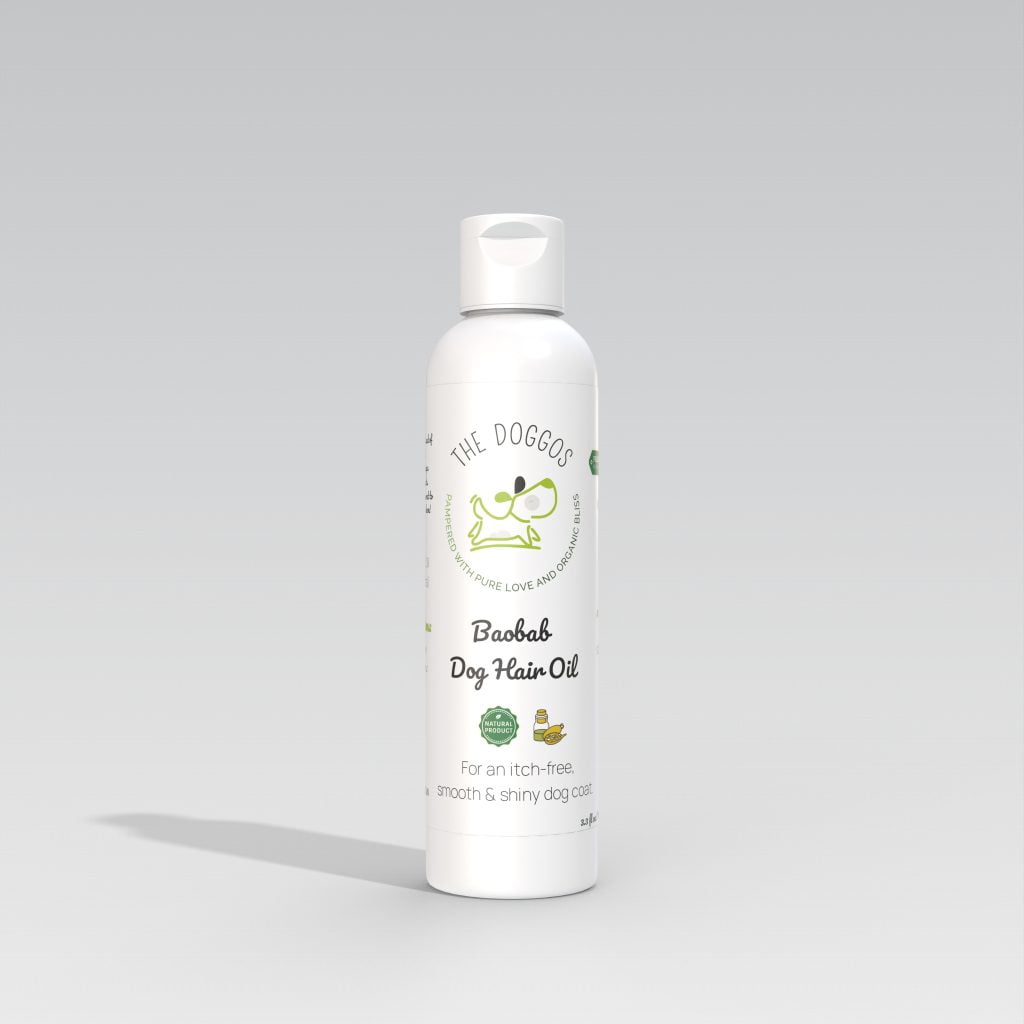
Stop guessing. Stop cycling through oils that were not designed for your dog’s skin. The Doggos Baobab Oil is cold-pressed, sustainably sourced from African baobab trees, and formulated specifically for canine skin and coat health.
Whether your dog is dealing with monsoon hot spots, summer dryness, post-tick bite wounds, or just a coat that has lost its life — this is the one oil that does it all without the greasy mess.
Shop The Doggos Baobab Oil here and see the difference in your dog’s skin within the first week.
Your dog’s skin is talking. It is time to listen.