
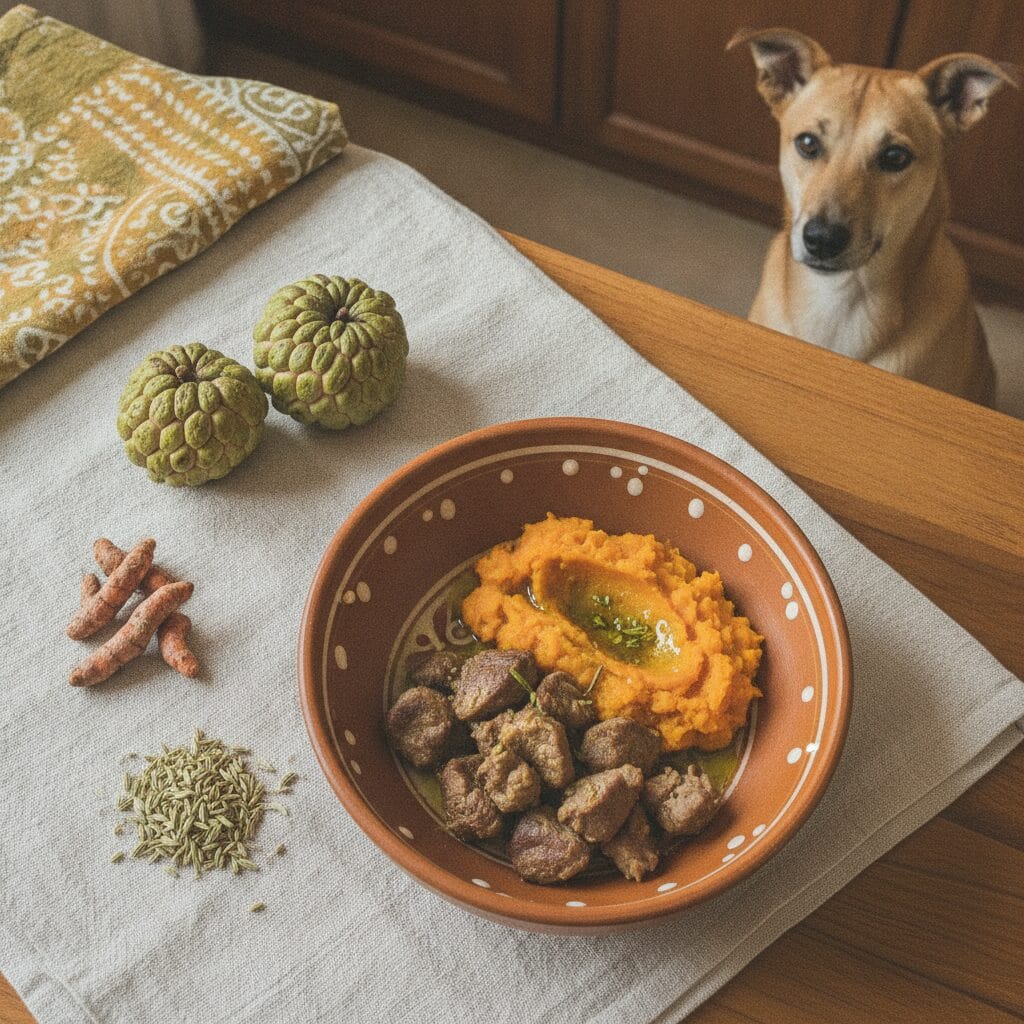
The juicy, creamy sitaphal, or custard apple, is a beloved monsoon delight across India. As we enjoy this sweet fruit, many Indian pet parents naturally ask: can dogs eat sitaphal fruit in India safely? While the thought of sharing our seasonal treats is tempting, the answer comes with crucial caveats regarding safety and nutritional balance.
Quick Answer: Can Dogs Eat Sitaphal Fruit in India?
Yes, dogs eat sitaphal fruit in India safely only if all seeds and skin are completely removed, and in very small, rare portions. The seeds are toxic, and the high sugar content makes it an unhealthy regular treat. For proper nutrition, a balanced diet supplemented with Hemp Meal Balancer is always superior.
What is Sitaphal (Custard Apple)?
Sitaphal, known globally as custard apple or sugar-apple, is a tropical fruit with a sweet, creamy white flesh and numerous hard, glossy black seeds. It’s cherished in India, particularly during the cooler months, for its unique flavour and nutritional profile. For humans, it’s a good source of Vitamin C, B vitamins, potassium, and dietary fibre. However, what’s good for us isn’t always ideal for our canine companions.
The Good: Potential Nutritional Benefits of Sitaphal for Dogs (in moderation)
When prepared meticulously and served in very small amounts, sitaphal can offer a few minor nutritional benefits:
- Vitamin C: An antioxidant that supports the immune system. While dogs produce their own Vitamin C, small boosts from whole foods can still be beneficial, especially during times of stress or recovery.
- Dietary Fibre: In tiny quantities, fibre can aid digestion and promote healthy bowel movements. However, too much fibre, especially from fruit, can easily lead to digestive upset.
- Potassium: Essential for maintaining proper fluid balance, nerve function, and muscle contractions.
- Antioxidants: These compounds help combat oxidative stress and protect cells from damage, supporting overall health.
It’s vital to remember that these benefits are negligible compared to the risks if not prepared correctly, and a dog’s primary nutritional needs are best met through a species-appropriate, meat-based diet.
The Bad: Why Sitaphal Can Be Dangerous for Dogs
Despite the tempting sweetness, the risks associated with feeding sitaphal to dogs are significant and often outweigh any perceived benefits, especially in the context of Indian households where proper preparation might be overlooked.
Toxic Seeds and Skin: A Silent Danger
This is the most critical and often underestimated danger. Sitaphal seeds contain small amounts of cyanide compounds, which are toxic. While a single seed might not cause acute poisoning, repeated ingestion or consuming multiple seeds can lead to a buildup of toxins, causing serious health problems. Symptoms of cyanide poisoning can include dilated pupils, breathing difficulties, bright red gums, excessive drooling, and even collapse. The skin also contains compounds that can cause gastrointestinal irritation and upset.
Choking Hazard and Intestinal Blockage
The hard, slippery seeds are a significant choking hazard, particularly for smaller breeds like Pugs, Shih Tzus, or even young puppies. If swallowed whole, these indigestible seeds can cause a dangerous and potentially fatal intestinal blockage. This is an emergency situation requiring immediate veterinary intervention and often surgery.
High Sugar Content: A Sweet Trap
Sitaphal is naturally very sweet, meaning it’s high in natural sugars. While a tiny taste might not harm, regular or excessive intake can lead to several health issues:
- Digestive Upset: The high sugar content can ferment in the gut, leading to diarrhoea, vomiting, and abdominal pain.
- Weight Gain and Obesity: Excess calories from sugar contribute to obesity, a widespread problem among Indian dogs, leading to joint issues, heart strain, and reduced lifespan.
- Dental Problems: Sugary foods can accelerate tooth decay and contribute to plaque buildup, which is already common in dogs on processed diets.
- Blood Sugar Spikes: This is especially concerning for diabetic dogs or those prone to pancreatitis, where even small amounts of high-sugar fruit can trigger a flare-up.
Allergic Reactions
Like any new food, sitaphal can trigger an allergic reaction in some dogs. Symptoms can range from mild itching, skin rashes, or hives to more severe gastrointestinal distress.
The “Heat” Myth and Sitaphal
In India, many pet parents classify foods as ‘heating’ or ‘cooling’ based on Ayurvedic or traditional beliefs. Some might consider fruits like sitaphal ‘cooling’. However, what’s often perceived as ‘heat’ from certain foods, like chicken or eggs, is actually an inflammatory response, frequently driven by an imbalance in Omega-6 to Omega-3 fatty acids in commercially raised meats. While sitaphal is not typically associated with ‘heat’, its high sugar content can still cause inflammation and digestive upset, which might be misdiagnosed as ‘heat’ by some.
How to Safely Serve Sitaphal to Your Dog (If You Must)
As a canine nutritionist, I generally recommend avoiding sitaphal due to the significant risks of toxicity, choking, and high sugar. There are many safer, more beneficial treats available. However, if you are absolutely determined to offer a tiny bit as a very rare indulgence, follow these strict guidelines:
- Thoroughly Deseed: This is the absolute most critical step. Remove every single black seed. Even one seed can be a hazard.
- Remove All Skin: Peel the fruit completely. The skin is indigestible and contains irritants.
- Portion Control is Paramount: Offer only a minuscule amount. Think of it as a small lick or a few tiny, pea-sized pieces, not a large chunk.
- Introduce Slowly: Give an even tinier piece initially and wait 24-48 hours to observe for any adverse reactions like vomiting, diarrhoea, or unusual behaviour.
Safe Sitaphal Serving Guide for Indian Dogs (Maximums)
| Dog Size (Approx. Weight) | Max. Sitaphal Portion (deseeded, deskin) | Frequency | Notes |
|---|---|---|---|
| Small (up to 10 kg) | 1-2 tiny pieces (5-10g) | Once a month, if at all | Introduce slowly, monitor closely for upset |
| Medium (11-25 kg) | 2-3 small pieces (15-20g) | Once a month, if at all | Ensure no seeds or skin, observe digestion |
| Large (26+ kg) | 3-4 small pieces (25-30g) | Once a month, if at all | High sugar content, consider overall diet carefully |
Remember: These are absolute maximums for healthy adult dogs. If your dog has any underlying health conditions, such as diabetes, pancreatitis, or a sensitive stomach, it is best to avoid sitaphal entirely.
I once had a client in Bengaluru whose Indie dog developed loose stools after a week of getting daily sitaphal treats from the garden. The owner thought it was healthy, but the sugar content and imbalance in the diet were the culprits. We cut out the fruit, introduced a balanced protein meal, and added a pinch of Hemp Meal Balancer to ensure all nutrient gaps were filled. Within days, his stools firmed up, and his energy stabilised. It’s a reminder that even ‘natural’ human foods need a balanced approach. You can learn more about my approach on my author page.
Mahiv Amit Chhabra, Certified Canine Nutritionist
Common Mistakes Indian Pet Parents Make with Sitaphal
In my experience, many well-meaning Indian pet parents make these critical errors when it comes to feeding sitaphal:
- Not Removing All Seeds: Believing a few seeds won’t hurt, or that dogs can simply pass them. This is extremely dangerous due to both toxicity and choking/blockage risks.
- Feeding the Skin: Assuming the skin is harmless fibre. It’s not. It can cause digestive upset and contains undesirable compounds.
- Over-Portioning: Giving generous chunks because the dog seems to enjoy it. This leads to sugar overload, digestive issues, and contributes to obesity.
- Frequent Feeding: Treating sitaphal as a regular snack rather than a rare, tiny indulgence. Seasonal availability often encourages this overfeeding.
- Relying on Fruit for Nutrition: Believing fruits like sitaphal are a significant source of vitamins for dogs. While they contain some, a dog’s primary nutritional needs are meat-based. For complete nutrition, a well-formulated supplement is far more effective. For more on balanced homemade meals, read our guide on homemade dog food recipes in India.
Why Hemp Meal Balancer is a Superior Choice for Daily Nutrition
Instead of risky fruits like sitaphal, focus on providing a truly balanced and species-appropriate diet. This is where a product like our Hemp Meal Balancer comes in. While sitaphal offers minimal, risky benefits, our Balancer delivers complete nutritional support without the dangers.
Many Indian home diets, especially those centred around chicken and rice, often lack a complete profile of amino acids, essential fats, and micronutrients. The Hemp Meal Balancer is specifically formulated to bridge these gaps. It provides a balanced array of amino acids, crucial for muscle development and repair, and contains beneficial fibres that support gut health.
By incorporating the Hemp Meal Balancer into your dog’s daily cooked meals, you ensure they receive a complete and balanced nutritional foundation. This means healthier skin and coat, stronger immunity, and consistent energy levels, all without the risks associated with highly sugary or potentially toxic human foods.
Frequently Asked Questions About Dogs and Sitaphal
Q: Are Sitaphal seeds poisonous to dogs?
A: Yes, sitaphal seeds are toxic to dogs. They contain small amounts of cyanide compounds that can be harmful if ingested. Beyond toxicity, they are also a significant choking hazard and can cause intestinal blockages due to their indigestible nature.
Q: Can puppies eat sitaphal?
A: No, puppies should absolutely not eat sitaphal. Their digestive systems are much more sensitive, making them highly susceptible to the fruit’s high sugar content, and the seeds pose an even greater choking and toxicity risk for their small bodies.
Q: What if my dog accidentally ate sitaphal seeds?
A: If your dog accidentally ingested sitaphal seeds, monitor them closely for symptoms like vomiting, diarrhoea, abdominal pain, difficulty breathing, or dilated pupils. Contact your veterinarian immediately, especially if they consumed multiple seeds or are a small breed.
Q: What are safer fruit alternatives for dogs in India?
A: Safer fruit alternatives for dogs, in moderation and always deseeded/peeled, include small amounts of banana, mango (without the pit), apple (without core and seeds), and watermelon (deseeded). Remember, fruits should always be a rare treat, not a dietary staple.
Q: How much sitaphal can a dog eat without getting sick?
A: Even a small amount of sitaphal can potentially cause issues, especially if seeds or skin are present. For healthy adult dogs, if prepared perfectly, the maximum recommended is 5-30g (tiny pieces) once a month, strictly as an occasional treat. It’s generally best to avoid it.
Choosing Real Nutrition Over Risky Treats
While the creamy sweetness of sitaphal might be tempting to share with your dog, the risks associated with its seeds, skin, and high sugar content far outweigh any minimal nutritional benefits. As responsible pet parents in India, our focus should always be on providing a safe, balanced, and species-appropriate diet.
Instead of reaching for risky human fruits, consider supplementing your dog’s homemade meals with essentials like our Hemp Meal Balancer. It ensures they receive all the vital nutrients they need for optimal health, without any of the danger. Prioritise their well-being with choices that truly nourish their carnivore biology.