Indian summers often leave us scrambling for ways to keep our beloved dogs cool and comfortable. One classic Indian home remedy that often comes to mind is curd rice. It’s a staple in many households, known for its cooling properties and gentle nature on the stomach. But when it comes to our canine companions, is this popular dish a summer saviour or a potential health hazard for curd rice for dogs in Indian summers: benefits, risks, and healthy feeding?
Quick Answer: Curd Rice for Dogs in Indian Summers: Benefits, Risks, and Healthy Feeding
Yes, curd rice can be a safe and cooling meal for dogs in Indian summers if prepared correctly. Plain, unsweetened curd provides beneficial probiotics for gut health and aids hydration, while plain white rice offers easily digestible carbohydrates. However, strict portion control, avoiding all seasonings, and ensuring nutritional balance with appropriate supplements are crucial to prevent digestive upset and nutrient deficiencies.
The Cooling Comfort of Curd Rice for Dogs in Indian Summers
In the scorching heat of Mumbai or Chennai, a cool bowl of curd rice can feel like a blessing. For dogs, especially those prone to heat stress or with sensitive tummies, it offers several potential benefits.
Why Curd is a Summer Essential for Dogs
Curd, or dahi, is a fantastic source of probiotics, the good bacteria that support a healthy gut microbiome. A balanced gut is essential for strong immunity and efficient nutrient absorption, especially important during stressful summer months. Curd also contains calcium and protein, and its high water content contributes to hydration, which is vital when temperatures soar. I’ve often seen dogs with mild digestive upsets recover quickly with a small, daily portion of plain curd. To learn more about this superfood, read my detailed guide on can dogs eat curd.
Rice as a Gentle Carbohydrate Source
White rice, when cooked plain and soft, is an easily digestible carbohydrate. It’s often recommended for dogs recovering from stomach upsets because it’s bland and provides readily available energy without straining the digestive system. In summer, when appetite might dip, a small amount of rice can help maintain energy levels without heavy protein loads.
Addressing the ‘Heat’ Myth: Omega-6 and Inflammation
Many Indian pet parents believe that certain foods, like chicken or eggs, cause ‘heat’ in dogs, leading to rashes or itching. This isn’t thermal heat; it’s often a misinterpretation of Omega-6 induced inflammation. Commercial chicken, fed on corn and soy, has a skewed Omega-6 to Omega-3 ratio (sometimes 20:1 or 30:1). This excess Omega-6 floods the body with inflammatory markers, leading to skin issues, paw licking, and ear infections. Curd rice, being relatively low in Omega-6, can sometimes provide a temporary respite from these inflammatory symptoms, but it doesn’t solve the underlying issue of an unbalanced diet. The actual ‘cooling’ effect comes from the probiotics and hydration, not from some mysterious thermal property.
Risks & Common Mistakes: What Indian Dog Parents Get Wrong with Curd Rice
While curd rice offers benefits, it’s not a foolproof solution. Many well-meaning Indian dog parents make critical mistakes that can turn a seemingly harmless meal into a health problem.
Lactose Intolerance: A Common Pitfall
Just like humans, some dogs are lactose intolerant. While fermented products like curd have less lactose than milk, it’s still present. Starting with a very small amount (1-2 teaspoons) and observing for signs like gas, bloating, diarrhoea, or vomiting is essential. If your dog shows any of these symptoms, curd rice might not be suitable for them.
The Danger of Seasonings and Spices
This is perhaps the biggest and most dangerous mistake. NEVER add salt, chilli, garlic, onion, or any other spices to your dog’s curd rice. These common Indian kitchen staples are toxic or harmful to dogs. Garlic and onions can cause red blood cell damage, while excessive salt can lead to sodium poisoning. Keep it absolutely plain.
Nutritional Imbalance: More Than Just a Snack
Curd rice, on its own, is not a complete and balanced meal for dogs. It lacks essential amino acids, fatty acids, and a proper calcium-to-phosphorus ratio. Relying solely on curd rice, even in summers, can lead to long-term nutritional deficiencies. Dogs are carnivores, and their diet needs to reflect that. A diet of just curd and rice will eventually lead to issues like osteopenia and compromised immunity.
Overfeeding and Weight Gain
Rice is calorie-dense. While easily digestible, excessive amounts can lead to weight gain, especially in less active breeds or senior dogs. Obesity brings its own host of problems, from joint issues to diabetes. Portion control is paramount.
Mahiv’s Insight: Balancing the Bowl for Optimal Health
In my seven years as a canine nutritionist, I’ve seen countless cases where well-meaning parents feed their dogs simple home-cooked meals like chicken and rice, or curd rice in summers, believing it’s a complete diet. A client in Bangalore had a beautiful Indie who was constantly scratching and had dull fur, despite eating ‘home food’. We discovered her diet lacked crucial Omega-3s and balanced amino acids. Simply adding a proper balancer to her meals, like our Hemp Meal Balancer, transformed her coat and stopped the itching within weeks. Curd rice is a good base, but it’s just that, a base. It needs to be fortified to be truly beneficial. You can learn more about my approach to canine nutrition on my author page.
The Doggos Method: Healthy Curd Rice for a Thriving Dog
If you choose to offer curd rice to your dog in Indian summers, here’s how to do it the right way, following The Desi Carnivore philosophy.
Choosing the Right Curd and Rice
- Curd: Always use plain, unsweetened, full-fat curd. Avoid flavoured or low-fat varieties, as they often contain artificial sweeteners (xylitol is highly toxic!) or excessive sugars.
- Rice: Opt for plain white rice, thoroughly cooked until soft and mushy. Brown rice is harder to digest for dogs due to its fibre content, which can be counterproductive if you’re aiming for a gentle meal. You can find more details in my post on can dogs eat rice.
The Doggos Hemp Meal Balancer: Enhancing Your Dog’s Summer Meal
This is where most homemade diets fall short. A simple bowl of curd and rice is a survival meal, not a thriving meal. It lacks the complete amino acid profile, essential fatty acids (especially Omega-3), and crucial micronutrients that dogs, as carnivores, need. This is why I developed the Hemp Meal Balancer.
Our Hemp Meal Balancer is designed to turn any chicken-rice or curd-rice meal into a nutritionally complete one. It provides:
- Complete Amino Acids: Essential for muscle development, immune function, and overall health.
- Balanced Fats: Rich in beneficial Omega-3s and GLA (a rare anti-inflammatory Omega-6) from hemp, counteracting the inflammatory Omega-6 found in commercial chicken or making a bland meal more robust.
- Prebiotic Fibre: Aids digestion and supports gut health, working synergistically with the probiotics in curd.
Adding a scoop of Hemp Meal Balancer ensures your dog gets the full spectrum of nutrients they need, even from a simple summer meal like curd rice.
Serving Sizes & Frequency
Curd rice should be offered as a supplementary meal or a treat, not the sole diet. A general guideline for an adult dog is:
- Small Dogs (up to 10 kg): 2-3 tablespoons, 2-3 times a week.
- Medium Dogs (10-25 kg): 1/4 to 1/2 cup, 2-3 times a week.
- Large Dogs (over 25 kg): 1/2 to 1 cup, 2-3 times a week.
Always adjust based on your dog’s activity level, age, and individual tolerance. Consult your vet for specific dietary recommendations, especially if your dog has underlying health conditions.
My Simple Curd Rice Recipe for Summers
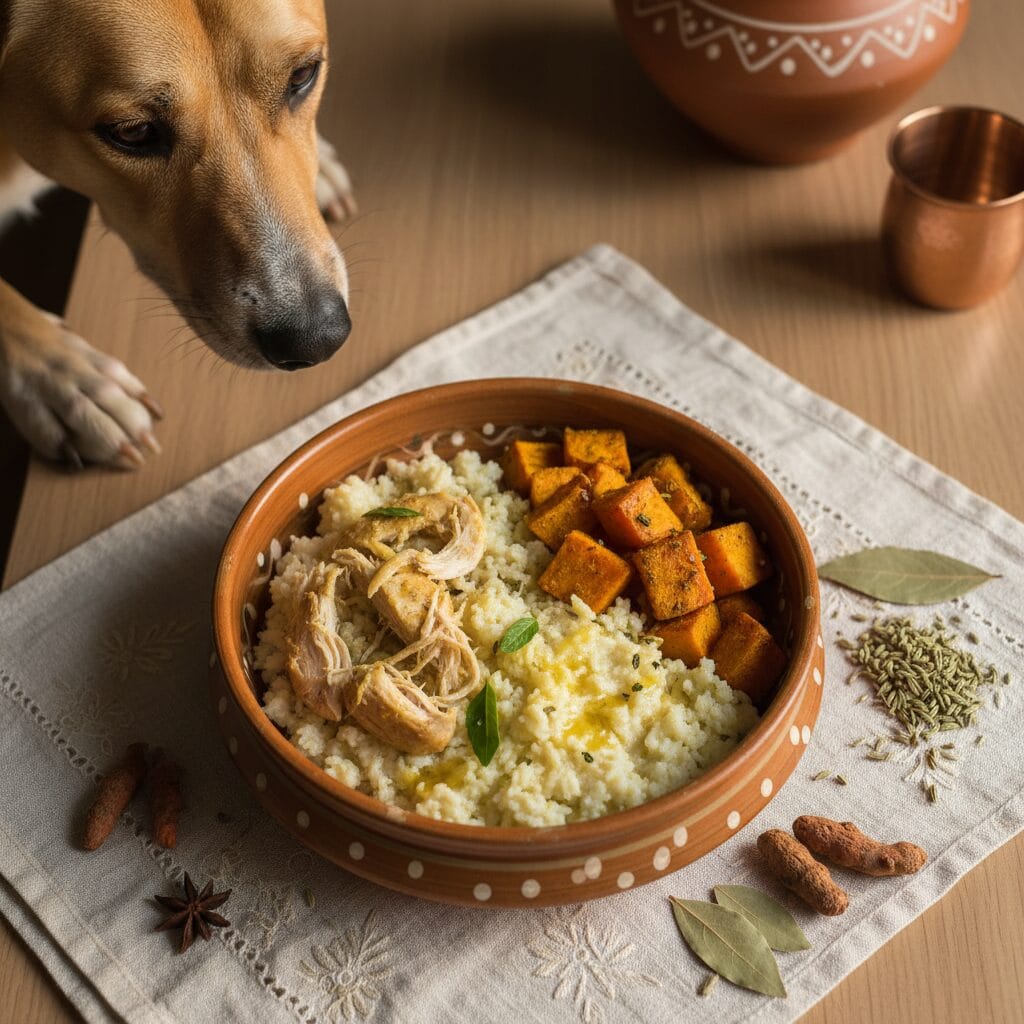
Here’s how I recommend preparing a healthy, balanced curd rice bowl for your dog:
Ingredients:
- 1/2 cup plain white rice
- 1.5 cups water
- 1/2 cup plain, unsweetened, full-fat curd
- 1-2 tablespoons cooked, finely shredded chicken (optional, for added protein)
- 1-2 teaspoons of The Doggos Hemp Meal Balancer (as per package instructions for weight)
Instructions:
- Cook the Rice: Rinse the rice thoroughly. In a pressure cooker, add rice and water. Cook for 3-4 whistles until it’s very soft and mushy. Alternatively, cook in a pot until the grains are fully broken down.
- Cool Completely: Allow the cooked rice to cool down to room temperature. This is crucial for digestibility and to preserve the probiotics in the curd.
- Add Curd: Once the rice is cool, gently mix in the plain curd. Ensure it’s well combined.
- Add Protein (Optional): If adding chicken, make sure it’s plain, cooked, and deboned.
- Boost with Balancer: Stir in the recommended amount of The Doggos Hemp Meal Balancer. This transforms it from a simple meal to a nourishing one.
- Serve: Offer immediately. Any leftovers should be refrigerated and consumed within 24 hours.
Beyond Curd Rice: Other Summer Hydration & Nutrition Tips
While curd rice can be a beneficial addition, remember that a holistic approach to summer care is best. Ensure your dog has constant access to fresh, cool water. You can also offer hydrating treats like frozen pumpkin puree cubes or small pieces of chilled, plain watermelon. For dogs struggling with appetite during the heat, consider our guide on dog not eating in summer India for more tips.
FAQs about Curd Rice for Dogs in Indian Summers