
Is your dog constantly scratching, biting their paws, or sporting angry red hot spots? You’re definitely not alone. Here in India, it feels like every second pet parent is battling an itchy pup, yaar. But before you grab another chemical spray or steroid shot, let’s really talk about what’s actually causing those relentless skin allergies and how you can fix them, the Desi Carnivore way.
**Here’s the thing: Most dog skin allergies in India usually come from a mix of unbalanced diets (especially way too many inflammatory Omega-6 fats and carbs that are tough to digest) and environmental triggers. By simply switching to a fresh food diet that’s right for their species, gently cooked, and totally balanced nutritionally, and adding some smart natural supplements, you can make a big difference. You can seriously cut down, or even get rid of, your dog’s itching and discomfort.**
Understanding Dog Skin Allergies: More Than Just “Heat”
For generations, Indian pet parents have blamed “garmi” (heat) from chicken or eggs for their dogs’ skin issues. Honestly, I’m here to tell you, as a certified canine nutritionist, that this is mostly a myth. Sure, meat does have a bit of a higher Thermic Effect of Food (TEF) than carbs, but those rashes, paw licking, and never-ending ear infections you’re seeing are almost always a sign of **inflammation**, not just a dog feeling “hot.”
This inflammation, you see, is mainly driven by a severe imbalance of Omega-6 to Omega-3 fatty acids in your dog’s food. And guess what? Commercial Indian chicken, often fed on corn and soy, can have an Omega-6:3 ratio as crazy high as 20:1 or even 30:1. Our dogs, though, are biologically built for a much lower ratio (more like 5:1 or 7:1). So, they’re just completely overloaded with inflammatory markers. This constant internal “fire” shows up as skin problems, joint aches, and sometimes even makes them act a bit off.
Of course, environmental stuff like dust mites, pollen, and seasonal allergies play their part, especially in our humid climate. But even then, a strong immune system and a healthy skin barrier, built from the inside out, can handle these outside attacks much better.
The Gut-Skin Connection: Your Dog’s Second Brain
You’ve heard the saying, “all disease begins in the gut.” For dogs, this is super true, especially when we talk about skin health. Your dog’s gut is its first line of defence, a complex world of trillions of bacteria that affect everything from how they absorb nutrients to how their immune system works.
Here’s why this really matters for itchy dogs:
* **Kibble and High-Carb Diets:** Most commercial kibble is just packed with grains, starches, and cheap fillers. Dogs, being carnivores, have **no amylase in their saliva** to even start breaking down these complex carbs. Their short digestive tracts (which get the job done in 12-30 hours, compared to a human’s 30 hours to 5 days) are designed for quickly processing protein, not for fermenting grains. So, when you feed a dog roti or too much rice, it basically hits their stomach “whole,” really straining their pancreas and overwhelming their system.
* **Raised Stomach pH:** High-carb diets also **raise stomach pH**, making it less acidic. A dog’s natural stomach pH of 1-2 (compared to a human’s 4-5) is vital for dissolving bone into calcium and phosphorus they can actually use, and even more importantly, for killing off nasty bacteria and pathogens. When that pH goes up, digestion goes down, and their gut becomes way more open to bacterial overgrowth.
* **Leaky Gut Syndrome:** This constant attack on their digestive system can lead to something called “leaky gut.” This means the intestinal lining becomes permeable, letting undigested food bits, toxins, and bacteria sneak into the bloodstream. And what happens then? The immune system sees these as invaders, kicking off a whole-body inflammatory response that often shows up as skin allergies, paw licking, and those stubborn chronic ear infections.
It’s just not fair to their bodies.
In a happy contrast, fresh food diets boast an amazing **90-94% digestibility rate** compared to kibble’s roughly 80% (Journal of Animal Science, 2021). That means more nutrients absorbed and less waste produced (think smaller, firmer poops!). A healthy gut truly is the bedrock for healthy skin.
Dietary Culprits: What’s Really Making Your Dog Itch?
Let’s get specific, na, about what’s often hiding in your dog’s bowl, just adding to that itch.
1. Commercial Kibble: The Usual Suspect
While super convenient, kibble is often the main problem.
* **High in Inflammatory Carbs:** Grains (corn, wheat, soy, rice), potatoes, peas are cheap fillers that dogs really struggle to digest.
* **Poor Quality Protein:** Usually rendered meat meals, which aren’t easy for their bodies to use.
* **Synthetic Additives & Preservatives:** These can trigger immune reactions.
* **Low Moisture Content:** Kibble is only about 10% water, which really stresses their kidneys. Fresh food is 70% water, which is why dogs on fresh diets don’t drink as much, and that’s totally normal and great for their kidney health.
2. Roti & Rice-Heavy Diets: The Indian Staple Trap
A lot of Indian households rely on roti, chapati, or a plain rice-and-chicken diet. While well-intentioned (we all want to feed our pets well!), these are pretty problematic:
* **Carb Overload:** Like we discussed, dogs aren’t built for high-carb diets. This just strains their pancreas and fuels inflammation.
* **Nutrient Deficiencies:** A diet of just chicken and rice is really unbalanced. It misses out on essential vitamins, minerals, and fatty acids.
* **The Calcium:Phosphorus Catastrophe:** Listen up, this is a life-or-death warning. Meat is packed with phosphorus but has almost no calcium. If you feed a boneless chicken and rice diet for years without adding a source of calcium their body can use, your dog’s body will actually **leach calcium from their own bones** to keep that crucial 1.2:1 Calcium:Phosphorus ratio balanced. This leads to debilitating conditions like **Osteopenia** (bone thinning) and, in really bad cases, “Rubber Jaw” syndrome, where their jaw bones literally become soft and bendy. This is a common and tragic mistake I see far too often. Please don’t let this happen to your furry friend.
*Solution:* You **absolutely must** balance the Ca:P ratio. The Desi Carnivore method uses dehydrated bones for this.
3. The Omega-6 Trap in Indian Chicken
Even if you’re cooking fresh chicken from your neighbourhood butcher, if it’s commercial, corn-fed chicken, you’re probably still adding to that Omega-6 imbalance. This is the real “heat” that pet parents wrongly blame on the meat itself. It’s the *type* of fat, not the protein, causing the trouble.
The Desi Carnivore’s Solution: Cook the Meal, Dehydrate the Bone
At The Doggos, we believe in a common-sense, science-backed approach that actually works for Indian homes. We totally get the *idea* of raw feeding from a biological standpoint, but practically speaking, in India, it’s just a non-starter. And that’s exactly why we advocate for **”Cook the Meal, Dehydrate the Bone.”**
Why Raw Feeding Doesn’t Work in India: The Hygiene Gap
I totally get it, the raw-feeding movement is big globally. But let’s be real about India, okay?
* **Indian Wet Markets vs. European Supermarkets:** Our local markets, especially in places like Mumbai or Chennai, are vibrant, bustling, and often humid. Raw meat sits out, exposed to everything, breeding bacteria like Salmonella and E.coli within minutes. This isn’t like the sterile, cold-chain environment of a Western supermarket. How could it be?
* **Cross-Contamination Risk:** You bring that raw wet-market meat into your home. Your dog drags a raw bone onto your rug, chews it between their paws, then licks your face. That’s a direct route for bacterial transmission to your family.
* **Dog’s Stomach pH vs. Household Safety:** Yes, a dog’s super acidic stomach (pH 1-2) *can* handle pathogens. Their bodies are designed for it. But our homes? They’re not. As responsible pet parents, we simply can’t ignore the cross-contamination risk that raw feeding brings in an Indian household context. It’s just not worth it.
For these reasons, **cooking the meat is absolutely non-negotiable** for safety and hygiene in India.
The Doggos Method: Cook the Meat, Dehydrate the Bone
1. **COOK the Meat:** Gently home-cook your meat (a pressure cooker is fantastic for both efficiency and keeping those nutrients in) to kill off Salmonella, E.coli, and other common pathogens.
2. **DEBONE After Cooking:** This is a **life-or-death safety rule**. **NEVER feed cooked bones.** High heat makes bones brittle and hard. They shatter into sharp, jagged splinters that can perforate your dog’s intestines, leading to fatal peritonitis. This is a common, dangerous trap a lot of well-meaning Indian parents fall into when they pressure-cook chicken with bones and feed it all. **This is extremely dangerous.** Please, just don’t do it.
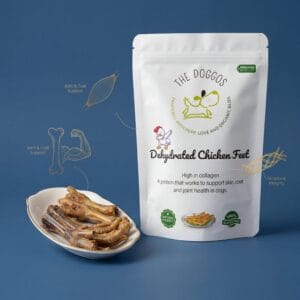
3. **DEHYDRATED Bones for Calcium & Dental Health:** This is our “Goldilocks” solution. Dehydration (a low-temperature, slow process taking over 20+ hours) keeps the porous structure of the bone. Unlike those brittle cooked bones, dehydrated bones crumble into a safe, chalky powder when chewed. This gives them bioavailable calcium without any splintering risk. They’re not raw (so hygiene risk is much lower), and not cooked (so splintering risk is gone). Plus, they do wonders for dental health, scraping off plaque and tartar.
* *Product Suggestion:* Our Dehydrated Chicken Feet are packed with glucosamine and calcium, like a natural joint pill that also cleans teeth. For bigger dogs, Dehydrated Mutton Trotters make for excellent, long-lasting chews.
Building an Anti-Itch Diet: The Doggos Way
Now that we get the “why,” let’s chat about the “how.” Here’s how to put together a diet that really cools inflammation and helps heal your dog’s skin.
1. Protein Power: Choose Wisely
* **Chicken:** This is our daily staple. Wash it well with turmeric water (it’s a natural antiseptic!), pressure cook, and then **DEBONE**. And crucially, every chicken meal **MUST** be balanced with Omega-3s.
* **Quail:** The hypoallergenic “super-prey.” If your dog has really persistent allergies, a novel protein like quail is fantastic for an elimination diet. Their immune system probably hasn’t seen it before. Our Dehydrated Whole Quail also comes with feathers, which are insoluble keratin that act like a “colon sweep,” scrubbing intestinal walls and bulking stool to naturally express anal glands. Got a scooting dog? Give a feather a try!
* **Mutton (Goat):** A great “recovery meat” that’s often really well-tolerated by chicken-allergic dogs because of its different protein structure. It’s also rich in iron and zinc, which is great for rebuilding after an illness.
2. Essential Fats: The Inflammation Fighters
* **Hemp Seed Oil:** This, my friends, is your dog’s anti-inflammatory superstar. It’s the king of **GLA (Gamma-Linolenic Acid)**, a rare Omega-6 that actually acts as an **anti-inflammatory**. GLA directly converts to Prostaglandin E1, which reduces inflammation and keeps that skin barrier nice and moist. Dogs with Atopic Dermatitis often lack the enzyme to process normal fats; GLA completely bypasses this step, making it like direct medicine for dry, cracking paws, dandruff, and hot spots. It’s plant-based, so it’s perfect for vegetarian households, and it even has a mild calming effect. (My Lab, Leo, goes absolutely nuts for this stuff!)
* *Product Suggestion:* Start adding our Hemp Seed Oil to your dog’s meals daily.
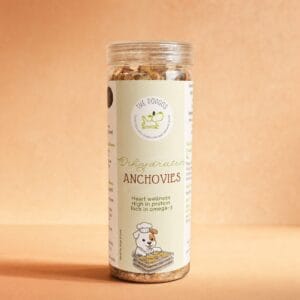
* **Dehydrated Anchovies/Sardines:** “Eat low on the food chain” is my personal mantra. Small, short-lived plankton eaters like anchovies and sardines have no heavy metal bioaccumulation (unlike tuna or mackerel). They’re just packed with DHA for brain development and helping prevent Cognitive Dysfunction Syndrome in our senior pups.
* *Product Suggestion:* Our Dehydrated Anchovies are odour-controlled and perfect for balancing Omega-3s in any meal.
3. Gut Support & Immunity: Healing from Within
* **Baobab Powder:** Coming from the African “Tree of Life,” Baobab has 5-6 times more Vitamin C than oranges. This really fuels collagen synthesis for strong ligaments and elastic skin, offering a massive immune shield. It’s also a prebiotic fibre, which is excellent for settling the gut when you’re changing diets.
* **Pumpkin:** A gentle, fibre-rich veggie that helps digestion and gives them essential vitamins.
* **Curd (Dahi):** A decent source of probiotics. Start with just a teaspoon to see if they’re lactose intolerant, as some dogs can be a bit sensitive. Learn more about curd for dogs.
Practical Section: Anti-Itch Recipes & Topical Relief
Let’s put all this into practice with a couple of actionable plans, shall we?
1. The “Itchy Dog Reset” (Elimination Diet)
If your dog’s allergies are really severe and you suspect food sensitivities, an elimination diet can help you pinpoint those triggers.
* **Protocol:** For 2-4 weeks, feed **only one novel protein** your dog has never had before, along with a couple of low-allergen vegetables.
* **The Doggos Itchy Dog Reset Bowl:**
* 1 Whole Dehydrated Quail (for novel protein, calcium, and gut-scrubbing feathers)
* 50g steamed green beans or boiled red pumpkin
* 1 tsp Hemp Seed Oil
* *No cooking needed for the quail!* Plus, the chewing action also releases endorphins, which can really help calm an anxious, itchy dog. (I’ve seen this work with Indie dogs especially, they love the chew!)
2. The Daily Anti-Inflammatory Golden Chicken Bowl
This is a totally balanced daily meal designed to keep inflammation firmly at bay.
* **Ingredients:**
* 500g raw chicken thighs (bone-in, skin-on for taurine – super important for heart health)
* 50g chicken liver (Vitamin A, B vitamins)
* 100g red pumpkin or sweet potato
* 1/2 tsp turmeric paste (anti-inflammatory power!)
* 1-2 tbsp Hemp Meal Balancer (for complete amino acids, Omega-3s, and prebiotic fibre) OR 1-2 tsp Hemp Seed Oil + 1-2 Dehydrated Chicken Feet (for calcium)
* **Preparation:**
1. Wash chicken and liver thoroughly, ideally with a turmeric water rinse.
2. Pop the chicken (bone-in), liver, and pumpkin into a pressure cooker with just enough water to cover.
3. Pressure cook for 2-3 whistles until everything is thoroughly cooked.
4. **Crucially: DEBONE all chicken pieces.** Please, discard those cooked bones safely.
5. Mash the pumpkin into the broth and shredded chicken.
6. Once it’s cooled down, stir in the Hemp Meal Balancer or Hemp Seed Oil. If you’re using Chicken Feet, feed them separately as a chew.
* **Why it works:** The cooked chicken gives digestible protein, pumpkin adds fibre, turmeric fights inflammation, and the Hemp Balancer/Oil fixes that Omega-6:3 ratio. The dehydrated bone provides essential calcium. This isn’t just a “survival meal,” it’s a “thriving meal.” And your dog deserves to thrive.
3. Topical Relief: Healing the Skin Barrier
While diet is the main player, topical solutions can offer immediate relief and really help support healing.
* **Baobab Oil:** Unlike heavy oils like coconut or mustard that just sit on the skin and can clog pores, our Baobab Oil has a unique fatty acid profile (high Palmitic and Oleic acid) that actually absorbs *into* the epidermis. It mimics your dog’s natural lipid barrier, healing from the inside out. I’ve personally seen fungal infections vanish in 90 days, alopecia reversed in 2 months, hot spots dried up in 24 hours, and hyperkeratosis (those crusty noses) resolved in 2 weeks with consistent use. It’s truly amazing stuff.
* **Baobab Therapy Mask:** For a full-body detox and soothing, our Baobab Therapy Mask uses the power of clay and baobab to draw out toxins and calm irritated skin.
* **Baobab Paw & Nose Balm:** For cracked paws and dry noses, our Baobab Paw & Nose Balm gives intense, deep moisture and healing.
Common Mistakes Indian Pet Parents Make
1. **Feeding Cooked Bones:** This is a huge mistake. Cooked bones splinter and can be lethal. Stick to raw recreational bones (if you can handle the hygiene) or, much, much safer, our dehydrated bones. Read our full guide on bones safety.
2. **Boneless Chicken + Rice Only:** Like we talked about, this leads to severe calcium deficiency and that awful “Rubber Jaw” syndrome over time. Always, always balance with a proper calcium source.
3. **Ignoring Omega-3s:** Believing all chicken is equal, or that adding a bit of coconut oil is enough. It’s really not. You *must* actively balance that Omega-6:3 ratio.
4. **Believing the “Heat” Myth:** Stopping chicken or eggs completely because of the “garmi” myth. This often just starves dogs of essential protein, when the real problem is Omega-6 inflammation that could be fixed with a simple supplement like Hemp Seed Oil.
5. **Over-Reliance on Steroids:** While steroids give quick relief, they suppress the immune system and don’t actually fix the root cause, leading to a vicious cycle. Use them as a last resort, while simultaneously working hard on diet.
6. **Giving Parle-G/Marie Biscuits:** These are full of sugar and maida (refined flour), which absolutely rot teeth, spike blood sugar, and contribute to gut issues. Instead, offer a healthy, functional chew like a Dehydrated Chicken Foot. It’s a no-brainer, really.
Frequently Asked Questions (FAQ)
**Q1: Can a vegetarian diet cure my dog’s skin allergies?**
A: No, sadly. Dogs are biologically carnivores, pure and simple. While some plant-based supplements like Hemp Seed Oil can definitely help manage inflammation, a complete vegetarian diet will always be missing key amino acids, specific vitamins (like B12), and bioavailable minerals that only come from meat and bones. Forcing a carnivore onto a vegetarian diet will probably make their health issues worse in the long run. It’s just not how they’re built.
**Q2: Is raw chicken good for dog skin allergies?**
A: Biologically speaking, raw is what they’re meant to eat. But practically, here in India, raw chicken from local wet markets poses a big hygiene and cross-contamination risk that we just can’t support. While a dog’s stomach acid is tough and *can* handle some pathogens, the risk to your household is simply too high. Our “Cook the Meal, Dehydrate the Bone” method offers all the nutritional goodness of fresh food without any of those raw risks. You can read more in our guide to raw feeding in India.
**Q3: How quickly will I see results from a fresh diet?**
A: A lot of pet parents notice big improvements in energy levels, how shiny their dog’s coat is, and stool quality within just 7-10 days. Skin allergies, being a deeper inflammatory issue, might take a bit longer, maybe 3-6 weeks, to show real improvement as the gut heals and inflammation calms down. Consistency is super key here. Don’t worry if you see some mucus in the stool around Day 3-4 of a diet transition; that’s normal as the gut sheds its old lining. A pinch of Baobab powder or extra pumpkin can really help them through it.
**Q4: What about anti-allergy kibble?**
A: “Anti-allergy” or “hypoallergenic” kibble still typically contains processed ingredients, high carbohydrates, and not much moisture. While they might use novel proteins, they don’t really fix the core problems of digestibility, inflammation from processed fats, or the lack of fresh, bioavailable nutrients. It’s often just a temporary fix, a band-aid, not a long-term solution for true healing.
**Q5: My vet prescribed steroids. Should I still change the diet?**
A: Yes, absolutely! Steroids give quick relief by suppressing the immune system, but they don’t actually fix the underlying problem. While your vet’s advice is important, you can (and definitely should) simultaneously switch your dog to a species-appropriate fresh diet. As the diet starts to heal the gut and reduce inflammation, you can then talk to your vet about a plan to gradually reduce and eventually stop steroid use, if it’s right for your dog.
Take the First Step Towards a Healthier, Itch-Free Life
Your dog doesn’t have to suffer in silence, na. By understanding their biology and making smart choices about their diet, you can unlock a world of relief and vitality for them. The Desi Carnivore method isn’t just about feeding them; it’s about truly nourishing them.
Go explore our range of functional dehydrated treats like Chicken Feet (great for joints & calcium), Anchovies (for Omega-3s & brain health), and our powerful Hemp Seed Oil for anti-inflammatory support. For targeted skin healing, our Baobab Oil is a total real fix.
Ready to completely improve your dog’s health? Dive deeper into our philosophy and recipes at What Should I Feed My Dog? The Complete Guide or learn more about me, Mahiv Amit Chhabra, and The Doggos’ mission.