Seeing your beloved dog low on energy, recovering from a tick fever bout, or looking a bit frail after surgery is never easy. As Indian pet parents, we often reach for familiar foods, but when it comes to true recovery, not all proteins are created equal. In India, I consistently recommend mutton for dog recovery India as the unparalleled choice for bringing your dog back to full strength.
Quick Answer: Why Mutton is Best for Dog Recovery in India
Mutton is the best protein for dog recovery in India due to its high iron, zinc, and B-vitamin content, crucial for rebuilding blood cells and boosting immunity. Its ‘warming’ nature in Ayurveda supports healing, while its rich nutrient profile aids muscle repair and energy restoration. For optimal results, always pair cooked mutton with our Dehydrated Mutton Trotters to provide essential calcium and collagen for joint and bone health during recovery.
Why Mutton is the Ultimate Recovery Protein for Indian Dogs
Our Indian climate, local pathogens, and common canine ailments like tick fever demand specific nutritional strategies. Mutton, particularly goat meat, offers a unique blend of benefits that make it ideal for recovery:
- Rich in Iron and Zinc: Mutton provides significantly more iron and zinc than chicken. Iron is vital for red blood cell production, critical after blood loss from tick fever or surgery. Zinc supports immune function and wound healing.
- Packed with B Vitamins: B vitamins (B12, Niacin, Riboflavin) in mutton are essential for energy metabolism, helping a lethargic dog regain their vigour.
- Ayurvedic ‘Warming’ Properties: In traditional Indian medicine, mutton is considered a ‘warming’ food, believed to strengthen the body and support internal healing processes. This is especially beneficial for dogs recovering from debilitating illnesses.
- Highly Digestible: While denser than chicken, mutton is still highly digestible for a carnivore’s stomach, ensuring maximum nutrient absorption when appetite might be low.
- Novel Protein for Allergies: Many dogs develop sensitivities to common proteins like chicken due to overexposure. Mutton, with its different protein structure, can be a great alternative for dogs with suspected chicken allergies during recovery.
When a dog is recovering, their body is working overtime to repair tissues, fight off residual infections, and rebuild reserves. Providing a nutrient-dense, easily absorbable protein like mutton gives them the best chance at a swift and complete recovery.
Mutton vs. Chicken for Recovery: A Comparison
While chicken is a fantastic daily protein, mutton shines brighter in specific recovery scenarios. Let’s look at the key differences.
| Nutrient / Quality | Mutton (Goat Meat) | Chicken (Breast) |
|---|---|---|
| Iron Content | ~3x higher | Lower |
| Zinc Content | ~4x higher | Lower |
| B Vitamins | Excellent source | Good source |
| Ayurvedic Property | ‘Warming’, strengthens body | ‘Cooling’, lighter |
| Fat Content | Leaner than commercial chicken | Higher Omega-6 (commercial) |
| Recovery Focus | Blood building, immunity, strength | Daily maintenance, lean muscle |
| Allergy Potential | Lower (often novel protein) | Higher (common allergen) |
As you can see, for targeted recovery, mutton offers specific advantages that chicken simply cannot match. For a deeper dive into daily protein choices, read my guide on Mutton vs Chicken for Dogs in India.
The Desi Carnivore Way: How to Prepare Mutton Safely
The core philosophy of The Doggos is ‘Cook the Meal, Dehydrate the Bone’. This is especially crucial with mutton, which often comes from Indian wet markets.
- Source Wisely: Buy fresh, human-grade goat meat from a trusted butcher. Look for lean cuts.
- Wash Thoroughly: Always wash the meat under running water. A turmeric water rinse can add a natural antiseptic touch.
- Gently Cook: Pressure cook the mutton until it’s tender, typically 4-5 whistles for curry cut pieces. This kills any surface bacteria like Salmonella or E.coli, which are common in our humid Indian environment. Feeding raw wet-market meat in Indian homes carries a significant cross-contamination risk.
- DEBONE Completely: This is NON-NEGOTIABLE. Never feed cooked bones. Cooked bones become brittle and can splinter into sharp fragments, causing internal damage. Remove all bones meticulously after cooking.
- Cool Before Serving: Let the cooked mutton cool to room temperature before serving.
Boost Recovery with Dehydrated Mutton Trotters
Once you’ve cooked and deboned your mutton, you’ve provided excellent protein, iron, and zinc. But what about calcium and joint support? This is where our Dehydrated Mutton Trotters come in.
Recovery often puts a strain on a dog’s skeletal system and joints. Our Dehydrated Mutton Trotters are slow-dehydrated at low temperatures for over 20 hours. This process retains the bone’s porous structure, allowing it to crumble safely into a chalky powder when chewed, providing a natural source of:
- Calcium and Phosphorus: Essential for maintaining the critical 1.2:1 calcium:phosphorus ratio. A boneless diet, even a homemade one, can lead to calcium deficiency over time.
- Collagen and Glucosamine: Mutton trotters are rich in these compounds, crucial for rebuilding cartilage, supporting joint health, and improving skin and coat quality, all vital during recovery.
- Mental Enrichment: Chewing is a natural stress reliever for dogs, releasing endorphins. A long-lasting chew like a Mutton Trotter can provide much-needed mental stimulation and comfort during a recovery period.
Think of them as a natural, edible joint supplement and a crucial component for holistic recovery.
Practical Section: Mutton Strength Stew for Recovery
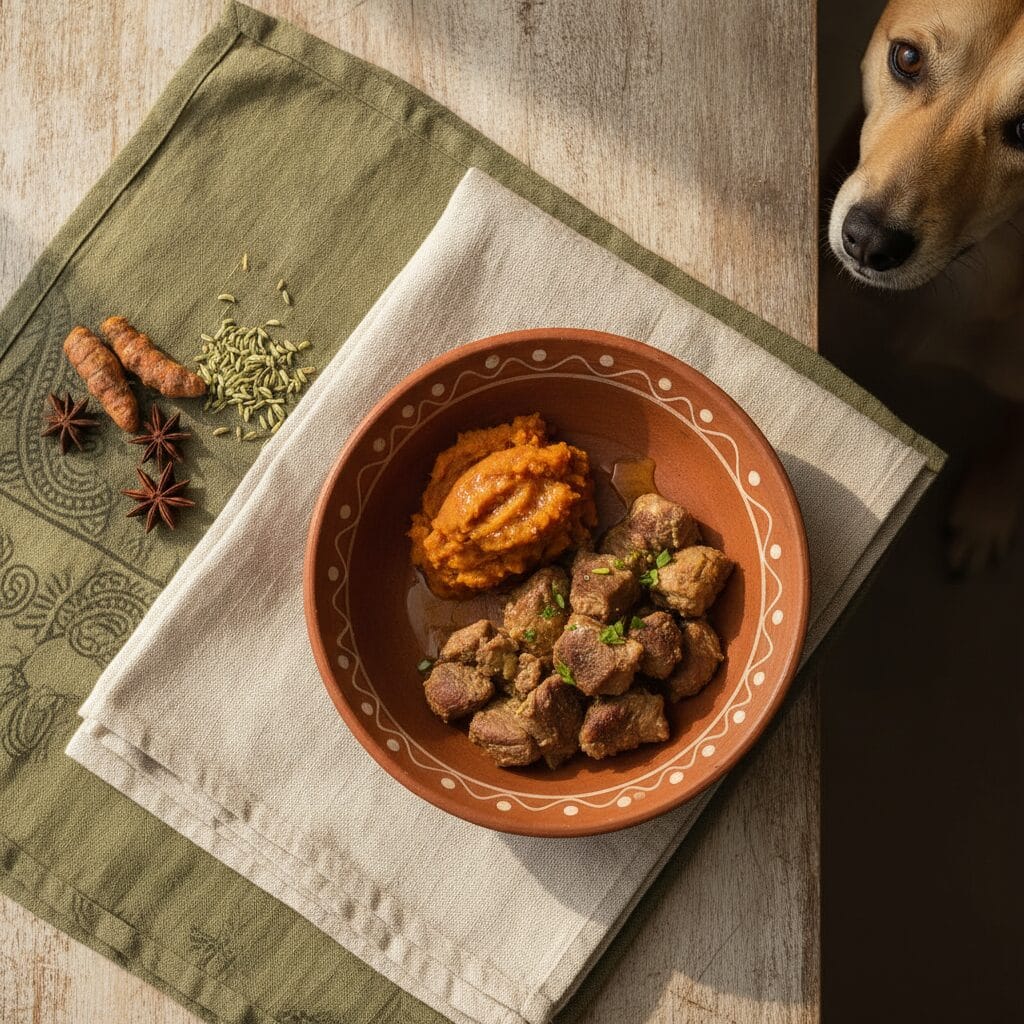
Here’s a simple recipe to prepare a powerful recovery meal for your dog:
Ingredients:
- 500g goat curry cut (bone-in for cooking, but remove bones after)
- 100g sweet potato, peeled and diced
- 50g spinach, roughly chopped
- 1/2 tsp turmeric powder
- 1 tsp ghee (optional, for flavour and healthy fats)
- Water for cooking
Instructions:
- Wash the mutton thoroughly.
- In a pressure cooker, add mutton, sweet potato, turmeric, and enough water to just cover the ingredients.
- Pressure cook for 4-5 whistles until the mutton is very tender.
- Once cooled, carefully remove ALL bones from the mutton. Mash any larger meat pieces.
- Stir in the spinach. The residual heat will wilt it perfectly, preserving nutrients.
- Add ghee if using, and mix well.
- Serve warm. For added omega-3s and an extra boost, sprinkle a few Dehydrated Anchovies over the meal once cool.
Serving Suggestion: For a medium-sized dog (15-25kg), start with 150-200g of this stew per meal, twice a day. Adjust based on your dog’s activity level and vet’s advice. Always provide fresh water.
Common Mistakes Indian Pet Parents Make During Recovery
- Feeding Cooked Bones: As I’ve stressed, this is dangerous. Cooked bones splinter. Always debone after cooking.
- Relying Solely on Chicken: While fine for daily maintenance, chicken lacks the specific micronutrient punch (iron, zinc) needed for serious recovery.
- Ignoring Calcium Needs: A boneless meat diet, even if home-cooked, will lead to calcium deficiency over time. This is why adding safe, digestible calcium sources like Dehydrated Mutton Trotters is so important.
- Overfeeding Grains: While a little rice can be a binder, too much roti or rice strains a carnivore’s digestive system, diverting energy from healing. Dogs lack amylase in their saliva, making grain digestion inefficient.
- Neglecting Hydration: Fresh food has high water content, so dogs on fresh diets drink less. But during recovery, ensure constant access to fresh water, especially if they’ve been dehydrated from illness.
From Mahiv’s Practice: I once worked with a young Indie in Chennai who was severely anemic after a brutal tick fever episode. His owner was feeding him boiled chicken and rice, but his red blood cell count wasn’t improving. We switched him to a mutton-based diet, fortified with a daily Dehydrated Mutton Trotter. Within three weeks, his energy levels were visibly higher, and subsequent blood tests showed a significant improvement in his platelet and red blood cell count. It’s truly amazing how quickly the right nutrition can turn things around. You can learn more about my approach on my author page.
Frequently Asked Questions About Mutton for Dogs