
An empty bowl.
Nothing in here yet. Let’s fix that. Start with what dogs go crazy for.
Crowd favourites
Or shop by what they need
Browse the whole shelf🧡 Every order you place feeds a street dog. Even a small bowl helps.
Type a product, an ingredient, or what your dog needs.
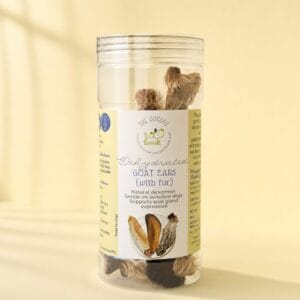
Slow-dehydrated whole goat ears, fur intact. The fur is the point: natural insoluble fibre that helps gut motility, plus a long chew session that scrapes plaque and engages the brain. Seven whole ears for ₹349, about fifty rupees an ear, where furry ears mostly sell in ones and twos for double that or more.
₹349.00
Most pet treats remove anything that doesn't look palatable to humans. We don't. Goat-ear fur is insoluble fibre, the same kind of roughage wild dogs picked up from prey. It moves food through the gut, brushes teeth on the way down, and engages a chewing instinct kibble never touches.
See it from every angle
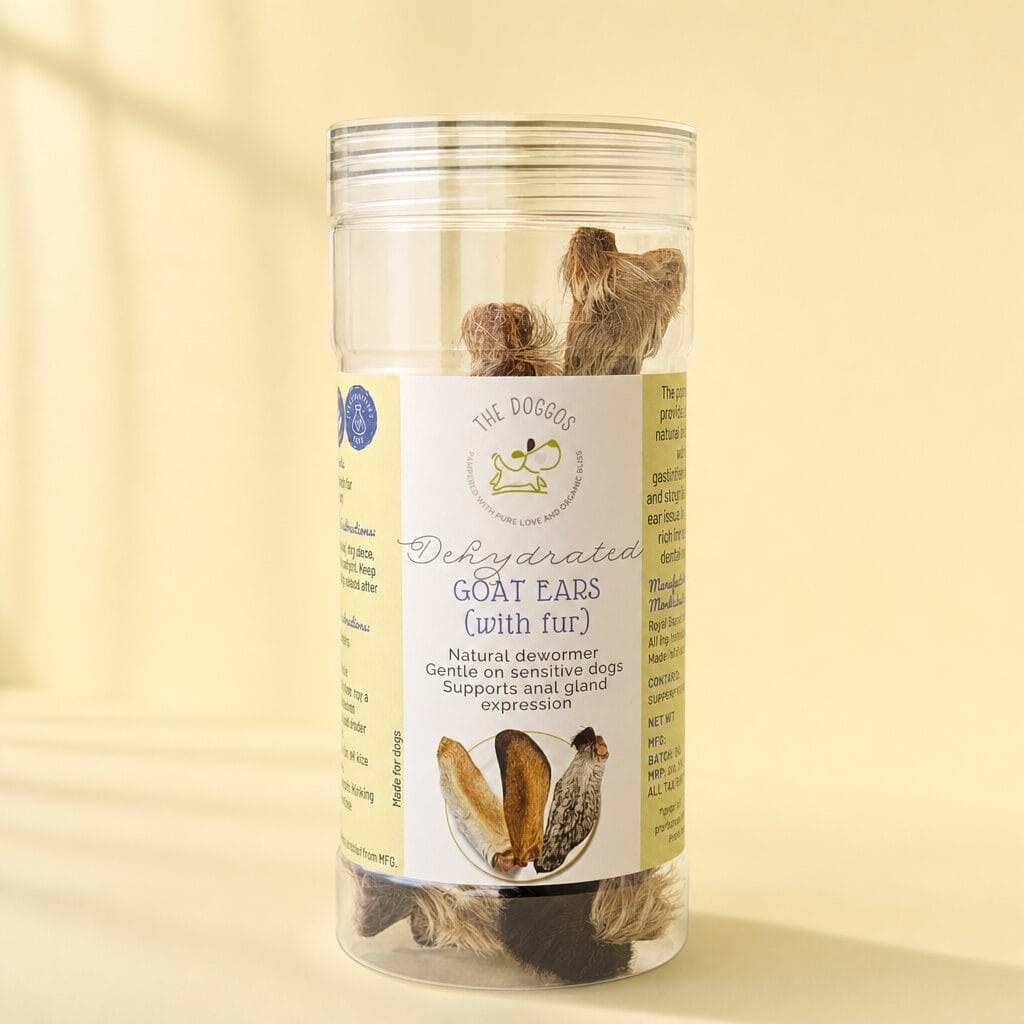
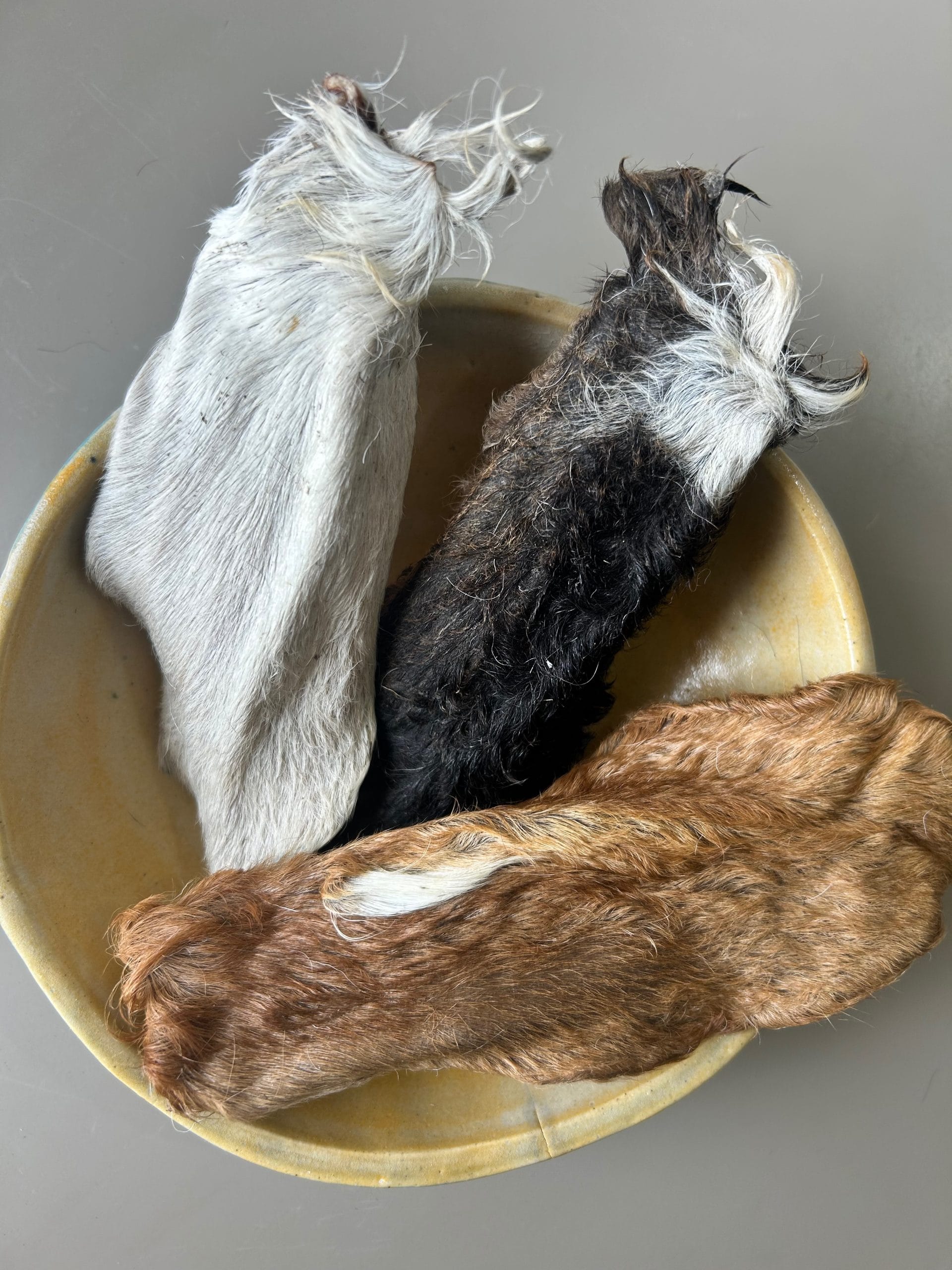
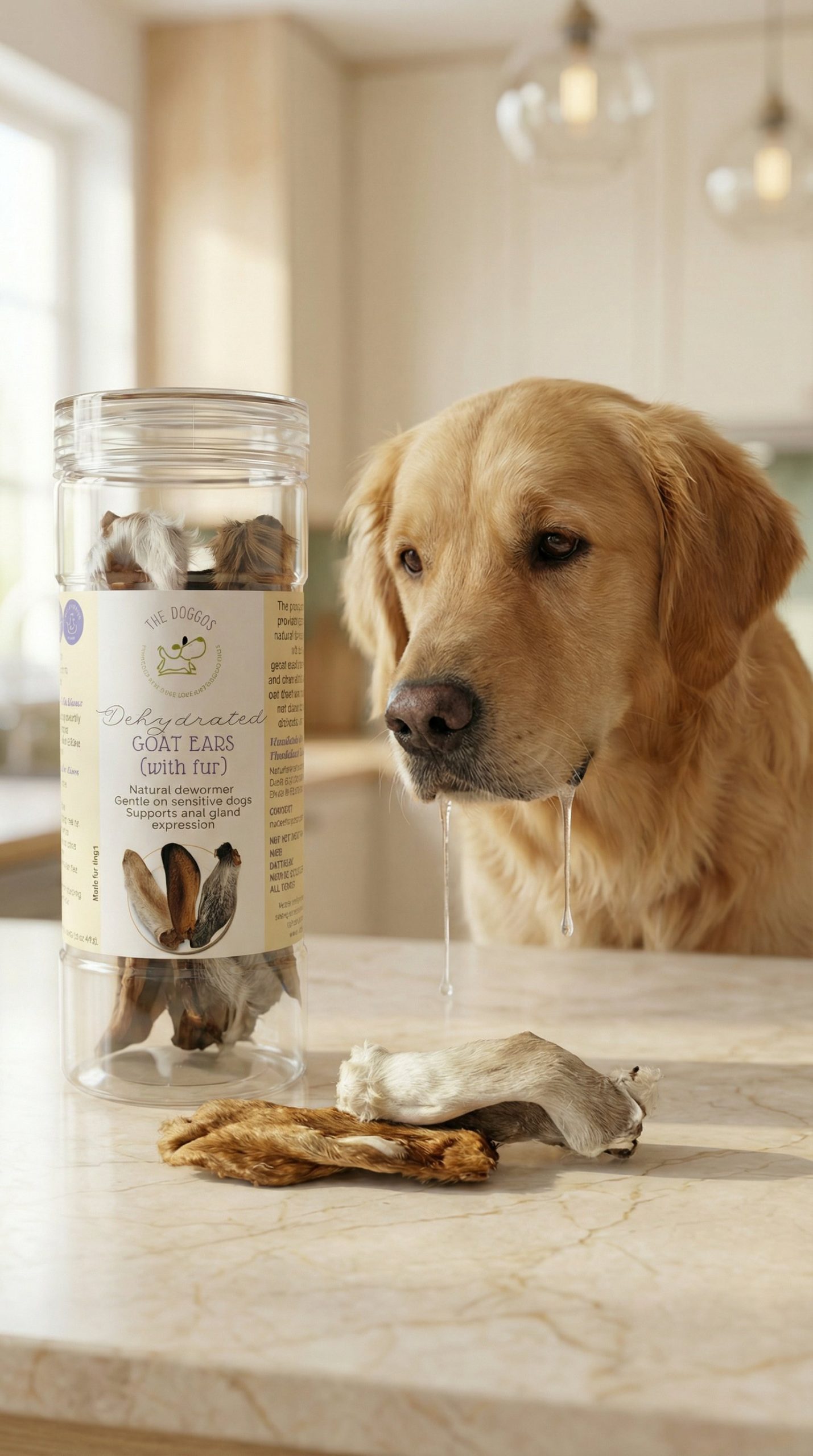
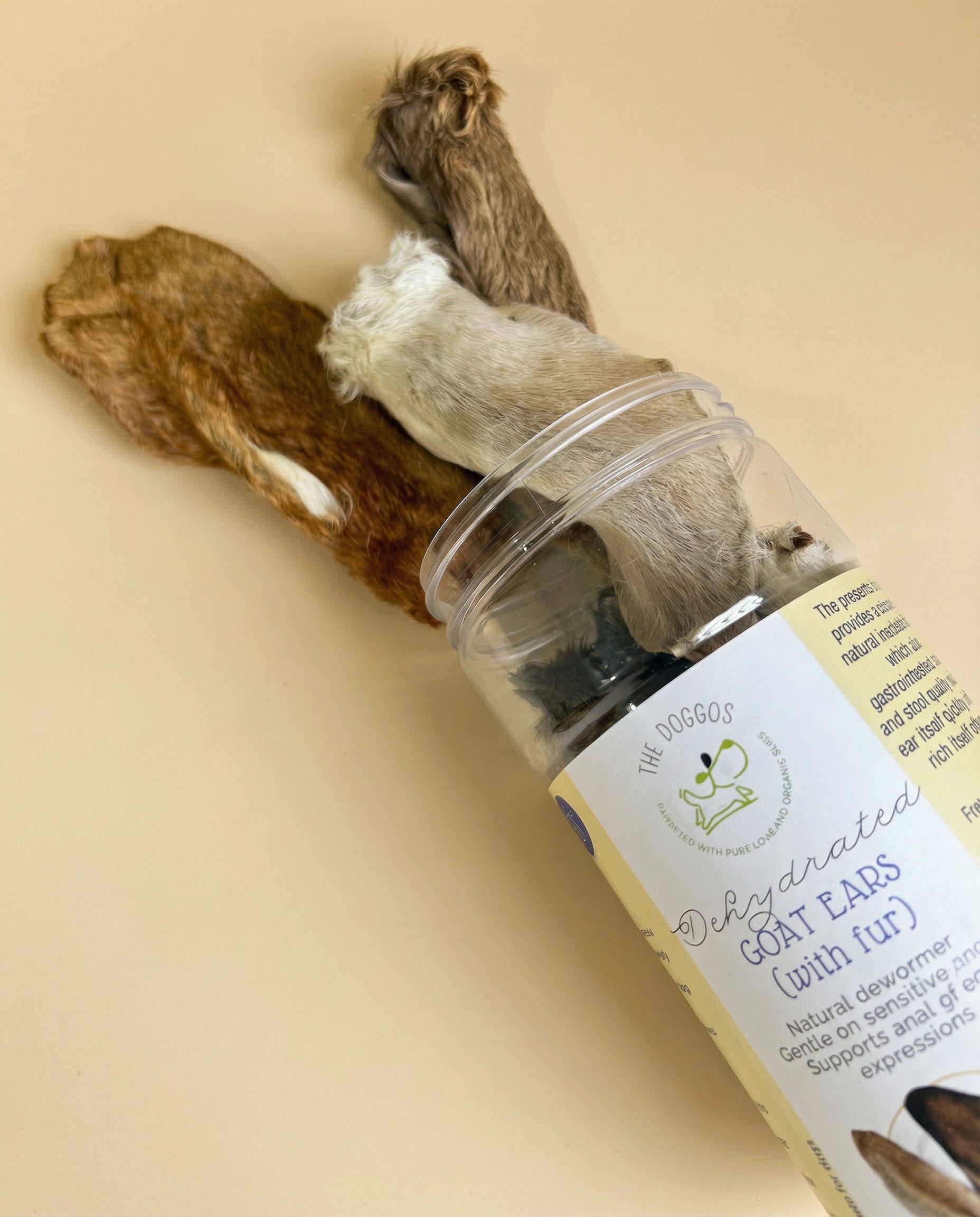
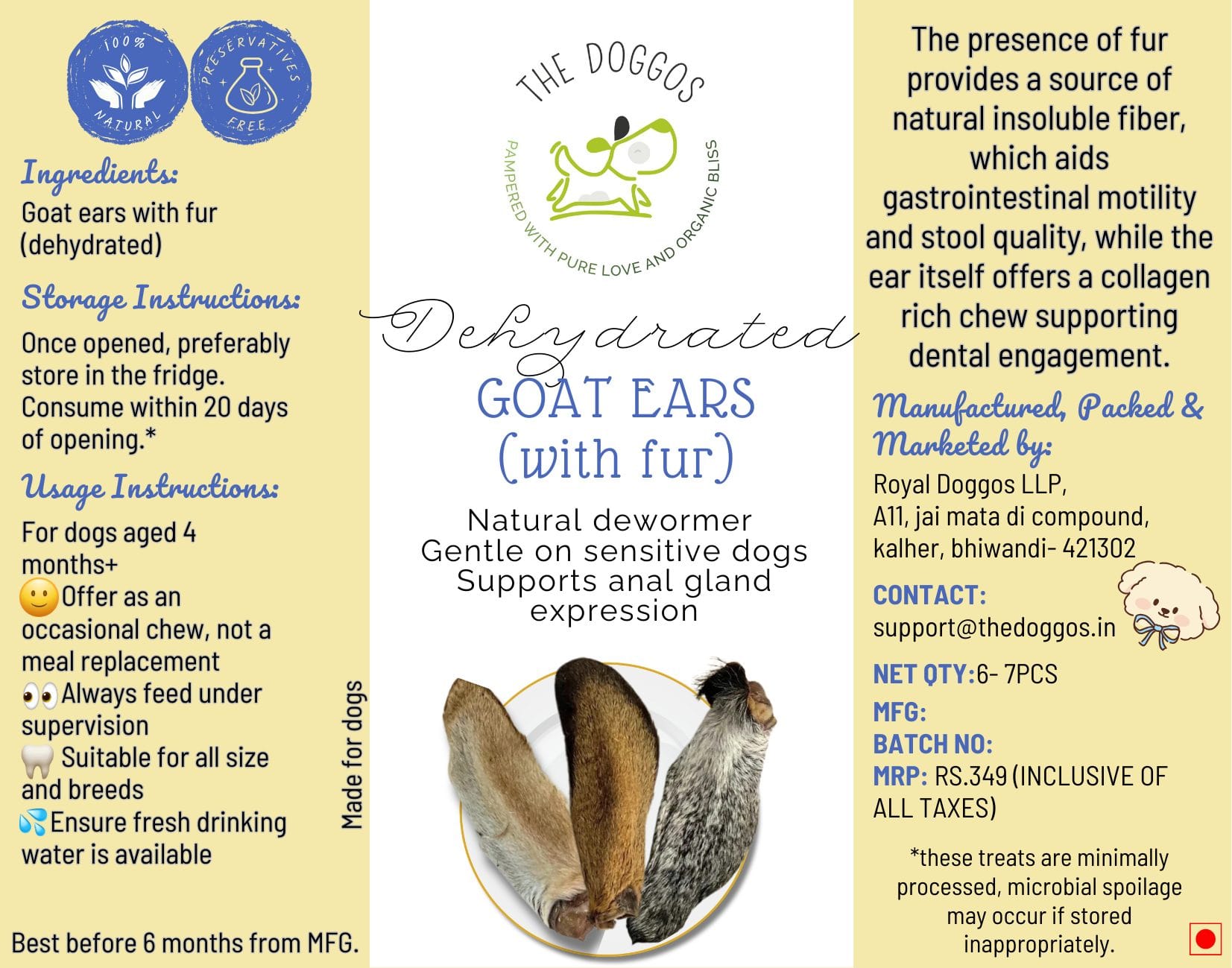
Free-farm goats, ears slow-dehydrated whole, fur included. The fur isn't a manufacturing oversight; it's natural insoluble fibre that helps move food through the gut. Dehydration takes the moisture out and locks in the cartilage and natural minerals. No additives, no preservatives, no flavouring.
Free-farm goats, ears taken whole and slow-dehydrated with the fur left on. Dehydration takes the moisture out and locks in the cartilage and natural minerals.
A whole goat ear is already complete: natural insoluble fibre in the fur that moves food through the gut, plus cartilage and natural minerals locked in by dehydration. No additives, no preservatives, no flavouring.
THE LABEL TEST
Rendered meat meal, animal fat (preserved with BHA & BHT), vegetable glycerin, cane sugar, salt, sodium tripolyphosphate, glucose syrup, food colouring (titanium dioxide, Red 40), potassium sorbate, propylene glycol, artificial smoke flavour, mixed tocopherols, phosphoric acid, citric acid…
Goat ears.
1 ingredient. The whole label.What it does
One whole goat ear, fur intact: fibre, dental scrub and enrichment in a single chew, drawn from what the ear actually does.
Goat-ear fur is natural insoluble fibre that helps move food through the gut, the roughage wild dogs got from prey.
A long chew session to scrape plaque on the way down, without the jaw-fatigue.
The natural crunch satisfies a chewing instinct kibble never touches. Enrichment, not just a snack.
Just free-farm goat ear: a single ingredient, no additives, preservatives or flavouring.
How we make it
Source
We work with audited farm partners, not factory-line suppliers, and pick the cuts that actually carry the nutrition. No mystery meat, no rendered meal, no protein blends. One source, one cut, every batch traceable to the farm it came from.
Trim
Most "natural" treats throw the raw cut into the dehydrator with the fat, skin and tendon ribbons attached. Fat oxidises faster, shortens shelf life by months, and adds calories your dog doesn't need. We trim by hand. The slow part of the process is here.
Slow heat
Twelve-plus hours in a controlled-humidity dehydrator at low temperature. Slow heat preserves the protein, collagen and natural minerals. High-temp drying, the industry shortcut, denatures the protein and turns it into brittle dust. We finish each batch under 8% moisture, the threshold below which microbes can't grow.
Quality
Every piece is checked at the bench for moisture, snap, and texture. Hard chews go through a controlled splinter test. We want them to break into chewable shards, not dangerous fragments.
Goat ear. Fur stays on.
Long enough to scratch the chewing itch. Short enough to not jaw-fatigue.
Roughly two weeks of enrichment chews at the recommended frequency.
No preservatives, no flavouring, no artificial colour.
“Pebble's gut was always a bit irregular on dry kibble. Goat ears twice a week and the stool quality is visibly more consistent. Vet said the fur is doing its job.”
“Sasha gets bored of every chew within a week. The goat ears have been the only one she comes back to four months in. Fur and all.”
The raw question every pet parent asks
Indian pet parents who feed raw are trying to feed clean. The instinct is right. The risk isn't even the meat itself; it's the cross-contamination chain after the meal: the bowl, the lick, the sofa, your hands. Slow dehydration is the perfect fix.
The dog eats wherever the dog eats: sofa, floor, sometimes your bed. Bowl, lick, the surfaces after. That's the contamination chain raw food rides through your home.
Cooked bones splinter, so most home-cooked dog meals skip bones. Smart for safety, but it leaves a calcium, phosphorus, and cartilage gap.
Slow dehydration is the middle path that solves both. Whole-food nutrition. No live bacteria. No splinter risk. The dog gets the full joint, calcium, and protein matrix, without you mopping the sofa afterwards.
Salmonella doubling at 30°C
Half-hour and the count doubles. Dehydration takes the moisture bacteria need to multiply away entirely.
Our moisture endpoint
Below this threshold, no microbe can grow. Slow heat takes us under, every batch.
Of dehydration as preservation
Older than refrigeration. Older than pet food. The simplest fix has been the right fix all along.
Real questions, real answers
Yes. Fur is insoluble fibre. It passes through the digestive tract unchanged but helps move food along. Wild prey diets include fur, feathers, and bone, all roughage. We leave it on because it does work.
It varies by dog and chewing style. Heavy chewers finish faster, light chewers make it last. Always supervise.
From 12 weeks onwards under supervision. Soft enough for puppy jaws while engaging the chewing instinct.
Small dogs: ½ ear per session. Medium dogs: 1 ear. Large dogs: 1–2 ears. Treats and chews should be 10% or less of daily diet.
2–4 times per week works for most dogs.
Cool, dry, sealed jar. Don't refrigerate: moisture spoils dehydrated treats. Reseal tightly after each use.
The packaging truth
The science, honestly.
Most treats don’t die in the dryer. They die in the package. There are three ways to put food in a bag. Only one survives an Indian courier van without ending its life in a landfill. Tap each pack. We’ll stress-test it for you.
Put it through the courier-van test ↓ tap each pack
Our jar · stamped PET 1
A rigid jar with an airtight foil seal. No oxygen reaches the crunch, which is how a single-ingredient food stays fresh with zero preservatives. Stamped PET 1 on the base: the most recycled plastic on earth, the same resin as your water bottle. Rigid, recyclable, real scrap value. The kind of thing a kabadiwala actually takes.
The supermarket pouch · crush + landfill
The usual supermarket pouch is a bag full of air. A bag full of air gets crushed. Stack it in a courier van and the treats rattle, knock and settle to dust at the bottom. Worse, it never gets recycled, because it isn’t one material. It’s five, fused with printed ink:
Crushes · landfillMagnified: one pouch wall
Nothing separates them. No recycler, no kabadiwala takes it. Landfill, every single one.
The paper bag · the green myth
Paper that holds oily food is lined with plastic. So it’s mixed material too, and just as unrecyclable. It soaks. It tears when wet. The treats go soft. The most eco-looking option on the shelf is the quiet landfill one.
Soaks · tears · landfillThe scorecard
We lose the last row on purpose.
The jar costs us more.
We pay it so your dog doesn’t.
When it’s empty use it yourself · recycle it · or send it back to us.
Sealed against air. Crush-proof in transit. PET 1. The jar your dog’s food deserves.
The contact sheet
The same hand catalogues every chew. Shelve the goat ears beside their single-ingredient dental and joint kin.
Why monthly
Most of what makes a treat actually work, collagen, glucosamine, omega-3, gut diversity, accumulates over weeks, not days. One pack gets you started; three packs gets you the result. Subscribe, save, and we ship the next one before this one runs out.
7 ears · Single-ingredient enrichment · Free shipping over ₹999.
Add to bowl — ₹349.00
Daksh V. (verified owner) –
Slightly oily texture on the inside which I wasn’t expecting. Dog loved it. I just put a paper towel down. 4 stars.
Mohit B. (verified owner) –
Cheaper than imported pig ears, made locally, indie-friendly. My two indies share-fight over them.
Janvi P. (verified owner) –
Good quality but the pieces vary in size, some are quite small. Smaller dogs handle that fine, my lab inhales the small ones in seconds.
Tisha M. (verified owner) –
Replaced pig ears (which made my cocker’s stomach upset) with these. Zero issues, same enjoyment. Hers and my problem solved.
Rahul Bhatia (verified owner) –
Finally something that lasts! My lab destroys every chew toy in 2 minutes flat. These goat ears gave him a solid 25-30 minute session. Not too hard not too soft just right. And the fur provides fiber for gut health apparently. Functional chew not just empty calories. Love this concept.
Kavitha Sundaram (verified owner) –
Was giving pig ears earlier but they’re SO greasy. My dogs face and my sofa would be covered in oil. Switched to goat ears and zero grease! Plus the fur fiber helps digestion. My dogs stools became firmer and more consistent. Better in every way compared to pig ears.
Shobha Nair (verified owner) –
Puppy chewing phase was destroying my house. Shoes chappal sofa corners cable wires nothing was safe. Started giving goat ear every evening and the destructive chewing STOPPED. He redirects all that energy to the ear instead. Saved my furniture and my sanity. Every puppy parent needs these.
Aniket B. (verified owner) –
Three dogs at home of varying sizes. The goat ears are a safe option for all of them. No fights over hard bones either.
Nitin Mehta (verified owner) –
My anxious indie gets stressed during storms and loud traffic noise. Goat ear chewing session calms her right down. Something about repetitive chewing releases happy hormones. She goes from panting and pacing to lying down peacefully crunching away. Natural anxiety management for dogs.
Priyanka Deshpande (verified owner) –
Good product dogs love it. The fur thing was scary at first but apparently its natural fibre that helps clean the gut. My dogs handled it fine no loose stools. Only 4 stars because the smell when you open the box is quite strong. Dogs love it obviously but keep it sealed properly.
Bhimashankar –
Nice
Suresh Thakur (verified owner) –
Better than any dental chew stick from the market. Those Dentastix type things are full of wheat and chemicals. This is single ingredient real goat ear. My dog actually WANTS to chew it unlike those commercial sticks he ignores. Teeth look cleaner gums look healthier. Nature > chemicals always.
Avinash K. (verified owner) –
Single ingredient, no nasties. Ria my golden loves them. We give one mid-day on weekends as her keep-busy chew. 25 mins of peace.
Tanvi Sharma (verified owner) –
Replaced those chemical loaded dental sticks with these goat ears. Actual single ingredient chew that cleans teeth naturally. My dog chews these willingly unlike those dentastix he used to ignore. Natural always beats manufactured.
Manish Tiwari (verified owner) –
Added goat ears to our treat rotation along with chicken feet and sardines. Different textures different nutrition different chew times. Dogs get variety and complete nutrition. The Doggos product range makes rotation feeding so easy. Everything is single ingredient no nonsense.
Ritika S. (verified owner) –
My senior beagle has lost a few teeth. Goat ears are soft enough that he can still enjoy a chew. Found my go-to for him.
Sara D. (verified owner) –
My pomeranian can finish one in 15-20 mins of focused chewing. Right size for small breeds.
Pavan R. (verified owner) –
Vet had said avoid hard chews after a tooth fracture last year. These are soft enough. Crisis solved.
Madhuri T. (verified owner) –
Floppy soft texture is perfect for my puppy who’s teething. He gnaws and loves it. No worry of broken teeth.