By Mahiv Amit Chhabra, Certified Canine Nutritionist and author of The Desi Carnivore. Last updated: 18 May 2026.
TL;DR
- The Beagle diet in India should be lean and low-carb, roughly 30 to 40% protein, 15 to 22% fat, and under 25% carbohydrates. Beagles have a strong food drive, a slow metabolism, and the easiest weight-gain wiring of any popular breed in India.
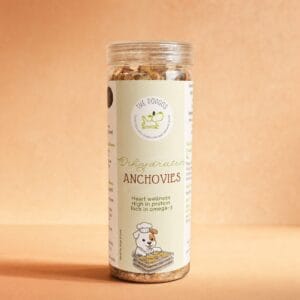
- Your two biggest problems are weight and ears, and both are solvable from the bowl. Dehydrated anchovies are the single most useful catalog product for a Beagle because they are low-calorie training rewards (4 to 5 kcal each) and a concentrated omega-3 source for the chronic ear inflammation Beagles are famous for.
- Free-feeding a Beagle is medical malpractice. Their food drive does not have an off switch. Measure every meal, weigh every chew, and treat the bowl like a prescription, not a buffet.
- Indian monsoon is Beagle ear-season. Humidity plus those long pendulous ear flaps trap moisture against the canal and feed yeast. The fix is mechanical (dry the ears) and dietary (cut the omega-6 chicken bombardment, add omega-3 every day).
- Beagles are also at elevated risk for IVDD, epilepsy in certain lines, cherry eye, and hypothyroidism. None of these are caused by food, but a clean diet meaningfully reduces the inflammation load that makes each of them worse.
The Beagle is the friendliest dog in India who will, if you let her, eat herself to death. That is not a joke. She is the only breed I consult on where the food drive is itself a medical condition. Tony, my older boy, has been around hundreds of dogs over six years and the Beagles are always the ones whose noses are already in the bag before the bag is open.
This is the diet plan I hand to every new Beagle client in Mumbai, Delhi, Bangalore, and Pune. The macros, the ear-infection protocol, the weekly bowl, the training-treat math, and the specific feeding mistakes Indian Beagle parents make.
Why the Beagle Bowl Is a Special Problem
The Beagle was bred in nineteenth-century England as a small scent hound. The genetic legacy that makes her brilliant at tracking, an obsessive food-motivated nose, also makes her the easiest dog in any household to overfeed. Two specific traits stack on top of each other:
- A strong appetite drive with no satiety brake. Beagles will keep eating long after they are full. A 2010 University of Cambridge study identified a POMC gene deletion in Beagles associated with obesity risk, the same gene linked to food-motivated behaviour in Labradors. Your Beagle is genetically wired to want more, every meal, every day.
- A slower metabolism than the dog looks like she should have. Beagles are athletic on a walk but their resting metabolism is closer to a small terrier than to a Lab. The 13 kg ideal-weight Beagle needs roughly 550 to 700 kcal per day, not 1,000.
Combine these and you get the Indian Beagle reality: most Beagles I see in consultation are 2 to 4 kg over ideal weight by age 3, and most owners think she “looks just right.” She does not. From above, you should see a clear waist tuck behind the ribs. If you cannot, you have work to do.
The Macro Targets for an Adult Beagle in India
Per the National Research Council’s 2006 Nutrient Requirements of Dogs and Cats, the minimum protein for an adult dog is 18% of dry matter. For a Beagle, you want to push protein up and crowd carbohydrates out, because every gram of unnecessary carb on a slow-metabolism dog turns into stored fat and inflammation.
| Macronutrient | Beagle target (% of dry matter) | Indian “small breed” kibble reality | Why it matters |
|---|---|---|---|
| Protein | 30 to 40% | 22 to 28% | Lean muscle, satiety, taurine precursors |
| Fat | 15 to 22% | 12 to 18% | Coat, ear lubrication, fat-soluble vitamins |
| Carbohydrates | Under 25% | 45 to 60% | Anything more drives weight gain and inflammation |
| Omega-3 (specifically) | 0.5 to 1 g per day | Trace | The single most important nutrient for Beagle ears |
The Indian “small breed” kibble aisle is the worst place to feed a Beagle from. Those bags are usually 45 to 60% carbohydrate from maize, rice, and wheat, with a token sprinkle of chicken meal and almost no usable omega-3. A 13 kg Beagle on small-breed kibble is being fed for a metabolism she does not have, with the nutrient profile that drives every condition the breed is prone to.
Beagle Health Conditions That Diet Touches
Beagles are not a fragile breed, but six conditions show up often enough that I plan diets around them.
- Obesity and the metabolic cascade. Fatty liver disease (hepatic lipidosis), insulin resistance, joint loading, and reduced lifespan all begin here. The fix is portion control, measured bowls, and high-value low-calorie training rewards (more on anchovies below).
- Chronic ear infections. Those long pendulous ears are a yeast and bacteria farm. The mechanical fix is to keep ears dry, especially in monsoon. The dietary fix is to crash the omega-6 inflammation load that commercial chicken delivers. Our full read on the natural ear infection protocol for Indian dogs goes deeper.
- Intervertebral Disc Disease (IVDD). Beagles have long backs relative to their leg length, which loads the spine on every jump. The single biggest preventive lever is keeping her at lean body weight. Every extra kilo on a Beagle is roughly four extra kilos of force across the disc on a jump landing.
- Idiopathic epilepsy. Certain Beagle lines carry an elevated seizure risk. Food does not cause this, but inflammation makes it worse. A clean low-carb diet with omega-3 is supportive, not curative.
- Cherry eye. Prolapse of the third eyelid gland. This is structural, not dietary, and usually needs surgical correction. A clean diet supports tissue healing post-op.
- Hypothyroidism. Beagles are at elevated breed risk. If your Beagle is gaining weight despite a measured diet, the thyroid panel is the first test, not a tighter food restriction.
Why Dehydrated Anchovies Are the Beagle’s Anchor Product
If I could put one item from the catalog into every Indian Beagle household, it would be dehydrated anchovies. The reasoning is mathematical, not promotional.
On the calorie side. A single dehydrated anchovy is roughly 4 to 5 kcal. The average commercial training treat is 12 to 25 kcal. Over a 20-reward training session, you save 150 to 400 kcal, which is up to half a Beagle’s daily allowance. For a breed where every treat counts, anchovies let you train and reward without sabotaging the waist.
On the omega-3 side. Anchovies are short-lived plankton-eating fish at the bottom of the food chain, with almost no heavy-metal bioaccumulation. Per 100 g of dehydrated anchovy, you get roughly 2 to 3 g of combined EPA and DHA, the two omega-3 fatty acids your dog actually uses (plant ALA conversion is under 5%). For a Beagle with chronic ear inflammation, 6 to 10 anchovies a day delivers a therapeutic dose in food form, with the training-treat bonus stacked on top.
On the inflammation side. Commercial Indian chicken is corn and soy fed, pushing the omega-6 to omega-3 ratio in the meat to 20:1 or 30:1, against the 7:1 target. This is the single biggest reason Indian Beagles have weeping ears and itchy paws. Adding omega-3 in every meal, either anchovies or dehydrated sardines or hemp seed oil, is corrective, not optional. The deeper biology is in our omega-3 for dogs guide.
Anchovies sit at the intersection of all three. That is why they are the anchor.
Indian Climate and the Monsoon Ear Problem
Beagle ears are a design flaw in Indian humidity. The long flap covers the canal, traps warm moist air, and creates a Petri dish for Malassezia yeast and bacterial overgrowth. Owners notice the head shaking and the smell, usually in July or August.
The mechanical protocol is non-negotiable: dry the ears after every monsoon walk with a clean cotton pad (no cotton buds into the canal), and check weekly for redness or yeasty smell. Beyond that, the diet is doing the real work:
- Cut the chicken-only bowl. If your Beagle eats chicken every day, you are loading omega-6. Rotate in goat or fish two to three times a week.
- Add omega-3 every single day. Six to ten anchovies, or 4 to 6 sardines, or 3 ml of hemp seed oil. Pick one, use it daily.
- Drop the high-carb kibble. Carbs raise inflammation through insulin signalling. The same omega-6 imbalance also drives the paw-licking covered in why dogs itch in Indian climate and the wider dog itching protocol.
A Beagle on a clean omega-3-loaded diet usually has visibly drier ears within 4 to 6 weeks. The yeast smell is the diagnostic.
A Weekly Beagle Meal Plan Using the Doggos Catalog
This is the template I give a 12 to 14 kg adult Beagle with no medical conditions. Two meals a day, total daily intake around 550 to 700 kcal. Adjust by waist visibility, not by guesswork.
| Day | Morning bowl (~280 to 350 kcal) | Evening bowl (~250 to 300 kcal) | Training reward (counted) |
|---|---|---|---|
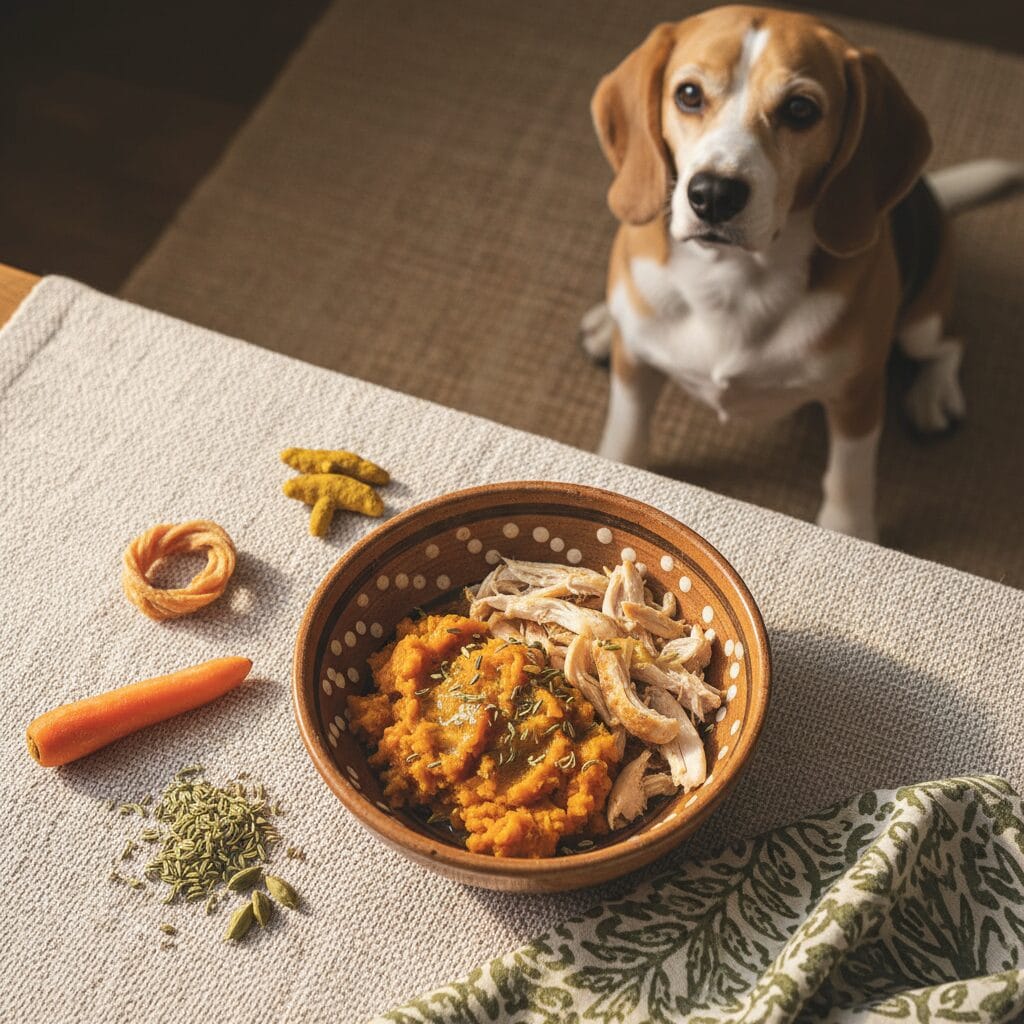
| Mon | Cooked chicken thigh (deboned) + steamed pumpkin + 1 tsp Bone and Organ Boost | Same | 6 to 8 dehydrated anchovies across the day |
| Tue | Cooked goat curry-cut + sweet potato + 1 tsp Bone and Organ Boost | Same | 6 to 8 anchovies |
| Wed | Cooked chicken + spinach + 4 dehydrated sardines crumbled in | Cooked chicken + 1 tsp Bone and Organ Boost | 6 to 8 anchovies |
| Thu | Cooked goat + green beans + 3 ml hemp seed oil | Same | 6 to 8 anchovies |
| Fri | Cooked chicken + pumpkin + 1 tsp Bone and Organ Boost | Same | 6 to 8 anchovies plus 1 dehydrated chicken foot |
| Sat | Cooked goat + sweet potato + Bone and Organ Boost | Cooked chicken + 4 sardines | 6 to 8 anchovies |
| Sun | Fasting morning (bone broth only) | Cooked chicken + pumpkin + 4 sardines + 3 ml hemp oil | None, recovery day |
A few rules that matter for a Beagle:
- Weigh the food, do not eyeball it. A kitchen scale is the cheapest piece of veterinary equipment you will ever buy.
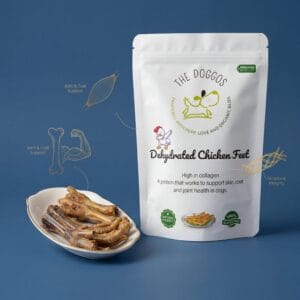
- Always debone after cooking. Cook the meat, then strip the bones. Cooked bones splinter. Calcium comes from the Bone and Organ Boost or dehydrated chicken feet, where the low-temperature drying keeps the bone safe.
- Anchovies are training rewards, not toppers. Use them earned during training, not sprinkled on the bowl. The Beagle works for them, which is half the calorie-control system.
- Vegetables stay under 15% of the bowl. Pumpkin, sweet potato, spinach, green beans. Skip onion, garlic, raw potato, grapes, and any leftover paratha that fell on the floor.
From Mahiv’s practice: A 4-year-old Beagle named Cookie in South Delhi came to me at 16 kg, recurring ear infections on a six-monthly antibiotic cycle, and a vet who had recommended a prescription “weight management” kibble for the third year in a row. We dropped the kibble. We set her daily intake at 650 kcal, with cooked chicken and goat rotated through the week, 6 to 8 dehydrated anchovies a day used exclusively as training rewards, 1 tsp Bone and Organ Boost on every meal, and 3 ml hemp seed oil four days a week. By month 3 she was 14 kg and her ears had stopped weeping. By month 5 she was 12 kg, the antibiotic cycle had not returned, and the prescription kibble was sitting unopened on a kitchen shelf. The diet was the prescription.
Life-Stage Adjustments for the Indian Beagle
Puppies (8 weeks to 12 months). Higher protein (35 to 45%) and moderate fat to support growth without front-loading fat stores. Three meals a day until 6 months, then two. Avoid the overfeeding-from-day-one trap, the genetics will already push appetite without your help. Half a dehydrated chicken foot two to three times a week from 16 weeks onwards is plenty for calcium and dental development.
Adults (1 to 7 years). Maintenance. The weekly plan above. The single best monitoring tool is a monthly side-profile photo against the same wall and the same lighting. Waist tuck, rib visibility through the coat (not through fat), and stool quality.
Seniors (7+). Beagles are long-lived for a small breed, often 13 to 15 years. The senior bowl needs slightly more omega-3 (joint and brain), slightly less starch, and watchful monitoring for thyroid function. I lean heavily on anchovies and sardines for senior Beagles, the DHA supports cognitive function and the EPA reduces joint inflammation. Add a dehydrated chicken foot twice a week for natural glucosamine.
Common Indian Feeding Mistakes for Beagles
Most of these I see weekly.
- Free-feeding from a bowl left out all day. This is the single worst Beagle mistake. Their satiety brake does not work. The bowl must be measured, served, and removed. Not negotiable.
- The “treat-counter” household culture. Anything that falls on the floor goes in the Beagle. Children sneaking biscuits. Family elders feeding “just a tiny bit of roti.” Every Beagle household needs a no-fly-zone rule that the dog is on a measured diet and human food is not part of it.
- Commercial “small breed” or “indoor” kibble. Almost all of these are 45 to 60% carbohydrate. For a slow-metabolism dog with strong food drive, this is the worst possible macronutrient profile.
- Parle-G and Marie biscuits as training treats. Sugar and maida. Use dehydrated anchovies instead, lower calorie, higher value, with the omega-3 bonus.
- Treating ear infections with antibiotic ear drops alone. The drops handle the symptom for two weeks. The diet handles the cause. If your Beagle is on an antibiotic cycle every six months, the diet is the diagnostic gap.
- Skipping omega-3 because “she gets chicken every day.” Indian chicken is the problem, not the solution. Without an omega-3 corrective, you are feeding inflammation.
- Vegetarian feeding. A Beagle without animal protein is a Beagle being slowly starved of taurine, EPA, DHA, B12, and bioavailable iron. The biology is not negotiable. Feed her meat.
Frequently Asked Questions
How many calories does a Beagle need per day in India?
An adult Beagle at ideal weight (12 to 14 kg) needs roughly 550 to 700 kcal per day. Working or highly active Beagles can go higher, spayed or senior Beagles slightly lower. The exact number matters far less than measuring the same amount every day and adjusting by waist visibility every two weeks. Use a kitchen scale, not a scoop.
Are dehydrated anchovies safe for Beagles every day?
Yes, 6 to 10 dehydrated anchovies per day is a safe and therapeutic dose for a 12 to 14 kg Beagle. They are low in mercury (short-lived bottom-of-food-chain fish), high in EPA and DHA, and only 4 to 5 kcal each. They are one of the few daily treats you can give a Beagle without worrying about weight gain. Count them into the daily allowance.
Why does my Beagle keep getting ear infections in monsoon?
Beagle ears are a humidity trap. The long flap covers the ear canal, traps moisture and warmth, and lets yeast and bacteria thrive. On top of this, a chicken-heavy commercial Indian diet floods the body with inflammatory omega-6 fatty acids that make ear linings more reactive. The fix is mechanical (dry the ears after walks, weekly check) and dietary (cut carb-heavy kibble, add omega-3 every day). Our natural ear infection guide for Indian dogs has the full protocol.
Can my Beagle eat raw meat?
The biological argument for raw feeding is sound, but Indian wet-market hygiene plus humidity is a real cross-contamination risk for both your dog and your kitchen. The Doggos method is “Cook the Meal, Dehydrate the Bone”, you cook the muscle meat to kill pathogens, debone it after cooking (cooked bones splinter), and supply bone calcium through dehydrated products like chicken feet or Bone and Organ Boost.
What is a Beagle’s ideal weight?
For a standard Beagle in India, ideal adult weight is roughly 9 to 14 kg, depending on frame and sex. The number on the scale matters less than the side-profile. From above, you should see a clear waist behind the ribs. From the side, you should feel ribs with light pressure (like the back of your knuckles), without seeing them. If you cannot find ribs at all, the Beagle is overweight regardless of what the scale says.
Is wet food better than kibble for Beagles?
Wet food is generally a better starting point than dry kibble for Beagles, mainly because of moisture content (70% water versus 10%) and lower carb load. The best option is fresh cooked food (chicken or goat) with dehydrated toppers for calcium and omega-3. Most Indian wet food in pouches is still high-carb and ingredient-vague, read the label, not the marketing.
How do I stop my Beagle from begging at the table?
You stop it the day she joins the family, not after the habit is set. No human food, ever, from anyone in the house, including the grandparents. A Beagle who has been fed roti once will try for roti every meal for the rest of her life. Use dehydrated anchovies as the only allowed reward, given out of training context, not from your plate. The whole-household discipline is the actual training.
About the Author
Mahiv Amit Chhabra is a Certified Canine Nutritionist and author of The Desi Carnivore: The Indian Pet Parent’s Guide to Real Meat, Whole Prey, and Ancient Superfoods. He runs The Doggos from Thane, Maharashtra, alongside his dogs Tony and Toughie, the brand’s longest-serving quality-control team. Read more about Mahiv.