By Mahiv Amit Chhabra, Certified Canine Nutritionist and author of The Desi Carnivore. Last updated: 18 May 2026.
TL;DR
- The best dog itching home remedy India owners can run is a 4-week reset: fix the Omega-6:3 ratio in the bowl, pull out roti and biscuits, and treat active inflamed patches with Baobab Therapy Mask three times a week.
- What Indian owners call “heat” is almost always Omega-6 inflammation, not thermal heat. Commercial corn-fed and soy-fed Indian chicken sits at a 20:1 to 30:1 Omega-6:3 ratio against the ideal of 7:1, and that fat profile drives paw licking, hot spots, and chronic itch.
- True chicken protein allergy is rare. Most “chicken allergies” diagnosed in Indian clinics are inflammatory reactions to that fat imbalance, not immune-system responses to the protein itself.
- Frequent shampooing makes itching worse. Stripping the natural skin barrier with harsh shampoos leaves the dog more reactive to humidity, dust, and mosquitoes.
- Expect visible reduction by day 14 and full clearance by day 28 to 42. Antihistamines and steroid creams are fire extinguishers, the diet is the fix.
The first message I get on most monsoon mornings is some version of “my dog is scratching itself raw, the cream worked for a week and now it is back.” Eight times out of ten, the dog is on kibble or a chicken-rice bowl with no Omega-3 added, and the steroid cream is suppressing a fire that the bowl is feeding daily.
This is the deep-dive protocol article. For the foundation on what itching actually is, read our why is my dog always itching guide and our hot spots on dogs in India explainer first. What follows is the four-week reset I run with clients when nothing else has stuck.
Why Indian Dogs Itch More: The Climate Stack
The Indian environment punishes a compromised skin barrier in ways Western dermatology textbooks do not describe. Five climate-specific drivers sit underneath almost every chronic itch case I see.
- Humidity and monsoon dampness. Mumbai, Chennai, Kolkata and the Konkan belt hold 80 to 95 per cent humidity for months. A coat that never fully dries is a culture medium for Malassezia yeast and Staphylococcus bacteria.
- Dust and pollution. Delhi-NCR winter PM2.5 and summer Loo dust deposit a film of particulate against the skin and irritate follicles.
- Salt air in coastal cities. Goa, Chennai, Vizag and Mumbai air carries marine aerosol that dries out the skin’s lipid layer.
- Hard water. Borewell and tanker water leaves a calcium-magnesium film on the coat that traps moisture and yeast.
- Mosquito and flea load. Year-round across most of India, not seasonal as in Europe. One flea-allergic dog scratches itself into a hot spot within 48 hours.
The climate is the trigger. The diet is the fuel. Treat only the trigger and the dog stays inflamed.
The Dietary Root Cause Most Indian Vets Miss
Commercial Indian chicken is overwhelmingly corn-fed and soy-fed, both heavy in Omega-6 linoleic acid. The result is chicken meat with an Omega-6:3 ratio between 20:1 and 30:1 against the pasture-raised ideal of around 7:1. Feed that fat profile every day without an Omega-3 counterbalance and the dog’s body produces a steady drip of pro-inflammatory eicosanoids (arachidonic acid, prostaglandin E2, leukotriene B4) that show up on the skin as redness, paw licking, ear gunk, and hot spots. The mechanism is well documented in canine atopic dermatitis literature, see for example the review in Veterinary Dermatology by Mueller and colleagues.
This is the bowl problem masquerading as a skin problem.
The “Heat” Myth
Ayurveda and TCM both warn against “heat-producing” foods like chicken and eggs. The observation behind that warning is real, many dogs do flare with rashes after chicken meals. The mechanism is wrong. It is not thermal heat, it is the Omega-6 spike from grain-fed poultry firing inflammatory pathways within hours of digestion. Add Omega-3 from oily fish or hemp to the same chicken bowl and the “heat” symptoms vanish, no protein change required.
The Protein Allergy Myth
By month three of chronic itch, most Indian vets recommend a hydrolysed-protein “hypoallergenic” kibble at three times the price of normal kibble. True IgE-mediated chicken protein allergy exists but is uncommon. Far more often, the dog is reacting to the inflammatory fat profile of grain-fed chicken, not to the protein. Switching to mutton or quail “cures” the allergy because those proteins come with a better fat ratio, not because the immune system has stopped recognising chicken.
The Hygiene Gap: Why Over-Bathing Backfires
The monsoon ritual of three baths a week with an antiseptic shampoo is one of the most reliable ways to make itching worse. The dog’s skin barrier is built on a thin lipid film and a slightly acidic pH. Strip it with detergent surfactants and you leave the skin more permeable to humidity, dust, allergens, and yeast. Bathing more than once every 10 to 14 days, in most cases, treats the symptom and feeds the cause.
Aggressive grooming, harsh sprays, and tick-and-flea collars stacked on top make a stripped-barrier dog itchier within a week. What you put back on the skin matters more than what you scrub off.
The Reset Protocol: Four Weeks to Clear Skin
This is the protocol I run with chronic-itch clients. It is built around the brand’s “Cook the Meal, Dehydrate the Bone” method and it works because it treats the whole loop, bowl plus barrier plus inflammation, in parallel.
Step 1: Reset the Diet
Switch the base bowl to home-cooked. The “Golden Chicken Bowl” structure: 500 g chicken thighs rinsed in turmeric water (natural antiseptic), pressure-cooked for 2 to 3 whistles, deboned, plus 100 g pumpkin, plus liver, mashed together. Never feed cooked bones. For more on bone safety see our can dogs eat bones guide.
Then add Omega-3 to every chicken meal, non-negotiable. Choose one:
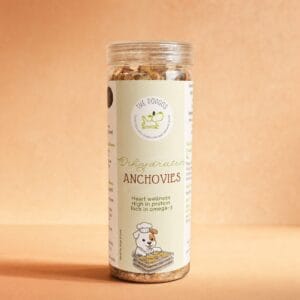
- 2 to 3 dehydrated anchovies per 10 kg of body weight, daily
- 1 to 2 dehydrated sardines per 10 kg, daily
- 2 to 5 ml hemp seed oil, daily, drizzled on the cooled bowl
For the deeper read on dosage and fat math, see our companion guide on Omega-3 for dogs in India.
Step 2: Treat Active Hot Spots with Baobab Therapy Mask
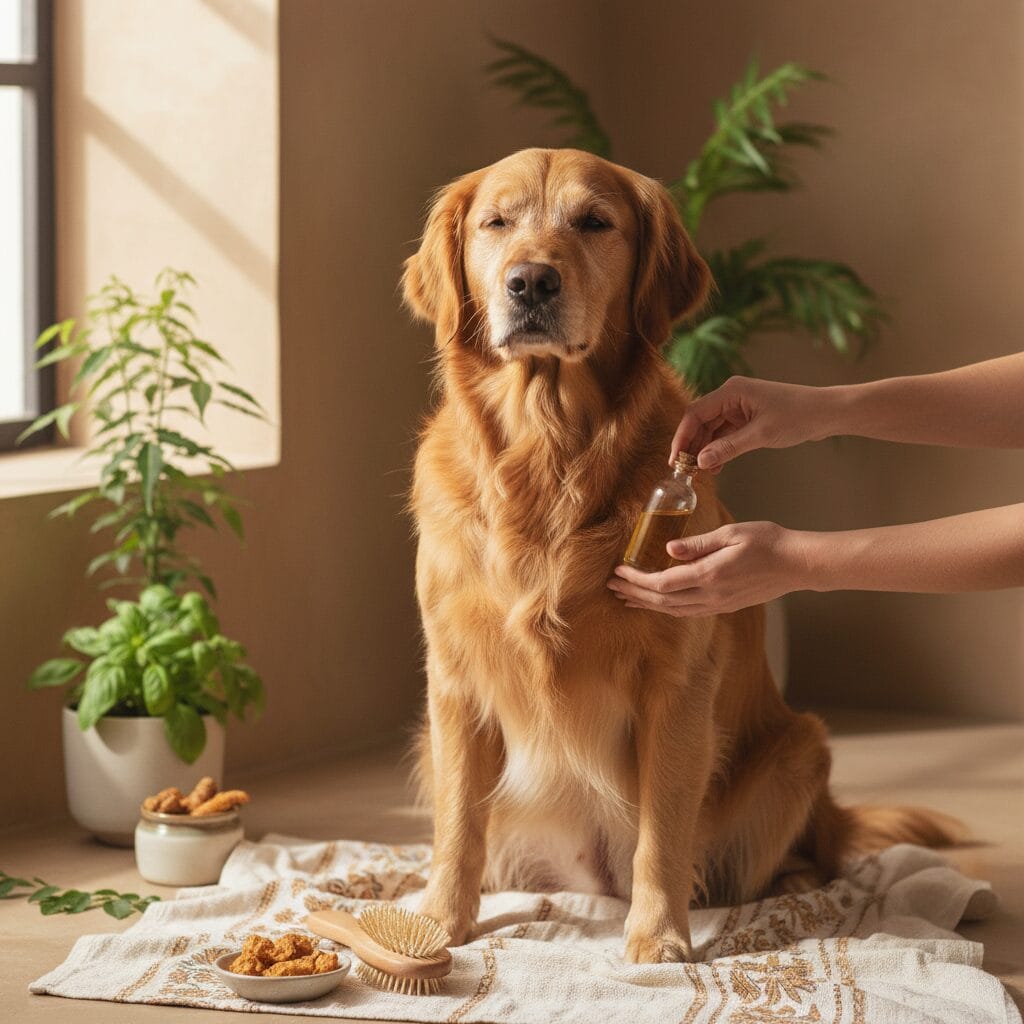
This is the anchor of the entire protocol. The Baobab Therapy Mask is a detox clay mask with anti-fungal botanicals that pulls moisture and yeast out of inflamed lesions while restoring the skin’s lipid barrier. Apply a thin layer to active hot spots and irritated zones, leave for 15 to 20 minutes, rinse with lukewarm water. Run this three times a week for the first two weeks, then taper.
Why a mask and not a shampoo? A shampoo is a wash-off detergent applied to the whole dog. A clay mask is a targeted dwell-time treatment on the lesions, so yeast, bacteria, and oxidised sebum lift into the clay rather than spreading across the coat.
Step 3: Maintenance with Baobab Oil
Once the lesion has dried and pinked over (usually day 10 to 14), shift to a thin daily layer of Baobab Oil on the affected area. Baobab Oil absorbs into the epidermis rather than sitting on top the way coconut and mustard oils do, which means it keeps the new skin barrier soft without trapping heat or clogging follicles.
Step 4: Cut the Inflammatory Inputs
For the full 4-week reset window:
- No roti, no chapati
- No commercial biscuits (Parle-G, Marie, Bonkers, anything with maida and sugar)
- No kibble, even “hypoallergenic”
- No table scraps with cooking oil
- One bath only, on day 14, with a mild oatmeal shampoo
Step 5: What to Expect, Week by Week
| Week | What you should see |
|---|---|
| Week 1 | Less new scratching. Existing lesions stop spreading. Slight worsening of dandruff as old skin sheds. Normal. |
| Week 2 | Active hot spots dry up and pink over. Coat feels softer. Less ear gunk. |
| Week 3 | Hair regrowth visible on bald patches. Paw licking reduces by 70 to 80 per cent. |
| Week 4 to 6 | Full clearance for most dogs. Stubborn cases need 8 to 12 weeks plus an elimination protein trial. |
Why This Beats Antihistamines and Steroid Creams
Cetirizine, prednisolone, and topical betamethasone do work. They suppress the inflammatory cascade for a few days, and they are excellent fire extinguishers for a flare that is keeping the dog awake at night. They are not solutions, because you cannot drug your way out of an inflammatory diet. Stop the cream, the bowl is still pouring fuel onto the fire, the hot spot returns within 10 to 14 days. Repeat steroid courses thin the skin, suppress the immune system, and set up the secondary infections owners then need antibiotics for. I now ask new clients to count their dog’s lifetime steroid courses before we even talk about food.
From Mahiv’s practice: A 6-year-old chocolate Lab in Bandra came in last August with chronic ear gunk, two hot spots behind the hindquarters, and a 3-month-old prescription for cetirizine that the owner had been giving daily. We pulled the kibble, switched to a mutton-trotter-and-pumpkin base bowl twice a week, added 3 ml hemp oil daily and 2 dehydrated sardines, and ran Baobab Therapy Mask on the hot spots and inside the ear flaps every Sunday for 4 weeks. By week 6 the ears were clean, the hot spots were furred over, and the cetirizine box was untouched. The food was the medicine. The mask did the topical work.
When to Actually See a Vet
The protocol above is for chronic, low-to-moderate itching with hot spots. Some presentations need a clinical hand and you should not delay:
- Open wounds with visible pus, or any lesion larger than a 5-rupee coin
- Fever (rectal temperature above 39.5 °C), lethargy, refusal to eat
- Yeast infection tracked deep into the ear canal with a foul odour, see our dog ear infection natural remedies guide for red flags
- Suspected demodectic or sarcoptic mange (patchy hair loss with crusting around eyes and ears)
- Hot spot that doubles in size in under 24 hours
For these, get a skin scrape, a cytology, and a targeted treatment from your vet. Then come back to the diet reset, because the underlying inflammation will still be there once the acute infection clears.
Frequently Asked Questions
What is the best dog itching home remedy in India?
The single most effective home protocol is a four-week diet reset: home-cooked chicken or mutton with Omega-3 added daily (anchovies, sardines, or hemp oil), no roti, no kibble, and topical treatment of active hot spots with a clay mask three times a week. Antihistamines and steroid creams suppress symptoms but do not address the inflammatory fat ratio driving the itch.
Why does my dog itch more during the monsoon in India?
Humidity above 80 per cent prevents the coat from drying fully, creating ideal conditions for Malassezia yeast and Staphylococcus bacteria. Combined with year-round flea load and an already-inflamed skin barrier from dietary Omega-6 excess, monsoon is when subclinical itch becomes clinical hot spots.
Is chicken really causing my dog’s allergies?
Usually it is the fat profile of commercial Indian chicken, not the protein itself. Grain-fed chicken sits at an Omega-6:3 ratio of 20:1 to 30:1 against an ideal of 7:1, which floods the body with inflammatory eicosanoids. Most “chicken allergies” resolve when Omega-3 is added to the bowl, no protein switch required.
How often should I bathe an itchy dog?
Once every 10 to 14 days with a mild oatmeal or pH-balanced shampoo. More frequent bathing strips the skin’s lipid barrier and worsens itching. Targeted clay-mask treatment of specific lesions is more effective than washing the whole dog.
How long before I see results from a diet change?
Visible reduction in scratching and new hot spots by day 14. Coat regrowth on bald patches by week 3. Full clearance for most dogs by week 4 to 6. Stubborn cases with multi-year inflammation may need 8 to 12 weeks plus a novel-protein elimination trial.
Can I use coconut oil instead of Baobab Oil for hot spots?
Coconut oil sits on the skin surface, traps heat, and can clog follicles, which often makes hot spots worse in humid Indian conditions. Baobab Oil absorbs into the epidermis and mimics the skin’s own lipid barrier, supporting healing rather than sealing the lesion under a layer of oil.
Does my dog need an allergy blood test?
For most chronic itch cases, no. The diet reset is cheaper, faster, and addresses the most common underlying driver. Blood and intradermal allergy testing is useful when itch persists despite a clean diet, a flea-free environment, and a 12-week reset, or when the dog has severe atopic dermatitis with secondary infections.
About the Author
Mahiv Amit Chhabra is a Certified Canine Nutritionist and author of The Desi Carnivore: The Indian Pet Parent’s Guide to Real Meat, Whole Prey, and Ancient Superfoods. He runs The Doggos from Thane, Maharashtra, alongside his dogs Tony and Toughie, the brand’s longest-serving quality-control team. Read more about Mahiv.