By Mahiv Amit Chhabra, Certified Canine Nutritionist and author of The Desi Carnivore. Last updated: 18 May 2026.
TL;DR
- The Boxer is one of the most cancer-prone and heart-sensitive breeds on Earth, with lymphoma, mast cell tumours, hemangiosarcoma, and a Boxer-specific cardiomyopathy (ARVC) running at unusually high rates. The single most evidenced nutritional intervention for this breed is an anti-inflammatory daily baseline anchored by hemp seed oil.
- The Boxer diet should be roughly 30 to 40% protein, 20 to 28% fat, and under 20% carbohydrates. The carb-heavy kibble that dominates the Indian pet aisle drives the same chronic low-grade inflammation that fuels both cancer pathways and cardiac stress.
- Hemp seed oil daily, dehydrated sardines twice a week, and the Bone and Organ Boost as a taurine source is the practical three-product protocol for Indian Boxer parents. Hemp oil delivers GLA (a rare anti-inflammatory Omega-6), sardines deliver EPA and DHA for the heart and coat, and the organ boost delivers the taurine that under-supplemented Boxers often run short on.
- Boxers overheat fast in Indian climate because of the short muzzle. Shift the summer bowl toward cooling fish proteins, keep them out of midday sun, and never overfeed. Obesity multiplies cancer risk in this breed more than in almost any other.
- Do not feed your Boxer raw meat from the Indian wet market. Cook the meal, dehydrate the bone. The biology supports raw. The Indian hygiene reality does not.
The Boxer arrived in India through colonial military and guard-dog channels in the early twentieth century, and three generations later she is everywhere, from Bandra apartments to Bangalore farmhouses, from Delhi police lines to Hyderabad villas. She is loyal, athletic, ridiculous around children, and one of the most cancer-prone dogs ever bred. The veterinary oncology data is not subtle. Studies from referral cancer centres place the Boxer in the top three or four breeds for lifetime cancer incidence, with lymphoma, mast cell tumours, and hemangiosarcoma all over-represented.
That is a heavy sentence to open with. It is also the reason this post exists. Most Boxer diet content online is written for European or American pet aisles and ignores both the cancer angle and the Indian climate. We are going to write the version your Boxer actually needs.
Why the Boxer Diet Has to Be Anti-Inflammatory from Day One
The medical literature on Boxer cancer susceptibility points repeatedly at chronic low-grade inflammation as the upstream driver. The same inflammatory pathway also stresses cardiac muscle, which matters because the breed already carries a genetic load of aortic stenosis and arrhythmogenic right ventricular cardiomyopathy (ARVC), the Boxer-specific cardiomyopathy that is named after this breed for a reason.
You cannot edit your Boxer’s genes. You can edit what her cells are bathed in every day for fourteen years. That is what the diet does. An anti-inflammatory daily baseline is not optional for a Boxer. It is the single biggest preventive lever you have.
Three biological facts make the case:
- Commercial Indian chicken is corn-and-soy fed, pushing the Omega 6:3 ratio in the meat to 20:1 or 30:1 against the 7:1 of pasture-raised. This floods the body with pro-inflammatory eicosanoids. A Boxer on kibble plus commercial chicken with no Omega-3 correction is sitting in chronic inflammation 365 days a year.
- High-carbohydrate diets raise blood glucose and feed the same inflammatory and tumour-supportive pathways that cancer biology consistently flags. Kibble at 50 to 70% carbohydrate is exactly the wrong macronutrient profile for this breed.
- The Boxer heart is unusually sensitive to taurine status. Boneless home diets and many commercial kibbles run low on taurine, and Boxers have been showing up in the dilated cardiomyopathy (DCM) literature alongside the spaniels and golden retrievers that get the most press.
Fix the inflammation, fix the carbs, fix the taurine. That is the entire diet philosophy in one sentence.
Why Hemp Seed Oil Is the Anchor Product for a Boxer
Hemp seed oil is the king of Gamma-Linolenic Acid (GLA), a rare Omega-6 that acts anti-inflammatory in the body. GLA converts into Prostaglandin E1, which down-regulates the inflammatory cascade rather than feeding it. For a Boxer, that mechanism is not a luxury topper. It is daily medicine.
Dogs with atopic dermatitis often lack the enzyme to convert linoleic acid into GLA on their own. Hemp seed oil bypasses that step entirely. For the Boxer specifically, three benefits stack:
- Anti-inflammatory baseline that quietly works on cancer-protective and heart-protective pathways every single day.
- Skin barrier repair that addresses the chronic allergies and hot spots Boxers are prone to in Indian humidity.
- Joint cushioning that helps the hip dysplasia load this breed often carries by middle age.
The daily dose is about half a teaspoon per 10 kg of body weight, drizzled cold over the cooked meal after it cools. Heat oxidises Omega fats. Never cook with it.
This is also why I anchor every Boxer protocol I run on hemp seed oil rather than fish oil capsules. The capsules oxidise in the bottle, the smell is unmissable on a 38°C Mumbai afternoon, and the GLA content is not there. Hemp oil sits in the fridge, pours clean, and delivers what the breed actually needs. For a deeper dive on the Omega-3 side of the picture, read our Omega-3 for dogs in India guide.
The Macro Targets for an Adult 25 to 30 kg Boxer
The National Research Council’s 2006 Nutrient Requirements of Dogs and Cats sets minimum protein at roughly 18% of dry matter for adult dogs. That is a survival floor. For a cancer-prone, muscular, athletic Boxer, the optimum is much higher and the carbs much lower.
| Macronutrient | Boxer target (% of dry matter) | Indian kibble reality | Why it matters for a Boxer |
|---|---|---|---|
| Protein | 30 to 40% | 18 to 25% | Lean muscle, taurine precursors, immune surveillance |
| Fat | 20 to 28% | 8 to 15% | Energy, Omega-3, fat-soluble vitamins, satiety |
| Carbohydrates | Under 20% | 50 to 70% | Anything more drives the inflammation and obesity that multiply cancer risk |
| Moisture (fresh diet) | 60 to 75% | Around 10% in kibble | Kidney load, hydration, important for a heat-sensitive breed |
An adult Boxer at a healthy 25 to 30 kg needs roughly 1,200 to 1,500 kcal per day, depending on activity, sex, and whether she is spayed. Working or extremely athletic Boxers go higher. Senior or spayed dogs go lower. Use waist visibility (a clear tuck behind the ribs from above) and rib palpation (you should feel them under a thin pad, not hunt for them) as your daily check, not the back of any bag.
The Two Golden Rules Apply with Extra Force to Boxers
Every bowl, regardless of breed, has to clear two checks. For a Boxer, where the stakes are cancer and cardiac, these matter more.
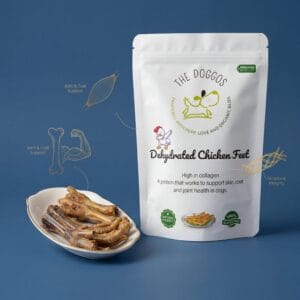
Rule 1: Calcium to Phosphorus ratio of 1.2:1. Meat gives phosphorus. Bone gives calcium. A boneless home diet of plain chicken plus rice slowly leaches calcium from the dog’s own skeleton over years, leading to Osteopenia and Rubber Jaw. The fix is non-negotiable, either dehydrated chicken feet or the Bone and Organ Boost into every meal.
Rule 2: Omega-6 to Omega-3 balance. The whole anti-inflammatory argument above lives or dies on this ratio. Add hemp seed oil daily and dehydrated sardines two to three times a week to bring the ratio back into the 5:1 to 7:1 range that the canine body actually evolved to use.
The Taurine Angle: Protecting the Boxer Heart
Boxers are over-represented in the dilated cardiomyopathy literature alongside golden retrievers, cocker spaniels, and a handful of other breeds where taurine status has emerged as a contributing factor. The mechanism is straightforward, taurine is a sulphur-containing amino acid that the heart muscle uses to regulate calcium flux during each beat. Low taurine means a heart that contracts less efficiently and, over years, dilates.
Muscle meat alone is taurine-poor. Organ meat, especially heart, kidney, and dark muscle from poultry, is taurine-rich. Boneless chicken-and-rice diets are some of the worst offenders here. So is any kibble that builds its protein around legumes and potato (the FDA’s grain-free DCM investigation flagged this exact pattern).
This is why the Bone and Organ Boost belongs in a Boxer’s daily bowl. It is a dehydrated blend of bone, organ, and connective tissue, balanced to deliver the taurine, iron, copper, and Vitamin A that you cannot reasonably hand-source in an Indian kitchen. For a 25 to 30 kg Boxer, one to one and a half teaspoons daily, sprinkled over the cooked meal, closes the taurine gap without you having to chase organ meat through every wet market in town.
A Weekly Boxer Meal Plan Using the Doggos Catalog
This is the template I hand most adult-Boxer clients. Assume a 25 to 30 kg adult, two meals a day, no medical conditions, normal Indian climate.
| Day | Morning bowl | Evening bowl | Topper or chew |
|---|---|---|---|
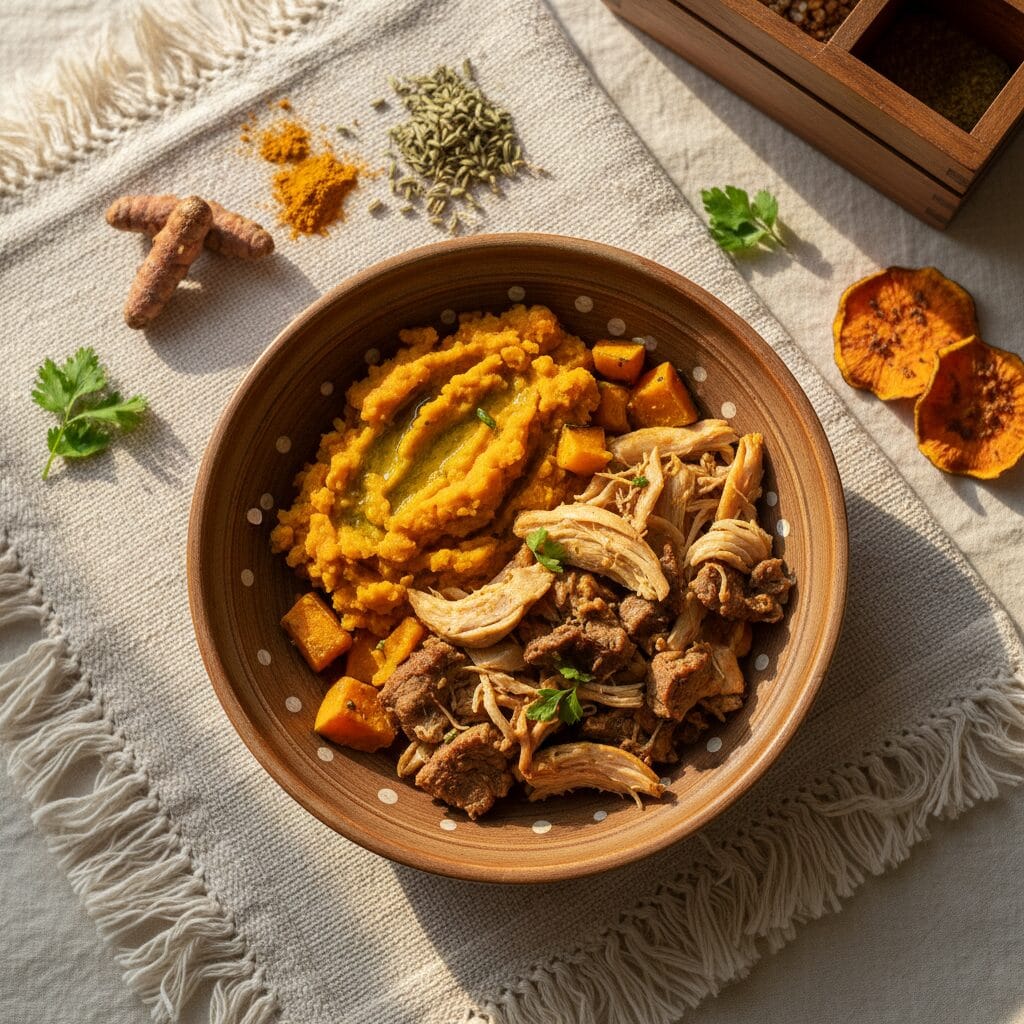
| Mon | Cooked chicken thigh + pumpkin + Bone and Organ Boost (1 tsp) + hemp oil | Same | 1 dehydrated chicken foot |
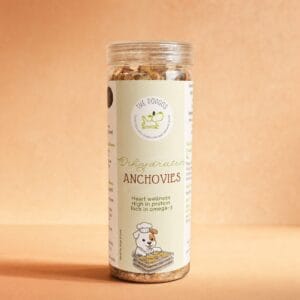
| Tue | Cooked goat + sweet potato + Bone and Organ Boost (1 tsp) + hemp oil | Same | 4 dehydrated anchovies |
| Wed | Cooked chicken + spinach + Bone and Organ Boost (1 tsp) + hemp oil | Cooked white fish + pumpkin + 5 dehydrated sardines | None needed |
| Thu | Cooked goat + green beans + Bone and Organ Boost (1 tsp) + hemp oil | Same | 1 chicken foot |
| Fri | Cooked chicken + pumpkin + Bone and Organ Boost (1 tsp) + hemp oil | Same | Dehydrated anchovies (training) |
| Sat | Cooked goat + sweet potato + Bone and Organ Boost (1 tsp) + hemp oil | Cooked chicken + 5 dehydrated sardines | 1 to 2 chicken feet |
| Sun | Fasting morning (just bone broth) | Cooked white fish + spinach + Bone and Organ Boost + hemp oil | None |
Notes that matter for this breed specifically:
- Hemp seed oil goes on daily. Half a teaspoon per 10 kg of body weight, drizzled cold over the cooled bowl. This is the non-negotiable anti-inflammatory anchor.
- Sardines twice a week minimum. EPA and DHA for the heart, coat, and cancer-protective Omega-3 baseline. Read our broader breakdown of Omega-3 for dogs in India for the science.
- Debone after cooking. Always. Cooked bones splinter. The Bone and Organ Boost and dehydrated chicken feet supply the calcium safely. Dehydrated treats are the safe middle path between raw and cooked bones.
- Vegetables are condiments, not meals. 10 to 15% of the bowl. Pumpkin, sweet potato, spinach, green beans. Skip onion, garlic, raw potato, grapes.
- Rotate protein. Chicken, goat, and fish minimum, to prevent the over-exposure that drives allergies.
From Mahiv’s practice: A 6-year-old Boxer named Bruno, from a Whitefield home in Bangalore, came to me with chronic skin flare-ups, paw-licking through monsoon, and an early grade two heart murmur his vet had picked up at his last booster. He had been on a “premium” Indian kibble for five years with no Omega-3 correction. We dropped the kibble, switched to a cooked chicken-and-goat rotation with the Bone and Organ Boost daily, hemp seed oil at 1.5 ml twice a day, and a serving of dehydrated sardines three times a week. By week 4 the paw-licking stopped. By week 8 his coat had filled back in and his energy was a different dog’s. The murmur did not vanish, those rarely do, but his cardiologist noted no progression at the 6-month recheck. Diet does not cure cardiac disease. It can absolutely stop pouring petrol on the fire.
Indian Climate Considerations for the Boxer
This is the section most generic Boxer content skips entirely, and it is where Indian Boxers actually get hurt.
The brachycephalic factor. The Boxer is not as flat-faced as a Pug or a Bulldog, but the short muzzle still cuts thermoregulation capacity meaningfully. Dogs cool by panting. Less muzzle, less panting surface, less cooling. In a Chennai July or a Delhi May, a Boxer can overheat in twenty minutes of midday walking. The diet adjustment is to lean into cooling proteins, fish first, then chicken, then mutton, through April to September.
Hydration is non-negotiable. A fresh-fed Boxer drinks less than a kibble-fed one (fresh food is 70% water versus kibble’s 10%), which is biologically correct. Still, a clean second water bowl in the evening, and a third before bed in peak summer, is the rule.
Skin and coat care in monsoon. The short coat is not protection against humidity, fungal pressure, or the secondary infections that follow a missed hot spot. Hemp seed oil internally and a good wipe-down after walks externally is your standard protocol. For the full breakdown read our dog itching in India guide.
Exercise timing. Early morning before 7 am, and evening after 6 pm, in summer. Mid-day walks are not negotiable, they are dangerous for this muzzle profile.
Life-Stage Adjustments
Puppies (8 weeks to 14 months). Boxers are slow maturers and take longer than most breeds to fully fill out. Higher protein (40 to 50%) and controlled calcium for the large-breed growth window. Avoid the giant-breed calcium overload mistake (Boxers are large but not giant), and avoid the early-spay weight-gain trap. Start hemp seed oil from 16 weeks at a half dose, the anti-inflammatory baseline pays off over the next twelve years.
Adults (1 to 7 years). The weekly meal plan above. The job is to keep weight tight, inflammation low, taurine topped up, and Omega-3 consistent. Watch the waist. An overweight Boxer is a Boxer whose cancer risk is climbing.
Seniors (7+). Boxers age fast and the senior window in this breed is genuinely the highest-stakes phase of the life cycle. Cancer screening from age 6 is standard. Cardiac screening from age 5 if the breeder has any history. Diet adjustments are slightly more fat (joint cushioning, brain function), more frequent small meals (the heart works less hard digesting smaller volumes), more Omega-3, less weight. Hemp seed oil, sardines, and the Bone and Organ Boost stay in the bowl daily.
Common Indian Feeding Mistakes for Boxer Parents
Most of these I see weekly in consultation. All of them are fixable.
- Kibble year-round with no Omega-3 correction. This is the single biggest mistake. A Boxer in chronic Omega-6 excess is a Boxer whose cancer risk profile is climbing every quarter. Hemp seed oil and sardines fix this.
- Under-supplementing Omega-3. A capsule a week is not a protocol. Daily hemp oil and twice-weekly dehydrated fish is the protocol.
- Ignoring breed-specific cardiac screening. Boxers should have a baseline cardiac assessment by age 3 and annual ones from age 5. Diet supports the heart, it does not replace the cardiologist.
- Free-feeding. Leaving food down all day in any breed is bad. In a Boxer it multiplies cancer risk because obesity is one of the few modifiable cancer risk factors and free-feeding is the fastest path to it. Two meals a day, measured, full stop.
- Roti, curd, and boneless chicken as the daily bowl. The household-dal-rice instinct extends to the dog. Boneless chicken with no calcium source leaches the skeleton. Curd in small quantities is fine, it is not a meal.
- Parle-G and Marie biscuits as training treats. Sugar and maida feed the same inflammation we are working to lower. A dehydrated chicken foot or a handful of dehydrated anchovies is the right answer for training.
- Vegetarian feeding. Causes taurine deficiency. In a Boxer, where DCM risk is already elevated, this is genuinely dangerous. Feed your Boxer meat or rehome them. I take this one personally.
Frequently Asked Questions
Are Boxers safe to feed raw meat from Indian wet markets?
No. The biological argument for raw feeding is sound, but the Indian wet-market supply chain combined with humidity is a real cross-contamination risk for your kitchen and your Boxer. The Doggos method is to cook the muscle meat to kill pathogens and supply bone calcium through dehydrated products, where low-temperature drying retains nutrients without the splintering risk of cooked bones.
How can diet reduce a Boxer’s cancer risk?
Boxers carry a genetic load for lymphoma, mast cell tumours, and hemangiosarcoma that diet cannot fully cancel. Diet can, however, lower the chronic inflammation, glycaemic load, and oxidative stress that consistently emerge as upstream drivers in cancer biology. Daily hemp seed oil (GLA, anti-inflammatory), regular dehydrated sardines (EPA and DHA), low carbohydrate intake, and tight weight management together represent the strongest dietary lever you have.
What about taurine for my Boxer’s heart?
Boxers are over-represented in the dilated cardiomyopathy literature, and taurine status is one of the few dietary factors with clear evidence behind it. Muscle meat alone is taurine-poor, so a daily organ source is needed. The Bone and Organ Boost is the simplest practical solution for Indian households, one teaspoon per 25 kg of body weight daily.
Why does my Boxer have constant skin issues?
In nine cases out of ten, it is Omega-6 inflammation, not “heat from chicken.” Commercial Indian chicken is fed corn and soy, which pushes the Omega 6:3 ratio in the meat to 20:1 against the 7:1 of pasture-raised. The fix is to add hemp seed oil or dehydrated anchovies to every chicken meal, which brings the ratio back into a useful range and usually clears chronic skin flare-ups within four to eight weeks.
How much should I feed an adult Boxer per day?
A healthy 25 to 30 kg adult Boxer needs roughly 1,200 to 1,500 kcal per day, split across two measured meals. Working or extremely active dogs go higher. Spayed or senior dogs go lower. Use the waist tuck and rib palpation as your daily check, never the back of a kibble bag. Obesity is one of the most powerful cancer risk multipliers in this breed.
Should I be giving my Boxer a fish oil capsule from the chemist?
Most over-the-counter fish oil capsules sold in Indian pharmacies are designed for human cardiology, oxidise within weeks of opening, and deliver inconsistent EPA and DHA. Whole dehydrated fish (sardines, anchovies) and cold-pressed hemp seed oil are more bioavailable, more stable in Indian climate, and significantly less expensive per useful gram of Omega-3 delivered.
Are dehydrated bones safe for a powerful chewer like a Boxer?
Dehydrated bones (chicken feet, mutton trotters, pig bone) are processed at low temperatures over twenty-plus hours, which preserves the porous bone microstructure. They crumble into a chalky powder under serious chewing pressure rather than splintering into sharp shards like cooked bones do. For a powerful chewer like an adult Boxer, supervised dehydrated chews are safe, dental-positive, and a far better option than rawhide or commercial dental sticks. Our dehydrated treats guide explains the difference in detail.
About the Author
Mahiv Amit Chhabra is a Certified Canine Nutritionist and author of The Desi Carnivore: The Indian Pet Parent’s Guide to Real Meat, Whole Prey, and Ancient Superfoods. He runs The Doggos from Thane, Maharashtra, alongside his dogs Tony and Toughie, the brand’s longest-serving quality-control team. Read more about Mahiv.