
Indian summer peaks, and with it, our collective love for mangoes reaches a fever pitch. From the creamy Alphonso in Maharashtra to the tangy Langra in Uttar Pradesh, the ‘King of Fruits’ is a staple in nearly every home. It’s natural to want to share a juicy slice with your dog, but before you do, let’s look at the desi way to safely give them mango in this updated 2026 guide.
Yes, dogs can eat mango in India, but only the peeled, de-pitted flesh, and strictly in moderation. Mango is rich in vitamins and fibre, but its high sugar content requires careful portioning to avoid digestive upset or contributing to inflammation. Always remove the pit and skin, which are choking hazards and indigestible, respectively.
Can Dogs Eat Mango (Generally)?
Yes, dogs can safely eat mango flesh in moderation. This sweet, fibrous fruit offers vitamins A, C, E, K, and potassium, boosting immunity and digestion. Always remove the toxic pit and indigestible skin to prevent choking or stomach upset. Introduce small, peeled, pitted pieces as an occasional treat.
Can We Give Mango to Dogs?
Absolutely, you can give mango to your dog, provided it’s prepared correctly. Offer only the soft, ripe flesh, completely free of the large pit and tough skin. The pit is a choking hazard and contains trace cyanide, while the skin is hard to digest. Serve small, bite-sized pieces to avoid digestive issues.
Can Dog Eat Mango Flesh Safely?
Yes, dogs can eat mango flesh safely, packed with vitamins and fibre beneficial for health. Strict moderation is key due to high sugar, which can cause digestive upset or inflammation if overfed. Always ensure it’s fresh, ripe, and thoroughly de-skinned and de-pitted for safety.
Can I Give Mango to My Dog as a Treat?
Yes, mango makes an excellent occasional treat for your dog. It’s a healthy, natural source of vitamins and antioxidants. Remember, treats should never exceed 10% of your dog’s daily caloric intake. Always portion control, remove all skin and pit, and observe your dog for any signs of sensitivity, especially to the natural sugars.
The Goodness of Mango for Your Desi Dog in 2026
Mangoes are not just delicious, they also pack a significant nutritional punch. Your dog can benefit from these nutrients, but only if given correctly and sparingly. Think of it as an occasional vitamin boost, not a daily meal replacement. Even in 2026, the nutritional profile remains consistent, offering valuable support when managed properly.
- Vitamins A, C, E, and K: Mangoes are rich in these essential vitamins. Vitamin A supports vision and immune function, Vitamin C acts as a powerful antioxidant, Vitamin E promotes healthy skin and coat, and Vitamin K is vital for proper blood clotting.
- Fibre: The dietary fibre in mango can aid digestion and promote healthy, regular bowel movements, which is great for dogs prone to occasional constipation. However, too much fibre can lead to loose stools or diarrhoea.
- Potassium: This essential electrolyte is crucial for proper nerve and muscle function, and helps maintain fluid balance within the body.
- Antioxidants: Mangoes contain various antioxidants that combat free radicals, reducing cellular damage and supporting overall cellular health.
While these nutrients are beneficial, always remember that your dog’s primary nutrition must come from a species-appropriate, meat-based diet, like the ones we advocate at The Doggos. Fruits are supplementary.
Crucial Precautions: The Pit and the Skin
Here’s where many well-meaning Indian pet parents unknowingly make a mistake. Sharing a whole mango, or even a piece with skin, is dangerous and can lead to serious health issues.
The Mango Pit: A Choking Hazard and Toxin Risk
The large, fibrous pit at the centre of a mango poses two serious threats to your dog:
- Choking Hazard: For dogs, especially medium to large breeds like a Labrador or a German Shepherd, the pit is the perfect size to get lodged in their throat, causing a life-threatening choking incident. If swallowed, it can lead to intestinal obstruction, a critical emergency requiring immediate veterinary surgery.
- Cyanide: Mango pits contain small amounts of cyanide, a toxic compound. While one pit might not be acutely lethal for most dogs, repeated exposure or ingestion by a particularly sensitive dog could lead to problems. It is simply not worth the risk.
Always remove the pit completely and ensure no fibrous strands remain before offering any mango flesh to your dog.
The Mango Skin: Indigestible and Potentially Irritating
While not as dangerous as the pit, mango skin should still be avoided for several reasons:
- Indigestible Fibre: The skin is tough and highly fibrous. Your dog’s digestive system is not designed to process it efficiently, which can lead to stomach upset, vomiting, or diarrhoea.
- Pesticide Residue: Mangoes sourced from Indian markets often carry pesticide residues on their skin, even after thorough washing. These chemicals can be harmful if ingested by your dog.
- Urushiol: Mango skin contains urushiol, the same compound found in poison ivy. While typically less potent in mangoes, it can still cause skin irritation or an allergic reaction in sensitive dogs, manifesting as itching or rashes around the mouth.
Always peel the mango thoroughly and discard the skin before sharing it with your dog.
Mango Nutritional Benefits & Risks at a Glance
| Feature | Benefit for Dogs | Risk for Dogs |
|---|---|---|
| Vitamins (A, C, E, K) | Immune support, vision, skin/coat health, blood clotting | None (from flesh) |
| Fibre | Aids digestion, prevents constipation | Too much can cause diarrhoea/upset stomach |
| Potassium | Nerve and muscle function, fluid balance | None (from flesh) |
| Antioxidants | Combats free radicals, reduces cellular damage | None (from flesh) |
| Natural Sugar | Energy source | Weight gain, dental issues, diabetes risk if overfed |
| Mango Pit | N/A | Severe choking hazard, intestinal obstruction, trace cyanide toxicity |
| Mango Skin | N/A | Indigestible, stomach upset, pesticide residue, urushiol irritation |
The ‘Heat’ Myth and Mangoes: Understanding Inflammation
Many Indian households believe certain foods, including chicken, eggs, and even sweet fruits like mangoes, cause ‘heat’ in dogs, leading to symptoms like rashes, itching, or digestive upset. As a certified canine nutritionist, I can tell you that what we often perceive as ‘heat’ is actually an inflammatory response within the body. This is particularly true with sugary fruits like mangoes or commercially raised chicken.
Mangoes are naturally high in sugar. While natural sugars are preferable to refined ones, excessive sugar intake, even from fruit, can contribute to systemic inflammation in dogs. This inflammation often manifests as:
- Increased paw licking
- Unexplained itching or skin rashes
- Hot spots
- Chronic ear infections
- Digestive upset
The problem is compounded by the typical Indian diet for dogs. Commercial Indian chicken, fed on corn and soy, has an Omega 6:3 ratio often skewed to 20:1 or 30:1, far from the healthy 7:1 ratio found in pasture-raised meat. This imbalance floods the body with inflammatory markers, making ‘heat’ symptoms worse. Combine this with sugary treats like mango, and you create a perfect storm for chronic inflammation.
Balancing the ‘Heat’ with Hemp Seed Oil: Your Dog’s Anti-Inflammatory Ally
Understanding fat balance is critical here. My philosophy, ‘The Desi Carnivore’ method, focuses on real meat, whole prey, and ancient superfoods. But it also corrects modern dietary imbalances. If you feed your dog chicken, you must actively balance its Omega-6 content with Omega-3s.
For dogs prone to ‘heat’ or inflammation, especially after enjoying sugary treats like mango, Hemp Seed Oil is a powerful ally. It’s uniquely rich in Gamma-Linolenic Acid (GLA), a rare Omega-6 fatty acid that acts as an anti-inflammatory. Unlike typical Omega-6s that promote inflammation, GLA converts into Prostaglandin E1, a compound that actively reduces inflammation. This makes Hemp Seed Oil direct medicine for a range of issues:
- Dry, cracking paws
- Dandruff and flaky skin
- Atopic dermatitis (skin allergies)
- Overall systemic inflammation
By adding a dash of Hemp Seed Oil to your dog’s daily meal, you’re not just ‘cooling’ them down in the traditional sense. You are actively reducing the inflammatory load in their body, making them less susceptible to the ‘heat’ symptoms often linked to certain foods, including mangoes. It’s not about stopping the protein or fruit; it’s about proactively balancing the fats to promote internal harmony.
How to Safely Feed Mango to Your Dog
You want to treat your dog to mango? Here’s how to do it properly and safely:
- Choose Ripe Mangoes: Always select mangoes that are ripe and soft. Unripe mangoes are harder to digest and can be quite sour, potentially causing stomach upset.
- Wash Thoroughly: Wash the mango well under running water to remove any surface dirt, bacteria, or potential contaminants.
- Peel Completely: Use a peeler or knife to remove all of the skin. Ensure no green or fibrous parts remain.
- Remove the Pit: Carefully slice the flesh away from the large central pit. Double-check for any fibrous strands that might cling to the flesh near the pit.
- Cut into Small, Bite-sized Pieces: This is crucial to prevent choking, especially for smaller breeds like a Pomeranian or a local Indie pup. Aim for pieces no larger than your thumbnail for small dogs.
- Moderation is Key: Mango is a treat, never a meal replacement. Its high sugar content means it should be given sparingly.
- Small dogs (e.g., Pomeranian, Indie pup): 1-2 small cubes, 2-3 times a week.
- Medium dogs (e.g., Beagle, Indie): 3-4 small cubes, 2-3 times a week.
- Large dogs (e.g., Labrador, German Shepherd): 5-6 small cubes, 2-3 times a week.
From Mahiv’s Practice: A Mango & Hemp Success Story
I once worked with a spirited Golden Retriever in Bengaluru, named Simba, who loved mangoes but would get itchy paws and mild ear irritation every summer. His owner, a wonderful cook, was convinced mangoes were ‘too hot’ for him. We tweaked his diet to include 3-4 small mango cubes twice a week, always paired with his regular meals balanced with a daily dose of Hemp Seed Oil. Within two weeks, Simba’s itching subsided, his coat grew shinier, and his ears cleared up. It wasn’t the mango causing ‘heat’; it was the unbalanced diet. Hemp Seed Oil helped counteract the inflammatory potential, allowing Simba to enjoy his favourite summer treat without discomfort.
Always introduce new foods slowly and observe your dog for any digestive upset or allergic reactions.
Common Mistakes Indian Pet Parents Make with Mangoes
While intentions are always good, many Indian dog owners still make these common errors when it comes to feeding mangoes:
- Feeding the Pit: This is the most dangerous mistake. As discussed, the pit is a serious choking hazard and can cause life-threatening intestinal obstruction, not to mention the trace cyanide.
- Feeding the Skin: The tough, fibrous skin is indigestible, can cause stomach upset, and may carry harmful pesticide residues or irritating urushiol.
- Too Much, Too Often: Overfeeding mango due to its high sugar content can lead to weight gain, dental issues, and worsen existing conditions like diabetes. Large quantities can also quickly cause diarrhoea or stomach upset.
- Dried Mango: While fresh mango in moderation is acceptable, dried mango is a concentrated source of sugar. It often contains added sweeteners or preservatives, making it unsuitable and unhealthy for dogs.
- Mango Pulp/Juice: Store-bought mango pulp or juice typically contains added sugars, artificial flavours, and preservatives, all of which are detrimental to your dog’s health. Stick to fresh, plain mango flesh.
When in doubt, always be cautious. An occasional, small piece of properly prepared mango flesh can be a delightful and healthy treat. A whole mango, or frequent large servings, is not.
Beyond Mango: A Holistic Approach to Indian Dog Diets
Mango can be a safe and enjoyable treat for your dog, but remember: a dog’s primary diet must be meat-based. In India, with our unique climate and wet market conditions, I strongly advocate for cooked fresh food. Gently pressure-cook meat to eliminate pathogens like Salmonella and E.coli, which are prevalent in our humid environment. However, it is absolutely crucial to debone after cooking, as high heat makes bones brittle and prone to shattering into dangerous splinters.
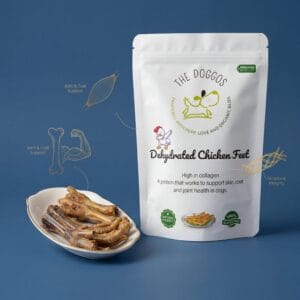
For essential calcium and dental health, never feed cooked bones. Instead, I recommend dehydrated bones and chews. Products like our Dehydrated Chicken Feet retain their porous structure because they are dried at low temperatures over many hours. This allows them to crumble safely into absorbable calcium and phosphorus, without the risk of dangerous sharp shards.
Maintaining the correct calcium:phosphorus ratio (must be 1.2:1) and balancing Omega-6:3 fats is paramount. A diet of just chicken and rice, without bone or Omega-3 supplementation, is a recipe for long-term health issues like Osteopenia (‘Rubber Jaw’ syndrome) and chronic inflammation. Adding a balancer like Hemp Seed Oil is not a luxury; it’s a necessity for a truly healthy Indian dog diet.
Want to learn more about my philosophy and how to feed your dog the best Desi Carnivore way? Read more about me and my work, or explore our range of natural dog treats.