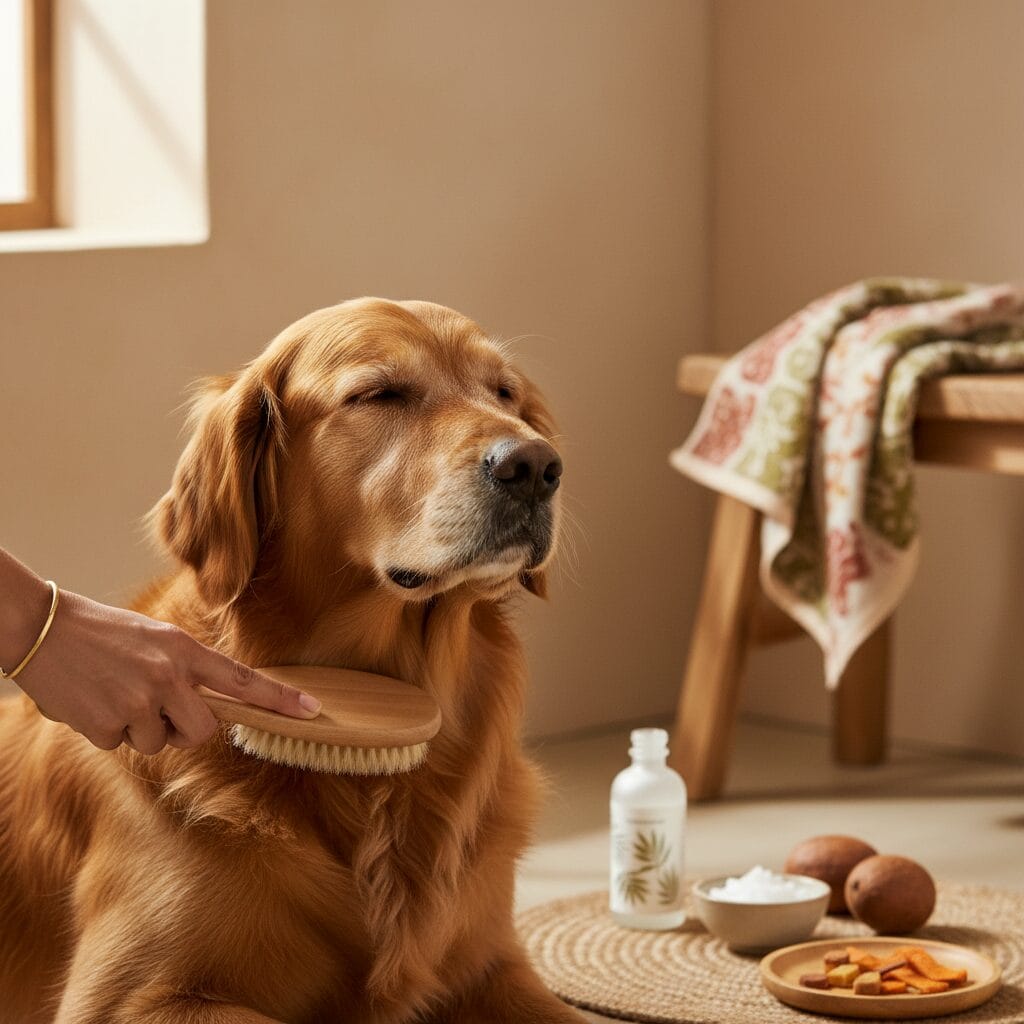
Many Indian dog parents use coconut oil for their dog’s skin and coat, hoping for its widely touted coconut oil MCT benefits for dog skin and coat in India. From dry paws to dull fur, the humble nariyal tel is a common remedy. But what’s the truth about its effectiveness, especially in our unique climate?
While coconut oil contains beneficial MCTs (Medium-Chain Triglycerides), its impact on dog skin and coat health in India is often superficial. For deep, lasting healing and protection, particularly against common issues like hot spots and fungal infections, a more advanced solution like Baobab Oil offers superior absorption and targeted repair.
The Promise of Coconut Oil: What Are MCTs?
Coconut oil is rich in Medium-Chain Triglycerides (MCTs), primarily lauric acid. These fatty acids are quickly absorbed and converted into energy by the body, offering some metabolic benefits. For skin, lauric acid is often cited for its antibacterial and antifungal properties, leading many to believe it’s a cure-all topical solution.
MCTs and Their Role in Dog Health
Internally, MCTs can aid digestion, support cognitive function, and provide a quick energy source. When applied topically, the antibacterial nature of lauric acid can offer a mild protective barrier against some surface pathogens. This is why you might see a temporary shine on your dog’s coat or slight improvement in very mild dry skin.
Why Coconut Oil Often Falls Short for Skin in India
The challenge with coconut oil, especially for persistent skin issues in Indian dogs, lies in its molecular structure. Coconut oil molecules are relatively large, meaning they primarily sit on the skin’s surface. While this can provide a temporary moisturising effect, it rarely penetrates deep into the epidermis where true healing needs to occur.
Consider India’s climate. The high humidity in cities like Mumbai or Chennai, combined with the heat, means that a thick layer of oil sitting on the skin can actually trap heat and moisture. This creates a breeding ground for bacteria and fungi, potentially exacerbating conditions like hot spots or yeast infections, rather than resolving them. Instead of healing, you might inadvertently be contributing to the problem by clogging pores and preventing the skin from breathing naturally.
The “Heat” Myth and Omega-6 Inflammation: A Real Culprit for Skin Issues
Many Indian pet parents describe their dogs as having ‘heat’ in their bodies, leading to skin rashes, itching, and hair loss. What they often observe is not actual thermal heat, but rather the effects of chronic inflammation driven by an imbalanced diet.
Commercial Indian chicken, often fed corn and soy, has a skewed Omega-6 to Omega-3 ratio, sometimes as high as 20:1 or 30:1. This floods your dog’s system with pro-inflammatory Omega-6 fatty acids, leading to symptoms like constant paw licking, unexplained itching, and recurrent ear infections. While topical coconut oil might offer a fleeting relief, it doesn’t address this fundamental internal imbalance.
To truly combat this inflammation, you need to balance their diet with anti-inflammatory Omega-3s. This is where supplements like Hemp Seed Oil come in. Hemp Seed Oil is rich in GLA (Gamma-Linolenic Acid), a rare Omega-6 that acts as an anti-inflammatory, directly addressing the root cause of many skin ailments from the inside out.
True Skin Healing: Why Baobab Oil is a Superior Choice for Indian Dogs
When it comes to deep skin healing and lasting coat health, especially for the challenges posed by the Indian environment, Baobab Oil stands in a league of its own. Unlike coconut oil, Baobab Oil has a unique fatty acid profile, rich in Palmitic and Oleic acids, that allows it to absorb *into* the epidermis. It mimics the skin’s natural lipid barrier, healing from the inside out, rather than just sitting on the surface.
I once consulted for a charming Pug in Chennai who battled chronic hot spots, despite his dedicated pet parent applying coconut oil daily. The oil sat on the surface, trapping heat, and offering little relief. Within 24 hours of switching to Baobab Oil, the redness began to subside. In two weeks, the hot spots had dried and healed completely. It’s a testament to Baobab Oil’s deep absorption, truly healing from within, not just moisturising superficially. As a certified canine nutritionist, I’ve seen this consistent efficacy time and again. You can learn more about my approach to canine nutrition on my author page.
This deep absorption is why Baobab Oil delivers proven results for a range of skin conditions:
- Fungal Infections: Eradicated in 90 days, even stubborn cases.
- Alopecia: Reversed in as little as 2 months, promoting new hair growth.
- Hot Spots: Significantly dried and soothed within 24 hours, with full resolution in days. You can read more about managing hot spots on dogs in India.
- Hyperkeratosis: Crusty noses and paw pads resolved in 2 weeks, restoring softness and elasticity.
- Dry, Flaky Skin: Deeply moisturises and repairs the skin barrier, eliminating dandruff and itching.
Baobab Oil doesn’t just coat the problem; it works with your dog’s skin biology to repair and strengthen it, offering true, lasting relief and a healthy, vibrant coat.
Practical Application: Using Baobab Oil for Your Dog’s Skin & Coat
Using Baobab Oil is simple and effective. For general coat health and shine, a few drops massaged into the fur and skin a few times a week is sufficient. For specific skin issues, a more targeted approach is needed:
- Hot Spots & Localised Irritations: Apply 2-3 drops directly to the affected area twice daily. Gently massage until absorbed. The anti-inflammatory properties will start working immediately.
- Dry Skin & Dandruff: For widespread dryness, add 5-10 drops (depending on dog size) to your palm, warm it slightly, and massage thoroughly into the coat and skin after a bath, or daily as needed.
- Cracked Paws & Noses: Apply a small amount to the affected areas twice daily. Consider using our Baobab Paw and Nose Balm for extra protection and healing on these tougher spots.
- Fungal or Bacterial Patches: Apply directly to the area after cleaning. For severe cases, consider pairing it with our Baobab Therapy Mask for a detoxifying and anti-fungal treatment.
Baobab Oil is completely natural and safe if licked, giving you peace of mind. Consistency is key for optimal results. You can explore our full range of natural dog grooming products for a holistic approach to skin health.
Baobab Oil vs. Coconut Oil: A Comparison for Your Dog’s Skin
| Feature | Coconut Oil | Baobab Oil |
|---|---|---|
| Absorption | Sits on surface, larger molecules | Absorbs deeply into epidermis, smaller molecules |
| Fatty Acid Profile | High in Lauric Acid (MCT) | High in Palmitic, Oleic Acids (penetrating) |
| Primary Action | Superficial moisturiser, mild antibacterial | Deep healing, anti-inflammatory, barrier repair |
| Suitability for Indian Climate | Can trap heat, clog pores in humidity | Absorbs without residue, prevents pore clogging |
| Effectiveness for Skin Issues | Limited for deep issues, temporary relief | Proven for fungal, hot spots, alopecia, hyperkeratosis |
| Licking Safety | Generally safe | Completely natural and safe |
Common Mistakes Indian Pet Parents Make with Skin & Coat Health
Despite the best intentions, many Indian pet parents inadvertently make mistakes when trying to improve their dog’s skin and coat:
- Over-relying on Surface Remedies: Believing that a topical application like coconut oil will fix deep-rooted issues. Many skin problems stem from diet, allergies, or internal inflammation.
- Ignoring Dietary Imbalances: Not addressing the Omega-6:3 imbalance in the diet, especially if feeding commercial chicken. Topical solutions are a bandage if the internal fire isn’t put out.
- Using Human Products: Applying human shampoos, creams, or oils that may contain fragrances, chemicals, or pH levels unsuitable for a dog’s sensitive skin.
- Expecting Instant Cures: Skin healing takes time. While some relief can be quick, true repair and regeneration require consistent, appropriate care over weeks or months.
- Not Consulting a Canine Nutritionist: While your vet is crucial for diagnosis, a certified canine nutritionist can help pinpoint dietary triggers and recommend species-appropriate solutions that often get overlooked.
Remember, a healthy coat and skin are often a reflection of overall internal health. Addressing both internal and external factors is key.