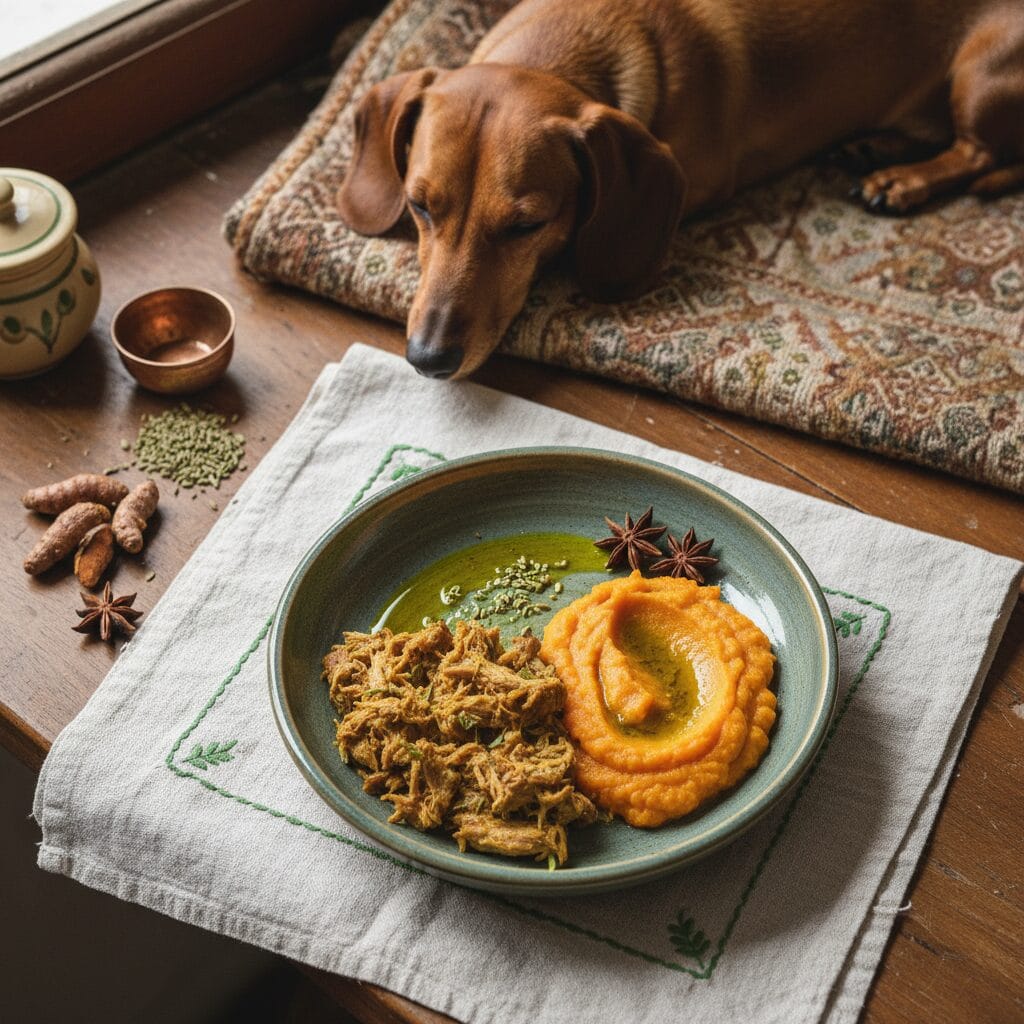
By Mahiv Amit Chhabra, Certified Canine Nutritionist and author of The Desi Carnivore. Last updated: 18 May 2026.
TL;DR
- The Dachshund diet in India must do two things on every single day, every single bowl: hold the dog at the lean end of breed standard (5.5 to 7 kg for standards, 3.5 to 4.5 kg for minis) and keep inflammation low. Every extra 500 g of fat is a measurable load on a back that is already biologically pre-loaded for disc disease.
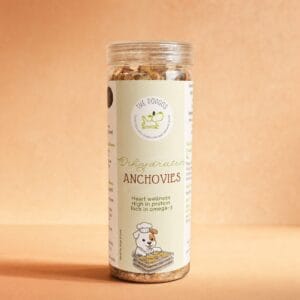
- The single best daily anchor for a Dachshund is dehydrated anchovies, the lowest-calorie functional treat in our catalogue, doubling as a high-value training reward and a daily omega-3 dose for spinal disc inflammation control.
- Up to 1 in 4 Dachshunds will have an IVDD (Intervertebral Disc Disease) episode in their lifetime, the highest rate of any popular breed. The CDDY mutation that gives the breed its short legs also causes premature disc calcification by age 2 to 3. Diet and weight are the two variables you actually control.
- Macro targets: protein 32 to 42%, fat 18 to 25%, carbohydrates under 20%. High-fat diets and free-fed kibble are the fastest way to load this dog’s back. Roti, biscuits, and “make-up” calories in summer are the most common Indian feeding mistakes.
- Stairs, sofa jumps, and roughhousing are the trigger events. Diet is the precondition that decides whether the trigger turns into a herniation.
The Dachshund is the most weight-sensitive popular breed in India. Not because she is fragile, but because her own genetics have set the stage. The same CDDY mutation that gives this dog her famously short legs also predisposes her to early disc calcification, with disc elasticity often lost by age two or three. After that, every kilogram of body fat is a force multiplier on a spine that was already running on borrowed time. Diet, in this breed, is not a lifestyle topic. It is back surgery prevention.
This guide is for the Indian Dachshund parent who has been told to “watch her weight” and has not been told what that actually means at the bowl. We will be specific. We will name the foods, the gram counts, the treats, the training tools, and the products that hold the line.
The Dachshund’s Real Health List, Ranked by What Actually Matters
Most breed-diet pages list ten conditions alphabetically. For a Dachshund the ranking is what matters.
- Intervertebral Disc Disease (IVDD). Up to one in four Dachshunds will have an IVDD episode in their lifetime. The breed is the textbook chondrodystrophic dog, meaning the cartilage development gene (CDDY) that built the short legs also drives premature disc calcification. Discs lose their gel-like core by age 2 to 3, and any compression event (jumping off a sofa, twisting on a slippery floor, a rough wrestle) can herniate the disc into the spinal cord. The result ranges from acute pain to partial paralysis.
- Obesity. Not the cause of IVDD on its own, but the single biggest accelerant. A Dachshund at the upper end of the breed standard (around 9 kg for a standard) is carrying roughly 50% more spinal load than the same dog at 6 kg. Indian Dachshunds drift to the heavy end because of free-fed kibble, biscuit training, and household scraps.
- Patellar luxation. Kneecap slips out of the groove, more common in mini Dachshunds. Lean weight is the biggest protective factor.
- Cushing’s disease. Older Dachshunds are over-represented for hyperadrenocorticism, with the increased appetite and thirst making weight control even harder.
- Dental disease. Small jaws plus high-carb Indian biscuits equals plaque, tartar, and infected gums, another chronic inflammation driver.
- Progressive Retinal Atrophy and Lafora disease in some lines. Less common but worth asking the breeder about screening.
The entire diet has to be built around items one and two. Everything else is downstream.
The Biology of IVDD, In Plain English
Chondrodystrophy means the gene that makes the legs short also changes how cartilage matures. In a typical dog, the centre of each intervertebral disc is a gel-like cushion (the nucleus pulposus) made mostly of water and proteoglycans, which absorbs shock. In a chondrodystrophic breed like the Dachshund, that gel begins replacing itself with hard calcified cartilage from puppyhood onwards. By age 2 to 3, much of the disc has effectively turned to chalk.
The chalky disc cannot absorb compression. So when the dog jumps off a sofa and lands hard on her front legs, the force travels straight up the spine, and a calcified disc that is going to herniate, herniates here. The herniated material then pushes into the spinal cord, and the dog presents with anything from a yelp and a limp to acute hind-end paralysis requiring neurosurgery.
You cannot reverse the chondrodystrophy. You can change the two variables that decide whether the disc actually fails, body weight and chronic inflammation. Both are nutrition problems.
The Two Non-Negotiable Rules of the Dachshund Diet
Rule 1: Hold the lean weight. Every gram of body fat above the ideal is loading the back. The breed standard puts a standard Dachshund at 7 to 8 kg, but my target for any Dachshund client is the lean end, 5.5 to 7 kg for standards, 3.5 to 4.5 kg for minis. You should be able to feel the ribs easily with light pressure, see the waist tuck from above, and see the abdominal tuck from the side. If she is rounded over the hips, she is too heavy.
This is where the dehydrated anchovies come in. They are the lowest-calorie functional treat in the Doggos catalogue. A whole anchovy is roughly 4 to 5 kcal, which means you can run a full training session, 15 to 20 rewards, on less than 100 kcal. The same training session with Marie biscuits or commercial training treats can easily run 200 to 300 kcal, half the daily allowance for a small dog. The anchovy is also a complete omega-3 dose, doubling as functional medicine, not just a reward.
Rule 2: Keep inflammation low, every single day. Chronic low-grade inflammation accelerates disc degeneration. The biggest inflammation lever you control through diet is the omega-6 to omega-3 ratio. Commercial Indian chicken is corn and soy fed, with an omega 6:3 ratio of 20:1 to 30:1 in the meat, against the 7:1 you would get from pasture-raised. That excess omega-6 is metabolised into pro-inflammatory prostaglandins. The fix is dietary omega-3 every single day, anchovies, sardines, hemp seed oil. Not occasionally. Daily. Read our omega-3 for dogs guide for the underlying biochemistry.
Macro Targets for an Indian Dachshund
Per the NRC 2006 Nutrient Requirements of Dogs and Cats, adult dog protein minimum sits at roughly 18% of dry matter, which is a survival floor. For a chondrodystrophic breed where preserving back-supporting muscle mass is essential, you push higher.
| Macronutrient | Dachshund target (% dry matter) | Indian kibble reality | Why it matters here |
|---|---|---|---|
| Protein | 32 to 42% | 18 to 25% | Preserves the lean muscle that supports the spine, satiety, no calorie bloat |
| Fat | 18 to 25% | 8 to 15% | Energy and omega-3 vehicle, NOT high-fat, the breed gains too easily |
| Carbohydrates | Under 20% | 50 to 70% | High-carb diets drive low-grade inflammation and pack on weight invisibly |
| Moisture (fresh diet) | 60 to 75% | Around 10% in kibble | Satiety, smaller portions feel “full”, easier on calorie discipline |
Note the fat number. This is not a high-fat breed. Plenty of social media accounts push high-fat diets for “energy” and “coat”, and for a Husky working in snow that argument has merit. For a Dachshund, fat is calorie density, and calorie density is back load. Stay in the 18 to 25% band.
A 6 kg adult Dachshund needs roughly 240 to 320 kcal per day, split across two meals. Working dogs slightly higher, senior or spayed dogs slightly lower. Use the rib check, waist tuck, and abdominal tuck as the daily monitor, not the back of any bag.
Why Dehydrated Anchovies Are the Dachshund’s Anchor Product
The Dachshund needs three things from her treats that most breeds do not need with the same urgency.
- Lowest possible calorie cost per reward. Training a Dachshund (recall, leash control, the impulse control that stops her launching off the sofa) is the single biggest IVDD prevention tool you have. You need a treat you can give freely. The anchovy is 4 to 5 kcal a piece. Compare to a Marie biscuit at 25 kcal, or a commercial liver treat at 8 to 15 kcal.
- Daily omega-3 dose, no extra step. Anchovies sit at the bottom of the marine food chain, short-lived plankton-eaters with no heavy-metal bioaccumulation. The EPA and DHA in anchovy fat are anti-inflammatory at the molecular level, exactly what a chondrodystrophic spine needs. Three to five a day for a 6 kg Dachshund delivers a meaningful EPA/DHA dose, with no fishy kitchen smell because they are dehydrated.
- Single-ingredient, no sugar or maida. Most Indian “training treats” are wheat flour, sugar, glycerin, and artificial flavour. None of that helps a Dachshund. Read our breakdown of why dehydrated treats win on the Indian shelf for the longer argument.
The protocol is simple. Every training session uses anchovies as the primary reward, and the daily bowl gets 3 to 5 anchovies scattered on top. Pair with hemp seed oil at 2 to 3 ml per day for the GLA anti-inflammatory layer, and dehydrated sardines two to three times a week for a larger EPA hit. That is the daily anti-inflammatory baseline.
For the bowl itself, Bone and Organ Boost is the daily topper. Small dogs on home-cooked chicken and rice without organ supplementation slide into taurine, iron, and B-vitamin deficiency within months. The dehydrated organ blend closes that gap in one teaspoon.
A Weekly Dachshund Meal Plan
This is the template I hand most new Dachshund clients. Assume a 6 kg adult, twice-daily feeding, no current IVDD diagnosis. If your dog has had an IVDD episode, the same plan applies with a slight bump in omega-3 and a stricter weight ceiling.
| Day | Morning bowl (approx 120 kcal) | Evening bowl (approx 120 kcal) | Daily extras |
|---|---|---|---|
| Mon | Cooked chicken thigh (40 g) + pumpkin (15 g) + Bone and Organ Boost (1 tsp) | Same | 3 to 4 anchovies, 2 ml hemp oil |
| Tue | Cooked goat curry cut (40 g) + spinach (10 g) + Bone and Organ Boost (1 tsp) | Same | 3 to 4 anchovies, 2 ml hemp oil |
| Wed | Cooked chicken (40 g) + pumpkin (15 g) + Bone and Organ Boost (1 tsp) | Dehydrated sardine (1 small) + cooked chicken (30 g) + green beans | 2 to 3 anchovies |
| Thu | Cooked goat (40 g) + sweet potato (10 g) + Bone and Organ Boost (1 tsp) | Same | 3 to 4 anchovies, 2 ml hemp oil |
| Fri | Cooked chicken (40 g) + spinach (10 g) + Bone and Organ Boost (1 tsp) | Same | 3 to 4 anchovies, 2 ml hemp oil |
| Sat | Cooked goat (40 g) + pumpkin (15 g) + Bone and Organ Boost (1 tsp) | Dehydrated sardine + cooked chicken (30 g) | 2 to 3 anchovies |
| Sun | Bone broth morning (light) | Cooked chicken (40 g) + Bone and Organ Boost (1 tsp) + a dehydrated sardine | 2 to 3 anchovies |
A few notes that matter:
- Always debone after cooking. Pressure-cook the meat, then strip the bones out before serving. Cooked bones splinter. The Bone and Organ Boost supplies calcium safely.
- Rotate the protein. Two minimum, ideally three. Dachshunds develop chicken allergies faster than larger breeds, partly because of over-exposure from kibble in their early years.
- Vegetables are 10 to 15% of the bowl, no more. Pumpkin, sweet potato, spinach, green beans. Skip onion, garlic, raw potato, and grapes.
- No free feeding. A Dachshund left with a bowl of kibble all day will eat herself to obesity. Two scheduled meals, fixed portion, weighed if you have to.
- Training treats come out of the daily calorie budget. If you used 10 anchovies during a training walk, that is roughly 40 to 50 kcal, take that off the dinner bowl.
Activity, Lifestyle, and the Indian Climate Layer
Diet alone will not save the Dachshund’s back. The lifestyle has to match.
- No jumping off sofas or beds. The most common IVDD trigger I see in clinical history. A small ramp is cheaper than spinal surgery.
- Stairs are a controlled activity, not a free one. Carry the dog or train her to use a ramp for daily descents. Spiral or steep stairs are particularly hard on a chondrodystrophic spine.
- Leash control on walks. A Dachshund who launches at a passing cat at the end of a retractable lead can twist her spine badly. Use a body-fitting walking vest, not a neck collar, and a fixed-length leash, not a flexi.
- Structured chewing replaces roughhousing. The Dachshund cannot afford uncontrolled wrestling. Substitute calm chew sessions, sniff work, slow feeders, and gentle puzzle toys.
- Lean walks, not heroic ones. Two 20 to 30-minute walks a day on flat ground, at her own pace, beats one long hilly trek.
Indian climate adds two specific traps. Heat-stressed Dachshunds eat less in summer, which is normal. The mistake is “making up” the lost calories with high-fat treats and biscuits. If she eats 20% less in May, she should weigh slightly less by July, which is fine. Monsoon brings paw and ear yeast pressure because Dachshunds have floppy ears low to wet ground, so dry the ears after walks and run 1 to 2 ml of hemp oil daily for the skin barrier. Tick fever season is real, and recovery diets are protein-heavy and iron-rich, exactly where the Bone and Organ Boost shines.
Life-Stage Adjustments
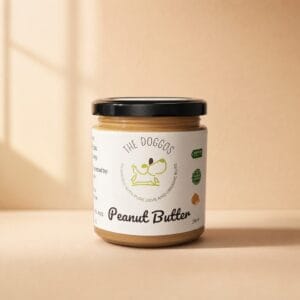
Puppies (8 weeks to 12 months). Higher protein (40 to 50%) for growth, but watch the calorie creep, Indian families overfeed roly-poly Dachshund puppies out of love. Two to three small meals a day, and balanced calcium (NRC 1.2:1 Ca:P). Read our puppy diet India guide for the full protocol. A pea-sized blob of peanut butter (zero xylitol, all natural) is a fine occasional puppy reward, but anchovies remain the daily training tool.
Adults (1 to 7 years). Follow the weekly plan above. Hold the lean weight. The discs are calcifying through these years, this is when prevention pays.
Seniors (7+). A Dachshund who has reached seven without an IVDD episode is doing well, do not let up. Slightly more fat for joint cushioning, slightly less calorie-dense overall, more omega-3. I push senior Dachshunds to 5 anchovies a day plus 2 to 3 sardines a week, with a half-teaspoon of hemp oil every meal. The Bone and Organ Boost remains the daily anchor topper.
From Mahiv’s practice: A 5-year-old standard Dachshund in Pune came in at 11 kg after her first IVDD episode, which had resolved with crate rest and medication. Her vet had told the owner a second episode was likely within 18 months at that weight. We rebuilt the bowl, dropped commercial kibble entirely, switched to cooked chicken and goat rotating with the Bone and Organ Boost daily, three anchovies per training session, 2 ml hemp oil twice a day, and we cut the daily kcal target to 280. Six months in, the dog was at 7.5 kg, the owner had ramps installed at every furniture point, and the second IVDD episode never came. Two and a half years later, the dog is 8 years old and still walking normally. The diet did not cure IVDD. It removed the load that would have triggered it.
Common Indian Feeding Mistakes for Dachshunds
These I see weekly.
- Free-feeding kibble. A bowl left out all day is a Dachshund obesity machine. This breed will eat itself to 12 kg. Two measured meals, fixed times.
- Letting her jump off the sofa or bed. The single most common IVDD trigger I see. A ramp costs less than one ICU night.
- Chapati and dal as the staple bowl. High-carb, low-protein, no muscle support for a chondrodystrophic back. Roti is a 5% incidental, not a meal. Same goes for plain rice.
- Marie biscuits and Parle-G as training treats. Sugar, maida, 25 kcal a piece. The anchovy or a small smear of natural peanut butter is the answer.
- High-fat “energy” treats. Cheese cubes, paneer chunks, ghee-soaked rotis, all calorie bombs for this breed. Reserve for emergency-recall only.
- “Making up” summer calories. If she eats less in May, she should weigh slightly less in June. Do not compensate.
- Skipping the omega-3 dose. A daily anchovy is not optional for this breed. The inflammation maths is too steep.
- Assuming back surgery is the only intervention. It is the last intervention. Diet, weight, and ramps are the first three, and they prevent the surgery in most cases.
For larger-frame joint support, the joint care for large breed dogs guide has the deeper protocol. For the Dachshund, the joint is not the issue. The disc is. And the disc responds to weight and inflammation control, not to glucosamine alone.
Frequently Asked Questions
How can I prevent IVDD in my Dachshund?
You cannot reverse the underlying CDDY mutation, but you can dramatically reduce the chance of a herniation event. The four levers are weight (keep her at the lean end of breed standard), inflammation (daily omega-3 via anchovies, sardines, or hemp seed oil), mechanics (no jumping off furniture, no rough stairs, walking vest not neck collar), and protein-forward feeding to preserve back-supporting muscle. Roughly a quarter of Dachshunds will still have at least one IVDD episode in their lifetime, but a lean, well-fed, well-managed dog is dramatically less likely to be in that group, and recovers far better when an episode does happen.
What is the right weight for a Dachshund?
For a standard Dachshund, aim for 5.5 to 7 kg, the lean end of breed standard. For a mini Dachshund, aim for 3.5 to 4.5 kg. You should be able to feel each rib with light fingertip pressure, see a clear waist tuck from above, and see an abdominal tuck from the side. If she is rounded over the hip bones or her belly is in line with her chest from the side, she is overweight, and that overweight is loading her back every day.
Are stairs OK for Dachshunds?
A controlled, supervised, occasional flight of stairs at her own pace is acceptable. Free, repeated, daily stair use is not. The repeated compression from going down stairs in particular is hard on a chondrodystrophic spine. If you live in a flat with stairs, carry her or train her to use a ramp for the daily descents. Spiral or steep stairs are particularly risky and should be avoided entirely.
Are chicken feet OK for Dachshunds?
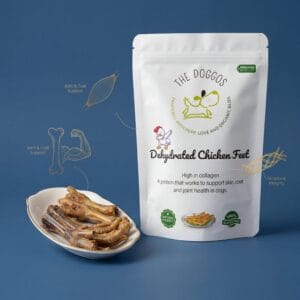
Yes, in moderation. Dehydrated chicken feet are a single-ingredient natural source of glucosamine and chondroitin, and the dehydrated bone is soft and crumbles safely in dog stomach acid (it is not the same as cooked chicken bone, which splinters). A standard Dachshund can have one or two a week as a chew, and a mini one a week. Watch the calorie load, factor them into the daily total.
Can my Dachshund eat raw meat from the local butcher?
I love the biological argument for raw feeding. I do not recommend the practice for Indian households. The wet-market supply chain plus Indian humidity is a real cross-contamination risk for your kitchen and your dog. The Doggos method is to cook the muscle meat (pressure cook, debone) and supply bone calcium through dehydrated products, where the low-temperature drying retains nutrients without the splintering risk of cooked bones.
How many anchovies a day for a Dachshund?
For a 6 kg adult, 3 to 5 dehydrated anchovies per day is the maintenance dose. Bump to 5 to 7 if she has had an IVDD episode and is in recovery, or if she is a senior. They can be split between training rewards and a bowl topper. The omega-3 contribution adds up over weeks and months, which is exactly the timeline on which disc inflammation responds.
My Dachshund’s vet has put her on a “weight management” kibble. Is that the right move?
Most veterinary weight-management kibbles are high-carbohydrate, low-protein formulations that strip fat by stripping calorie density via fibre. They do reduce weight in the short term, but they do so at the cost of muscle mass and at the cost of leaving the dog on a high-carb, pro-inflammatory diet. A measured fresh diet with calorie discipline, the 32 to 42% protein target, and a daily omega-3 dose holds weight just as well, with better muscle preservation and lower inflammation. If your vet is open to it, share the daily kcal target and the macro split and ask for buy-in.
About the Author
Mahiv Amit Chhabra is a Certified Canine Nutritionist and author of The Desi Carnivore: The Indian Pet Parent’s Guide to Real Meat, Whole Prey, and Ancient Superfoods. He runs The Doggos from Thane, Maharashtra, alongside his dogs Tony and Toughie, the brand’s longest-serving quality-control team. Read more about Mahiv.
External Citations
- Bergknut N, et al. (2012). The dog as an animal model for intervertebral disc degeneration? Spine, 37(5), 351-358. Establishes the chondrodystrophic Dachshund as the classic IVDD model and quantifies the role of the CDDY mutation in premature disc calcification.
- Bauer JE. (2011). Therapeutic use of fish oils in companion animals. Journal of the American Veterinary Medical Association, 239(11), 1441-1451. Reviews evidence for EPA/DHA omega-3 fatty acids in reducing disc and joint inflammation in chondrodystrophic dogs.