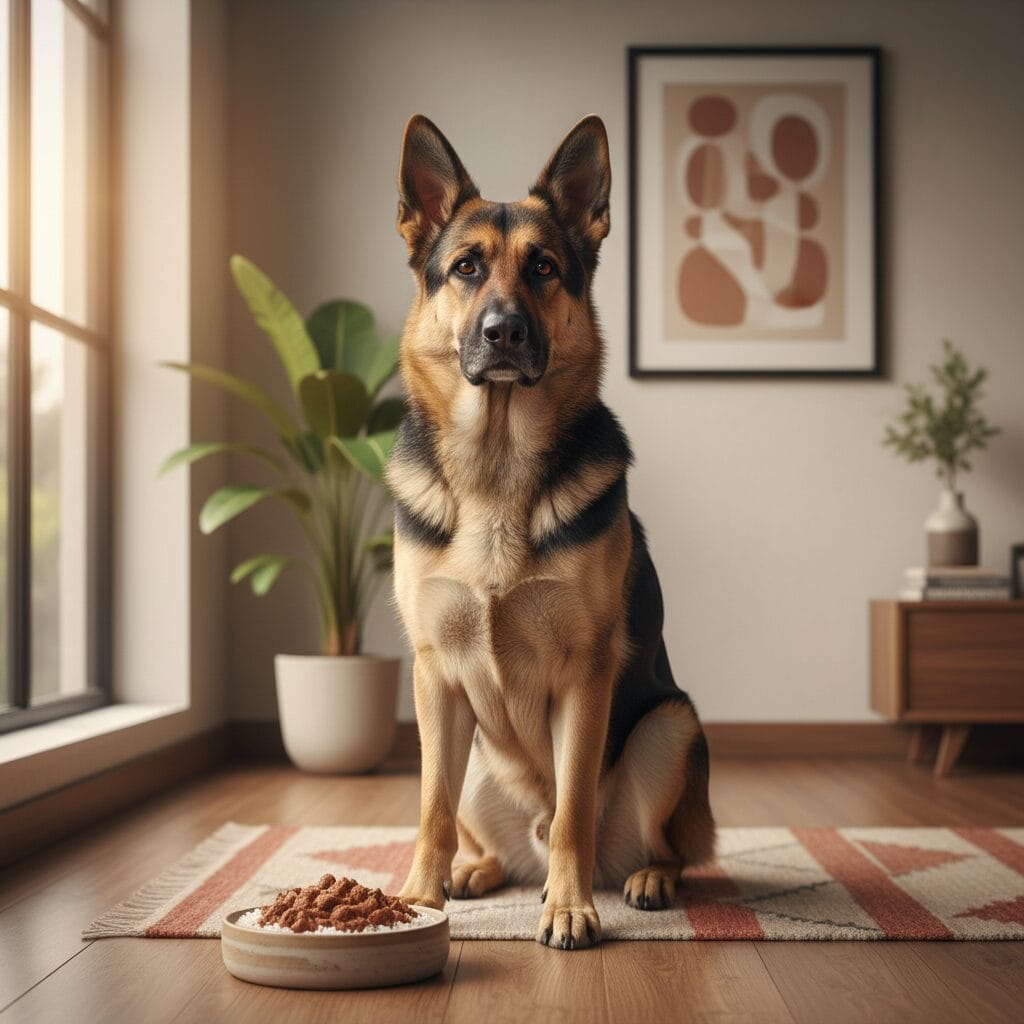
Your German Shepherd is more than just a pet; they’re a loyal family member, a protector, and often, a furry shadow. Furry shadow. But in India, feeding these magnificent creatures can feel like navigating a maze of conflicting advice and cultural myths. From well-meaning relatives pushing roti to outdated kibble recommendations, figuring out what’s truly best? Man, it’s tough. But look, I’m here to cut through all that noise and give you a clear, science-backed roadmap for your GSD’s diet.
So, what should you feed your German Shepherd in India? For a thriving German Shepherd, regardless of age, the core of their diet must be a gently home-cooked, meat-dominant meal. This should always be balanced with calcium from dehydrated bones, essential Omega-3 fats, and age-appropriate portions. And here’s the thing: you absolutely must avoid cooked bones, steer clear of boneless chicken-rice diets if they don’t have enough calcium, and seriously cut down on high-carb fillers like kibble or too many grains.
Why Your German Shepherd Needs a Species-Appropriate Diet (The Desi Carnivore Way)
Let’s be clear: internally, your German Shepherd is still 99.9% wolf. They might look like your cuddly house pet, but deep down, their biology tells a totally different story. Understanding this is the first step to unlocking their real, vibrant health.
GSDs: Built for Meat, Not Maida
Imagine your GSD trying to digest a plate of roti or a bowl of processed kibble. Their system just isn’t built for that, yaar. Here’s why:
- Stomach pH 1-2: A dog’s stomach acid is super strong, like, 10 to 100 times more acidic than a human’s (pH 4-5). This powerhouse is built to dissolve raw meat and bone, and to kill pathogens. High-carb diets actually raise this pH, making them less efficient at digestion. And less able to fight off nasty bacteria, too.
- No Salivary Amylase: Humans? We start digesting starches right in our mouths, thanks to amylase. Dogs? Nope. Zero. When you feed your GSD a biscuit or rice, it hits their stomach effectively “whole,” putting a huge strain on their pancreas.
- Short Intestines: A dog’s digestive tract is short, built to zip through protein and fat, not for fermenting grains over long periods like herbivores or omnivores. Kibble, packed with all those carbs, often means bigger, smellier poops because, honestly, so much of it is just indigestible. Who wants that? Fresh food, though? That’s 90-94% digestible. More nutrients absorbed, smaller, firmer poops. Win-win.
This is why I’m so strong about not feeding your GSD excessive grains, roti, or commercial kibble. These aren’t just “not ideal,” guys, they actually *work against* your dog’s biology, leading to chronic inflammation, gut issues, and, over time, a whole load of health problems. Seriously. Want to know more about grains for dogs? Check out my guide: Can Dogs Eat Rice?
The Indian Reality: Cooked Meat, Dehydrated Bone
While biologically, dogs are wired for raw prey, the reality of feeding raw meat in an Indian household is full of ethical and practical hygiene risks. I’ve actually got a name for this: the “Hygiene Gap.”
- Indian Wet Markets vs. European Supermarkets: If you’re buying from your neighbourhood butcher or a local wet market (especially in cities like Mumbai or Chennai, with all that humidity!), you’re looking at breeding grounds for bacteria like Salmonella and E.coli. Bringing raw meat from these sources into your home poses a big cross-contamination risk.
- The Doggos Method: Cook the Meal, Dehydrate the Bone: This is our unique ‘Indian middle path,’ if you will. We gently home-cook meat (usually in a pressure cooker) to eliminate pathogens. And trust me, for safety, this is non-negotiable.
- NEVER Feed Cooked Bones: Look, this is a life-or-death warning, no exaggeration. High heat, especially pressure cooking, makes bones brittle. They shatter into sharp, jagged splinters that can literally perforate your GSD’s intestines. And that can lead to fatal peritonitis, no joke. So many well-meaning Indian parents make this mistake, thinking they’re giving calcium. But you’re not, na? You’re actually creating a serious hazard.
- Dehydrated Bones for Safety & Calcium: Our solution is dehydrated bones. Low-temperature, long-duration dehydration keeps the bone’s porous structure intact, allowing it to crumble safely into a chalky powder that your GSD can easily digest. This provides crucial calcium. Plus, it’s fantastic for dental cleaning and gives them some great mental enrichment. (My Lab goes crazy for these!)
The Calcium:Phosphorus Imperative for GSD Joints
German Shepherds are unfortunately, quite prone to joint issues like hip and elbow dysplasia. A big contributing factor to strong bones and healthy joints is the correct Calcium:Phosphorus (Ca:P) ratio in their diet, ideally 1.2:1. Meat is rich in phosphorus, but often doesn’t have enough calcium. And honestly, this is where most Indian pet parents really miss the mark.
- The “Chicken + Rice” Trap: Many Indian homes feed a diet of boneless chicken and rice. While well-intentioned, this diet is seriously lacking in calcium. Over months and years, this forces your GSD’s body to literally leach calcium from their own bones just to keep essential bodily functions going. Think about that.
- Consequences: Osteopenia & “Rubber Jaw”: This calcium deficiency can lead to osteopenia (weak, brittle bones) and, in really severe cases, “Rubber Jaw” syndrome. That’s when the jawbone gets so soft, it can actually be bent. It’s painful, debilitating, and guess what? Totally preventable.
- The Solution: Dehydrated Bones: Adding dehydrated bones like Dehydrated Chicken Feet or Dehydrated Whole Quail to your GSD’s diet is essential. They provide bioavailable calcium in a super safe form, ensuring strong bones and supporting healthy joints. Alternatively, you can use a high-quality calcium supplement like eggshell powder or calcium citrate, but I always, always prefer whole food sources, personally.
| Calcium Source | Benefit for GSDs | Safety Note |
|---|---|---|
| Dehydrated Chicken Feet | Excellent Ca:P ratio, Glucosamine, Chondroitin for joints, dental cleaning | Safe, crumbles easily |
| Dehydrated Whole Quail | Whole prey Ca:P, novel protein, manganese for ligaments | Safe, digestible |
| Dehydrated Pig Bone / Mutton Trotters | High calcium, long-lasting chew for dental health & enrichment | Safe when dehydrated, supervise chewing |
| Eggshell Powder | Pure calcium carbonate, easily absorbed | Ensure finely ground, measure accurately |
| Cooked Bones | ZERO BENEFIT, EXTREME DANGER | NEVER, EVER FEED. SHATTERS INTO SPLINTERS. |
Battling “Heat” and Inflammation: The Omega-3 Solution
Have you ever heard that chicken or eggs cause “heat” in dogs, leading to itching or rashes? This is a super common “desi nuskha” (home remedy) myth, right? But what you’re *really* seeing is the effect of an Omega-6 overload. That’s inflammation, not some kind of thermal ‘heat’ from the food.
- The Omega-6 Imbalance: Commercial Indian chicken is mostly corn- and soy-fed, let’s be honest, resulting in an Omega-6 to Omega-3 ratio that can be, like, 20:1 or even 30:1. This just floods your GSD’s system with inflammatory markers. And that shows up as paw licking, hot spots, chronic ear infections, or that ‘unexplained’ itching everyone talks about.
- Omega-3s: The Anti-Inflammatory Balancer: To counteract this, you *have* to add Omega-3s to every chicken meal. These aren’t just some fancy ‘toppers,’ you see. They’re ‘balancers.’ Hemp Seed Oil is a fantastic plant-based source, rich in Gamma-Linolenic Acid (GLA), a rare Omega-6 that actually *acts* as an anti-inflammatory. It directly helps with skin barrier health. And trust me, it really cuts down on the itching. Dehydrated Anchovies or Sardines are also excellent sources of DHA and EPA, crucial for brain health. And for really bringing down systemic inflammation.
If your GSD is constantly itching, scratching, or having ear infections, it’s highly, highly likely their diet is a big part of the problem. Honestly, most vets won’t tell you this directly, but it’s true. I’ve written extensively about this: Why Is My Dog Always Itching?
German Shepherd Diet Plan: A Stage-by-Stage Guide
Your GSD’s nutritional needs change as they grow, right? So, here’s how to tailor their diet through different life stages.
Puppy Power (8 Weeks to 12 Months)
This is a super critical period for bone development, muscle growth, and cognitive function. Proper nutrition now really lays the groundwork for a healthy adult life.
- Focus: Balanced growth (we don’t want them growing too fast, do we?), strong bones, brain development.
- Frequency: 3-4 smaller meals a day, gradually reducing to 2 by 6-8 months.
- Protein: High-quality, digestible proteins like gently cooked chicken or mutton. Mutton is excellent for iron, crucial for growing puppies.
- Calcium: Absolutely non-negotiable, seriously. Dehydrated Chicken Feet provide calcium, phosphorus, and joint-supporting glucosamine. A pinch of Bone and Organ Boost can also be a great addition for extra minerals and taurine.
- Omega-3s: Essential for brain and eye development. Add Dehydrated Anchovies or Hemp Seed Oil to every meal. And hey, DHA even makes puppies easier to train! Bonus!
- Transitioning: Always, always introduce new foods gradually, over about 7 days, to avoid any digestive upset. Start with 25% new food, 75% old, slowly increasing. You might see some mucus in their poop around Day 3-4, and that’s totally normal. It’s just their gut shedding old lining. A little pumpkin or Baobab Powder can help.
Sample Puppy Meal (4-6 months): Gently cooked chicken (and remember, *deboned*!), a small amount of boiled red pumpkin, a quarter of a Dehydrated Chicken Foot (crushed, please!), and a sprinkle of Dehydrated Anchovies. For a full guide on homemade meals, check out: 10 Homemade Dog Food Recipes India.
Adult Vigor (1-7 Years)
Once your GSD is all grown up, the game changes a bit. Now it’s all about maintenance, keeping that energy sustained, and heading off those common breed-specific issues, like joint degradation, at the pass.
- Focus: Lean muscle mass, joint health, immune support, balanced energy.
- Frequency: 2 meals a day.
- Protein: Chicken’s a great staple, but mix in mutton for its iron and zinc. You can even try novel proteins like Dehydrated Whole Quail (cooked or as a chew) to help prevent any sensitivities down the line.
- Calcium: Continue with dehydrated bones like Chicken Feet daily. Or Mutton Trotters a few times a week, that works too, for both calcium and dental health.
- Omega-3s: Crucial for maintaining a healthy inflammatory response and supporting skin, coat, and joint health. Hemp Seed Oil is a daily must-have, in my opinion.
- Dental Health: German Shepherds love to chew! Provide appropriate dehydrated chews like Mutton Trotters or Pig Bones. These aren’t just snacks; they’re functional medicine, really. They scrape plaque and release those feel-good endorphins. A calmer, happier GSD? Yes, please.
Sample Adult Meal: “Golden Chicken Bowl” (500g chicken thighs, 50g liver, 100g red pumpkin, turmeric, pressure cooked and DEBONED, seriously) with a daily dose of Hemp Seed Oil and a Dehydrated Chicken Foot for some happy after-meal chewing. On rotation, swap chicken for “Mutton Strength Stew.”
Senior Wisdom (7+ Years)
As your GSD ages, their metabolism slows down, their activity drops, and those joint issues? They might start showing up more. Their diet, then, really needs to support them through those golden years.
- Focus: Joint support, cognitive health, easy digestibility, lean protein.
- Frequency: 2 meals a day, potentially smaller portions if activity significantly decreases.
- Protein: Opt for easily digestible, leaner proteins. Mutton is excellent for older dogs. It’s got “warming” properties (think Ayurveda) and is packed with iron, which can really help with their vitality. Quail is also a gentle, hypoallergenic option.
- Joint Support: High doses of glucosamine and chondroitin? Super beneficial. Dehydrated Chicken Feet are a natural daily joint supplement. Consider adding Baobab Powder for its Vitamin C, which fuels collagen synthesis. And that’s absolutely crucial for cartilage and ligament health. (I’ve seen this work with Indie dogs especially, who often have harder lives.)
- Cognitive Health: DHA from Dehydrated Anchovies or Hemp Seed Oil is vital to help prevent Cognitive Dysfunction Syndrome (what we call doggy dementia).
- Weight Management: Monitor weight closely. Obesity just adds extra strain on those aging joints. We don’t want that.
Sample Senior Meal: Gently cooked mutton (you know the drill, *deboned*!) with steamed green beans and a sprinkle of Baobab Powder for gut health and Vitamin C. Supplement with Hemp Seed Oil and Dehydrated Anchovies daily.
The Doggos Method: Practical Recipes for Your GSD
Here are some staple recipes from The Doggos, tailored for your German Shepherd, keeping our “Cook the Meal, Dehydrate the Bone” philosophy firmly in mind, as always.
The Daily Desi GSD Bowl (Adult)
This is your go-to, perfectly balanced meal for a healthy adult GSD.
- 500g chicken thighs (bone-in, skin-on for taurine – but remember to pressure cook it and then DEBONE after, please!)
- 50g chicken liver (vital Vitamin A)
- 100g red pumpkin (for fibre and digestion)
- 1 tsp turmeric paste (natural anti-inflammatory)
- 1 tbsp Hemp Meal Balancer (adds complete amino acids, fats, and prebiotics)
- 1-2 tsp Hemp Seed Oil (Omega-3 balance)
Method: Pressure cook the chicken thighs, liver, and pumpkin with turmeric for 2-3 whistles. Once cooled, REMOVE ALL BONES COMPLETELY. I mean it. This is non-negotiable for safety. Mash the pumpkin into the broth. Mix in the Hemp Meal Balancer and Hemp Seed Oil. Serve warm. This forms the base of a truly fantastic meal. For more homemade ideas, check out our Homemade Dog Food Recipes India guide.
Joint & Muscle Builder (Puppy/Senior/Recovery)
Perfect for GSDs recovering from illness (like tick fever), growing puppies, or seniors needing extra support.
- 500g goat curry cut (super rich in iron and zinc)
- 100g sweet potato (complex carbs, fibre)
- Handful of spinach (wilt in residual heat, don’t overcook)
- 1 tsp Bone and Organ Boost (for vital organs and minerals)
- 1 tbsp Dehydrated Anchovies (Omega-3, DHA)
Method: Pressure cook goat and sweet potato for 4-5 whistles until very tender. Once cooled, DEBONE COMPLETELY, no exceptions. Stir in the spinach to wilt, then add the Bone and Organ Boost and Dehydrated Anchovies. Talk about a powerful recovery meal! Learn more about recovery diets in our Tick Fever in Dogs India guide.
Essential Supplements & Treats for Your GSD
These aren’t just “extras”; they’re functional medicine, honestly, addressing specific GSD needs.
- Dehydrated Chicken Feet: Your GSD’s daily joint pill, basically. Rich in natural glucosamine and chondroitin, vital for preventing and managing hip and elbow dysplasia, which we know GSDs are prone to. Also a fantastic dental cleaner.
- Hemp Seed Oil: The ultimate anti-inflammatory for GSDs, I’d say. Balances Omega-6s, soothes skin allergies, promotes a glossy coat. And helps with joint mobility, too.
- Dehydrated Mutton Trotters: A long-lasting chew that provides collagen for joints, iron for vitality, and incredible mental enrichment. (I get so many DMs about these!) The act of chewing releases dopamine and serotonin. That means a calmer, happier GSD.
- Dehydrated Anchovies: Brain food, truly! High in DHA, crucial for cognitive function in puppies. And for helping prevent cognitive decline in senior GSDs. Also excellent for skin and coat health.
- Bone and Organ Boost: A powerful mix of dehydrated organ meats and bone powder. Packed with taurine (which is great for heart health in big breeds, by the way), iron, and a whole spectrum of essential vitamins and minerals often missing from those boneless diets.
- Hemp Meal Balancer: For those days you’re feeding a simpler cooked meal, this balancer ensures your GSD gets a complete amino acid profile, balanced fats, and some good prebiotic fibre for gut health.
Common German Shepherd Feeding Mistakes in India
I’ve seen these mistakes repeated countless times, believe me. Avoid them to ensure your German Shepherd’s long-term health, plain and simple.
- Feeding Cooked Bones (THE BIGGEST MISTAKE): I cannot stress this enough, people. Cooked bones, especially from pressure cookers, are brittle and splinter. They’re a severe choking hazard. And they can cause fatal internal injuries. It’s just not worth it. NEVER, EVER FEED YOUR GSD COOKED BONES.
- Boneless Chicken-Rice Without Calcium: This is like a slow poison, honestly. While it might seem harmless, a diet without enough calcium will absolutely lead to weak bones, joint problems, and eventually, severe health issues like osteopenia. Always add a safe calcium source like dehydrated bones or eggshell powder.
- Over-Reliance on Kibble or Roti: These high-carb, low-moisture, often highly processed foods are just biologically inappropriate for carnivores. They strain the digestive system. They contribute to inflammation. And they lead to poor nutrient absorption. Your GSD deserves real food, don’t they?
- Ignoring Omega-3s: Thinking ‘chicken causes heat’ and then just stopping meat altogether? That’s not the solution. The problem is the Omega-6 imbalance. Failing to add Omega-3s (like Hemp Seed Oil or Anchovies) will just lead to chronic inflammation, skin issues, and a dull coat. It’s a cycle.
- Not Providing Appropriate Chews: GSDs *need* to chew. Period. It’s vital for dental health. For mental stimulation. And for stress relief. Denying them safe, appropriate chews (like dehydrated bones) just leads to boredom, destructive behaviour, and a whole lot of plaque buildup.
It’s all about making smart, informed choices for our furry friends.
Frequently Asked Questions About German Shepherd Diets
Q: Can German Shepherds be vegetarian in India?
A: No, absolutely not. Let’s be super clear here. German Shepherds are carnivores, deep down in their biology. Their digestive system is purely designed for meat, not plants. Trying to feed a GSD a vegetarian diet will inevitably lead to nutrient deficiencies, poor muscle mass, and honestly, a whole lot of health problems. It just goes against everything their biology screams for. Want to dive deeper? Check out my full guide: What Should I Feed My Dog?
Q: How much should I feed my GSD?
A: Okay, so the general guideline is about 2-3% of their ideal adult body weight for grown-up GSDs, and a bit more for puppies (think maybe 5-10% depending on their age and how fast they’re growing). But here’s the kicker: that’s just a starting point. Their activity level, metabolism, and age all play a huge role. You’ve got to monitor their body condition: you should be able to easily feel their ribs, but not see them sticking out. Adjust those portions as needed, right? And remember, fresh food is way more nutrient-dense, so they’ll often need less by volume compared to kibble. Good to know, na?
Q: Are grains like rice good for German Shepherds?
A: Look, in small amounts, like for a bit of soluble fibre or if they’re having some digestive upset, white rice can be okay. But it should *never* be the main part of your GSD’s meal. Grains are loaded with carbohydrates, and dogs really struggle to digest them effectively because they don’t have salivary amylase. Relying too much on grains just feeds inflammation and other health issues. Meat and healthy fats should always be the star of the show. Want to know more? Here’s a deeper dive: Can Dogs Eat Rice?
Q: My GSD has joint issues. What should I feed?
A: If your GSD is dealing with joint issues, you’ve got to focus on an anti-inflammatory diet. Make sure you’re balancing those Omega-6:3s by adding Hemp Seed Oil every single day. Bring in natural sources of glucosamine and chondroitin, like Dehydrated Chicken Feet. Mutton, with its “warming” properties, can also be really beneficial. And please, avoid those high-carb diets; they just fuel inflammation. Keeping a healthy weight is also super important to take the strain off those joints.
Q: What about milk or curd for GSDs?
A: So, most adult GSDs? They’re actually lactose intolerant. That means milk can totally cause digestive upset, like diarrhoea or gas. Not fun. But here’s the good news: plain, unsweetened curd (our good old dahi) in small amounts can actually be quite beneficial. It’s fermented, so the lactose content is much lower, and it gives them some good probiotics for gut health. Just start with a teaspoon and watch for any adverse reactions, okay? You can dive deeper into this here: Can Dogs Eat Curd?
Feeding your German Shepherd in India doesn’t have to be complicated or dangerous, I promise. By embracing the “Cook the Meal, Dehydrate the Bone” method, prioritising true carnivore nutrition (because that’s what they are!), and using functional, natural supplements, you can provide a diet that helps your GSD not just survive, but truly, truly thrive. At The Doggos, we’re dedicated to making this real, wholesome nutrition accessible and safe for every Indian pet parent, just like you. Explore our range of dehydrated treats and hemp supplements that are designed to complement your GSD’s healthy homemade meals.
Disclaimer: Just a quick heads-up: I’m a certified canine nutritionist, not a vet. While all this info comes from scientific research and a whole lot of experience, it’s not a stand-in for professional vet advice, okay? Always, always chat with your vet for any health concerns or before making big changes to your dog’s diet, especially if they’ve got underlying health conditions. Better safe than sorry!