Is your beloved Indie growling over their food bowl? Do they snap when you approach while they’re eating? Food aggression, also known as resource guarding, is a serious behavioural issue that many Indian dog parents face. But it is entirely manageable. With the right approach and tools.
To stop food aggression in Indian dogs, establish a consistent feeding routine. Use slow feeders to reduce competition. And introduce high-value, long-lasting chews like Dehydrated Goat Ears. These strategies redirect their protective instincts. They build trust. And provide calming enrichment. Making meal times safe and stress-free.
Understanding Food Aggression in Indian Dogs
Food aggression, or resource guarding, is a dog’s instinctive behaviour. They protect valuable items. Most often food. From perceived threats. It’s a natural survival instinct. But in a domestic setting, it can be dangerous. It’s not about being “mean” or “dominant”. It often stems from deep-seated insecurity.
What is Resource Guarding?
Resource guarding shows up as growling. Stiff body language. Snapping. Or even biting. When someone approaches a dog’s food. Toys. Or even a favourite sleeping spot. It’s their way of saying, “This is mine, stay away.”
Why It Happens: Genetics, Past Trauma, Insecurity
Many factors contribute to food aggression.
- Genetics: Some breeds, especially those with a strong guarding instinct, might be more prone.
- Past Trauma: Dogs rescued from the streets of Mumbai or Chennai. Or those from multi-dog households where food was scarce. They often develop resource guarding out of necessity. They learned to protect their meal to survive.
- Insecurity: A dog feeling insecure about their environment. Or their relationship with their human. They might guard resources. As a way to control their world.
The Indian Context: Street Dogs and Competition
In India, many dogs, particularly our wonderful Indie breeds, have ancestral memories of survival on the streets. Food was a daily struggle. Competition was fierce. This ingrained behaviour doesn’t just disappear when they find a loving home. It’s vital to understand this background. To approach food aggression in Indian dogs with empathy and effective strategies.
The Dangers of Traditional Indian Feeding Practices
Many Indian homes inadvertently contribute to food aggression. Feeding dogs from the floor in high-traffic areas. Allowing children to disturb them during meals. Or constantly taking and giving back the food bowl. These can reinforce guarding behaviours. Also, a diet of only roti or rice with little protein often leaves dogs feeling unsatisfied. This increases their anxiety around food.
Introducing Slow Feeders: The First Step to Calm Mealtimes
Slow feeders are bowls designed with obstacles. They force dogs to eat more slowly. This simple tool can significantly reduce food aggression. For several reasons:
- Reduces Competition: When a dog eats too quickly, it often signals a fear that their food will be taken away. Slow feeders extend mealtime. Making the dog feel less rushed and more secure.
- Mental Enrichment: Navigating the obstacles provides a mild mental challenge. It engages the dog’s brain. And makes eating a more satisfying activity.
- Better Digestion: Slower eating prevents bloating. And improves digestion. This also contributes to a calmer, more satisfied dog.
Chews for Calming: Redirection and Enrichment
Chewing is a natural, stress-relieving activity for dogs. It releases endorphins. Which have a calming effect. For dogs with food aggression, high-value, long-lasting chews serve as an excellent outlet. For their protective instincts. And a positive redirection. Instead of guarding their meal, they can guard their chew. That’s a safer and more acceptable behaviour.
“I once worked with a spirited Labrador in Bengaluru who guarded his kibble bowl so intensely, his family was genuinely scared. We introduced daily chewing sessions with a Dehydrated Mutton Trotter after his meals, and within three weeks, the tension around his bowl visibly reduced. The act of chewing satisfied his oral fixation and provided a healthy outlet for his guarding instinct, shifting his focus from his food bowl to his chew. You can learn more about my approach on my author page.”
, Mahiv Amit Chhabra, Certified Canine Nutritionist
Choosing the Right Chew
Not all chews are created equal. For food aggression, you need something that is:
- Long-lasting: It should keep them occupied for a significant period.
- High-value: Something they truly love and find rewarding.
- Safe: No cooked bones that can splinter! Our dehydrated treats are specifically designed for safety and digestibility.
| Chew Type | Benefits for Food Aggression | Considerations |
|---|---|---|
| Dehydrated Goat Ears | Long-lasting, fur provides fibre, calming, promotes dental health. | Excellent for most dogs, highly digestible. |
| Dehydrated Pig Bone | Very long-lasting, satisfying, rich in calcium and phosphorus. | Best for strong chewers, ensures proper mineral balance. |
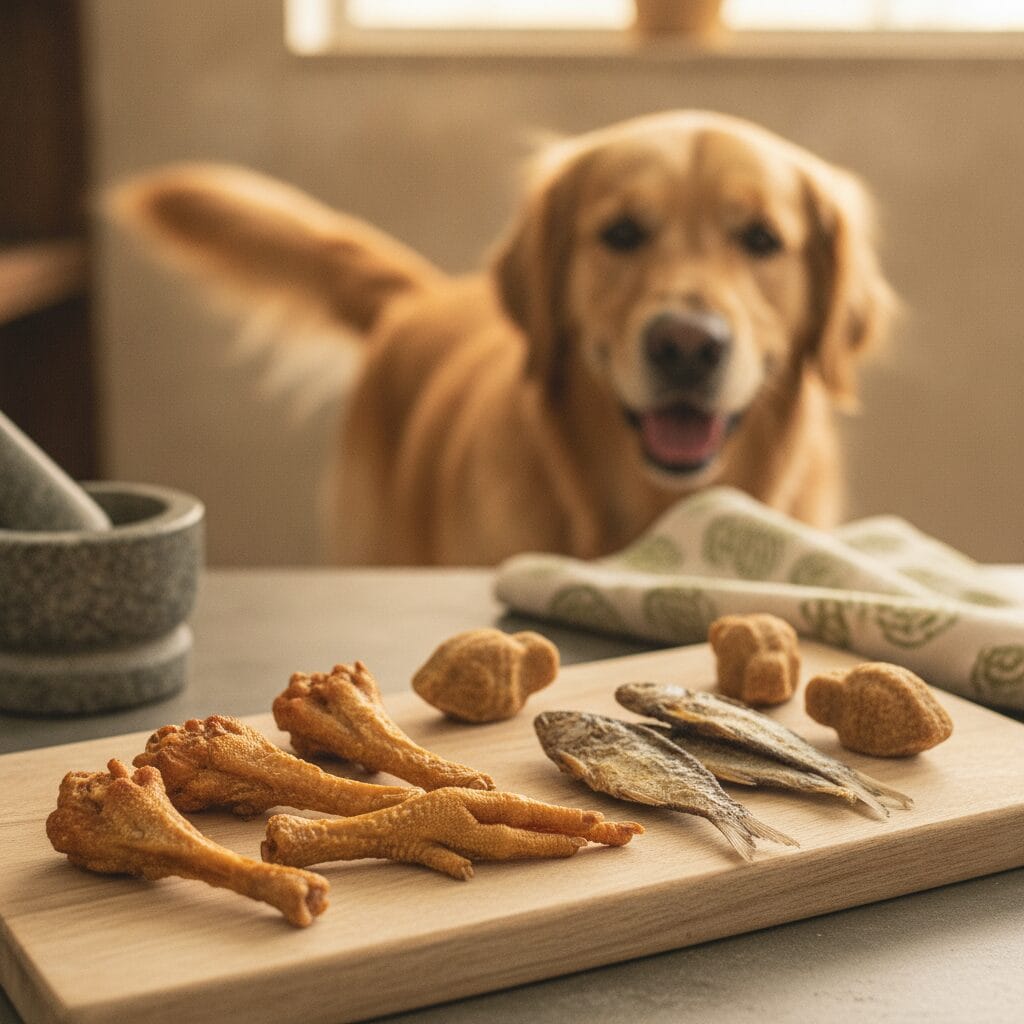
| Dehydrated Chicken Feet | Good for moderate chewers, natural source of glucosamine for joints, also cleans teeth. | Slightly shorter lasting than goat ears/pig bone, but still beneficial. |
| Dehydrated Mutton Trotters | Very durable, excellent for large breeds, high in collagen for joint health. | Heavy duty chew, ideal for powerful chewers. |
Dehydrated Goat Ears: The Natural Solution for Food Aggression
Among the best options for redirecting resource guarding are Dehydrated Goat Ears. These natural, single-ingredient chews are not just a treat. They are a functional tool for behavioural management. The process of chewing a durable item like a goat ear engages a dog’s natural instincts. Providing a healthy outlet for stress and anxiety. That often underlies food aggression.
Why Dehydrated Goat Ears Work:
- Long-Lasting Satisfaction: Unlike quick treats, Dehydrated Goat Ears provide extended chewing time. Keeping your dog engaged and mentally stimulated. This sustained engagement is crucial for calming anxious behaviours.
- Natural Fibre from Fur: The fur on our Dehydrated Goat Ears acts as a natural colon sweep. It helps to clean the intestinal walls. It bulks up stools. And naturally expresses anal glands. Contributing to overall gut health. A healthy gut is often linked to better behaviour and reduced anxiety.
- Dental Health Benefits: The texture of the dehydrated ear helps scrape away plaque and tartar buildup. Promoting healthier teeth and gums. Good dental health contributes to a dog’s overall well-being and comfort.
- Safe and Digestible: Dehydration at low temperatures retains the ear’s natural structure. Without making it brittle like cooked bones. This means it crumbles safely. And is fully digestible. Eliminating the risks associated with cooked bones.
Creating a Peaceful Feeding Environment
Beyond specific tools, the feeding environment plays a critical role. In managing food aggression in Indian dogs.
- Designated Feeding Spot: Always feed your dog in a quiet, low-traffic area. Where they feel secure. This should be their personal space. Undisturbed during meal times.
- Consistent Schedule: Dogs thrive on routine. Feed at the same times each day. To reduce anxiety about when their next meal will come.
- “Leave It” and “Drop It” Training: Practice these commands with low-value items first. Gradually work up to their food bowl from a distance. The goal is to teach them that giving up an item results in something even better.
- No Disturbing While Eating: Teach all family members, especially children, to leave the dog undisturbed while they are eating. This builds trust. And reduces the perception of threat.
A 7-Day Protocol to Reduce Food Aggression
Here’s a step-by-step plan to begin addressing food aggression in your Indian dog:
- Days 1-2: Establish the Safe Zone:
- Feed your dog in a quiet, isolated room.
- Use a slow feeder for all meals.
- Do NOT approach the bowl while they are eating. Observe from a distance.
- After they finish, immediately offer a high-value chew, such as a Dehydrated Goat Ear, in a separate location.
- Days 3-4: Introduce Positive Association (from a distance):
- While your dog is eating from their slow feeder, stand several feet away (beyond their comfort zone).
- Gently toss a very high-value treat (like a tiny piece of cooked chicken or paneer) towards the bowl, but not directly into it.
- Do this a few times during each meal, then walk away. The goal is for them to associate your presence with good things.
- Days 5-6: Gradual Approach:
- Continue the positive association.
- As your dog eats, take a single step closer than the previous day, toss a treat, and step back.
- Never force proximity. If they growl, you’re too close. Revert to the previous distance.
- Always follow meals with a satisfying chew like our Dehydrated Pig Bone.
- Day 7 Onwards: Consistency and Management:
- Maintain the routine. Continue slow feeder use and post-meal chews.
- Practice the “toss and retreat” game at a distance they are comfortable with.
- Celebrate small victories. This is a journey of trust-building.
Common Mistakes Indian Pet Parents Make
- Punishing Growling: A growl is a warning. Punishing it teaches your dog to skip the warning and go straight to biting. Instead, respect the growl as communication.
- Taking Food Away “To Show Who’s Boss”: This is a disastrous approach. It escalates aggression and destroys trust. It confirms their fear that their food will be stolen.
- Feeding in Chaotic Environments: Expecting a dog to eat calmly amidst children, guests, or other pets is unrealistic. It fuels anxiety.
- Ignoring the Underlying Cause: Food aggression is rarely just about food. It’s about fear and insecurity. Addressing the behavioural and environmental factors is key.
- Not Providing Enough Mental Enrichment: A bored dog is an anxious dog. Chews, puzzle toys, and training provide mental stimulation. That reduces overall stress. Consider exploring our guide on the best natural dog treats in India for more enrichment ideas.
Managing food aggression in Indian dogs requires a thoughtful, patient approach. That combines environmental changes, training, and the right tools. By incorporating slow feeders and high-quality, natural chews like our Dehydrated Goat Ears, you can transform mealtime anxiety into a calm, enriching experience. These chews not only satisfy your dog’s natural urge to chew but also help redirect their guarding instincts into a safe and beneficial activity.