By Mahiv Amit Chhabra, Certified Canine Nutritionist and author of The Desi Carnivore. Last updated: 18 May 2026.
TL;DR
- The Indie dog diet should be roughly 30 to 45% protein, 20 to 30% fat, and under 20% carbohydrates, the opposite of the 50 to 70% carbohydrate kibble that floods the Indian pet aisle. Indies evolved as opportunistic carnivore-scavengers on the Deccan plateau, not on puffed corn.
- The single best foundation for an Indie bowl is a cooked-meat-and-pumpkin base topped with the Bone and Organ Boost, which fixes the taurine, iron, and Ca:P gaps that a plain home-cooked chicken-and-rice bowl always leaves behind.
- Roti, curd, and boneless chicken is the most common Indie feeding mistake in India, and it slowly leaches calcium from the dog’s own skeleton, leading to Osteopenia and Rubber Jaw syndrome over years.
- Indies are genetically hardier than imported breeds (lower hip dysplasia rates, fewer congenital conditions, leaner build, faster metabolism), but they run hot in Indian climate and need a high-moisture, low-carb diet to thrive into their typical 14 to 16-year lifespan.
- Do not feed your Indie a vegetarian diet. They are opportunistic carnivores, not herbivores. The biology is not negotiable.
The Indian Pariah Dog was here before the British, before the Mughals, before the Marathas. Genetic studies place the Indie lineage as one of the most ancient surviving dog populations on Earth, diverging from the modern dog clade somewhere between 14,000 and 30,000 years ago. Your Indie’s ancestor hunted the same Deccan plateau where Maratha cavalry would later ride. And yet, in 2026, we feed that dog a beige biscuit made of puffed maize.
The Indie is the most under-served dog in Indian pet nutrition content. “Premium” breed-diet pages are written for Labradors, Goldens, and German Shepherds, imported breeds that arrived in India in the last 150 years. Meanwhile the indigenous dog, the one who is genuinely adapted to this climate, gets a footnote. We are going to fix that here.
A Short Honest History of the Indie
The Indie is not a stray. She is a landrace, a population shaped by thousands of years of natural selection on the Indian subcontinent. Imported breeds are Victorian-era genetic experiments. Indies are the original draft.
Two things matter for diet:
- Indies descend from the same ancestral wolves that scavenged across the Deccan, Bengal, and Kerala, surviving on small mammals, birds, fish from coastal villages, opportunistic livestock scraps, and human leftovers. This is the canonical “opportunistic carnivore-scavenger” pattern. It is not herbivore. It is not corn-and-soy.
- The Indie gene pool was never bottlenecked by Victorian show-breeding. This is why Indies have far lower rates of hip dysplasia, far fewer congenital heart conditions, and almost no brachycephalic problems compared to Pugs, Bulldogs, or even Labs. It is also why Indies can live 14 to 16 years on the right diet, several years longer than the Indian Lab average.
When you feed an Indie, you are feeding a dog whose digestive tract has been selected, for tens of thousands of years, to process meat, organ, scavenged bone, and small amounts of incidental plant matter. The pancreas is calibrated for protein, not industrial cereal.
Why Kibble Is Biologically Backward for an Indie
Most kibble on the Indian shelf contains 50 to 70% carbohydrates, almost entirely from maize, rice, and wheat. The Indie’s pancreas was not built for this. Three biological facts make the case:
- Dog saliva contains no amylase. Unlike humans, your dog cannot begin breaking down starch in the mouth. The starch hits the stomach essentially whole and forces the pancreas to do all the work.
- The dog stomach is meant to be at pH 1 to 2, a vat of acid that dissolves bone and kills bacteria. High-carb diets raise stomach pH, weakening bone digestion and opening the door to bacterial overgrowth.
- Canine intestines are short, 12 to 30 hours of transit, built for fast protein processing. Grain fermentation needs the long colon of a horse or a cow. A dog does not have one.
When a kibble-fed Indie shows up at my consultation with loose stools, dull coat, paw-licking, and 3 kg of unnecessary weight, the explanation is rarely mysterious. The diet is the diagnosis. An Indie, the most ancient and resilient dog on this subcontinent, deserves better than the biologically inappropriate sludge sold to every other dog. The hardiness is a gift. Do not waste it on Pedigree.
The Macro Targets for an Active 15 to 20 kg Indie
Per the National Research Council’s 2006 Nutrient Requirements of Dogs and Cats, the minimum dietary protein for adult dogs is roughly 18% of dry matter. That is a survival floor, not an optimum. For an active Indie, the optimum sits much higher.
| Macronutrient | Indie target (% of dry matter) | Indian kibble reality | Why it matters |
|---|---|---|---|
| Protein | 30 to 45% | 18 to 25% | Lean muscle, immune function, taurine precursors |
| Fat | 20 to 30% | 8 to 15% | Energy, fat-soluble vitamins, coat oil |
| Carbohydrates | Under 20% | 50 to 70% | Anything more strains the pancreas and feeds inflammation |
| Moisture (fresh diet) | 60 to 75% | Around 10% in kibble | Kidney load, hydration, satiety |
A 15 to 20 kg active Indie typically needs 750 to 1,000 kcal per day, roughly 4 to 6% of body weight in fresh food. Adjust upward for working dogs, downward for senior or spayed dogs. Use stool quality, waist visibility, and energy as your monitoring instruments, not the back of the kibble bag.
The Two Golden Rules Apply Doubly to Indies
Every bowl, regardless of breed, has to clear two checks. For an Indie, where you are explicitly trying to honour the ancestral diet, these matter even more.
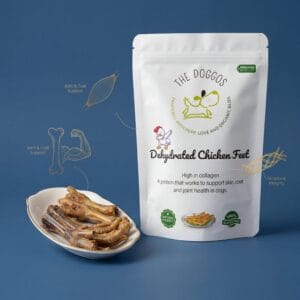
Rule 1: Calcium to Phosphorus ratio of 1.2:1. Meat gives phosphorus. Bone gives calcium. A boneless home diet (just chicken plus rice) leaches calcium from the dog’s own skeleton over years, leading to Osteopenia and the dreaded Rubber Jaw, the slow demineralisation of the lower jaw. I see this in adult Indies fed “homemade” boneless chicken every single week. The fix is non-negotiable, either dehydrated bone (Chicken Feet, Whole Quail) or the Bone and Organ Boost, into every meal.
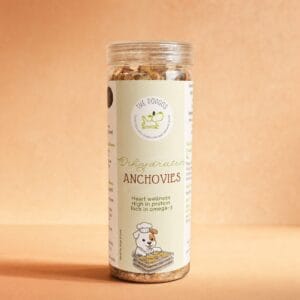
Rule 2: Omega-6 to Omega-3 balance. Commercial Indian chicken is fed corn and soy, which pushes the Omega 6:3 ratio in the meat to 20:1 or 30:1, against the 7:1 of pasture-raised. This floods the body with inflammatory markers. Add hemp seed oil or dehydrated anchovies to every chicken meal to bring it back into range. This is the single biggest reason your Indie may be licking paws or developing hot spots in monsoon. It is Omega-6 inflammation, not “heat from chicken.”
Why the Bone and Organ Boost Is the Indie’s Anchor Product
Indies evolved on whole-prey scavenging, the entire carcass, not the muscle meat. Muscle meat is phosphorus-heavy and taurine-poor. Organ meat is where the iron, the taurine, the Vitamin A, the B vitamins, the copper, and the manganese live. Bone is where the calcium lives. A dog fed only “chicken breast and rice” is missing two of the three pillars of the ancestral plate.
This is exactly the gap Bone and Organ Boost is designed to close. It is a dehydrated blend of bone, organ, and connective tissue, balanced to deliver the nutrients you cannot reasonably hand-source in an Indian kitchen, especially the taurine, which is critical for cardiac function and is almost always under-supplied in boneless home meals.
For an Indie, the daily protocol is simple. Cook the meat. Add the Bone and Organ Boost as a topper. You are feeding the dog what her grandmother twenty generations back ate, with the wet-market hygiene problem removed. To lean further into the whole-prey angle, add a dehydrated whole quail once or twice a week. It is the closest thing you can buy to a small intact prey animal, feathers and all, and it is hypoallergenic for any Indie who has been over-exposed to commercial chicken.
A Weekly Indie Meal Plan Using the Doggos Catalog
This is the template I hand most new Indie clients. Assume a 15 to 20 kg adult, two meals a day, no medical conditions.
| Day | Morning bowl | Evening bowl | Chew or topper |
|---|---|---|---|
| Mon | Cooked chicken thigh + pumpkin + Bone and Organ Boost (1 tsp) | Same | 1 dehydrated chicken foot |
| Tue | Cooked goat curry-cut + sweet potato + Bone and Organ Boost (1 tsp) | Same | Hemp seed oil (3 ml) |
| Wed | Cooked chicken thigh + spinach + Bone and Organ Boost (1 tsp) | Whole dehydrated quail (full meal) | None needed |
| Thu | Cooked goat + pumpkin + 4 dehydrated anchovies | Cooked chicken + Bone and Organ Boost | 1 chicken foot |
| Fri | Cooked chicken thigh + green beans + Bone and Organ Boost (1 tsp) | Same | Hemp seed oil (3 ml) |
| Sat | Cooked goat + sweet potato + Bone and Organ Boost (1 tsp) | Same | 1 to 2 chicken feet |
| Sun | Fasting morning (just bone broth) | Whole quail + steamed vegetables | None |
Notes that matter:
- Always debone after cooking. Cook the meat, then strip the bones out. Cooked bones splinter. The Bone and Organ Boost (or dehydrated chicken feet) provides the calcium safely.
- Rotate the protein. Two proteins minimum, ideally three, to prevent the over-exposure that drives most Indian dog allergies.
- Vegetables are condiments, not meals. 10 to 15% of the bowl, max. Pumpkin, sweet potato, spinach, green beans. Skip onion, garlic, raw potato, and grapes.
- Hydration matters. A fresh diet is already 70% water, but Indian heat means a clean second water bowl in the evening is non-negotiable.
From Mahiv’s practice: A 3-year-old Indie named Bhaagi, adopted from a Pune shelter, came to me with chronic paw-licking, dull coat, and the kind of loose stool that ruins your morning. She had been on a “premium” Indian kibble for 18 months. We dropped the kibble, switched her to a cooked-chicken-and-pumpkin base with the Bone and Organ Boost daily, added 2 ml hemp oil per meal, and a whole quail twice a week. Two weeks in, the stool firmed up. By week 6, the paw-licking stopped and her coat looked like a different dog’s. The owner sent me a photo at month 4, Bhaagi at her ideal weight, ears clean, eyes bright. The diet was the prescription.
Indian Climate Considerations for the Indie
Indies are built for Indian weather in a way Huskies, Saint Bernards, and even Labs are not. The lean frame dissipates heat. The single coat does not trap humidity. The gut flora handles the local water supply better than imported breeds. But “built for” is not “immune to.” Practical adjustments:
- Monsoon ear and paw care. An outdoor disposition exposes Indies to moisture-borne yeast and fungal pressure. Keep ears dry. Wipe paws after walks. Watch for the early itch.
- Summer water intake. A fresh-fed Indie naturally drinks less than a kibble-fed dog (fresh food is 70% water). This is normal. Still, on a 40°C Mumbai afternoon, refill twice a day and check gum colour if the dog goes off food. Our guide to summer appetite loss in Indian dogs goes deeper.
- Tick and flea season. Indies are not magically immune. Brush weekly, keep the coat clean (hemp oil helps here), and watch for the early signs of tick fever (lethargy, pale gums, fever).
Life-Stage Adjustments
Puppies (8 weeks to 12 months). Higher protein (40 to 50%) and calcium support for growth. Two meals a day, scaled to about 6 to 8% of body weight. Avoid the giant-breed calcium overload mistake, Indies are medium-sized, not Mastiffs. Half a chicken foot two to three times a week from 16 weeks onwards is plenty.
Adults (1 to 7 years). The weekly meal plan above. Maintenance is the game. Watch the waist.
Seniors (7+). Indies often live 14 to 16 years on good food. The senior bowl needs slightly more fat (joint cushioning, brain function), less raw bone (older teeth), and more Omega-3. I lean on the Bone and Organ Boost heavily for senior Indies, the dehydrated organ is easy on older digestion while still delivering taurine, B vitamins, and iron. Add 4 to 6 anchovies per day for the DHA hit.
Common Indian Feeding Mistakes for Indies
Most of these I see weekly.
- Roti, curd, and boneless chicken as the default daily bowl. The dal-rice household instinct extends to the dog, and it is wrong. Boneless chicken with no calcium source leaches the skeleton. Curd in small quantities is fine, but it cannot be a meal.
- Parle-G and Marie biscuits as training treats. Sugar and maida. They rot teeth and contribute nothing. A dehydrated chicken foot is the correct answer.
- Vegetarian feeding. The single most damaging Indian household decision. Vegetarian diets cause taurine deficiency, dilated cardiomyopathy, and shortened lifespan. There is no ethical argument that justifies it for the dog. Feed your dog meat or rehome them.
- Over-rice-ing the bowl. Rice has its place during digestive upset, as covered in our rice for dogs guide, but it is a 5 to 10% condiment, not the meal.
- Feeding raw from the Indian wet market. The hygiene gap is real. Cook the meat, dehydrate the bone. The full argument is in our raw feeding in India guide.
- Assuming the Indie is “just a street dog” and doesn’t need quality food. This one I take personally. She is the most genetically intact dog on this subcontinent. She deserves better, not less.
Frequently Asked Questions
Are Indie dogs vegetarian?
No. Indie dogs are opportunistic carnivores, evolved over tens of thousands of years to eat meat, organ, bone, and scavenged scraps. Vegetarian feeding causes taurine deficiency, dilated cardiomyopathy, poor coat, and significantly shortened lifespan. There is no version of canine biology that supports a vegetarian diet for an Indie. Feed her meat.
Can I feed my Indie roti?
A small amount of plain roti is not toxic, but it should not be a daily food. Dogs cannot pre-digest starch in saliva (no amylase), so roti hits the stomach essentially whole and strains the pancreas. Use roti the way you would use a single piece of biscuit, occasional and incidental, not as the base of any meal. Read our full breakdown of chapati for Indian dogs for context on starchy Indian staples.
What is the typical Indie lifespan?
Well-fed Indies routinely live 14 to 16 years, with many making it to 17 or 18. This is several years longer than the average Indian Labrador or German Shepherd, mostly thanks to the lack of inbreeding-related conditions. Diet plays a meaningful role, an Indie on a fresh, biologically appropriate diet typically outlives a kibble-fed Indie by 2 to 3 years in my consulting experience.
Are Indies prone to any health conditions?
Compared to imported breeds, Indies are dramatically less prone to congenital and structural conditions. Hip dysplasia rates are low. Heart conditions are rare. The main issues I see in adult Indies are diet-driven, allergies and ear infections from over-exposure to commercial chicken, weight gain from kibble, and Osteopenia from years of boneless feeding. All three are preventable.
Can I feed my Indie raw meat?
I love the biological argument for raw feeding. I do not recommend the practice for Indian households. The wet-market supply chain plus Indian humidity is a cross-contamination risk for your kitchen and your dog. The Doggos method is “Cook the Meal, Dehydrate the Bone”, you cook the muscle meat to kill pathogens, and you supply bone calcium through dehydrated products, where the low-temperature drying retains nutrients without the splintering risk of cooked bones.
How much food does an active 15 kg Indie need per day?
Roughly 750 to 900 kcal per day, or about 4 to 6% of body weight in fresh food, split across two meals. Working dogs and lean dogs go higher. Spayed or senior dogs go lower. Use waist visibility (you should see a tuck behind the ribs from above) and stool quality as the daily check, not the back of any bag.
Is the Indie the same as a Mudhol Hound or a Rajapalayam?
No, these are distinct Indian breeds. The Indie (Indian Pariah Dog) is a landrace, naturally evolved across the subcontinent. The Mudhol Hound, Rajapalayam, Chippiparai, and Kanni are recognised Indian breeds with more specific regional histories and slightly different builds and dietary needs. All of them benefit from the same biology-led, low-carb, whole-prey approach.
About the Author
Mahiv Amit Chhabra is a Certified Canine Nutritionist and author of The Desi Carnivore: The Indian Pet Parent’s Guide to Real Meat, Whole Prey, and Ancient Superfoods. He runs The Doggos from Thane, Maharashtra, alongside his dogs Tony and Toughie, the brand’s longest-serving quality-control team. Read more about Mahiv.