By Mahiv Amit Chhabra, Certified Canine Nutritionist and author of The Desi Carnivore. Last updated: 18 May 2026.
TL;DR
- The Rajapalayam diet should sit at roughly 35 to 45% protein, 22 to 32% fat, and under 15% carbohydrates. This is a hare-coursing sighthound built on fat and protein, not on rice. Indian kibble at 50 to 70% carbohydrate is biologically backward for this breed.
- The single best foundation for a Rajapalayam bowl is a cooked-meat base topped with the Bone and Organ Boost, which closes the taurine, iron, and Vitamin A gaps that a working sighthound burns through faster than most breeds.
- Rajapalayams carry 12 to 18% body fat in working condition, which means almost no caloric reserve. Under-feeding fat is the single most damaging mistake Tamil Nadu owners make, and it shows up as a brittle coat, weight loss, and a sighthound who “just won’t eat.”
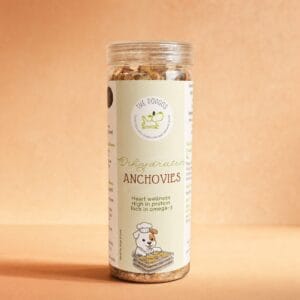
- The white coat and pink skin make Rajapalayams sun and insect sensitive. Omega-3 from dehydrated anchovies and hemp seed oil supports the skin barrier against Tamil Nadu UV and flies.
- Do not feed your Rajapalayam a vegetarian diet. This is a Polygar-era hunting hound, selected for chasing hare and small game across the Western Ghats. The biology is not negotiable.
The Rajapalayam was here before kibble, before “premium imported breeds,” and before the Indian middle class started feeding dogs from sealed bags. She was here when the Nayakar dynasty hunted in the forests around Madurai, and she was here when the Polygar chieftains fought the East India Company across southern Tamil Nadu. She is one of the oldest documented Indian sighthounds, and yet, in 2026, most published feeding advice for her is either silent or copied from a generic American Greyhound page.
The Rajapalayam is the second most under-served dog in Indian pet nutrition content, after the Indie. There is barely a breed-diet page that actually understands the working sighthound build, the Tamil Nadu climate it evolved in, or the white-coat-associated quirks that show up across the breed. We are going to fix that here.
A Short Honest History of the Rajapalayam
The Rajapalayam, also called the Polygar Hound, is named for the town of Rajapalayam in the Virudhunagar district of Tamil Nadu. The breed was developed under the patronage of the Nayakar rulers and later kept by the Polygar (Palaiyakkarar) chieftains as a hunting and guardian hound. Historic records describe these dogs coursing hare and wild boar across the dry scrub and low hills of southern Tamil Nadu.
Two facts matter for diet:
- The Rajapalayam was selected as a working sighthound. Tall, deep-chested, narrow-waisted, with long racing legs and a lean body composition (12 to 18% body fat in working condition). The breed runs by sight, accelerates hard, and burns fat and protein for fuel. The digestive tract was shaped on game, scraps, and organ meat from village hunts, not on commercial rice-fed chicken or kibble.
- The breed pool stayed largely indigenous. Unlike a Lab or a Golden, the Rajapalayam was not run through Victorian show-breeding bottlenecks. Tamil Nadu state has actively conserved the breed, and the Indian Army’s Remount Veterinary Corps has trialled Rajapalayams as guard and assault dogs at Hisar. The genetics are local, sturdy, and adapted to Indian heat.
When you feed a Rajapalayam, you are feeding a sighthound whose ancestors took down hare on dry Tamil scrub thirty generations ago. The metabolism is calibrated for protein and fat. The pancreas was never asked to ferment rice.
Breed-Specific Build and What It Demands
The Rajapalayam standard, broadly, is a tall hound at 65 to 75 cm at the shoulder, weighing 22 to 32 kg, almost entirely white in coat with a characteristic pink or flesh-coloured nose and ears, and golden-yellow eyes. The build is sighthound through and through, deep chest, tucked waist, long thin legs, and a low-body-fat frame.
Three structural points drive feeding decisions:
- Deep chest, narrow waist. Like all sighthounds, the Rajapalayam is at higher risk of gastric dilatation (bloat) than a barrel-chested breed. This argues for two smaller meals a day instead of one large one, and a calm rest period after eating, not a sprint chase.
- Long racing legs and a high stride. Shoulder, elbow, and hip joints take repeated landing force across a working life. Collagen and glucosamine support matter here, more than they would for a low-impact breed.
- Low body fat reserve. A working Rajapalayam carries 12 to 18% body fat. That is enviable, but it also means very little caloric buffer. Skip a meal or under-feed fat, and the dog visibly loses condition within a week.
Health Considerations Specific to the Rajapalayam
Most published Rajapalayam health writing is thin. Here is what I see across consultations and what the breed history supports.
White-coat-associated deafness. Some Rajapalayam lines, particularly those bred for the very white “pure white” show standard, carry a higher incidence of congenital deafness linked to the same pigment-related genes that produce the white coat. This is well documented across white-coated breeds (Dalmatians, white Boxers, white Bull Terriers). Test puppies for hearing if you can, and if your Rajapalayam is deaf in one or both ears, this is a behavioural and safety issue, not a nutritional one. The diet does not change.
Thin skin and sun sensitivity. The pink-skinned, white-coated Rajapalayam is more vulnerable to Tamil Nadu UV, insect bites, and contact irritants than a pigmented breed. The skin barrier is the front line of defence, and the barrier is built from fat (cholesterol, ceramides, fatty acids). This is the single biggest argument for keeping fat intake high and Omega-3 generous.
Low cold tolerance. Bred for Tamil Nadu, not Manali. A Rajapalayam in Delhi winter or a Bangalore monsoon evening will feel the cold faster than a Lab. Adequate fat in the diet supports thermoregulation. Do not cut fat in cooler months. Increase it.
Fussy eater tendency. Sighthounds are not Labradors. They graze, walk away, return, and walk away again. This is normal sighthound behaviour. The mistake is to interpret “she didn’t finish the bowl” as “she needs less food,” and then chronically under-feed her. Most “thin Rajapalayams” I see are not sick. They are owners-mis-reading-grazing-behaviour cases.
The Macros for a Working Rajapalayam
Sighthounds run on fat and protein, not on carbohydrates. The macronutrient targets sit higher in fat than a general “active dog” template, and lower in carbohydrate than almost any kibble on the Indian shelf.
| Macronutrient | Rajapalayam target (% of dry matter) | Indian kibble reality | Why it matters |
|---|---|---|---|
| Protein | 35 to 45% | 18 to 25% | Lean muscle, taurine precursors, recovery from sprint work |
| Fat | 22 to 32% | 8 to 15% | Skin barrier, joint cushioning, thermoregulation, sprint fuel |
| Carbohydrates | Under 15% | 50 to 70% | Excess raises stomach pH, feeds inflammation, blunts fat oxidation |
| Moisture (fresh diet) | 65 to 75% | Around 10% in kibble | Kidney load, hydration in Tamil Nadu heat |
A 25 kg adult Rajapalayam in moderate activity typically needs 1,100 to 1,400 kcal per day, roughly 3.5 to 5% of body weight in fresh food. A working dog or a young dog in growth pushes that higher. Use waist visibility, the rib feel (you should feel ribs easily under a thin fat layer), and energy as your daily check, not the kibble bag.
The Two Golden Rules Apply to Every Rajapalayam Bowl
Rule 1: Calcium to Phosphorus ratio of 1.2:1. Muscle meat is phosphorus-heavy. Bone provides calcium. A boneless home diet (just chicken plus rice) leaches calcium from the dog’s own skeleton over years, leading to Osteopenia and Rubber Jaw, the slow demineralisation of the lower jaw. I have seen this in adult Rajapalayams fed boneless chicken-and-rice for years. The fix is non-negotiable, either dehydrated bone (chicken feet, whole quail, mutton trotters) or the Bone and Organ Boost, into every meal.
Rule 2: Omega-6 to Omega-3 balance. Commercial Indian chicken is fed corn and soy, which pushes the Omega 6:3 ratio in the meat to 20:1 or 30:1, against the 7:1 of pasture-raised. This floods a thin-skinned breed like the Rajapalayam with inflammatory markers, showing up as flaky skin, recurrent ear gunk, and insect-bite reactivity. Add hemp seed oil or dehydrated anchovies to every chicken meal. For a sun-sensitive white-coated sighthound, this is not optional.
Why the Bone and Organ Boost Is the Rajapalayam’s Daily Anchor
A Polygar-era Rajapalayam hunted, killed, and ate the small game she caught, hare, jungle fowl, the occasional small deer. She ate the muscle, but she also ate the liver, kidney, heart, and the soft bones. Muscle meat is phosphorus-heavy and taurine-poor. Organ meat is where the iron, the taurine, the Vitamin A, the B vitamins, the copper, and the manganese live. Bone is where the calcium and collagen live. A sighthound fed only “chicken breast and rice” is missing two of the three pillars her metabolism was built around.
Bone and Organ Boost is designed to close exactly this gap. It is a dehydrated blend of bone, organ, and connective tissue, balanced to deliver the nutrients a sighthound cannot reasonably get from muscle meat alone, especially the taurine (critical for cardiac function in a deep-chested breed at higher bloat risk), the iron (for oxygen transport during sprint recovery), and the Vitamin A (for the skin barrier of a thin-skinned, sun-exposed dog).
The daily protocol is simple. Cook the meat. Add the Bone and Organ Boost as a topper. You are feeding the dog what her great-great-great-grandmother ate on a Tamil Nadu evening after a hunt, with the wet-market hygiene problem removed.
Why a Sighthound Needs the Joint Stack
Long racing legs hammer shoulders, elbows, and hips across a working life. Sighthound owners who wait for limping before they support joints have left it too late. The protocol I recommend daily across my Rajapalayam clients:
- Dehydrated mutton trotters once or twice a week. Mutton trotters are denser than chicken feet, with more marrow and collagen, and they are the closest equivalent to the connective-tissue rich diet a hunting hound built her joints on. The collagen feeds tendon and ligament recovery directly.
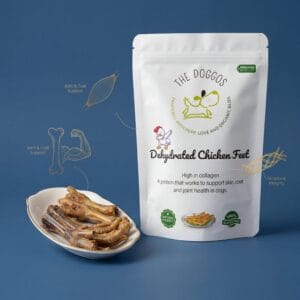
- Chicken feet two to three times a week as a chew. Glucosamine and chondroitin in the most bioavailable form, plus a dental scrape. The full case is in our chicken feet for dogs in India guide.
- Hemp seed oil daily. Anti-inflammatory, supports joint mobility and the skin barrier in one ingredient.
For a hard-running 25 kg sighthound, this stack is the difference between a free-moving dog at age 9 and a stiff one.
Novel Protein and the Whole-Prey Argument
The Rajapalayam was a hunter. She ate small whole animals as part of her ancestral plate. The closest you can replicate in 2026 is a dehydrated whole quail once or twice a week. Quail is a true novel protein for almost every Rajapalayam (the breed has rarely encountered it), which makes it ideal for the chicken-allergic dogs I see weekly. The feathers also act as an insoluble keratin colon sweep, scrubbing the intestinal wall and bulking stool to naturally express anal glands.
If your Rajapalayam scoots or has soft stool, a whole quail twice a week often resolves both inside two weeks.
A Weekly Rajapalayam Meal Plan Using the Doggos Catalog
This is the template I hand most new Rajapalayam clients. Assume a 25 kg adult, two meals a day, no medical conditions, moderate daily exercise.
| Day | Morning bowl | Evening bowl | Chew or topper |
|---|---|---|---|
| Mon | Cooked chicken thigh + pumpkin + Bone and Organ Boost (1.5 tsp) | Same | 1 dehydrated mutton trotter |
| Tue | Cooked goat curry-cut + sweet potato + Bone and Organ Boost (1.5 tsp) | Same | 5 ml hemp seed oil |
| Wed | Cooked chicken thigh + spinach + Bone and Organ Boost (1.5 tsp) | Whole dehydrated quail (full meal) | None needed |
| Thu | Cooked goat + pumpkin + 6 dehydrated anchovies | Cooked chicken + Bone and Organ Boost | 2 chicken feet |
| Fri | Cooked chicken thigh + green beans + Bone and Organ Boost (1.5 tsp) | Same | 5 ml hemp seed oil |
| Sat | Cooked goat + sweet potato + Bone and Organ Boost (1.5 tsp) | Same | 1 dehydrated mutton trotter |
| Sun | Bone broth + 2 boiled eggs (morning) | Whole quail + steamed vegetables | None |
Notes that matter:
- Always debone after cooking. Cook the meat, then strip the bones out. Cooked bones splinter into sharp shards that can perforate intestines. The Bone and Organ Boost (or dehydrated chicken feet and trotters) provides the calcium safely.
- Rotate proteins. Chicken, goat, fish, quail. A sighthound bred on village hunting variety will not thrive on single-protein monotony.
- Vegetables are condiments, not meals. 10 to 15% of the bowl at most. Pumpkin, sweet potato, spinach, green beans. Skip onion, garlic, raw potato, and grapes.
- Two smaller meals, not one. Deep-chested breeds are at higher bloat risk. Split the daily ration across morning and evening, and keep the dog calm for an hour after eating.
From Mahiv’s practice: A Madurai breeder reached out about three months ago with a litter and two breeding adults living in mediocre condition, dull patchy coats, dry pink skin under the white fur, mid-afternoon lethargy, and one bitch who simply wouldn’t keep weight on. The whole pack had been on a rice-heavy “boiled chicken plus rice” routine for years, Tamil Nadu standard. We moved everyone to the cooked-meat plus Bone and Organ Boost protocol, added mutton trotters twice a week for the working adults, anchovies daily, and hemp oil 5 ml per meal. By week 4, the dull coats were gone. By week 8, the thin bitch had put on 1.8 kg of clean weight and the puppies in the next litter looked like a different breed. The breeder messaged me a photo at week 10. I have it pinned on my desk.
Indian Climate Considerations for the Rajapalayam
The Rajapalayam evolved in Tamil Nadu, so heat tolerance is excellent. Cold tolerance is the weak point, and thin pink skin under a white coat is the other one.
- Tamil Nadu UV and the white coat. The single best dietary defence is generous Omega-3 (anchovies, hemp oil) and adequate fat. The barrier is built from inside. Topical baobab oil helps for any local inflammation, but the diet is the foundation.
- Insect and fly pressure. Thin skin reacts harder to mosquito and fly bites. Keep the coat clean. A weekly groom is enough. Watch for hot spots and treat them early.
- Monsoon and cooler nights. Increase the fat slightly in cooler months. Do not cut food because the dog seems less active.
- Bangalore, Pune, Delhi placements. If you have moved a Rajapalayam to a cooler city, a coat in winter is not a luxury. It is appropriate care. So is more fat in the bowl.
- The fussy eater problem. Sighthounds graze. Put the bowl down for 20 minutes. Pick it up if uneaten. Do not free-feed (this trains “I will eat when I want”) and do not chase the dog with food. The grazing pattern is normal, not a feeding emergency.
Life-Stage Adjustments
Puppies (8 weeks to 14 months). Sighthound puppies grow tall before they grow heavy. Protein at 40 to 50%, fat at 25 to 32%, three to four meals a day until 6 months, then two. Avoid forcing weight on, lean is correct for the breed. A growing Rajapalayam should look “leggy and light,” not chunky. Half a chicken foot two or three times a week from 16 weeks gives early joint support.
Adults (1 to 7 years). The weekly plan above. Watch the waist, watch the rib feel, watch for the dull coat that signals fat is too low.
Seniors (7+). The Rajapalayam’s working build means joints will tell you when she is slowing down before her face does. Slightly more fat, more Omega-3, and lean on the Bone and Organ Boost for the easy-on-older-digestion organ delivery. Add a dehydrated mutton trotter twice a week for collagen and 6 anchovies per day for DHA. Cooler joints and a sharper mind both benefit.
Common Tamil Nadu and Indian Owner Mistakes
Most of these I see weekly.
- Rice-heavy bowls. Tamil cultural defaults push “saadham plus chicken curry” into the dog bowl. Rice is a condiment for a dog, 5 to 10% of the bowl maximum. Most Rajapalayams I take on are getting 40 to 60% rice. The fix alone clears flaky skin and dull coat within a month.
- Under-feeding fat. “Lean breed” gets misread as “low fat.” A Rajapalayam needs 22 to 32% fat. Cutting fat thins the skin barrier, brittles the coat, and makes a working hound visibly lose condition. Feed her fat.
- Free-feeding. Sighthounds graze. Free-feeding turns this into “never quite eats a meal and never quite finishes” which destroys feeding discipline. Two scheduled meals, 20 minutes, pick it up.
- Vegetarian feeding. The single most damaging Indian household decision for any dog, doubly so for a hunting hound. Vegetarian diets cause taurine deficiency, dilated cardiomyopathy (extra risk for a deep-chested breed), poor coat, and a shortened life. There is no ethical argument that justifies it. Feed your Rajapalayam meat, or rehome her with a family who will.
- Mistaking grazing for fussiness. “She is fussy” usually means “I am free-feeding and ignoring sighthound behaviour.” Two meals, scheduled, no negotiation. Hunger is the best appetite stimulant.
- Feeding raw from the local market. The hygiene gap is real in any Indian wet market, more so in humid coastal Tamil Nadu. Cook the meat, dehydrate the bone. The full argument is in our raw feeding in India guide.
- Assuming “Indian indigenous breed” means “feed her anything.” The Rajapalayam is the descendant of royal hunting hounds. She deserves better, not less. The same biology-led approach we use for the Indie dog diet applies to her, with sighthound-specific fat and joint adjustments.
Frequently Asked Questions
Are Rajapalayams good apartment dogs?
A Rajapalayam can adjust to apartment life only if the daily exercise demand is met. This is a sighthound bred to course hare across open country. She needs at least one long, off-lead or long-line sprint session a day, plus walks, plus mental stimulation. In a flat with no run access, she will physically deteriorate. The diet does not compensate for under-exercise. If you live in a Mumbai or Bangalore flat with no nearby open ground, choose a different breed.
Why is my Rajapalayam so thin?
In almost every case I see, the answer is one of three things, and it is rarely disease. First, the dog is genuinely a working-condition sighthound at 12 to 18% body fat, and the owner is comparing her to a Lab. That is the correct weight. Second, the owner is free-feeding and the dog is grazing, never eating a full meal. Third, fat in the bowl is too low. The fix is two scheduled meals, 22 to 32% fat, and the Bone and Organ Boost daily. If the dog is also lethargic, vomiting, or has changed coat colour, see a vet.
What about the deafness in white-coated Rajapalayams?
Some Rajapalayam lines, particularly those selected for the very pure white coat, carry a higher incidence of congenital deafness, linked to the same pigment genes that produce the coat colour. This is a known pattern across white-coated breeds (Dalmatians, white Boxers, white Bull Terriers). It is genetic, present from birth, and not influenced by diet. If your Rajapalayam is uni- or bilaterally deaf, treat it as a training and safety adjustment. The diet does not change.
Can I feed my Rajapalayam raw meat?
The biological argument is strong, but I do not recommend the practice for Indian households. Tamil Nadu wet-market supply combined with coastal humidity is a cross-contamination risk for your kitchen and your dog. The Doggos method is “Cook the Meal, Dehydrate the Bone”, you cook the muscle meat to kill pathogens, and you supply bone calcium through dehydrated products, where the low-temperature drying retains nutrients without the splintering risk of cooked bones.
Can a Rajapalayam be vegetarian for religious reasons?
No. A Rajapalayam is a working hunting sighthound bred for chasing hare. A vegetarian diet causes taurine deficiency, dilated cardiomyopathy (the deep-chested build raises that risk further), brittle coat, and a shortened life. This is not a cultural debate, it is biology. If you cannot in good conscience feed meat, please do not take on a sighthound. There are plenty of family-friendly breeds for vegetarian households. The Rajapalayam is not one of them.
How much food does a 25 kg adult Rajapalayam need per day?
Roughly 1,100 to 1,400 kcal per day, or about 3.5 to 5% of body weight in fresh food, split across two meals. Working dogs and growing dogs go higher. Spayed or senior dogs go lower. Use rib feel (ribs easily palpable under a thin fat layer) and waist visibility (a tuck behind the ribs from above) as your daily check, not the back of any bag.
Is the Rajapalayam the same as a Chippiparai or a Kanni?
No. The Rajapalayam, Chippiparai, and Kanni are three distinct Tamil Nadu sighthounds with overlapping working histories and different physical standards. The Rajapalayam is the largest of the three, almost entirely white-coated, and historically associated with the Nayakar dynasty and the Polygar chieftains. The Chippiparai and Kanni are smaller, typically fawn or black, and were used for similar hare and small-game coursing. All three benefit from the same sighthound-led, high-fat, low-carb, whole-prey approach laid out in this post.
About the Author
Mahiv Amit Chhabra is a Certified Canine Nutritionist and author of The Desi Carnivore: The Indian Pet Parent’s Guide to Real Meat, Whole Prey, and Ancient Superfoods. He runs The Doggos from Thane, Maharashtra, alongside his dogs Tony and Toughie, the brand’s longest-serving quality-control team. Read more about Mahiv.
External References
- Indian Council of Agricultural Research (ICAR), National Bureau of Animal Genetic Resources, registry entry for the Rajapalayam as a recognised indigenous Indian dog breed: https://nbagr.icar.gov.in/
- National Research Council. (2006). Nutrient Requirements of Dogs and Cats. National Academies Press.