Your beloved Indie, once a whirlwind of energy chasing squirrels across the park, now takes a little longer to get up. Their once-sparkling eyes might seem a touch dimmer, and that zest for life, well, it’s there, but quieter. This isn’t just “old age.” Often, it’s a silent cry from a body starved of the right kind of nutrition. Don’t let outdated feeding practices or boneless home diets dictate your senior dog’s golden years.
For senior dogs here in India, a species-appropriate diet basically means gently home-cooked, deboned meat (like chicken or goat) balanced with dehydrated bones for calcium, rich Omega-3s (from Hemp Seed Oil or Dehydrated Anchovies), and targeted superfoods to support joints, digestion, and cognitive function. It’s about unleashing their inner carnivore, not dulling it with processed kibble or plain roti.
Why Your Senior Desi Dog Needs a Carnivore Diet, Now More Than Ever
Your dog, whether a majestic Rajapalayam or a charming Indie, is 99.9% wolf internally. Their digestive system just hasn’t evolved to process the high-carb, low-moisture, processed foods many Indian pet parents rely on. And this is especially true for senior dogs whose digestive capabilities naturally slow down.
Think about it:
- Stomach pH: A dog’s stomach acid is super strong, like pH 1-2. It’s built to melt bone and raw meat, wiping out bacteria. Our human stomachs? They’re pH 4-5. As dogs age, this acidity can naturally decrease, making it even harder for them to break down complex carbs or fight off pathogens if fed raw. Cooked meat is easier to digest and safer from a hygiene perspective, especially here in India.
- No Salivary Amylase: And unlike us, your dog’s saliva doesn’t have amylase. So, grains and starches basically hit their stomach “whole,” forcing their pancreas to work overtime to produce enzymes. For an older dog, whose body is already doing extra work, that’s just an unfair burden, isn’t it?
- Short Intestines: Their gut is short, really short (we’re talking 12-30 hours transit time compared to our 30 hours to 5 days!), made for quick protein processing, not for grains to sit and ferment. Kibble, often 40-60% carbohydrates, just sits in their gut much longer than it should, leading to fermentation, gas, and nutrient malabsorption.
Look, fresh, cooked food, the kind they’re actually meant to eat, gives them 90-94% digestibility. That means more good stuff gets absorbed, and you get smaller, firmer stools. Win-win. Contrast that with kibble’s roughly 80% digestibility, which just translates to bigger, smellier poop and less nutrition actually getting to their cells. For an aging body trying to fix itself and stay healthy, every single nutrient is precious.
The Indian Senior Dog Diet Dilemma: Cooked Bones and Calcium Catastrophe
Here’s where a lot of well-meaning Indian pet parents make a huge, potentially fatal mistake. You’re doing your best for your dog, pressure-cooking up some chicken or mutton. Great start! But then… you feed the bones.
NEVER, EVER FEED COOKED BONES TO YOUR DOG.
That high heat, like from your pressure cooker, makes bones brittle. They don’t just soften; they shatter into sharp, jagged splinters. These can easily tear through your dog’s esophagus, stomach, or intestines. Think about it. We’re talking life-threatening internal bleeding, peritonitis, and usually, an emergency vet visit that was totally avoidable. This isn’t some old wive’s tale; it’s a grim reality I’ve seen play out far too many times. And it breaks my heart every time.
The Calcium:Phosphorus Imbalance: The Silent Leech
Okay, so if cooked bones are a no-go, does that mean you just stick to boneless chicken and rice? Please, no! Absolutely not. This, my friends, is the second biggest mistake I see. Meat’s full of phosphorus, sure, but without bones, it’s seriously lacking in calcium. Over time, sometimes months, sometimes years, a boneless home diet (even one that looks perfectly healthy) basically leaches calcium from your dog’s own bones just to keep their body running. This leads to:
- Osteopenia: Their bones get weak, fragile even. Prone to breaks.
- “Rubber Jaw” Syndrome: Severe calcium deficiency in the jawbone. It gets soft, pliable. Horrifying.
The fix? A Calcium:Phosphorus ratio of 1.2:1. It’s non-negotiable. Cooked bones are dangerous. Raw bones from your neighbourhood wet market? Big hygiene risk. (Seriously, in Mumbai or Chennai’s humidity, bacteria multiply in minutes!) So, what’s the sensible middle path?
Dehydrated Bones and Chews.
Dehydration, a low-temperature, slow drying process (we’re talking 20+ hours), actually keeps the bone’s safe, porous structure intact. Unlike those dangerous cooked bones, dehydrated ones just crumble into a safe, chalky powder when your dog chews them. Perfect for highly absorbable calcium, zero splintering risk. This, my friend, is the Goldilocks solution for Indian homes: not raw (too risky for hygiene), not cooked (splinter city!). Just right.
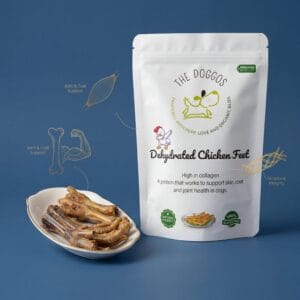
And hey, little tip: Dehydrated Chicken Feet are amazing for calcium and joints. Or try Dehydrated Whole Quail for a full calcium punch.
Beyond ‘Heat’: Tackling Inflammation with Omega-3s
Ever heard, “Oh, chicken gives my dog ‘heat’ in summer!”? I hear it all the time. It’s a super common thing in Indian households. But here’s the thing – what you’re actually seeing isn’t some magical “thermal heat.” It’s almost always an inflammatory reaction, thanks to an imbalanced diet.
Honestly, most vets won’t tell you this, but commercial Indian chicken, because of all the corn and soy they’re fed, has a totally skewed Omega-6:3 ratio. We’re talking 20:1, sometimes even 30:1! (Ideally, it should be 7:1 or less). This just floods your dog’s system with inflammatory markers, showing up as:
- Paw licking
- Hot spots
- Chronic ear infections
- That “unexplained” itching
- Dull coat and dry skin
And for our senior buddies, chronic inflammation just makes joint pain worse, cuts down their mobility, and basically, makes them feel pretty miserable.
The Fix: Omega-3 Balancers, Not Just Toppers.
You absolutely, positively MUST add Omega-3s to every single chicken meal. These aren’t just fancy “toppers” for flavour, yaar; they’re vital “balancers” for actual health.
- Hemp Seed Oil: My personal favourite, honestly, because it’s got some truly unique properties. It’s super rich in GLA (Gamma-Linolenic Acid), which is this rare Omega-6 that actually works as an ANTI-inflammatory. GLA goes straight to Prostaglandin E1, cutting down inflammation and keeping that skin barrier nice and healthy. Think moist skin, no more dry patches! Dogs with Atopic Dermatitis often miss the enzyme to properly handle normal fats, so GLA just bypasses that whole step, offering direct relief for dry, cracking paws and dandruff. It’s a real fix! Bonus? It’s plant-based (perfect for our vegetarian homes!), and it even has a mild calming effect. Brilliant for anxious seniors, no?
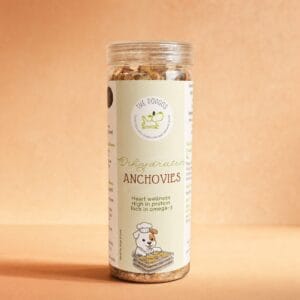
- Dehydrated Anchovies / Sardines: These little fish, anchovies and sardines, they’re small and don’t live long. That means they’re low on the food chain, so you don’t get that heavy metal buildup you might find in bigger fish. Smart, right? They’re absolutely packed with DHA, which is super important for brain health. For our older dogs, DHA really helps ward off Cognitive Dysfunction Syndrome (basically, canine dementia) and keeps them mentally sharp. We want them alert! And our dehydrated ones? Odour-controlled. So easy to use.
Adding these powerful Omega-3s? It totally solves those “heat” symptoms without you having to ditch excellent protein like chicken. Problem solved!
Joints, Brain & Gut: Senior Superfoods for Indian Dogs
As dogs get older, some specific areas just need a little extra love and support. A fresh, balanced diet plus some smart functional treats and supplements? That can make a world of difference, honestly.
Joint Health: Natural Glucosamine & Chondroitin
Arthritis and stiff joints are a common problem for many senior dogs. But instead of reaching for synthetic pills, why not look at natural sources?
- Dehydrated Chicken Feet: Think of them as a natural joint pill. Each foot packs about 450mg of glucosamine and chondroitin. Pretty cool, right? Plus, chewing them helps scrape off plaque. Bonus dental care!
- Dehydrated Mutton Trotters: Rich in collagen, these are fantastic for joint cartilage and keeping skin elastic. And they give serious chewing enrichment. (My Lab goes crazy for these!)
Brain Health: DHA for Cognitive Function
Dogs, just like us, can start to experience a bit of cognitive decline as they age.
- Dehydrated Anchovies / Sardines: Like I said before, these are DHA powerhouses. Absolutely vital for keeping brain function and memory sharp in aging dogs. Keep those memories strong!
Gut Health: Prebiotics & Fibre
It’s pretty common for seniors to start having a few more digestive issues.
- Baobab Powder: This amazing African superfood, Baobab powder, is loaded with prebiotic fibre. That fibre feeds all the good gut bacteria, which helps settle their tummy during diet changes and just makes digestion better all-round. And it’s an incredible source of Vitamin C (we’re talking 5-6x more than oranges!). That fuels collagen, meaning strong ligaments and elastic skin, and gives their immune system a huge boost. A big shield for our senior pups!
- Pumpkin & Sweet Potato: Pumpkin and sweet potato are brilliant sources of dietary fibre. Great for keeping bowel movements regular and adding those essential vitamins.
Protein for Strength & Recovery
Chicken’s usually a daily staple, right? But think about adding other proteins for some specific, targeted benefits:
- Mutton (Goat): I often call it “recovery meat.” It’s got 3x the iron and 4x the zinc compared to chicken. Seriously powerful. Perfect for senior dogs bouncing back from tick fever (helps rebuild platelets and red blood cells like crazy), or for those who are just lethargic or losing muscle mass. Ayurveda even sees it as a “warming” protein, which is fantastic for winter months or for dogs with stiff joints. And lots of dogs with chicken allergies actually do really well with goat, thanks to its different protein structure. Good to know, na?
- Whole Quail: A truly hypoallergenic “super-prey.” Got a senior dog with allergies you just can’t figure out? Quail can be an amazing novel protein for an elimination diet. It’s worth a try. It’s also rich in manganese, which helps protect ligaments from tears. And get this: the feathers act like a natural “colon sweep,” scrubbing intestinal walls and bulking up stool to naturally express anal glands. Pretty neat, huh? Scooting dog? Give them a feather!
The Hydration Advantage: Why Fresh Food Keeps Kidneys Happy
Here’s a subtle but really big benefit of feeding your senior dog fresh food: way better hydration. Kibble, usually, is only about 10% water. Freshly cooked food, though? It’s around 70% water, which is so much closer to what a dog would naturally eat in the wild.
This quietly bumps up your dog’s daily water intake, without them even needing to gulp more from their bowl. For senior dogs, whose kidneys might be working a bit harder, this constant, gentle hydration is just brilliant for kidney health. It helps flush out toxins and keeps their organs humming along beautifully. You might even notice your old buddy drinking less water from their bowl. And guess what? That’s totally NORMAL. It’s actually a great sign of good health on a fresh diet.
Crafting the Perfect Senior Dog Bowl: The Desi Carnivore Way
Right, so how do you actually put together a species-appropriate, kidney-friendly, joint-supporting meal for your aging Desi dog? Remember that mantra: “Cook the Meal, Dehydrate the Bone.”
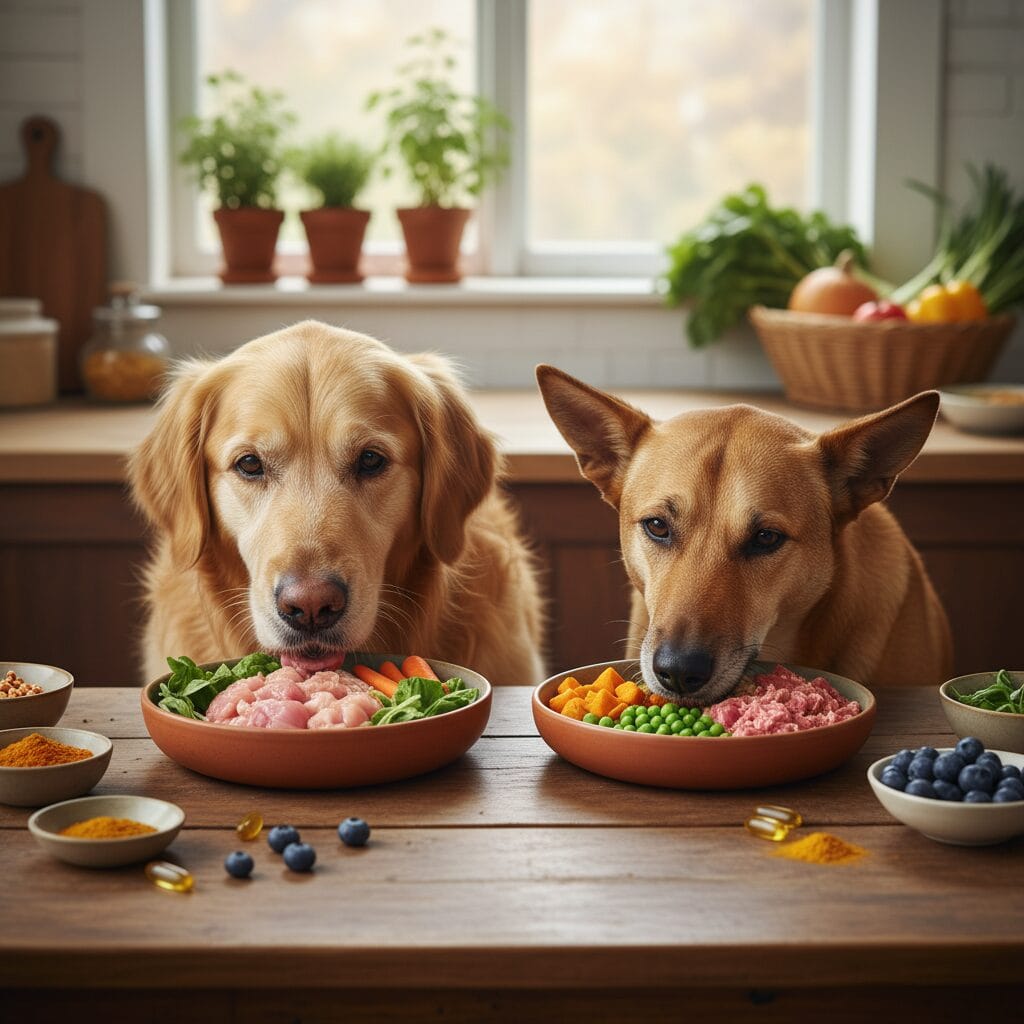
The Senior Golden Chicken Bowl (Daily Staple)
This recipe takes our classic chicken bowl and tweaks it to be extra beneficial for our senior pals.
- Protein Base: 500g chicken thighs (skin-on, because taurine! Debone *after* cooking, okay?) + 50g chicken liver (that’s your vital Vitamin A punch). Wash chicken with a little turmeric water. It’s a natural antiseptic, a nice touch.
- Vegetables: 100g red pumpkin (fibre, antioxidants galore) + 50g steamed green beans (think low-calorie fibre). Mash that pumpkin right into the broth.
- Calcium: 2-3 Dehydrated Chicken Feet, crumbled into a fine powder once the meal has cooled down. (You *could* use a pinch of eggshell powder or calcium citrate, but honestly, the feet are way better for their joints.)
- Omega-3 Balance: 1-2 tsp Hemp Seed Oil (check the label for dosage, it depends on weight) OR 1 tbsp crumbled Dehydrated Anchovies.
- Gut & Immunity Boost: 1/2 tsp Baobab Powder. It’s a gut and immunity powerhouse.
- Process: Pressure cook the chicken, liver, and pumpkin for 2-3 whistles. Let it cool completely. Then, and this is crucial, DEBONE the chicken completely. Mash the pumpkin right into the broth. Once everything’s properly cooled, stir in your Hemp Seed Oil/Anchovies, Baobab Powder, and those crumbled Chicken Feet. Serve it warm, never piping hot.
Mutton Strength Stew (For Recovery & Winter)
- Protein Base: 500g goat curry cut (bone-in is fine, just remember to debone *after* cooking!) + 50g goat liver.
- Vegetables: 100g sweet potato (complex carbs, vitamins) + a generous handful of spinach (just let it wilt in the residual heat).
- Omega-3 Balance: 1 tbsp crumbled Dehydrated Anchovies for that Omega-3 punch.
- Process: Pressure cook the goat meat, liver, and sweet potato for about 4-5 whistles, until it’s super tender. Let it cool down. Again, DEBONE the goat meat completely. Mash the sweet potato into the stew. Stir in the spinach and anchovies once it’s cooled. Simple!
Transitioning Your Senior Dog
If your senior dog has been on kibble or a boneless diet for ages, a slow, gradual transition is absolutely crucial. Don’t rush it.
- Days 1-2: 75% old food + 25% new fresh food.
- Days 3-4: 50% old food + 50% new fresh food. You might see some mucus in their stool around now – often, that’s just the gut shedding an old, unhealthy lining. It’s totally normal, nothing to panic about. (I’ve seen this work with Indie dogs especially). A pinch of Baobab Powder or a little extra pumpkin can really help settle things.
- Days 5-6: 25% old food + 75% new fresh food.
- Day 7: 100% fresh food!
Always keep an eye on their stool. If anything seems off, just slow down the transition. Take your time.
Common Mistakes Indian Pet Parents Make with Senior Dog Diets
Honestly, I see these mistakes almost every single day. But avoiding them? That can seriously add years of quality life to your senior dog. Worth paying attention to.
- Feeding Cooked Bones: This is, hands down, the number one, most dangerous mistake. Cooked bones splinter. End of story. Please, just don’t do it. Ever.
- Boneless Chicken & Rice Only: This leads to a severe calcium-phosphorus imbalance. We’re talking long-term skeletal issues, like osteopenia and “rubber jaw.” It’s a slow, painful decline no dog deserves.
- Relying on Kibble: Look, kibble just has low digestibility, tons of carbs (which actually raise stomach pH, making dogs more prone to bacterial infections), and causes chronic dehydration. Kibble is literally the opposite of what a senior carnivore needs. Full stop.
- Ignoring Omega-3s: Ignoring Omega-3s? Believing that “heat” myth and not adding crucial anti-inflammatory Omega-3s from things like Hemp Seed Oil or Dehydrated Anchovies means your dog lives with chronic inflammation. That shows up as itching, hot spots, and joint pain. And nobody wants that for their beloved pet, right?
- Giving Sugary Biscuits (Parle-G, Marie): Honestly, giving sugary biscuits (yes, I’m looking at you, Parle-G and Marie!) is a big no-no. They’re packed with maida and sugar, they rot teeth, and offer literally zero nutritional value. What’s the point? Instead, reach for a functional treat, like a Dehydrated Chicken Foot. It cleans teeth *and* gives them glucosamine. Smart swap.
- Over-feeding or Under-feeding: Senior dogs often have slower metabolisms. It’s just how it is. So, keep an eye on their weight and adjust portions. And for precise feeding guidelines, definitely talk to a nutritionist.
FAQ: Your Senior Dog Diet Questions Answered
Q1: What’s the best protein for senior dogs in India?
For most healthy senior dogs, gently home-cooked, deboned chicken is a fantastic daily protein, can’t go wrong. But if your dog needs a bit more support – maybe they’re recovering from an illness, have stiff joints, or seem a bit lethargic – then cooked goat (mutton) is brilliant. It’s got higher iron and zinc, which is super beneficial. And for seniors with suspected allergies, novel proteins like quail are a great option.
Q2: Can senior dogs eat bones?
Yes, they can, but with some really important rules. NEVER, ever feed cooked bones. They splinter dangerously, remember? Raw bones from Indian wet markets? Those come with pretty big hygiene risks. For senior dogs here in India, the safest bet is dehydrated bones and chews. Think Dehydrated Chicken Feet or Mutton Trotters. They give them all that essential calcium and great mental enrichment, without any of the dangerous splintering.
Q3: How do I ensure my senior dog gets enough calcium?
The best way to make sure your home-cooked diet has enough calcium is to add safe, easy-to-digest calcium sources. That means adding finely crushed dehydrated bones or whole quail (crumbled right into powder) to their meals. It’s simple, really. If you’re going with eggshell powder or calcium citrate, you need to make sure you hit that 1.2:1 Calcium:Phosphorus ratio. That usually means some careful calculating based on how much meat you’re giving.
Q4: My senior dog is constantly itching. Is it their food?
Often, yes! What many Indian pet parents think of as “heat” from chicken or eggs is actually just an inflammatory response. It’s usually down to an imbalanced Omega-6:3 ratio in the commercial chicken. This excess Omega-6 just floods their body with inflammatory markers, leading to all that itching, hot spots, and those annoying chronic ear infections. But balancing their diet with Hemp Seed Oil or Dehydrated Anchovies? That can make a huge difference in cutting down this inflammation. You can read more here: Why is my dog always itching?
Q5: Is it safe to switch my old dog to a new diet?
Absolutely, yes! It’s totally safe and often incredibly beneficial to switch a senior dog to a fresh, species-appropriate diet. Just make sure you do it slowly. We recommend a 7-day transition (that means slowly increasing the new food while cutting back on the old) to let their digestive system get used to it. Fresh food is usually way more digestible and hydrating, which is just brilliant for aging bodies. They’ll thank you for it.
Embrace the Golden Years, The Desi Carnivore Way
Your senior dog deserves so much more than just “getting by,” don’t they? They deserve to actually thrive. Here at The Doggos, we truly believe age is just a number. With the right nutrition, your aging Desi dog can totally regain their spark, move with less pain, and enjoy a vibrant, truly healthy life. Our whole range of dehydrated treats and superfood supplements are made to do just that, turning everyday meals into something like functional medicine for them.
From our joint-supporting Dehydrated Chicken Feet to the anti-inflammatory Hemp Seed Oil and brain-boosting Dehydrated Anchovies, we’ve got truly natural solutions. All tailored for the Indian pet parent, because we get it.
Disclaimer: While I am a certified canine nutritionist, this information is for educational purposes only and not a substitute for veterinary advice. Always consult with your veterinarian for any health concerns or before making significant changes to your dog’s diet, especially if they have pre-existing medical conditions.
Related Reading
- Read the complete Indian dog feeding guide.
- About the author: Mahiv Chhabra, certified canine nutritionist.