By Mahiv Amit Chhabra, Certified Canine Nutritionist and author of The Desi Carnivore. Last updated: 18 May 2026.
TL;DR
- The Cocker Spaniel has the worst ear-and-skin profile of any popular Indian breed. Chronic otitis externa, atopic dermatitis, and seborrhoea drive most vet visits, and the Indian monsoon makes all three roughly 3 to 4 times worse.
- The fix is a three-pillar protocol, not a steroid cream. Diet (drop chicken, switch to mutton or quail, add omega-3), topical care anchored on the Baobab Therapy Mask, and sensible weekly ear hygiene.
- Most “ear-infection Cockers” are chicken-protein reactive. Indian commercial chicken is corn-and-soy fed, pushing the Omega 6:3 ratio to 20:1 or higher and fuelling inflammation in a breed already primed for skin reactivity.
- Macro targets for an adult Cocker: protein 30 to 40%, fat 18 to 25%, carbohydrates under 22%, with a non-negotiable omega-3 source in every bowl.
- Pre-emptive June to September topical care prevents the monsoon flare. Do not wait for the smell.
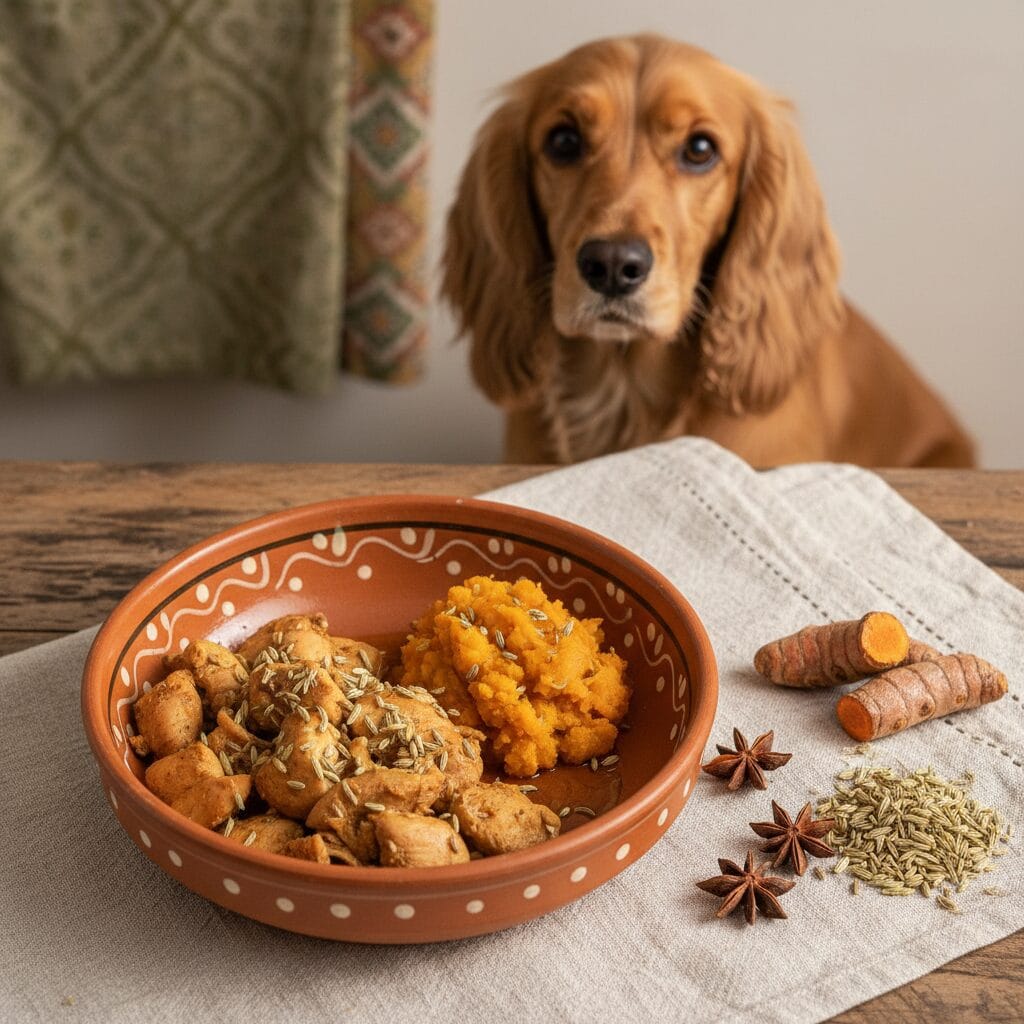
If you own a Cocker Spaniel in India, you already know the rhythm. The head shake. The ear smell that arrives a few days before the redness. The vet visit. The steroid drops. Three months of relief. Then it starts again. Most Cocker owners I meet have been on this loop for two to four years before they ask whether the diet might have something to do with it.
It does. Almost always.
The Cocker Spaniel is one of the most over-represented breeds in canine otitis externa research, and food sensitivity is the most under-treated driver of the cycle. Indian conditions make it worse, the long pendulous ears trap warm humid air against the canal, the monsoon turns each ear into a petri dish, and the typical Indian Cocker bowl is the exact wrong fuel for a skin-reactive breed.
The Cocker Spaniel Health Profile
A diet plan for a Lab is not a diet plan for a Cocker. The breed is genetically loaded for a specific cluster of conditions:
- Chronic otitis externa. Cocker Spaniel otitis prevalence sits among the highest of any breed, roughly 20 to 30% of the breed affected at some point. The biology is mechanical and microbial, sealed canal, warm humid air, microbiome destabilisation, and Malassezia yeast plus Staphylococcus bacteria blooming on repeat.
- Atopic dermatitis. Environmental and food allergies. Cocker skin reacts to dust mites, pollens, and very commonly to chicken protein and the chicken-fed-chicken Omega-6 load.
- Seborrhoea. Oily, flaky skin with a distinctive musty odour. Often misdiagnosed as poor grooming. It is metabolic.
- Hip dysplasia, hypothyroidism, cherry eye, and IMHA. All over-represented in the breed. Diet does not cause IMHA, but inflammatory loads in the bowl do not help.
The thread linking the top three concerns is chronic inflammation driven by a poorly balanced diet plus a humid climate. That is the lever you can pull at home.
The Ear-Infection Biology in Plain English
Most Cocker owners describe the cycle the same way. The dog scratches. The ear smells. The vet prescribes steroid-antibiotic drops. The infection clears. Two months later, it returns. Western vet protocols treat the symptom (the active infection) and ignore the underlying inflammation that keeps re-creating the conditions for it.
The pendulous ear traps warmth and humidity. Over-cleaning strips the protective microbiome. Systemic inflammation from a chicken-heavy diet keeps the skin barrier compromised. And the Indian monsoon turns the whole equation up to 11. Steroid drops mask the redness. They do nothing about the diet feeding the fire.
In my consulting experience, about seven out of ten Cocker ear-infection cases are downstream of food sensitivity, most often to chicken protein or to the Omega-6 imbalance in commercial Indian chicken. Switch the base protein, fix the fat ratios, and the recurring cycle often goes quiet within 8 to 14 weeks.
The Indian Monsoon Multiplier
Mumbai gets close to 2,200 millimetres of rain a year. Mangaluru tops 3,500. The interior of a Cocker’s ear during a July monsoon is, microbiologically, a sealed warm marsh. Malassezia loves it.
This is why the protocol I run with Indian Cocker clients is pre-emptive, not reactive, from June to September. By the time you smell the ear, the microbiome is already disrupted and you are back on the vet treadmill. Start the diet plus topical protocol in May, before the first heavy rain, and hold it through the season.
The Three-Pillar Cocker Protocol
This is the protocol I hand every Cocker client. None of it is a substitute for veterinary care during an active aggressive infection. All of it is what stops the next one.
Pillar 1: Diet (the chicken question)
Drop chicken as the primary protein for at least 8 weeks. Switch to mutton (goat) or quail as the base. Add an omega-3 source to every single bowl.
Commercial Indian chicken is corn-and-soy fed, which gives the meat an Omega 6:3 ratio of 20:1 to 30:1, against the 7:1 of pasture-raised. Omega-6 in excess is pro-inflammatory and feeds exactly the kind of skin and ear reactivity a Cocker is genetically primed for. Compounding this, repeated daily exposure to chicken protein from puppyhood is the most common driver of true food allergy in adult dogs.
Mutton is the recovery protein. Different protein structure, higher iron, no allergy history in most chicken-reactive Cockers. Quail is the hypoallergenic novel-protein gold standard. Both are far better Cocker bases than chicken.
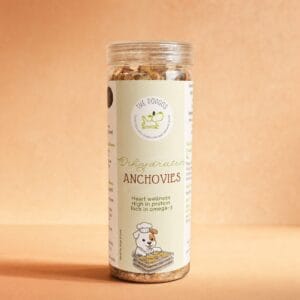
To every meal, add either hemp seed oil or dehydrated sardines. Hemp delivers GLA, a rare Omega-6 that converts to anti-inflammatory Prostaglandin E1 and feeds the skin barrier directly. Sardines deliver EPA and DHA in their most bioavailable whole-fish form, no oxidation issue, no fishy-capsule rancidity. I usually run both, sardines in one meal, hemp oil in the other.
Pillar 2: Topical care, anchored on the Baobab Therapy Mask
This is where most Cocker protocols fall apart. The diet fix is half the battle, but the active yeast and bacterial colonies that have been recolonising the same patches for two years need a direct topical intervention. Steroid creams suppress the immune response and reduce redness without addressing the microbe load. They are an anti-inflammatory, not an anti-fungal.
The Baobab Therapy Mask is the topical I anchor every Cocker case on. It is a detox clay mask formulated for the exact problem the breed presents, fungal and bacterial overgrowth on warm humid skin patches and around the ear leather. The kaolin clay draws moisture, oils, and microbial debris out of the affected skin, breaking the warmth-plus-humidity-plus-microbiome cycle that keeps the yeast alive. The Baobab is rich in Palmitic and Oleic acids, which absorb into the epidermis and mimic the dog’s natural lipid barrier, so the skin actually heals rather than just dries out.
The protocol, the mask goes on twice a week during a flare, once a week as maintenance, on the affected skin patches and behind the ears (never inside the ear canal). Leave on for 10 to 15 minutes, then wipe off with a damp cloth.
Used pre-emptively from May onwards, the Baobab Therapy Mask is the single biggest piece of the monsoon protocol. For ongoing skin maintenance and dry patches, I add Baobab Oil directly on the skin and ear leather.
Pillar 3: Ear hygiene (less is more)
The most common Cocker owner mistake is over-cleaning. Daily ear cleans strip the protective microbiome and leave a defenceless canal that yeast and bacteria recolonise within days. The correct frequency is a gentle weekly clean with a vet-approved solution, plus drying the ears thoroughly after every bath or swim. That is it.
The deeper protocol is in our guide to natural remedies for dog ear infections in India.
Macros for an Adult 12 to 15 kg Cocker
The English Cocker sits at 12 to 15 kg, the American slightly lighter at 10 to 13 kg. Macro targets adjusted for the skin and ear profile:
| Macronutrient | Cocker target (% of dry matter) | Indian kibble reality | Why it matters |
|---|---|---|---|
| Protein | 30 to 40% | 18 to 25% | Skin barrier proteins, immune function |
| Fat | 18 to 25% | 8 to 15% | Coat oil quality, fat-soluble vitamins |
| Carbohydrates | Under 22% | 50 to 70% | Excess feeds yeast colonies and inflammation |
| Omega 6:3 ratio | 5:1 to 7:1 | 20:1 to 30:1 | The single most important number for a Cocker |
An adult Cocker typically needs 550 to 750 kcal per day, roughly 4 to 5% of body weight in fresh food, split into two meals.
Why Baobab Therapy Mask Is the Anchor Product for a Cocker
Most breed-diet guides anchor on a food product. For a Cocker, that is the wrong call. The food side matters, but the differentiator, the thing that turns a stubborn two-year ear-and-skin cycle around, is the topical. Diet alone takes 8 to 14 weeks to show. Topical care plus diet can cut a flare in 3 to 4 weeks.
The Baobab Therapy Mask is the exact tool for the exact problem. Detox clay anti-fungal action is what a monsoon Cocker ear and skin need, and the Baobab lipid profile heals the barrier from inside out, unlike the surface-coating coconut and mustard oils that trap heat and worsen yeast. I have used it on more Cocker cases than any other product in the catalog, and the response rate is unusually good. Diet feeds the long game, the mask handles the active patch.
A Weekly Cocker Spaniel Meal Plan
Adult 12 to 15 kg Cocker, two meals a day, active but not working. Anchored on mutton with quail rotation and chicken removed for the elimination phase.
| Day | Morning bowl | Evening bowl | Topical or topper |
|---|---|---|---|
| Mon | Cooked mutton curry-cut + pumpkin + hemp oil (2 ml) | Cooked mutton + sweet potato + 4 sardines | Baobab Oil on ear leather |
| Tue | Cooked mutton + spinach + hemp oil (2 ml) | Whole dehydrated quail | Baobab Therapy Mask (10 min) |
| Wed | Cooked mutton + pumpkin + 4 sardines | Cooked mutton + green beans + hemp oil | Weekly ear clean |
| Thu | Cooked mutton + sweet potato + hemp oil | Whole quail + steamed vegetables | None |
| Fri | Cooked mutton + spinach + 4 sardines | Cooked mutton + pumpkin + hemp oil | Baobab Therapy Mask (10 min) |
| Sat | Cooked mutton + green beans + hemp oil | Cooked mutton + sweet potato + 4 sardines | Baobab Oil on dry patches |
| Sun | Fasting morning (bone broth) | Whole quail + steamed vegetables | None |
Notes:
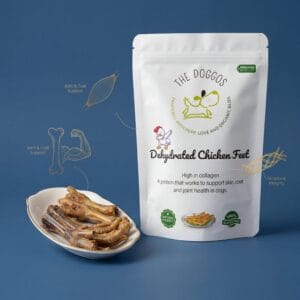
- Always debone after cooking. Cooked bones splinter. Calcium comes from the dehydrated products (sardines, quail).
- No chicken for the first 8 weeks. This is the elimination phase. After 8 weeks, you can challenge with a single small chicken meal and watch for any return of ear redness, head shaking, or paw licking within 48 hours.
- Training treats: dehydrated anchovies work beautifully here. Small, smelly, single-ingredient, and they add to the daily omega-3 load.
- Vegetables are condiments, 10 to 15% of the bowl, max. Pumpkin, sweet potato, spinach, green beans.
From Mahiv’s practice: A 4-year-old English Cocker named Pearl in Mumbai came to me with a two-year history of quarterly ear infections. Her vet had run three courses of antibiotic-steroid drops in 12 months. We dropped chicken, switched her to a mutton base with 4 sardines daily and 2 ml hemp oil per meal, and started the Baobab Therapy Mask twice weekly on her ear leather and one raw flank patch. Six weeks in, the smell stopped. By month four, the patch was fully feathered over. At her 14-month follow-up, Pearl had not had a single ear infection or skin flare. The owner had stopped buying drops.
Common Indian Cocker Owner Mistakes
- Ignoring ear smell as “just a Cocker thing.” It is not normal. It is an early-warning microbial signal. Act on it the day you notice it.
- Letting the dog swim and not drying ears. Pool, beach, even heavy monsoon shower. Always dry the ears.
- Over-bathing. Stripping the skin barrier with weekly shampoo baths worsens seborrhoea and atopic dermatitis. Once a month with a gentle shampoo is the right cadence.
- Feeding kibble plus chicken weekly. The double inflammation load. The single most common driver of recurring ear infections I see in Indian Cockers.
- Tying the ears up “for cooling”. Traps warm humid air in a sealed pocket against the canal. Worse than leaving them down.
- Skipping the omega-3 source. “I switched to mutton, why is my dog still itching?” Because you removed the trigger but did not address the underlying inflammation. The omega-3 closes the loop. Read our why is my dog always itching guide and our hot spots in Indian dogs deep dive for the full inflammation picture, plus our broader dog itching in India and dog skin and coat overviews.
- Stopping the protocol the day symptoms clear. This is maintenance, not a course. Drop it and the cycle returns.
Frequently Asked Questions
Why does my Cocker Spaniel keep getting ear infections?
Cocker Spaniels are predisposed to chronic otitis externa because long pendulous ears trap warm humid air against the canal, destabilising the ear microbiome and allowing yeast and bacteria to recolonise on repeat. In Indian conditions, food sensitivity (usually to chicken or to the Omega-6 load in commercial chicken) drives systemic inflammation that keeps the skin barrier compromised and feeds the cycle. The fix is removing the inflammatory trigger from the diet, adding omega-3, and using a topical anti-fungal like the Baobab Therapy Mask.
Should I cut my Cocker’s ear hair?
A neat trim around the ear opening (not deep inside the canal) helps airflow and is widely recommended. But never tie the ears up “for cooling”, that traps warm humid air in a sealed pocket and makes the problem worse. A monthly trim of the ear feathering by a calm groomer is the right approach.
Are Cockers chicken-allergic?
Many Cockers develop chicken protein sensitivity, but the more common Indian problem is the Omega-6 inflammation load from commercial corn-and-soy-fed chicken, which pushes the meat’s Omega 6:3 ratio to 20:1 or higher. Both manifest the same way, recurring ear infections, skin itch, paw licking. An 8-week elimination diet on mutton or quail is the clean diagnostic.
How often should I clean my Cocker’s ears?
Once a week with a gentle vet-approved cleaner during a calm period. Daily cleaning strips the protective ear microbiome and leaves a defenceless canal. During an active infection, follow your vet’s frequency. Always dry the ear thoroughly after every bath or swim.
When should I start the monsoon protocol for my Cocker?
Start in May, before the first heavy rain. Pre-emptive Baobab Therapy Mask once or twice weekly, a clean diet locked in, and weekly ear checks. The Indian monsoon makes Cocker ear and skin issues 3 to 4 times worse, prepare for it the way you would prepare for a known storm.
Is the Baobab Therapy Mask safe for inside the ear canal?
No. The Baobab Therapy Mask is for the skin around the ear (the leather) and on affected body patches, never inside the canal. For inside the canal, use a vet-approved ear cleaning solution. The mask works on the external skin where yeast and bacteria recolonise after sealing themselves into the canal.
About the Author
Mahiv Amit Chhabra is a Certified Canine Nutritionist and author of The Desi Carnivore: The Indian Pet Parent’s Guide to Real Meat, Whole Prey, and Ancient Superfoods. He runs The Doggos from Thane, Maharashtra, alongside his dogs Tony and Toughie, the brand’s longest-serving quality-control team. Read more about Mahiv.