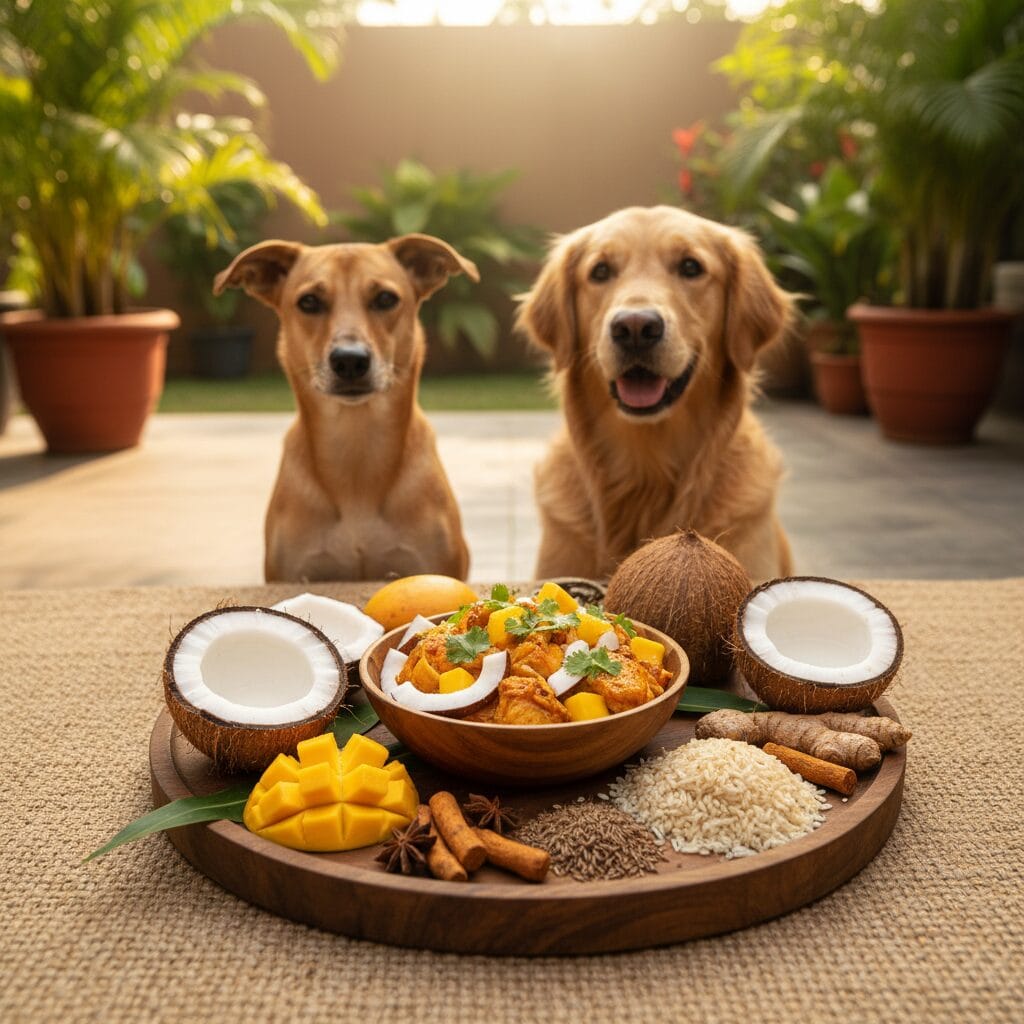
Every Indian household, especially in the coastal regions, knows the magic of coconut. From refreshing tender coconut water on a hot Mumbai afternoon to rich coconut milk in a Goan curry, it’s a staple. But when your furry family member looks at that fresh nariyal with those big, hopeful eyes, a common question pops up: Can my dog actually eat coconut?
Quick Answer: Yes, dogs can eat coconut, but only in moderation and in specific forms. Coconut flesh, water, and oil come with some health perks, but too much can easily lead to tummy troubles because it’s pretty fatty. And please, never feed the hard husk or shell, they’re a big choking hazard.
The Tropical Truth: What Parts of Coconut Are Safe for Dogs?
Understanding which parts of the coconut are safe and beneficial for your dog is super important. It’s not a one-size-fits-all situation, and moderation, my friend, is always your best bet.
Coconut Flesh (The White Meat)
The soft, white flesh of a fresh coconut can be a super tasty treat for your dog. It’s got dietary fibre, which can help digestion in small amounts, plus some minerals. However, it’s also high in fat, so portion control is crucial to prevent an upset stomach, diarrhoea, or even pancreatitis in sensitive dogs. (My own Indie dogs absolutely love a tiny bit of fresh nariyal, but it’s a rare treat!)
- How to offer: Grate just a little bit of fresh, unsweetened coconut flesh or cut it into tiny, bite-sized pieces. Always make sure there’s no hard shell.
- Why it matters: While it’s a good source of fibre, remember your dog’s main fibre should come from veggies that actually suit their biology, like pumpkin or leafy greens, not high-fat fruit.
Coconut Water (The Electrolyte Boost)
Fresh coconut water, straight from a tender coconut, is rich in electrolytes like potassium, calcium, and magnesium. It can be a hydrating treat on a scorching Chennai summer day, but again, you’ve got to be careful with how much you give. It’s got natural sugar and potassium levels, which can be a bit of a problem if they get too much, especially for dogs with kidney issues.
- How to offer: A few sips of fresh, pure coconut water are more than enough. Avoid packaged coconut water, which often contains added sugars and preservatives that are totally pointless and bad for your dog.
- Why it matters: While it provides electrolytes, dogs should mostly get their water from fresh, clean drinking water and the super high moisture content (70%!) of a fresh, home-cooked meal. Kibble, which is only 10% water, just doesn’t cut it, does it? Dogs on a fresh diet naturally drink less, and that’s a good sign for kidney health!
Coconut Oil (The Controversial Fat)
This is where things get a bit more nuanced. Coconut oil has become really popular in recent years for its supposed benefits, mostly because of its Medium-Chain Triglycerides (MCTs) and lauric acid. These compounds are believed to support brain health, energy, and have some antimicrobial properties.
- Internal use: Some pet parents add a tiny amount to their dog’s food for a shiny coat or as an energy booster. Again, high fat content means take it easy and start with very small doses (1/4 tsp for small dogs, 1 tsp for large dogs).
- Topical use: A lot of people use it for dry skin, hot spots, or minor irritations. The antimicrobial properties of lauric acid can be helpful. However, this is where the “Desi Carnivore” method has a smarter, more effective way of doing things, which we’ll dive into next.
- Why it matters: While coconut oil isn’t bad in itself, it’s often seen as a magic cure-all, especially for skin issues. And for a truly carnivorous diet, it’s not a main fat source.
Coconut Milk & Cream
These are typically way fattier than coconut water or flesh and are often found in processed stuff with extras. Due to the high-fat content and all those potential additives, it’s best to just not give coconut milk or cream to your dog.
Coconut Husk/Shell (The Absolute NO)
This is a non-negotiable no-go. The hard, fibrous husk and shell of a coconut are a huge choking risk and can splinter into sharp, jagged pieces if chewed. This is exactly why we push our “Cook the Meal, Dehydrate the Bone” method and seriously tell you not to feed cooked bones. Just like cooked bones, a coconut shell can cause internal perforations, leading to a deadly infection called peritonitis. (My Lab, bless his heart, would try to eat the entire thing if I let him!) Never, ever give your dog coconut husk or shell.
Why The Desi Carnivore is Cautious About Coconut Oil for Dogs (And What We Recommend Instead)
I see many Indian pet parents reaching for coconut oil, especially when their dog starts itching or developing skin rashes. The belief often stems from the idea that it will “cool” the dog or is a natural remedy. But as a certified canine nutritionist, I need to tell you the full story.
What many call “heat” from chicken or eggs (a concept rooted in Ayurveda or TCM) is actually almost always an Omega-6 inflammation spike. Commercial Indian chicken, fed on corn and soy, has a terrible Omega 6:3 ratio, often as high as 20:1 to 30:1. This floods your dog’s system with inflammatory markers, leading to the very symptoms you’re seeing: paw licking, hot spots, chronic ear infections, and “unexplained” itching.
While coconut oil does have some beneficial lauric acid and MCTs, it’s not the most effective solution for inflammation that’s all over the body or really deep skin healing. It’s still a heavy fat, and for topical use, it often sits on the skin surface, trapping heat and potentially clogging pores, which can make certain conditions worse.
Our Targeted Approach to Inflammation and Skin Health
For true anti-inflammatory action and really deep skin healing, we use nature’s best ingredients, specifically chosen for a dog’s biology and the Indian climate:
1. For Internal Inflammation & Skin Barrier Repair: Hemp Seed Oil
This is the king of plant-based anti-inflammatories. Our Hemp Seed Oil is rich in GLA (Gamma-Linolenic Acid), a rare Omega-6 that acts as a powerful anti-inflammatory. Unlike regular Omega-6s, GLA converts to Prostaglandin E1, directly reducing inflammation and keeping the skin barrier moist and supple. Dogs with Atopic Dermatitis often lack the enzyme to process normal fats; GLA bypasses this step, making it direct medicine for:
- Dry, cracking paws
- Dandruff and flaky skin
- Chronic itching and hot spots (from the inside out)
- Joint pain and stiffness
- A bonus: it has a mild anxiolytic (calming) effect, perfect for anxious dogs during festivals.
This is a much smarter and more effective way for inflammation than coconut oil, addressing the root cause rather than just surface symptoms.
2. For Topical Healing & Skin Regeneration: Baobab Oil
If your dog is dealing with stubborn fungal infections, alopecia, or persistent hot spots, our Baobab Oil is simply the best. Unlike coconut, olive, or mustard oils (which are heavy and sit on the skin surface), Baobab Oil has a unique composition of Palmitic and Oleic acids that absorb *into* the epidermis. It mimics your dog’s natural lipid barrier, healing from the inside out. (I’ve seen this work wonders, especially with sensitive skin issues!)
We’ve seen incredible results:
- Fungal infections eradicated in 90 days
- Alopecia (hair loss) reversed in 2 months
- Hot spots dried in 24 hours
- Hyperkeratosis (crusty nose/paws) resolved in 2 weeks
For full skin care, consider our range of Baobab grooming products, including the Baobab Therapy Mask and Baobab Paw & Nose Balm.
Comparison: Coconut Oil vs. The Doggos’ Solutions
Let’s look at how these oils stack up for specific canine health concerns:
| Concern | Coconut Oil | The Doggos’ Solution | Why Our Solution is Better |
|---|---|---|---|
| Internal Inflammation (Itching, Hot Spots) | Some antimicrobial, limited anti-inflammatory. High fat. | Hemp Seed Oil | Directly reduces inflammation thanks to GLA, bypassing tricky metabolic pathways and sorting out that Omega-6 imbalance. |
| Dry, Flaky Skin / Dandruff | Surface moisture, can clog pores. | Hemp Seed Oil (internal), Baobab Oil (topical) | Hemp builds up the skin barrier from within; Baobab soaks in deep, acting like your dog’s own natural oils. |
| Fungal/Bacterial Infections | Lauric acid has some antimicrobial properties. | Baobab Oil (topical), Baobab Therapy Mask | Gets absorbed deep down, with proven results against fungal and bacterial nasties. Plus, it won’t trap heat. |
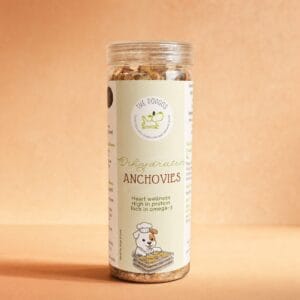
| Overall Coat Shine | Can contribute, but high fat. | Balanced fresh diet with Dehydrated Anchovies or Hemp Seed Oil | Directly fixes Omega-3 deficiency, which is absolutely vital for a healthy, shiny coat. |
That’s a pretty clear picture, don’t you think?
Nutritional Breakdown: What Coconut Offers (and Lacks) for Your Carnivore
Let’s be clear: your dog is 99.9% wolf internally. Their digestive system, with a stomach pH of 1-2 and no amylase in saliva, is designed for processing meat, not fermenting plant matter. While coconut can offer some benefits, it is by no means a main part of a species-appropriate diet.
- Fibre: Coconut flesh provides fibre, which can help with stool consistency. However, a carnivorous diet balanced with the right kind of veggies like pumpkin or green beans provides this without the high-fat load.
- MCTs: Medium-Chain Triglycerides in coconut oil are easily digestible and can provide a quick energy source, super helpful for active dogs or those needing a caloric boost. They’re also being studied for cognitive support in senior dogs.
- Minerals: Coconut contains a little bit of manganese, copper, and iron. These are much easier for their bodies to use and you’ll find loads more in organ meats like liver (which is why our Bone and Organ Boost is so super important).
The Critical Gap: Calcium:Phosphorus Ratio
This is where an exclusive plant-based addition like coconut just doesn’t cut it. Your dog needs a precise Calcium:Phosphorus ratio of 1.2:1 in their diet. Meat is rich in phosphorus, but without bone, it doesn’t have enough calcium. Feeding a boneless home diet (like just chicken and rice, even with a bit of coconut) over years will steal calcium right out of your dog’s own bones, leading to really nasty problems like Osteopenia and “Rubber Jaw” syndrome.
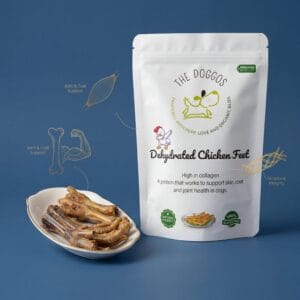
Coconut does not provide this essential calcium. This is why our philosophy is “Cook the Meal, Dehydrate the Bone.” You cook the meat for safety, especially with how things are in India, and then add **dehydrated bones** (/dog-treats/) like Dehydrated Chicken Feet or Dehydrated Whole Quail to provide safe, calcium and phosphorus their bodies can actually use, along with other really important minerals and glucosamine for joint health. They’re not just treats; they’re functional medicine!
Practical Section: How to Safely Introduce Coconut to Your Dog
If you’ve decided to offer your dog a bit of coconut, here’s how to do it safely and responsibly:
- Start Small: Introduce any new food slowly. For a small dog (like a Shih Tzu or Pug), start with 1/4 teaspoon of grated fresh coconut flesh or a few sips of coconut water. For a larger dog (like a Labrador or German Shepherd), you can offer up to 1 teaspoon of flesh or a small amount of water.
- Fresh & Unsweetened: Always use fresh, raw coconut. Never give sweetened, dried, or processed coconut products, which contain high amounts of sugar and preservatives that are really bad for your dog’s health.
- Monitor for Upset: After giving coconut, watch your dog for any signs of digestive upset, such as vomiting, diarrhoea, or lethargy. If you notice any issues, discontinue use.
- Occasional Treat: Coconut should be an occasional treat, not a daily staple or a big part of their meal. Their main meals should always be balanced, protein-rich, and species-appropriate. For a full guide, check out our blog on what should I feed my dog.
- No Husk or Shell: I cannot stress this enough. Make sure all the hard bits of the coconut are completely removed before offering any to your dog.
Common Mistakes Indian Pet Parents Make with Coconut
Even with good intentions, it’s easy to make mistakes when it comes to feeding “human foods” to our dogs, especially something as common in India as coconut.
- Overfeeding Due to “Natural” Perception: Just because something is natural doesn’t mean more is better. Coconut is high in fat, and overfeeding can lead to pancreatitis, a painful and serious inflammation of the pancreas.
- Using Processed Products: Giving packaged coconut water, desiccated coconut (which can expand in the stomach), or sweetened coconut products. These are full of sugars and additives bad for dogs.
- Believing it’s a Cure-All for Skin Issues: As we’ve discussed, topical coconut oil only helps a little compared to targeted solutions like Hemp Seed Oil (for internal inflammation) and Baobab Oil (for deep topical healing). Believing it will fix all skin problems often delays finding a more effective solution.
- Ignoring the Calcium:Phosphorus Balance: Adding coconut to a diet of just chicken and rice still leaves your dog seriously lacking in calcium, leading to long-term skeletal problems. Always remember the 1.2:1 Ca:P ratio and include safe bone sources.
- Feeding the Husk or Shell: This is a deadly mistake due to choking and splintering risks. Never, ever do this.
FAQ: Your Coconut Queries Answered
Q: Can dogs have coconut oil for skin issues?
A: Sure, coconut oil has some germ-fighting properties and can moisten the skin a bit. But honestly, for real deep healing and to get to the bottom of inflammation (which is usually an Omega-6 imbalance), our Hemp Seed Oil (for inside) and Baobab Oil (for outside) are way more effective and precise. They just hit different, you know?
Q: Is coconut water good for dehydrated dogs?
A: Fresh coconut water can definitely give them some electrolytes and a bit of hydration, but only in small amounts. Here’s the thing, it’s got natural sugar and potassium, so it should never, ever replace their regular fresh drinking water. Mostly, your dog should be getting their water from their bowl and the super high moisture in a fresh, home-cooked meal.
Q: Can dogs be allergic to coconut?
A: Yep, absolutely. While it’s pretty rare, any food can potentially trigger an allergic reaction in dogs. It’s just how it is. Keep an eye out for things like tummy troubles (vomiting, diarrhoea), itching, skin rashes, or any swelling. If you think there’s an allergy brewing, stop giving it to them and chat with your vet, okay?
Q: Can dogs eat desiccated coconut?
A: Look, it’s really best to just steer clear of desiccated coconut. It’s usually dried, super high in fat, and can actually soak up moisture and puff up in your dog’s tummy. That means discomfort or worse, digestive issues. Not worth it. Always, always stick to fresh, unsweetened coconut, and only a little bit.
Q: Does coconut cause “heat” in dogs?
A: No, not really. Coconut itself isn’t going to cause “heat” in the way some people think about it, like in Ayurveda. Here’s the thing, that “heat” or inflammation you might see in your dog? It’s almost always down to an Omega-6 fatty acid imbalance (super common in commercial chicken, sadly) and an underlying inflammatory response. It’s got nothing to do with whether the food is ‘hot’ or ‘cold’. The real fix is balancing those fats with good Omega-3 sources, like our Dehydrated Anchovies, or the anti-inflammatory GLA you get from Hemp Seed Oil. That’s the solution.
The Desi Carnivore Way: Balance and Biology
At The Doggos, our philosophy is clear: Cook the Meal, Dehydrate the Bone. We believe in providing species-appropriate nutrition, balanced with the practical realities of Indian households. While coconut has its place as a tiny, occasional treat, for truly healthy skin, strong bones, and a tough, resilient gut, look to our range of targeted solutions.
From our Hemp supplements that fight inflammation and support overall well-being, to our Baobab grooming products that fix and guard the skin barrier, and our functional dehydrated treats like Dehydrated Chicken Feet (natural joint pills and dental cleaners) or Dehydrated Mutton Trotters (for keeping their minds busy and getting that collagen), we provide everything your Desi Carnivore needs to thrive. It’s about feeding *right*, with science and safety as our guiding principles.
Author: Mahiv Amit Chhabra, certified canine nutritionist, author of “The Desi Carnivore: The Indian Pet Parent’s Guide to Real Meat, Whole Prey, and Ancient Superfoods.” For more insights, visit my author page.