The Kombai, with its lean muscle and unwavering loyalty, is a testament to India’s rich canine heritage. These powerful hunting dogs from Tamil Nadu are not meant for a diet of processed kibble. They thrive on real, natural foods, but providing a safe and balanced homemade dog food recipe in the Indian context requires specific knowledge. I’m Mahiv Amit Chhabra, and I’m here to guide you through creating a perfect Kombai natural Indian diet plan.
Quick Answer: A Natural Indian Diet for Your Kombai
A natural Indian diet for your Kombai involves gently home-cooked, deboned meats (like chicken or goat), balanced with essential fats (Hemp Seed Oil, Anchovies), a small amount of digestible carbohydrates (pumpkin, sweet potato), and crucial calcium and organ nutrients from safe dehydrated bones and supplements like Bone and Organ Boost. This approach ensures optimal nutrient absorption, strong muscles, and sustained energy for this active hunting breed, without the hygiene risks of raw feeding in India.
Understanding the Kombai: A Hunter’s Biology
The Kombai is a truly indigenous breed, renowned for its courage, agility, and keen hunting instincts. Bred for millennia to track and bring down wild boar, their biology is unequivocally that of a carnivore. This means their digestive system is designed for meat, not grains or fillers.
- Strong Stomach Acid: Like all dogs, Kombai possess a highly acidic stomach (pH 1-2) capable of breaking down bone and sterilising pathogens.
- Short Intestinal Tract: Their short intestines are built for rapid protein digestion and absorption, not the slow fermentation of complex carbohydrates.
- No Salivary Amylase: Unlike humans, dogs lack amylase in their saliva, meaning they cannot begin carbohydrate digestion in the mouth. Grains hit their stomach largely undigested, putting a strain on the pancreas.
Feeding a Kombai effectively means respecting their biological blueprint. A diet heavy in rice, roti, or commercial kibble goes against their very nature, leading to digestive issues, nutrient deficiencies, and chronic inflammation over time. For a deeper dive into general feeding principles, see What Should I Feed My Dog?
Why a “Natural Indian Diet” for Your Kombai?
Many Indian pet parents want the best for their Kombai but often fall into the trap of convenience foods or misconceptions. Here’s why a natural, home-cooked approach is superior:
- Superior Digestibility: Fresh, whole foods are 90-94% digestible compared to ~80% for kibble. This means your Kombai absorbs more nutrients, leading to better energy, healthier coat, and smaller, firmer stools.
- Hydration: Fresh food is naturally 70% water, a stark contrast to kibble’s 10%. This natural hydration is excellent for kidney health, especially in India’s hot climate.
- No Mystery Ingredients: You control every ingredient, avoiding harmful fillers, artificial colours, and preservatives common in commercial pet food.
- Addressing Indian Challenges: Our method specifically tackles the hygiene issues of Indian wet markets and the dangers of feeding cooked bones, making it safe and sustainable for Indian households.
The Desi Carnivore Method for Kombai: Cook the Meat, Dehydrate the Bone
My philosophy, The Desi Carnivore: Cook the Meal, Dehydrate the Bone, is specifically crafted for Indian households. It combines the biological benefits of a meat-centric diet with the practicalities of our environment. For more on this, read our guide on Raw Food Diet for Dogs in India.
Cook the Meat Safely
While dogs are biologically equipped for raw meat, the reality of Indian wet markets presents an undeniable hygiene risk. Salmonella and E.coli are prevalent, and cross-contamination in our homes is a genuine concern, especially in humid cities like Mumbai or Chennai. Therefore, I insist on gently cooking your Kombai’s meat.
- Pressure Cooker is Your Friend: A few whistles in the pressure cooker is enough to kill pathogens while retaining nutrient integrity.
- Wash with Turmeric Water: For added safety, wash chicken or goat with a turmeric water rinse before cooking. Turmeric is a natural antiseptic.
Debone After Cooking: Never Feed Cooked Bones
This is a non-negotiable safety rule. High heat makes bones brittle, causing them to shatter into sharp, jagged splinters that can fatally perforate your Kombai’s digestive tract. Many well-meaning Indian parents make this mistake by pressure-cooking chicken with bones and feeding the whole thing. It is incredibly dangerous. Always debone after cooking!
Dehydrated Bones for Calcium and Dental Health
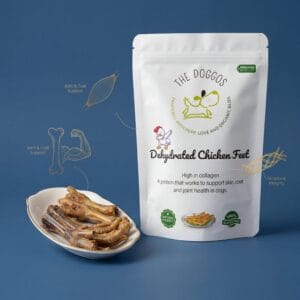
This is the “Goldilocks” solution: not raw (hygiene risk), not cooked (splintering risk). Dehydration (low temp, 20+ hours) retains the porous bone structure. These bones crumble into a safe, chalky powder, providing essential calcium and phosphorus in the correct 1.2:1 ratio. This is crucial for a Kombai, whose active lifestyle demands strong bones and joints. Our Dehydrated Chicken Feet and Dehydrated Mutton Trotters are excellent natural sources of calcium, glucosamine, and chondroitin, supporting their robust frame and also providing mental enrichment through chewing.
Ensuring Complete Nutrition: The Bone and Organ Boost Advantage
While dehydrated bones provide vital minerals, a complete carnivore diet also requires the dense nutrition found in organ meats. For a Kombai, who expends significant energy, ensuring adequate intake of vitamins, minerals, and amino acids is paramount. This is where Bone and Organ Boost becomes an indispensable part of their Kombai natural Indian diet plan.
Our Bone and Organ Boost is a carefully formulated blend of dehydrated bone meal and organ meats like liver, heart, and kidney. It delivers:
- Balanced Calcium and Phosphorus: Ensures the ideal 1.2:1 ratio, preventing long-term skeletal issues like osteopenia.
- Taurine: Crucial for heart health, especially important for active breeds and often lacking in plain muscle meat diets.
- Iron and B Vitamins: Essential for red blood cell production, energy metabolism, and recovery from strenuous activity. This is particularly beneficial for a hunting dog’s stamina.
- Vitamin A (from liver): Supports vision, immune function, and skin health.
Adding a scoop of Bone and Organ Boost to your Kombai’s daily meal ensures they receive a complete spectrum of nutrients that plain cooked muscle meat alone cannot provide. It’s an easy way to elevate a simple meal to a truly complete and species-appropriate one.
Balancing Fats for a Kombai’s Health
Commercial Indian chicken, often corn and soy-fed, has a skewed Omega-6:3 ratio (20:1 to 30:1). This imbalance can lead to inflammation, manifesting as skin issues, itching, and ear infections. For a Kombai, who might be exposed to various environmental triggers during their outdoor activities, managing inflammation is key.
- Hemp Seed Oil: A fantastic source of GLA (Gamma-Linolenic Acid), an anti-inflammatory Omega-6 that directly targets skin issues, joint pain, and improves coat health. It’s a natural coolant, counteracting the “heat” myth associated with chicken. Add a few drops of Hemp Seed Oil to every chicken meal.
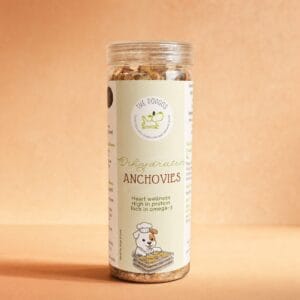
- Dehydrated Anchovies: An excellent source of Omega-3 DHA and EPA. These small, wild-caught fish are low on the food chain, meaning no heavy metal accumulation. Dehydrated Anchovies are perfect for brain health, joint support, and calming inflammation.
“I once worked with a Kombai in Coimbatore who was suffering from persistent paw licking and dull coat, despite being fed a home-cooked chicken and rice diet. We introduced Bone and Organ Boost for mineral balance and started adding 1 teaspoon of Hemp Seed Oil daily. Within a month, the paw licking significantly reduced, and his coat regained its natural lustre and thickness. It wasn’t about stopping the chicken, but balancing the nutrients. The right calcium, phosphorus, and Omega-3 are game-changers for these active dogs.” – Mahiv Amit Chhabra
Practical Kombai Diet Plan: The Golden Hunter’s Bowl
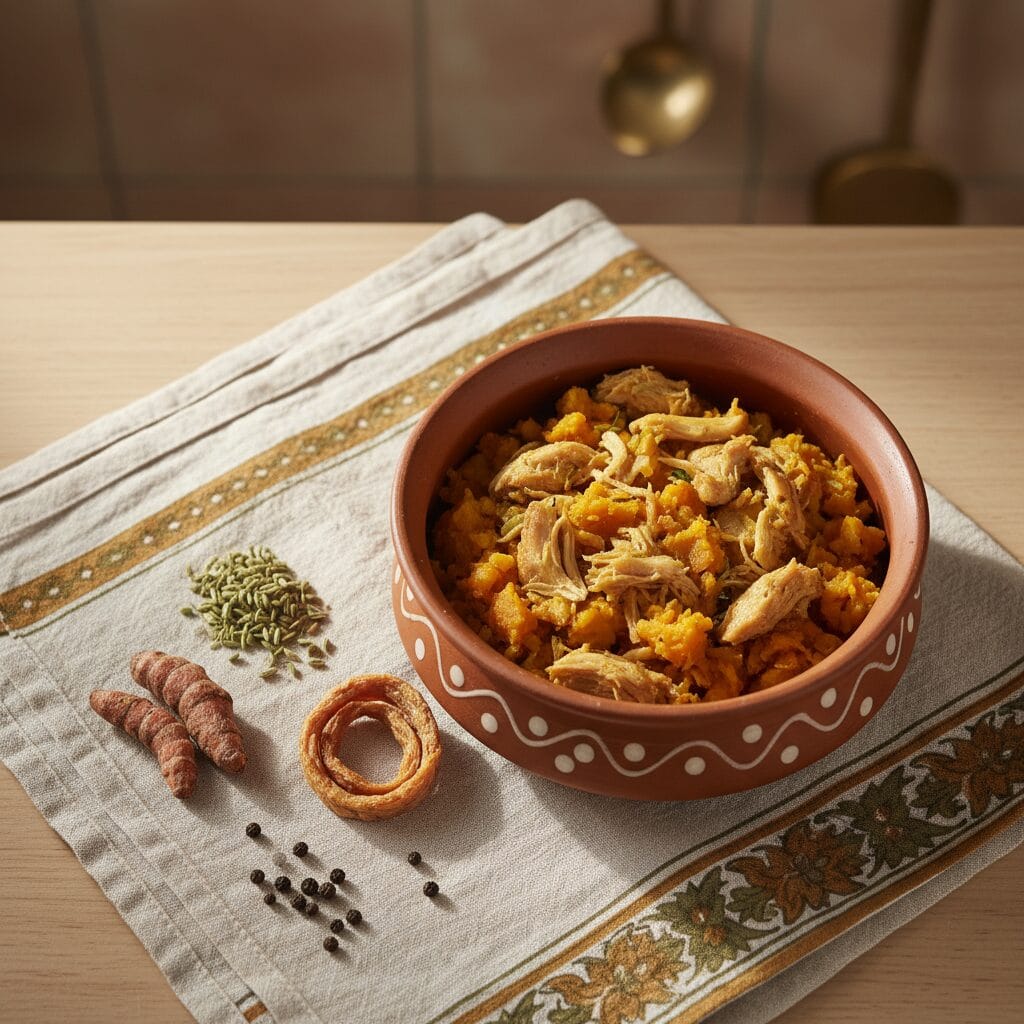
Here’s a simple yet powerful recipe for your Kombai, incorporating the principles of the Desi Carnivore method:
Ingredients:
- 500g bone-in, skin-on chicken thighs (for natural fat and taurine)
- 50g chicken liver (rich in Vitamin A, iron)
- 100g red pumpkin or sweet potato (for fibre and digestible carbs)
- 1 tsp turmeric paste (natural antiseptic, anti-inflammatory)
- 1-2 tsp Hemp Seed Oil or a sprinkle of Dehydrated Anchovies
- 1 scoop (approx. 5g) of Bone and Organ Boost
Method:
- Wash chicken and liver thoroughly, optionally with turmeric water.
- Place chicken, liver, pumpkin/sweet potato, and turmeric paste in a pressure cooker with just enough water to cover.
- Cook for 2-3 whistles (about 15-20 minutes).
- Once cooled, carefully **DEBONE** all the chicken. Mash the pumpkin/sweet potato into the broth.
- Mix in the Hemp Seed Oil or Dehydrated Anchovies and the Bone and Organ Boost.
- Serve warm. Adjust portion size based on your Kombai’s activity level and weight.
Common Mistakes Indian Kombai Parents Make
Even with the best intentions, it’s easy to fall into common traps when feeding your Kombai in India:
- Feeding Cooked Bones: As discussed, this is a severe safety hazard. Always debone cooked meat.
- Relying Heavily on Grains: Roti, rice, and chapati are not species-appropriate staples for a carnivore. While small amounts of cooked rice or pumpkin can add fibre, they should never be the main component of the meal. See Is Roti Good for Dogs? for more details.
- Ignoring Calcium:Phosphorus Ratio: A diet of boneless meat plus rice will lead to calcium deficiency over time, weakening bones. Always supplement with safe calcium sources like dehydrated bones or Bone and Organ Boost.
- Believing the “Heat” Myth: The rashes and itching seen from chicken are almost always due to Omega-6 inflammation, not thermal heat. Balancing fats with Omega-3 or GLA-rich Hemp Seed Oil is the solution, not removing a valuable protein.
- Using Human Biscuits as Treats: Parle-G and Marie biscuits are full of sugar and maida, detrimental to dental health and overall well-being. Opt for functional dehydrated treats instead.
FAQ: Kombai Diet
What is the best diet for a Kombai in India?
The best diet for a Kombai in India is a natural, home-cooked approach consisting primarily of gently cooked, deboned meats (chicken, goat), balanced with essential fats (Hemp Seed Oil, Anchovies), and critical calcium and organ nutrients from safe dehydrated bones or Bone and Organ Boost. This respects their carnivore biology while addressing local hygiene concerns.
Can Kombai dogs eat rice or roti?
While small amounts of well-cooked rice or specific vegetables like pumpkin can be included for fibre, rice and roti should not form the bulk of a Kombai’s diet. As carnivores, their digestive systems are not designed to efficiently process high amounts of grains, which can lead to digestive upset and nutrient deficiencies. Meat should always be the primary ingredient.
How much meat should I feed my Kombai daily?
An active adult Kombai typically requires 2-3% of its ideal body weight in food daily, with at least 70-80% of that being muscle meat and organs. For example, a 20kg Kombai might need 400-600g of food, with 300-450g being meat. This should be split into two meals. Always monitor their body condition and adjust accordingly. Don’t forget to include a source of calcium and essential nutrients like Bone and Organ Boost.
Are raw bones safe for Kombai dogs in India?
While dogs can digest raw bones, the hygiene conditions of Indian wet markets make raw feeding a significant cross-contamination risk for households. Cooked bones are never safe as they splinter. The safest option for calcium and dental health for your Kombai is to feed dehydrated bones, which are processed at low temperatures to remain digestible and safe.
Should I add supplements to my Kombai’s diet?
Yes, especially if feeding a home-cooked diet. Key supplements for a Kombai include a source of balanced calcium and phosphorus (like Bone and Organ Boost), and Omega-3 fatty acids (from Dehydrated Anchovies or Hemp Seed Oil) to balance inflammatory Omega-6s. These additions ensure your Kombai receives all the essential nutrients for their active lifestyle and robust health.
Fuel Your Kombai’s Inner Hunter
Your Kombai is a magnificent, active breed that deserves a diet as robust and natural as their spirit. Moving away from processed foods and towards a thoughtfully prepared, home-cooked meal plan, enriched with the right supplements, will unlock their full potential. By prioritising safe meat, balancing crucial nutrients, and providing the essential calcium and organ support, you’re not just feeding your Kombai, you’re honouring their ancient lineage.
For a truly complete and balanced meal, especially for an active hunting breed, consider integrating our Dehydrated Bone and Organ Boost into their daily diet. It’s the simplest way to ensure your Kombai gets the complete nutrition they need to thrive.