By Mahiv Amit Chhabra, Certified Canine Nutritionist and author of The Desi Carnivore. Last updated: 18 May 2026.
TL;DR
- A single-ingredient dog treat is a treat with exactly one input, one whole-food source, and zero added preservatives, binders, fillers, flavour enhancers, or processing aids. If the ingredient list has more than one word, it is not single-ingredient, no matter what the front of the pack claims.
- In India, “all-natural” and “100% chicken” are not regulated phrases. The label is the only protection a consumer has, and most labels are written to suggest single-ingredient while delivering blended treats with 5 to 12 inputs on the back.
- Single-ingredient outperforms blended treats on four hard biology axes: allergen identification (one variable), nutrient density (no empty calories), digestibility (whole protein, not extruded flour), and label trust (no marketing wiggle room).
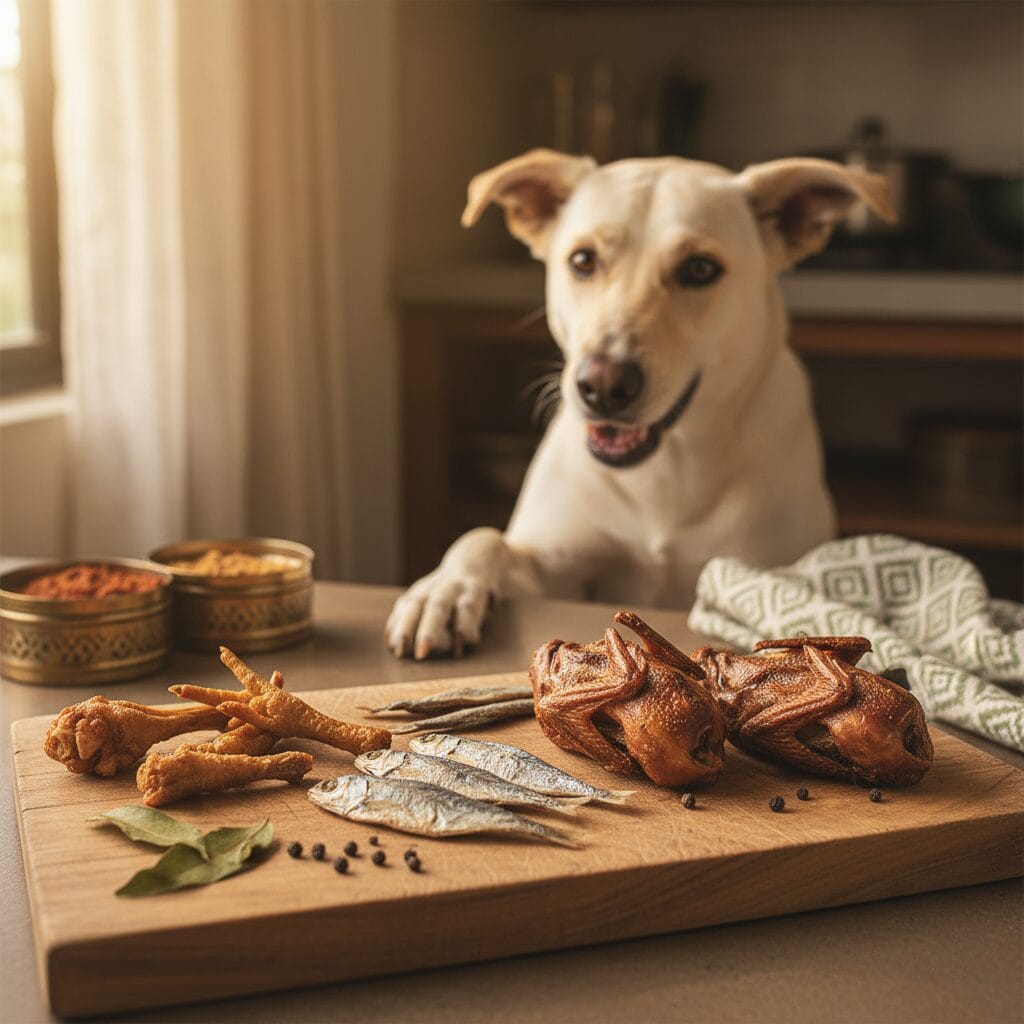
- The strict single-ingredient line in India is held by dehydrated meats and fish: chicken feet, mutton trotters, sardines, anchovies, whole quail, chicken heads, goat ears, pig bone, Bombay duck. Anchor your dog’s treat shelf here.
- The single most accessible entry point for a new Doggos customer is the dehydrated chicken foot, a functional joint pill and dental tool the dog actually wants to eat.
A bag of “Chicken Hearty Sticks” in an Indian pet store tells you, in big friendly letters, that it is “made with real chicken.” Flip the bag. You will see chicken meal, wheat flour, sugar, glycerin, salt, caramel colour, BHA, and four other things you cannot pronounce. Real chicken is in there somewhere, possibly at 12%, and the rest is a soft brown cracker engineered to feel like a treat. That is the gap the “single-ingredient” category exists to close.
This is the article I wish every Doggos customer read before their first order. The definition, the regulation gap, the biology, the strict catalog, the cost argument, and the starter stack.
What “Single-Ingredient” Actually Means
A single-ingredient dog treat is a treat with exactly one input, one whole-food source, and zero added preservatives, binders, fillers, flavour enhancers, or processing aids. The ingredient list reads as one word. Chicken. Sardine. Quail. Goat ear. That is the whole label.
What it does not mean:
- Not “natural-flavoured chicken treats” with 7 ingredients on the back.
- Not “all-natural,” a marketing word with no Indian regulatory definition.
- Not “made with real meat,” which only requires that meat appear somewhere in the mix.
- Not “no added preservatives,” which permits sugar, salt, and glycerin to do the preserving instead.
Every additional ingredient adds three things: an allergen risk, a digestion variable, and a label-deception opportunity (more places to hide cheap fillers behind expensive-sounding hero ingredients).
One idea from this pillar: a single-ingredient treat is a treat where the label is the product.
Why This Matters More in India Than in the US or UK
Indian pet treat regulation is loose. There is no AAFCO equivalent enforcing ingredient transparency on pet treats sold here. “Chicken treats” can legally contain 20% chicken-by-product and 80% maida-sugar-glycerin and still be marketed as chicken treats. For pet treats, labelling discipline is largely self-regulated, which is to say barely regulated at all.
The consumer has the front of the pack (marketing) and the back of the pack (often in 6-point font, often omitting percentages), and that is it. The label is the only protection, and most labels are written to obscure rather than reveal.
There is also a structural reason single-ingredient fits India. Most Indian wet-market meat is sold whole, not pre-formulated. Chicken feet that were historically discarded as waste are now the joint pill in a 100g pack. The Indian poultry trade processes roughly 5 million chickens a day, and the offal stream that no human market wanted is exactly what dogs need.
The Indian kitchen vocabulary already understands single-ingredient food. A glass of milk, a fistful of peanuts, a piece of mutton. The concept does not need translation.
The Biology, Why Single-Ingredient Outperforms Blended Treats
Four hard axes on which single-ingredient wins.
1. Allergen identification. A dog reacting to chicken is precisely diagnosable when the treat is chicken-only. If your dog flares up after “Chicken Hearty Sticks” (chicken plus rice plus glycerin plus caramel plus BHA), you do not know which input triggered it. The vet then runs an elimination diet that takes 8 to 12 weeks. Single-ingredient treats make this a 2-day test.
2. Nutrient density. A dehydrated chicken foot is 35 to 40 kcal of glucosamine, chondroitin, collagen, and calcium. A “chicken-style” rice-cracker is 35 kcal of starch with a chicken-flavour spray. The first is medicine. The second is filler.
3. Digestibility. Industrial blending, heat extrusion, and flour binding degrade digestibility from 90 to 94% (whole food) to around 75 to 80% (extruded treats). The lost percentage exits as larger, smellier stool.
4. Label trust. With one ingredient, greenwashing is impossible. There is no “premium chicken” version of a chicken foot. It is a chicken foot.
For why the dehydration method itself works, our first-principles guide to dehydrated treats walks through the temperature, time, and bone-microstructure argument.
The Complete Single-Ingredient Catalog
Not every clean-label treat is strictly single-ingredient. Here is the honest map.
Dehydrated Meat Treats (strict single-ingredient)
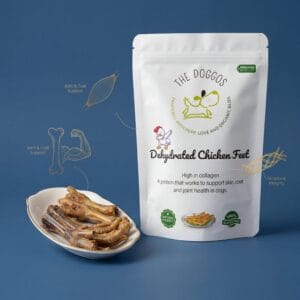
- Dehydrated chicken feet: the joint pill. Roughly 450 mg glucosamine and 350 mg chondroitin per foot, plus collagen and calcium at a Ca:P ratio near 1.2:1. The most accessible entry point. Our chicken feet for dogs guide covers dosage and the splintering myth.
- Dehydrated mutton trotters: the large-breed joint chew. Denser and higher in collagen than chicken feet, ideal for Labs, Shepherds, and giants. The mutton trotters guide has the connective-tissue argument.
- Dehydrated pig bone: the recreational chew. Long-lasting, mechanically scrapes plaque. Size-match strictly.
- Dehydrated goat ears: dental chew with fur fibre. The keratin acts as a “colon sweep,” helping anal-gland expression.
- Dehydrated chicken heads: whole-prey enrichment. Small, taurine-rich, suitable for cats and small dogs.
- Dehydrated whole quail: novel protein. The elimination-diet hero, because most Indian dogs have never been exposed to quail.
Dehydrated Fish (strict single-ingredient)
- Dehydrated sardines: omega-3 and DHA. Small short-lived fish, no heavy-metal bioaccumulation. Our omega-3 for dogs guide explains why whole fish outperforms capsules.
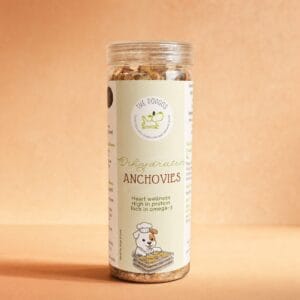
- Dehydrated anchovies: the training treat. Pocket-portable, single-ingredient omega-3.
- Dehydrated Bombay duck: novel-protein fish from coastal India, dehydrated for odour control.
Organ Blends
- Bone and Organ Boost: a 3-input mix where each input is single-ingredient. Technically a blend, biologically a “complete organ supplement.” The daily taurine and iron foundation for a Cook-the-Meal home diet.
Clean-Label but Not Strict Single-Ingredient
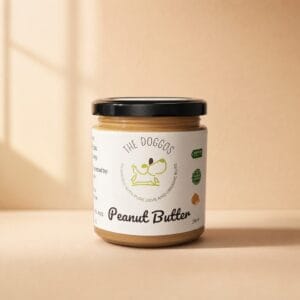
Pumpkin biscuits, peanut butter, and hemp oil are clean-label but not strictly single-ingredient. Peanut butter is roasted peanuts plus a touch of salt. Pumpkin biscuits have multiple inputs by necessity. Hemp oil is single-ingredient but it is a supplement, not a treat. They earn a place on the shelf. The strict line is held by the dehydrated meats and fish above.
How to Read a Treat Label Like a Nutritionist
| What the label says | What it actually means |
|---|---|
| “100% chicken” | Sometimes legitimate. Read the ingredient list. If more than one item appears, walk away. |
| “Chicken-flavoured” | Usually no real chicken. Cereal binder plus chicken essence (a spray-on flavour). |
| “All-natural chicken treats” | “All-natural” has no Indian regulatory meaning. Read the ingredient list. |
| “Made with real meat” | Real meat is present, often at 8 to 15%. The rest is filler. |
| “No artificial preservatives” | Sugar, salt, and glycerin may be doing the preserving work. |
| “Single-ingredient” | Should be ONE word on the ingredient list. If you see more, it is marketing. |
| “Glucosamine plus chondroitin chews” | Usually vegetable plus glucosamine-HCl plus glycerin. Often less bioavailable than the whole-food form. |
| “Grain-free” | Often replaced with potato or tapioca starch. Still a high-carb cracker. |
If the ingredient list is one word, the treat is what the front of the pack says. If it is two or more words, the front is marketing and the back is the truth.
The Cost Argument
Per gram, a dehydrated chicken foot costs more than a generic biscuit. Per gram of functional nutrient, it is cheaper.
| Metric | Single-ingredient (Doggos) | Commercial chew / biscuit |
|---|---|---|
| Cost per pack | Rs. 199 for ~14 chicken feet (100g) | Rs. 250 to Rs. 500 for 200g |
| Cost per glucosamine dose (450 mg) | Rs. 14 (one foot) | Rs. 10 to Rs. 20 (capsule), or “trace” (most chews) |
| Cost per omega-3 dose | Rs. 30 to Rs. 40 (handful of anchovies) | Rs. 60 to Rs. 100 (training treat with omega claim) |
| Cost per training session | Rs. 8 to Rs. 12 (~5 anchovies) | Rs. 6 to Rs. 10 (~5 commercial treats) |
The right framing is medicinal, not snack. You are not buying a luxury cracker. You are buying a joint pill, a dental tool, or an omega-3 dose that the dog enjoys.
Our dehydrated treats vs commercial treats comparison breaks the numbers down by category.
Common Objections, Answered Honestly
“My dog will not eat them.” Usually a transition issue. Your dog is used to sugar-glycerin-glazed treats, and the unflavoured dehydrated form is biologically more boring in the first 48 hours. A 7 to 10 day transition (mix new with old, increasing the new ratio) fixes it in nearly every case. Hand-feeding the first three sessions accelerates the switch.
“They are more expensive.” Per gram, yes. Per functional dose, no. The premium pays for traceable single-ingredient sourcing and low-temperature dehydration.
“They smell.” Fish smells. Meat smells. Mitigation: store in airtight glass jars (better than the original pack in Mumbai humidity), hand-feed outdoors, and rotate between smellier treats (fish, organ) and less smelly ones (chicken feet, goat ears) by week.
“Cooked is safer than raw or dehydrated.” No. Cooked bone splinters into sharp shards that can perforate the gut, a fatal peritonitis risk. Raw meat from an Indian wet market carries a Salmonella and Campylobacter load that is not worth the cross-contamination risk in a humid kitchen. Dehydrated is the middle path. Our safe dog chews guide covers this in detail.
The 6-Product Starter Stack for a New Doggos Customer
The stack I recommend to clients. Covers roughly 80% of an Indian adult dog’s treat and supplement needs.
- Dehydrated chicken feet: the joint and dental anchor. 1 foot per 5 kg of body weight, 2 to 4 times a week.
- Bone and Organ Boost: the daily taurine and iron foundation. 1 teaspoon over the main meal.
- Dehydrated sardines: omega-3 and DHA, skin and coat support. 2 to 4 sardines twice a week.
- Dehydrated anchovies: training treats. Pocketable, single-ingredient omega-3.
- Hemp Seed Oil: omega balance, GLA for skin barrier. Single-ingredient but a supplement, not a treat. Essential for any dog still eating commercial chicken.
- Baobab Oil: topical lipid barrier for cracked paws, hot spots, and dry coat. Same caveat, a single-ingredient supplement, not a treat.
The first four are strict single-ingredient treats. The last two complete the protocol. Together this stack covers joint support, dental cleaning, taurine and iron, omega-3 balance, training reinforcement, and skin barrier maintenance.
From Mahiv’s practice: A 4-year-old Indie in Bandra came to me last monsoon with chronic itching, dull coat, and a daily Parle-G habit. Her label history was a mess: three “chicken” treats with 8 to 12 inputs each, plus boiled chicken and rice as the main meal. We cleared the shelf, kept her on chicken-and-rice (added hemp oil), and replaced all snacking with single-ingredient: 1 chicken foot daily, 3 sardines twice a week, anchovies for recall training. By week 8 her coat was glossy enough that her owner asked which shampoo I had recommended. I had recommended none. The diet was the shampoo.
What the Single-Ingredient Discipline Buys You
Switching to a strict single-ingredient treat shelf removes every cheap filler from your dog’s snack intake. Allergen identification becomes a 2-day exercise instead of a 2-month workup. The label becomes real information rather than a marketing surface. All of this without changing the main meal.
For most Indian dog parents, the treat shelf is where the most uncontrolled junk enters the diet. Fix it and you fix more inflammation, itching, and dental problems than you would believe.
Frequently Asked Questions
What is a single-ingredient dog treat exactly?
A treat with exactly one input on the ingredient list, one whole-food source, and zero added preservatives, binders, fillers, or flavour enhancers. The label reads as a single word: chicken, sardine, quail, goat ear. If the back of the pack lists more than one item, the treat is not single-ingredient regardless of what the front claims.
Are single-ingredient treats safe for puppies?
Most are, with timing caveats. Dehydrated chicken feet are safe for puppies over 12 weeks with their adult molars in. Anchovies work as a soft training treat from 8 weeks. Pig bone and goat ears should wait until 4 to 6 months. Supervise every first session.
Can I use single-ingredient treats as my dog’s entire diet?
No. Treats are functional add-ons, not complete nutrition. A complete diet still needs a cooked-meat base meal (the “Cook the Meal” half of the Doggos method), with single-ingredient treats and dehydrated bones layered on for joint support, dental work, and mineral balance.
What is the difference between single-ingredient and “natural”?
Single-ingredient is a specific claim: one input, period. “Natural” is a marketing word with no Indian regulatory definition. A treat can be “all-natural” and still contain 12 ingredients.
How long do dehydrated single-ingredient treats last?
Sealed, in a cool dry place, most keep for 6 to 12 months. Once opened, transfer to an airtight jar (especially in Mumbai or Chennai humidity) and aim to use within 6 to 8 weeks. Refrigeration is not required for meat treats but helps fish treats if your kitchen runs hot.
Are Indian-made single-ingredient treats safe?
Yes, when sourced from a GMP-certified facility with traceable supply. The single-ingredient nature of the product makes adulteration nearly impossible. Indian-made is in fact an advantage, because the raw material comes from the same poultry, fish, and mutton supply you would use yourself.
Can my cat eat them too?
Several work for cats: dehydrated sardines, anchovies, Bombay duck, whole quail, chicken heads, and the Bone and Organ Boost are all cat-friendly by size. Avoid chicken feet, mutton trotters, pig bone, and goat ears for cats, those are dog-sized.
Why are they more expensive than commercial treats?
Per gram, they are. Per gram of functional nutrient (glucosamine, omega-3, taurine, calcium), they are usually cheaper. The price reflects traceable single-ingredient sourcing and low-temperature dehydration.
About the Author
Mahiv Amit Chhabra is a Certified Canine Nutritionist and author of The Desi Carnivore: The Indian Pet Parent’s Guide to Real Meat, Whole Prey, and Ancient Superfoods. He runs The Doggos from Thane, Maharashtra, alongside his dogs Tony and Toughie, the brand’s longest-serving quality-control team. Read more about Mahiv.
Sources cited in this article: National Research Council (2006), Nutrient Requirements of Dogs and Cats, National Academies Press. AAFCO (2024), Official Publication on Pet Food Labelling Standards. Hill et al. (2009), “Comparison of bioavailability of nutrients from whole-food versus supplement sources in companion animals,” Journal of Animal Physiology and Animal Nutrition.