By Mahiv Amit Chhabra, Certified Canine Nutritionist and author of The Desi Carnivore. Last updated: 18 May 2026.
TL;DR
- The Siberian Husky diet in India should run roughly 32 to 45% protein, 20 to 32% fat, and under 15% carbohydrates, anchored on cooling fish proteins, not on chicken or any kibble. Huskies were bred for -40 degree C Arctic work. Indian climate is biologically wrong for them, and the diet has to actively manage that mismatch every single day.
- The single most important addition to a Husky bowl in India is daily omega-3 from whole fish. The Dehydrated Sardines topper is the daily anchor I prescribe, the EPA and DHA support the dense double coat, cool internal inflammation, and protect the brain and joints under heat stress.
- Never shave a Husky in India. The double coat insulates against heat as well as cold. Shaving destroys that thermoregulation, ruins the regrowth pattern, and makes sunburn and skin disease worse. Use diet, omega-3, and topical baobab oil instead.
- Huskies are genetically built to be lean. Their food drive is lower than every other large breed I see. Owners read this as “she’s a fussy eater” and overfeed. In an Indian climate, every extra kilo is heat exhaustion waiting to happen, weight management is the single biggest health lever you control.
- The hardest question, asked honestly: a Siberian Husky is not the right dog for most Indian homes. If you already have one, the rest of this guide is how to give that dog the best possible life. If you are thinking of getting one, please read this section before you buy.
The Elephant in the Room: Should a Siberian Husky Even Live in India?
I will give you the honest answer first. The Siberian Husky was selected over two thousand years by the Chukchi people of north-eastern Siberia to pull light sleds across the Arctic at temperatures that routinely dropped to -40 degree C. Every part of this dog, the double coat, the fat metabolism, the thrifty appetite, the dense undercoat that traps body heat, was shaped for that environment.
Indian average summer temperatures across Mumbai, Delhi, Bangalore, Chennai, and Pune sit between 28 and 42 degree C, with humidity that can push the felt temperature higher. That is a 70 to 80 degree gap from the climate the Husky’s genome expects. No amount of air-conditioning fully fixes that mismatch, because the moment you walk the dog outside, the biology hits a wall.
I am not here to tell anyone to give up their Husky. The dog you have is the dog you love. But if you are considering a Husky in India in 2026, please pick a breed that is built for this climate, an Indian Pariah Dog, a Rajapalayam, even an Indian-bred Labrador. The Husky was not built for this place. Owning one in India means committing to a level of climate management, dietary discipline, and lifestyle adjustment most pet parents underestimate.
If you have read that paragraph and you still want to do right by your Husky, the rest of this guide is for you.
Breed-Specific Health Concerns in Indian Climate
The Siberian Husky in India faces a stack of issues, some genetic, some climate-driven, that the diet has to support against. Be opinionated about each of these.
- Heat exhaustion and heat stroke. This is the number one preventable cause of Husky death in Indian summers. A Husky panting heavily in 38 degree C heat is not “just adjusting”, that is the early signal of a thermoregulation system at its limit. Heat exhaustion can progress to organ failure within hours.
- Zinc-responsive dermatosis. This is specific to Northern breeds (Huskies, Malamutes, some Samoyeds). The dog cannot absorb dietary zinc efficiently from the gut, leading to crusty skin lesions around the eyes, mouth, paws, and pressure points. Organ meat is the dietary lever, in particular liver and the broader organ profile.
- Hypothyroidism. Huskies have higher-than-average rates of low thyroid function, which compounds in Indian heat (sluggish dogs in heat get misread as “lazy”, not as medically hypothyroid). Watch for weight gain on normal food, dull coat that does not respond to omega-3, and exercise intolerance.
- Hip dysplasia. Less common than in Labradors or German Shepherds, but real. Weight management is the single best protection against the joint loading that triggers symptomatic dysplasia.
- Juvenile cataracts and progressive retinal atrophy. Genetic. Not diet-driven, but a Husky with vision loss in Indian heat is at higher risk of disorientation and heat stroke. Watch and screen.
- Weight management with zero margin. A Lab carrying an extra 3 kg is unhealthy. A Husky carrying an extra 3 kg in Mumbai summer is in genuine danger. There is no slack in this system.
The Lower Food Drive Is Biology, Not Fussiness
This one trips up almost every new Husky owner I consult with. The Husky has a lower food drive than every other large breed I work with. They were selected to work efficiently on small rations across long Arctic distances, the Chukchi could not afford to feed sled dogs as much as the dogs would eat in theory. The “thrifty metabolism” is encoded.
What this looks like in an Indian home: the dog walks away from the bowl, sniffs, eats half, leaves the rest. The owner panics. “She is not eating.” The owner adds biscuits, mixes in milk, free-feeds, escalates to wet food, and slowly creates a heavy dog who is now also a picky one. The fix is to trust the biology. A Husky in a hot climate is supposed to eat less than a Lab of the same weight. Calculate her actual calorie need (we will get to numbers), serve that amount, and walk away. She will eat when she is hungry.
The Macro Targets for an Adult Husky in India
Adult working Siberian Huskies were studied in the 1980s and 1990s by Reynolds and colleagues, who found that working sled dogs ran on diets of roughly 30 to 35% fat by dry matter without negative health effects. Even non-working Huskies tolerate, and often thrive on, a higher-fat diet than most breeds. The macro target in India looks like this:
| Macronutrient | Husky target (% of dry matter) | Indian kibble reality | Why it matters |
|---|---|---|---|
| Protein | 32 to 45% | 18 to 25% | Lean muscle, immune function, coat keratin |
| Fat | 20 to 32% | 8 to 15% | Husky-specific energy source, coat oil, cold-adaptation legacy |
| Carbohydrates | Under 15% | 50 to 70% | High carbs inflame an already heat-stressed body |
| Moisture (fresh diet) | 65 to 75% | Around 10% in kibble | Critical for kidney load and heat regulation |
A 20 to 25 kg adult Husky in a low-activity Indian apartment usually needs 800 to 1,100 kcal per day, or about 3 to 4% of body weight in fresh food. Working or hiking Huskies (the rare exception in India) go higher. Spayed or older dogs go lower. Adjust by waist visibility, not by the dog “asking” for more, because she will not.
Indian Climate Diet Philosophy for Huskies
Four pillars, in order of impact.
1. Cooling proteins first: fish, then chicken, then mutton
Fish is the right daily protein for a Husky in India. Fish is lower in saturated fat than mutton, has cooling thermal properties in Ayurveda and TCM, and brings a built-in omega-3 load that no terrestrial protein can match. Chicken is fine but only when the omega-6 imbalance is corrected (more below). Mutton has a place, in winter, in recovery, and once or twice a week for variety, but as a daily protein in Mumbai or Chennai summer it is a thermal mistake.
2. Omega-3 every single day, non-negotiable
This is where the Dehydrated Sardines topper earns its place. The dense Husky double coat is metabolically expensive to maintain. The body has to produce keratin, sebum, and the lipid envelope of every hair shaft. Omega-3 fatty acids (EPA and DHA) are the substrate for that whole production line, and they are also the most potent dietary anti-inflammatory you can hand a heat-stressed dog. Read our deeper take on omega-3 for dogs in India for the full ratio math.
3. Zinc support via organ meat
Zinc-responsive dermatosis is a Northern-breed quirk. The dietary fix is organ meat, ideally fed several times a week. The Bone and Organ Boost is a clean source of liver, kidney, heart, and connective tissue in a dehydrated balanced form, which solves the “how do I add organ meat without a smelly kitchen” problem most Indian apartments have. A teaspoon a meal, every day, gives the zinc, iron, taurine, and Vitamin A coverage the dog cannot manufacture on her own.
4. Smaller, more frequent meals
A heat-stressed dog does not want a big bowl. Split the daily intake into 2 to 3 smaller meals (early morning, late evening, optional small midday for puppies or seniors). Skip the midday meal in peak summer. Always feed in a cool room, never right before or after a walk.
Why Dehydrated Sardines Are the Husky’s Daily Anchor
A Husky in Indian climate has two diet jobs running in parallel, maintain a thick double coat and manage chronic low-grade heat inflammation. Both problems lead back to the same nutrient, marine omega-3 (EPA and DHA), specifically from small short-lived fish that have not bioaccumulated heavy metals.
Sardines sit exactly in that sweet spot. They feed low on the food chain (plankton, copepods, krill), they have negligible mercury and PCB load compared to tuna or king mackerel, and they pack one of the highest EPA-plus-DHA densities of any food on the planet, roughly 1,400 to 2,000 mg per 100 g of whole sardine. For a 20 kg Husky in Indian heat, that is genuinely therapeutic dosing.
The Dehydrated Sardines version solves the practical problem most Indian households have with fresh fish, the smell, the bones, the cooking faff. The whole sardine is dehydrated at low temperature, the omega-3 profile is largely preserved, and the brittle dehydrated bone is safe and crumbly (very different from cooked bone, which splinters). Feed 3 to 5 whole sardines per day for a 20 kg Husky, broken over the bowl or fed as a high-value training treat. This is the single highest-impact change you can make to a Husky bowl in Indian climate.
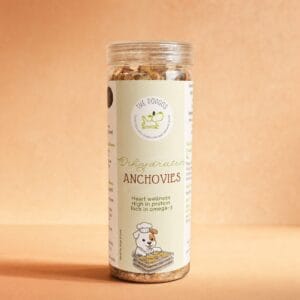
To stack the omega-3 effect, layer 3 to 5 ml of hemp seed oil per meal. Hemp brings GLA, a rare anti-inflammatory omega-6 that converts to prostaglandin E1 and supports skin barrier health, ideal for the Husky coat. For smaller training-treat use or for the rare small-breed Husky mix, Dehydrated Anchovies are the size-friendly alternative, same omega-3 logic, smaller pieces.
Coat Care: Why You Never Shave a Husky in India
I am putting this in italics for the search engines and the algorithm: do not shave your Husky in India. The double coat is a thermal envelope. The outer guard hairs reflect sunlight. The dense undercoat traps a layer of insulating air, which actually slows heat transfer from the hot Indian air to the dog’s skin. Shave the coat off, and you have stripped the dog’s primary climate protection in exchange for a few weeks of “she looks cooler”. She is not cooler. She is hotter, more prone to sunburn, and the regrowth pattern (the dreaded “coat blow”) is often patchy or never quite the same.
Manage the coat with diet and topical care, not scissors.
- Diet. Daily omega-3 from sardines plus hemp oil, as above. This is doing the deep work, sebum quality, hair shaft strength, anti-inflammatory tone.
- Topical. Baobab Oil is the right topical for a Husky coat. It absorbs into the epidermis (unlike coconut or mustard oils, which sit on the surface and trap heat), mimics the skin’s natural lipid barrier, and is anti-fungal and anti-inflammatory. Massage a few drops along the spine and into any dry or itchy patches once or twice a week. Our dull coat in dogs guide is the broader playbook.
- Brushing. Twice a week, more during the spring coat blow. Use an undercoat rake, not a scissors-style stripper.
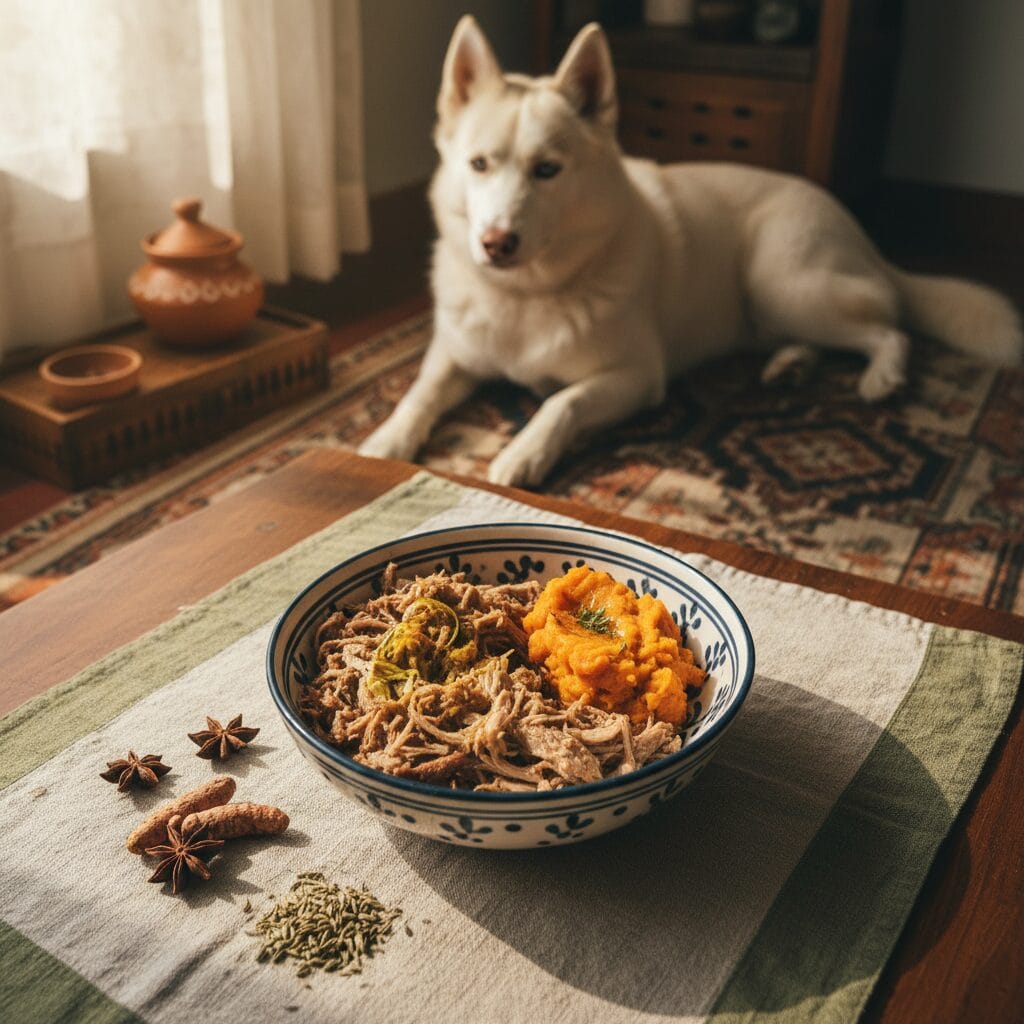
From Mahiv’s practice: A 4-year-old Siberian Husky in Pune, Aru, came to me with chronic hot spots along the flanks, a dull patchy coat, and crusty lesions around the muzzle (classic zinc-responsive picture). He was on a premium chicken kibble year-round, no fish, no organ, walked at noon. We dropped the kibble, switched the base to a cooked-fish-and-pumpkin bowl with 4 dehydrated sardines per day, added the Bone and Organ Boost (1 tsp per meal) for the zinc, and used baobab oil topically on the muzzle and flanks. Walks moved to 5:30 am and 9:00 pm. The crusts cleared in 3 weeks. The coat was visibly glossier by week 5. By week 8 the hot spots were gone and the muzzle had regrown clean fur. The diet did most of the work, the baobab finished the surface.
A Weekly Husky Meal Plan for Indian Climate
This is the template I hand most new Husky clients. Assume a 20 to 25 kg adult, no medical conditions. Note the seasonal note at the bottom.
| Day | Morning bowl | Evening bowl | Topper or chew |
|---|---|---|---|
| Mon | Cooked fish (rohu or bangda) + pumpkin + Bone and Organ Boost (1 tsp) | Cooked chicken thigh + spinach + sardines (3 to 4) | Hemp oil 3 ml |
| Tue | Cooked fish + sweet potato + Bone and Organ Boost (1 tsp) | Same | 4 dehydrated anchovies |
| Wed | Cooked chicken thigh + pumpkin + sardines (4) | Cooked fish + green beans + Bone and Organ Boost | Hemp oil 3 ml |
| Thu | Cooked fish + spinach + Bone and Organ Boost (1 tsp) | Same | 4 dehydrated sardines |
| Fri | Cooked chicken thigh + pumpkin + sardines (4) | Cooked fish + sweet potato + Bone and Organ Boost | Hemp oil 3 ml |
| Sat | Cooked mutton (winter only, fish in summer) + pumpkin + Bone and Organ Boost | Cooked fish + spinach + sardines (3) | 4 anchovies |
| Sun | Light fasting morning (bone broth only) | Cooked fish + Bone and Organ Boost + sardines (3) | Optional rest day from chews |
Seasonal adjustment: In Indian summer (April to September across most of the country), fish is the dominant protein, 5 to 6 days a week. Chicken is the supporting protein. Mutton sits out almost entirely except for the occasional cold-weather pocket. In winter (especially North Indian winter), mutton can come in 1 to 2 times a week as a “warming” protein, and chicken can move up. Fish stays daily through both seasons because the omega-3 job does not have a season.
Important rules that matter:
- Cook the meat. Always. Indian wet-market fish, chicken, and mutton are not raw-feeding-grade. Pressure cook or boil to kill Salmonella and E. coli.
- Debone after cooking. Always. Cooked bones splinter. The dehydrated sardines, the Bone and Organ Boost, and dehydrated chews supply the calcium safely.
- Vegetables are condiments. 10 to 15% of the bowl, no more. Pumpkin, sweet potato, spinach, green beans. Skip onion, garlic, raw potato, grapes.
- Hydration matters more for Huskies than for any other breed in India. Two water bowls, refilled twice a day in summer.
Common Indian Owner Mistakes with Huskies
I see these weekly. Most of them are well-intentioned. All of them are fixable.
- Kibble year-round. Honestly the worst dietary choice for a Husky in India. High-carb, omega-6-dominant, low-moisture, dehydrating, and thermally heating. If you change one thing after reading this guide, change this.
- Shaving the coat in May. Covered above. The coat is the climate kit. Leave it on.
- Walking at midday because “she has energy”. Husky paw pads on Indian asphalt at 38 degree C is a burn injury. Walk before 6 am and after 8 pm. In May and June, consider skipping outdoor walks entirely and using indoor enrichment.
- Free-feeding because “she doesn’t eat much”. Measured meals only. The lower food drive is biology, not appetite signalling.
- Treating “she ate half the bowl” as a feeding problem. It is a Husky being a Husky. Pick up the bowl, serve at the next meal. Do not add cheese, milk, or biscuits to “tempt” her. You are training a picky eater.
- Skipping omega-3 because the dog “smells fishy”. Use the Dehydrated Sardines topper, the smell is minimal, the omega-3 is identical to wet fish. The reason your Husky has crusty muzzle skin and itchy paws is the missing omega-3, fix the input.
- Ignoring the panting. Heavy panting in moderate Indian heat is a thermoregulation warning. If the dog also has reddened gums, drooling, or wobbling, that is heat stroke onset. Get her into cool water (not ice water), shade, and to a vet.
- Feeding raw from the Indian wet market. Do not. The hygiene gap is real. Cook the meat, dehydrate the bone.
Life-Stage Adjustments
Puppies (8 weeks to 12 months). Higher protein (40 to 50%) and consistent calcium support. Three meals a day, scaled to roughly 5 to 7% of body weight. Avoid over-supplementing calcium, Huskies are medium-large, not giant breeds. Introduce sardines gradually from 16 weeks, starting at 1 to 2 per day.
Adults (1 to 7 years). The weekly meal plan above. The single most important task is weight management. There is no slack.
Seniors (7+). Husky lifespan averages 12 to 15 years on good care. The senior bowl needs slightly more omega-3 (cognitive support), slightly less raw bone (older teeth), and watchful protein (kidney check at year 8 and beyond). The Bone and Organ Boost continues to be the daily backbone, the dehydrated organ is easy on senior digestion.
A Note on “Why Is My Husky Always Itching?”
If your Husky is licking paws, scratching the flanks, has crusty muzzle, or chronic ear gunk, the diet is the first place to look. The pattern I see most often is kibble + chicken + no omega-3, which produces an omega-6:omega-3 ratio of around 20:1 in the dog’s tissues (the target is closer to 5:1). That is chronic low-grade inflammation. Itching is the symptom. Our why is my dog always itching guide goes deeper on the differential.
Frequently Asked Questions
Should I get a Siberian Husky in India?
Honestly, no, unless you can fully commit to climate control, pre-dawn and post-sunset walks, a fish-anchored diet, no shaving, and the lifestyle restriction that comes with owning a -40 degree C Arctic dog in a 40 degree C country. The dog will be hot, prone to skin disease, and at heat-stroke risk for most of her life. Indian Pariah dogs, Rajapalayam, and Indian-bred Labradors are far better climate matches. If you already have a Husky, the rest of this guide is your playbook. If you do not, please pick a different breed.
What is the best food for a Husky in India?
A cooked fresh diet anchored on fish (rohu, bangda, surmai, or cooked sardines) with daily Dehydrated Sardines for omega-3, plus the Bone and Organ Boost for zinc and taurine, and a vegetable side (pumpkin or sweet potato). Avoid kibble year-round. Avoid mutton in summer. Add hemp seed oil for the coat. Cook the meat, never feed cooked bones.
Can I shave my Husky in summer?
No. The double coat is a thermal insulator that slows heat transfer from hot Indian air into the dog’s skin, and reflects sunlight off the guard hairs. Shaving strips both layers of protection, exposes the skin to sunburn, and the regrowth often comes back patchy or coarser. Brush twice a week with an undercoat rake instead. Manage heat through diet, walk timing, hydration, and air conditioning, not the coat.
How much should I feed an adult Husky in Indian climate?
Roughly 800 to 1,100 kcal per day for a 20 to 25 kg adult Husky in a low-to-moderate-activity Indian household, split across 2 to 3 smaller meals. That is about 3 to 4% of body weight in fresh food, less than a Labrador of the same weight would eat. Adjust by waist visibility, not by the dog “asking” for more. Huskies rarely ask, that is the biology, not the appetite.
Why does my Husky have crusty skin around her muzzle and paws?
This is the textbook presentation of zinc-responsive dermatosis, a condition specific to Northern breeds including Siberian Huskies, Malamutes, and some Samoyeds. The dog cannot absorb dietary zinc efficiently. The fix is consistent organ meat in the bowl, the Bone and Organ Boost gives a clean dehydrated organ profile (liver, kidney, heart) that covers the zinc, plus iron and Vitamin A. Combine with topical baobab oil on the affected skin. Expect visible improvement within 3 to 6 weeks.
Can I feed my Husky raw meat?
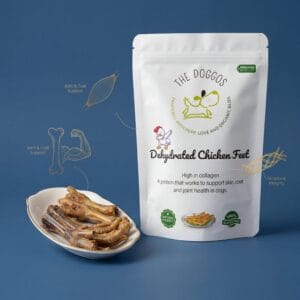
I love the biological argument for raw feeding for a Husky, the ancestral diet was nearly all raw protein and fat. I do not recommend the practice for Indian households. Indian wet-market supply combined with humidity is a real cross-contamination risk for your kitchen, your dog, and your family. The Doggos method is “Cook the Meal, Dehydrate the Bone”, you cook the muscle meat to kill pathogens, and you supply bone calcium through dehydrated products like sardines, chicken feet, or the Bone and Organ Boost.
Why does my Husky eat less than my friend’s Labrador?
Because she is built that way. Siberian Huskies were selected over 2,000 years by the Chukchi people to work hard on small rations across the Arctic, and the “thrifty metabolism” is genetic. A Husky eating less than a Lab of equal weight is normal and expected. The mistake most Indian owners make is interpreting this as fussiness and adding cheese, biscuits, or milk to “tempt” the dog. Do not. Measure her portion, serve at meal times, and pick up the bowl after 20 minutes. She is fine.
What temperature is too hot to walk my Husky?
Above 28 to 30 degree C, walks are risky. Above 35 degree C, walks are dangerous. Above 38 degree C, do not walk at all, use indoor enrichment instead. Always check the pavement with the back of your hand, if you cannot hold it there comfortably for 7 seconds, the asphalt will burn paw pads. In Indian summer, this means walks only before 6 am and after 8 pm in most cities. Our summer appetite loss in Indian dogs guide covers the heat-related feeding adjustments in more depth.
About the Author
Mahiv Amit Chhabra is a Certified Canine Nutritionist and author of The Desi Carnivore: The Indian Pet Parent’s Guide to Real Meat, Whole Prey, and Ancient Superfoods. He runs The Doggos from Thane, Maharashtra, alongside his dogs Tony and Toughie, the brand’s longest-serving quality-control team. Read more about Mahiv.
External Citations
- Reynolds, A. J. et al. Effect of diet and training on muscle glycogen storage and utilization in sled dogs. Journal of Applied Physiology, 1995. Foundational study on Husky-type working dog fat metabolism and macronutrient tolerance.
- Siberian Husky Club of America, Nutrition Guidelines for the Siberian Husky. Breed-club nutritional reference for protein, fat, and weight standards.
- National Research Council, Nutrient Requirements of Dogs and Cats, 2006. The standard reference for canine macronutrient minimums and working-breed energy ranges.