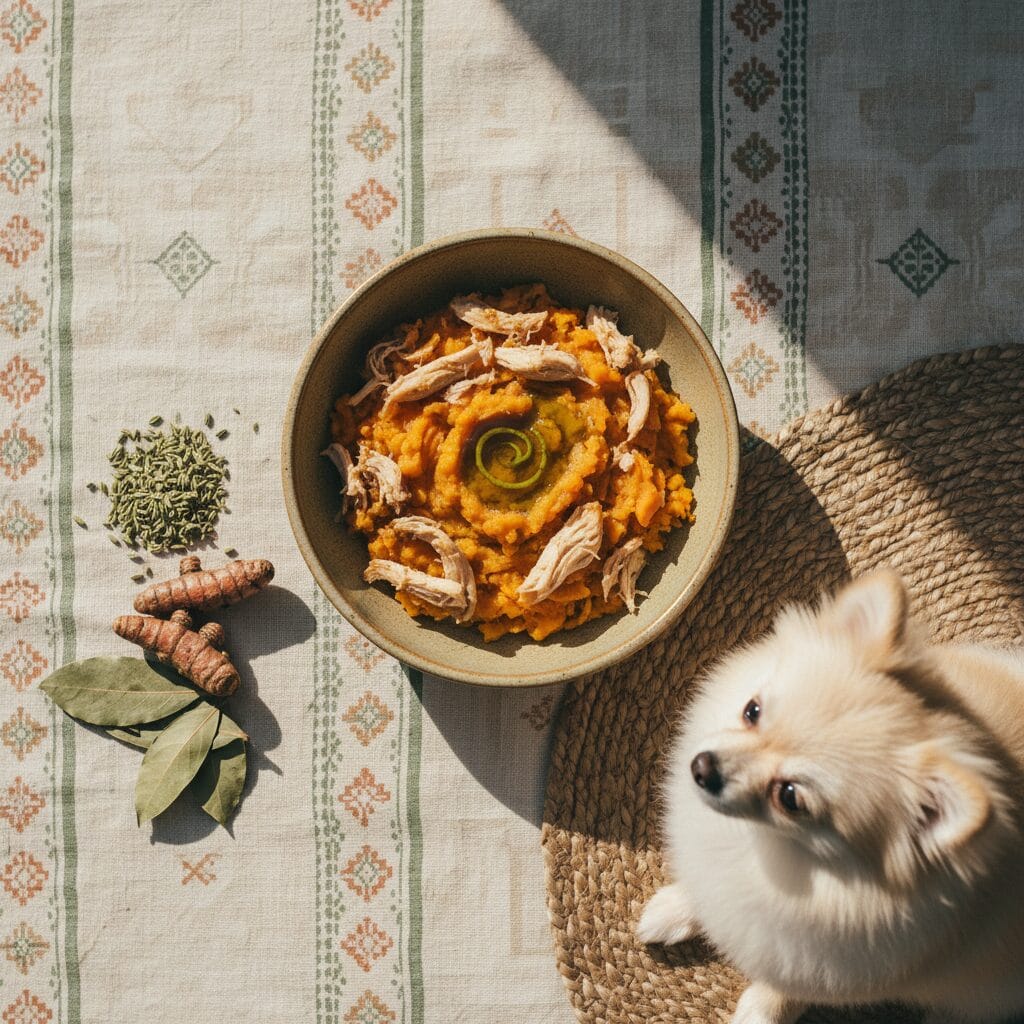
By Mahiv Amit Chhabra, Certified Canine Nutritionist and author of The Desi Carnivore. Last updated: 18 May 2026.
TL;DR
- The Pomeranian diet in India should sit at 30 to 40% protein, 20 to 28% fat, and under 20% carbohydrates, with calorie density nudged higher than larger breeds because small-breed metabolisms burn fat fast and crash hard.
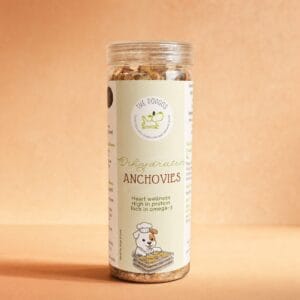
- The anchor product for almost every Pom bowl is dehydrated anchovies. They are size-matched to a tiny mouth, deliver the omega-3 a thick double-coat needs, and provide the mechanical dental scraping that soft kibble cannot.
- Dental disease is the number-one health problem in Pomeranians, driven by small jaws, retained baby teeth, and a lifetime of soft commercial food. Chewing is the prescription, not a bigger toothbrush.
- Poms overheat in Indian climate but should never be shaved. The double-coat insulates both ways. Cooling fish proteins and omega-3 are the right intervention, not the clippers.
- Curd and Marie biscuits as the main diet is the most damaging Indian feeding mistake for a Pom. Sugar, dairy, and cereal in one bowl. Their teeth pay the bill.
The Pomeranian is one of the most over-fed and under-nourished dogs in urban India. She is small, she looks like a stuffed toy, and well-meaning households treat her like a doll. By age four she is missing teeth. By six she has chronic skin issues. By eight she has a heart murmur. None of this is destiny. Most of it is diet.
Poms came down from large Spitz-type sled dogs in Northern Europe, shrunk through Victorian-era selective breeding into the toy companion you see today. The body got small. The double-coat stayed. The metabolic engine stayed too. What changed is the bowl, and that mismatch is the reason your Pom is itching, smelling, and losing teeth at age five.
This guide is the practical, biology-led answer to “what should I feed my Pomeranian in India” from a nutritionist who consults on dozens of Pom cases every year. We will cover the dental angle, the double-coat, the small-breed macro split, and the meal plan that fixes most of it.
Pomeranian-Specific Health Concerns That Diet Can Influence
A Pom is not a generic small dog. She has a specific cluster of conditions that show up again and again in Indian clinics, and almost every one of them has a nutritional lever.
- Dental disease. The single most common Pom issue. Small jaws crowd the teeth. Baby teeth often refuse to fall out, leading to double rows. Soft commercial food and curd-biscuit feeding never lets the teeth get the mechanical scraping they evolved to receive. By age four, more than two-thirds of small-breed dogs show clinical signs of periodontal disease.
- Patellar luxation. The kneecap pops out of its groove. Genetic component plus a weight component. Every kilo above ideal weight is a kilo of stress on a knee designed for a 2 kg dog.
- Collapsing trachea. The cartilage rings in the windpipe weaken with age and chronic inflammation. Obesity makes it worse. Omega-3 anti-inflammatory support genuinely helps.
- Hypoglycaemia in puppies. Pom puppies have tiny livers and very little stored glycogen. Miss a meal and the blood sugar crashes. This is a real emergency. Three to four small meals a day in the first six months, never less.
- Alopecia X (black skin disease). A frustrating bilateral hair loss with darkening skin. The cause is still debated, but inflammation modulation through omega-3 and skin barrier support with hemp and baobab oil consistently helps in my consulting experience.
- Heat sensitivity. That gorgeous double-coat traps body heat in 38°C Mumbai humidity. Diet is the right cooling tool, not the clipper.
The Dental Angle Is the Whole Argument
The Pomeranian conversation in India revolves around coat and weight. The real number-one issue is the mouth, and almost nobody talks about it.
Small breeds have the same number of teeth as a Mastiff, crammed into a jaw the size of a thumb. The crowding traps food. Plaque mineralises into tartar within 48 to 72 hours. Without mechanical scraping the gum line gets inflamed, the periodontal ligament breaks down, and the tooth dies. By the time you notice the smell, the damage is years deep.
Brushing a Pom’s teeth daily is the textbook answer. It is also a fantasy almost no Indian Pom parent maintains for ten years. The realistic intervention is to make every meal slightly mechanical.
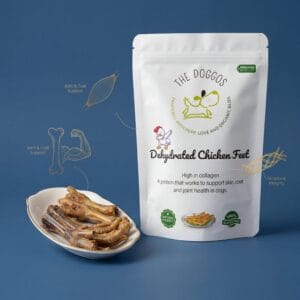
This is where dehydrated anchovies earn their place as the anchor for the breed. Small enough for a Pom’s mouth, crunchy enough to scrape the tooth surface, and packed with omega-3 that does triple duty on coat and joints. Pair them with quarter-sized pieces of dehydrated chicken feet, the bone crumbles and the connective tissue catches on the enamel to pull plaque off. Soft kibble does the opposite. It glues to the teeth.
The Macro Targets for a 2 to 4 kg Pomeranian
Small breeds are not smaller versions of big dogs. They burn calories per kilo at a much higher rate, their stomachs are tiny, and they have to extract maximum nutrition from very little food. The macros shift accordingly.
| Macronutrient | Pom target (% of dry matter) | Indian kibble reality | Why it matters |
|---|---|---|---|
| Protein | 30 to 40% | 18 to 25% | Lean muscle, immune support, taurine for cardiac function |
| Fat | 20 to 28% | 8 to 15% | Energy density, coat oil, fat-soluble vitamins, hypoglycaemia buffer |
| Carbohydrates | Under 20% | 50 to 70% | More than this strains the pancreas and feeds dental plaque |
| Moisture (fresh diet) | 60 to 75% | Around 10% in kibble | Kidney load, gum hydration, satiety |
A 2 to 4 kg adult Pom typically needs 180 to 300 kcal per day, split across two or three small meals. Per the NRC 2006 Nutrient Requirements of Dogs and Cats, small-breed energy density should run roughly 1.5 to 2x higher per kilo than large breeds. Dropping a Pom on the same kibble as a Labrador is a recipe for either deficiency or obesity, with no middle setting.
Watch the waist. You should see a tuck behind the ribs from above and a slight upward curve in the belly line from the side. If your Pom looks like a furry sausage, she is overweight, and 200 grams matters more on a 3 kg frame than 5 kilos on a 30 kg Lab.
Coat Care Is Inside-Out, Not Outside-In
Poms are double-coated, which means two layers: a soft dense undercoat and a longer guard coat on top. This is a heat-management system built for a Polar climate. It traps an insulating layer of air, and counterintuitively, it cools as well as it warms. Shave it and you destroy the insulation, often permanently, and the regrowth is patchy and dull. This is the single biggest summer mistake I see in Indian groomers’ photo galleries.
What actually keeps a Pom coat lush, mat-resistant, and shedding less is what you put in the bowl. Three nutritional levers do most of the work.
- Omega-3 from fish. Every chicken bowl in India is omega-6 dominant because the chicken is fed corn and soy. The ratio sits around 20:1 against the 7:1 of pasture-raised. Add dehydrated anchovies or dehydrated sardines to every chicken meal and you bring it back into range. The deeper science is in our omega-3 for dogs guide.
- Hemp seed oil for GLA. Hemp is rich in Gamma-Linolenic Acid, a rare anti-inflammatory omega-6 that bypasses the enzyme step where most dogs with skin issues get stuck. A daily 1 to 2 ml drizzle of hemp seed oil on a Pom bowl over 8 to 12 weeks visibly thickens the coat and calms the underlying inflammation.
- Baobab oil topically for shine. Coconut and mustard oil sit on the surface and clog pores. Baobab oil has a palmitic-oleic acid profile that mimics the skin’s own lipid barrier and absorbs into the epidermis. A few drops worked into the coat once a week brings back the sheen without the greasy residue, and the deeper coat-and-skin protocol is in our skin and coat guide for Indian dogs.
The order matters. Diet first, oils second, topicals third. Do not start with an expensive shampoo when the bowl is still wrong.
Why Dehydrated Anchovies Are the Pomeranian Anchor
If I had to recommend one product for almost every Pom in India, it would be dehydrated anchovies. The reasoning is unusually clean for a single SKU.
- Size-matched. A whole anchovy is the size of a single Pom mouthful. No cutting, no breaking, no choking risk.
- Omega-3 dense. Anchovies sit at the bottom of the food chain. They eat plankton, live a year or two, and accumulate almost no mercury (unlike tuna or shark). The DHA and EPA content per gram is exceptional, directly supporting coat, joints, anti-inflammatory pathways, and brain function.
- Mechanically dental. Every anchovy bite is a small dental workout. The dry crunchy texture scrapes across the tooth surface. Add a few to every dinner and you have built dental hygiene into the meal.
- Low-calorie for training. A whole anchovy is roughly 3 to 5 calories. You can use ten to fifteen as training rewards through the day without blowing the calorie budget on a 3 kg dog.
- Odour controlled. Dehydration kills the wet-fish smell. Even vegetarian households who refuse to cook fish at home can keep these in the kitchen.
The protocol I hand most new Pom clients: 4 to 6 anchovies per day for a 2 to 4 kg adult, split between meals and training. That is the daily omega-3 dose, the dental scrub, and the training treat in one product.
From Mahiv’s practice: A 3-year-old Pom called Mishti from Andheri came in with early periodontal disease, a dull coat, and the kind of breath that clears a room. Her diet was Marie biscuits in the morning, kibble at night, and curd whenever the family ate. We dropped the biscuits, cut the kibble entirely, and built a fresh bowl around cooked chicken thigh, quarter-sized dehydrated chicken-foot pieces, and 5 dehydrated anchovies a day. Hemp oil at 1 ml per meal, baobab oil rubbed into the coat once a week. At the 4-month vet recheck, her vet noted a visible plaque reduction without a single dental cleaning, and the owner sent a photo of a coat I genuinely did not recognise.
A Weekly Pomeranian Meal Plan Using the Doggos Catalog
Assume a healthy 3 kg adult Pom, two meals a day plus a small lunchtime snack to keep blood sugar stable. Adjust quantities up or down by 20 to 30% based on the size of the dog.
| Day | Morning bowl (approx 70 g) | Evening bowl (approx 70 g) | Snack or topper |
|---|---|---|---|
| Mon | Cooked chicken thigh + pumpkin + 1 tsp Bone and Organ Boost | Same | 4 dehydrated anchovies through the day |
| Tue | Cooked goat curry-cut + sweet potato | Cooked chicken + 1 tsp Bone and Organ Boost | 1 ml hemp seed oil with dinner |
| Wed | Cooked chicken thigh + spinach | Cooked chicken + 4 anchovies | Quarter-sized dehydrated chicken-foot pieces |
| Thu | Cooked goat + pumpkin + 4 anchovies | Cooked chicken + 1 tsp Bone and Organ Boost | 1 ml hemp seed oil with dinner |
| Fri | Cooked chicken thigh + green beans | Cooked chicken + 1 tsp Bone and Organ Boost | 4 dehydrated anchovies through the day |
| Sat | Cooked goat + sweet potato + 2 dehydrated sardines (broken into pieces) | Same | Quarter-sized dehydrated chicken-foot pieces |
| Sun | Cooked chicken + pumpkin + Bone and Organ Boost | Cooked chicken + 4 anchovies | A small dab of peanut butter on a training mat |
Notes that matter for a small dog:
- Three or four small meals a day for puppies under 6 months. The hypoglycaemia risk in Pom puppies is real. Never let the gap between meals exceed 5 to 6 hours in the first six months. Our puppy diet guide for India goes deeper on this.
- Always debone after cooking. Cooked bones splinter. Use dehydrated bone (chicken-foot quarters, the Bone and Organ Boost) for calcium safely.
- Watch portion creep. A 5-gram over-feed daily becomes a kilo over the year on a 3 kg dog. The waist check is non-negotiable.
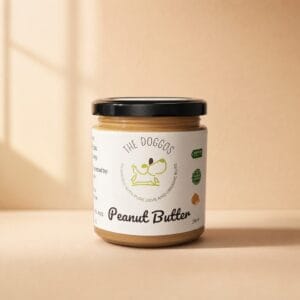
- Use peanut butter sparingly. Half a teaspoon for training is fine. A spoonful is a quarter of the daily calorie budget on a Pom.
Indian Climate Considerations for the Pom
The double-coat is built for snow. You are in Mumbai humidity. The mismatch is real but solvable.
- Never shave the coat. This is the most common Indian groomer mistake. The double-coat insulates against heat as well as cold by trapping air and reflecting solar radiation. Shave it and the dog sunburns, overheats more, and the regrowth often comes back patchy and dull, sometimes never fully recovering. Brush weekly, deshed seasonally, but the scissors should never come out.
- Cooling through diet, not the clipper. Fish proteins are considered cooling in both Ayurveda and TCM frameworks, and the underlying mechanism is the omega-3 anti-inflammatory pathway. Anchovies, sardines, and a daily hemp oil dose do more for a Pom’s heat tolerance than any haircut.
- Hydration matters more on a small frame. A 3 kg dog dehydrates faster than a 30 kg dog. Two water bowls in summer, refreshed twice a day.
- Monsoon ear and paw care. Poms are prone to ear infections from the dense fur around the canal. Wipe ears dry after a damp walk. Watch for the early itch and read our breakdown of why dogs itch in India for the systemic checklist.
Life-Stage Adjustments
Puppies (8 weeks to 12 months). Three to four small meals a day for the first six months. Higher protein (around 40%) and slightly higher fat to fuel growth and prevent hypoglycaemia. Never let the gap between meals exceed 5 to 6 hours. Half a dehydrated chicken-foot piece two or three times a week from 16 weeks onwards covers calcium and dental development.
Adults (1 to 8 years). The weekly meal plan above. The biggest adult-Pom mistake is feeding too much because the food looks like nothing on a 3 kg dog. Weigh it the first month so your eyes recalibrate.
Seniors (8+). Poms often live 13 to 16 years. The senior bowl needs slightly more omega-3, softer textures if teeth are already compromised, and slightly less calorie density. Anchovies broken into pieces are exactly what an ageing small-breed mouth needs, the dental scraping plus DHA combination is unmatched.
Common Indian Feeding Mistakes for Pomeranians
Most of these I see weekly in Mumbai, Delhi, and Bangalore clinics.
- Curd and Marie biscuits as the daily meal. The household instinct is to feed the dog leftovers, and for small dogs this turns into a curd-biscuit-roti routine. Sugar plus maida plus dairy is a near-perfect combination for rotting small-breed teeth. A dehydrated chicken-foot quarter is the correct snack instead.
- Only soft kibble or wet food. No mechanical scraping at all. The teeth deteriorate fast.
- Shaving the coat in summer. Already covered above. Stop.
- Skipping meals or single-meal-a-day feeding. Hypoglycaemia risk, especially in puppies. Three small meals beat one big one.
- Over-feeding training treats. A teaspoon of peanut butter looks like nothing to you. It is a quarter of the daily calorie budget for a 3 kg Pom. Use anchovies for training, they are low-calorie and high-value.
- Vegetarian feeding. The single most damaging household decision for any dog. Vegetarian feeding causes taurine deficiency, dilated cardiomyopathy (already a small-breed risk), poor coat, and shortened lifespan. Feed her meat.
Frequently Asked Questions
What is the best food for a Pomeranian in India?
A fresh cooked meat base (chicken thigh or goat curry-cut) with a calcium source (dehydrated chicken-foot pieces or Bone and Organ Boost) and an omega-3 topper (dehydrated anchovies or sardines) is the best practical diet for a Pomeranian in India. Avoid soft kibble, curd-biscuit feeding, and vegetarian diets. Aim for 30 to 40% protein, 20 to 28% fat, and under 20% carbohydrates.
How much should I feed my Pomeranian per day?
A healthy adult Pom of 2 to 4 kg needs roughly 180 to 300 kcal per day, split across two or three small meals. That is about 4 to 6% of body weight in fresh food, so 80 to 240 grams depending on the dog. Puppies under six months need three to four small meals to prevent blood sugar crashes.
Why does my Pomeranian have such bad breath and teeth?
Bad breath in a Pomeranian is almost always early periodontal disease, which is the number-one Pom health issue in India. Small breeds have crowded teeth, often retain baby teeth, and rarely get mechanical scraping on soft commercial food. Add dehydrated anchovies and small dehydrated chicken-foot pieces to every dinner. The crunch is the scrub, and the improvement is visible within 8 to 12 weeks.
Should I shave my Pomeranian in summer?
No, never shave a Pomeranian. The double-coat insulates against heat as well as cold by trapping air and reflecting solar radiation. Shaving it can cause sunburn, increase overheating, and often results in patchy regrowth that never fully recovers. Use diet (cooling fish proteins, omega-3 anti-inflammatory support) and brushing instead.
Can Pomeranians eat anchovies safely?
Yes. Dehydrated anchovies are one of the best functional foods for a Pomeranian. They are size-matched to a small mouth, deliver high-quality omega-3 (DHA and EPA) for coat and joint support, provide mechanical dental scraping, and work as low-calorie training treats. Four to six per day is a sensible adult dose, halved for puppies.
Are Pomeranians prone to hypoglycaemia?
Yes, particularly as puppies. Small-breed puppies have very limited liver glycogen stores and can crash dangerously if a meal is missed. In the first six months, feed three to four small meals a day with no more than 5 to 6 hours between meals. Watch for weakness, wobbling, or unresponsiveness, and feed immediately if you see them.
What is the typical Pomeranian lifespan in India?
A well-fed Pomeranian routinely lives 13 to 16 years. The lifespan stretches at the upper end when diet, dental health, and weight are properly managed from puppyhood. Most early Pom deaths in India track back to obesity, untreated dental disease, or heart conditions worsened by chronic inflammation, all of which respond to diet.
About the Author
Mahiv Amit Chhabra is a Certified Canine Nutritionist and author of The Desi Carnivore: The Indian Pet Parent’s Guide to Real Meat, Whole Prey, and Ancient Superfoods. He runs The Doggos from Thane, Maharashtra, alongside his dogs Tony and Toughie, the brand’s longest-serving quality-control team. Read more about Mahiv.
References
- National Research Council. (2006). Nutrient Requirements of Dogs and Cats. The National Academies Press. https://nap.nationalacademies.org/catalog/10668/nutrient-requirements-of-dogs-and-cats
- Mueller, R. S., Fieseler, K. V., Fettman, M. J., Zabel, S., Rosychuk, R. A., Ogilvie, G. K., & Greenwalt, T. L. (2004). Effect of omega-3 fatty acids on canine atopic dermatitis. Journal of Small Animal Practice, 45(6), 293-297. https://onlinelibrary.wiley.com/doi/abs/10.1111/j.1748-5827.2004.tb00238.x