By Mahiv Amit Chhabra, Certified Canine Nutritionist and author of The Desi Carnivore. Last updated: 18 May 2026.
TL;DR
- The Mudhol Hound diet should be roughly 35 to 45% protein, 22 to 32% fat, and under 15% carbohydrates, the sighthound metabolic profile that supports a 45 km/h racing build, not the cereal-heavy kibble most Indian owners default to.
- The single most important joint food for a Mudhol is dehydrated mutton trotters, the collagen-and-iron load that protects the shoulder and hip from the repeated high-velocity impact of coursing and free running.
- The Indian Army inducted the Mudhol Hound as an official service dog in 2017, making this breed nationally significant and worth feeding properly. A working Mudhol on cereal kibble is a failure of pet nutrition culture, not the dog.
- A correctly conditioned Mudhol looks “thin” to a Labrador-trained eye. The hip points and last two ribs should be visible. Overfeeding to mask the lean build is the single most common owner mistake.
- Do not raw-feed in Indian homes, do not feed cooked bones, and do not feed a vegetarian diet to this dog. The biology of a sighthound is non-negotiable.
The Mudhol Hound was running across the Deccan plateau before Karnataka was Karnataka. Maratha and Mughal cavalry units used these dogs for coursing blackbuck and hare across open ground at 45 km per hour. Three centuries later, in 2017, the Indian Army inducted the Mudhol as an official service dog after trials at the Remount Veterinary Corps in Meerut, the first indigenous Indian breed to earn that posting. And yet the typical pet-shop diet for this athlete is a beige extruded cereal pellet engineered for sedentary apartment Labs.
We can do better. The Mudhol Hound, also called the Caravan Hound, the Karwani, or the Pashmi depending on which corner of Karnataka you ask in, is one of the most under-served breeds in Indian pet nutrition writing. This is the article I hand every Mudhol parent in my consultation chair.
A Short Honest History of the Mudhol Hound
The breed gets its name from Mudhol, a town in the Bagalkot district of north Karnataka, where the Maratha rulers of the small princely state kept and refined the line. The dogs themselves are older than the kingdom. Caravans of traders carried these hounds along the Deccan trade routes for centuries, which is why “Caravan Hound” is the older English name and “Karwani” the older Hindi-Urdu one. The Pashmi variant carries a feathered coat. The smooth variant carries a short, dense coat. Same dog, two textures.
Two things matter for diet:
- The Mudhol is a sighthound. That metabolic profile is shared with the Saluki, the Greyhound, and the Rajapalayam. Sighthounds run on protein and fat, not on carbohydrates. The body composition is lean, the heart and lungs are oversized, and the muscle fibres are tuned for short, fast, high-impact work. A diet that suits a working sighthound looks almost nothing like a diet that suits a Labrador.
- The Indian Army adopted Mudhols as service dogs in 2017 for tracking, surveillance, and patrol work in arid terrain. The Karnataka Mudhol Hound Research and Information Centre at Timmapur, Bagalkot, supplied the initial dogs. This is a real, citable, indigenous-breed conservation milestone. Feeding these dogs well, especially in their home range, is a small contribution to keeping the breed alive and working.
If you are reading this with a Mudhol asleep at your feet, you are now a custodian of a 700-year-old working breed. Your bowl matters.
Breed Anatomy and Why It Drives the Diet
The Mudhol stands 65 to 72 cm at the shoulder, weighs 22 to 28 kg in working condition, and is built like an arrow. Deep chest, narrow waist, long legs, long lean neck, the kind of dog that looks like a thin oil painting in profile. The skin is thin, the body fat reserve is low, and the metabolic engine is calibrated for short explosive output rather than steady plodding.
Practical biological consequences:
- Thin skin and minimal coat in the smooth variant mean sun sensitivity on Deccan and Konkan summers, and a higher need for omega-3 to keep the skin barrier intact.
- Low body fat reserve means a Mudhol cannot afford to skip meals the way a Lab can. Even a 2 day appetite drop drops visible body condition.
- Sensitivity to anaesthesia is a sighthound class trait. The lean body composition and low fat reserves change how anaesthetic drugs distribute. Any surgery for a Mudhol must be done by a vet who knows sighthound dosing. This matters for owners because nutrition for recovery (more fat, more iron, more collagen) becomes especially load-bearing after surgery.
- Hip dysplasia rates are low in working Mudhol lines and somewhat higher in heavier “show” lines. The diet should support the lean working frame, not pad it.
- Muscle and shoulder injuries are the most common Mudhol working injury. The racing sighthound shoulder and hip take repeated high-velocity impact, especially in coursing dogs.
The diet has to feed the racing engine, protect the joints from the impact load, and stay light on the digestive system because there is not a lot of spare fat to fall back on.
The Macro Targets for a 22 to 28 kg Working Mudhol
Per the NRC 2006 Nutrient Requirements of Dogs and Cats, the minimum dietary protein for adult dogs is roughly 18% of dry matter. That is a maintenance floor for a sedentary dog. For a sighthound it is a starvation number.
| Macronutrient | Mudhol target (% of dry matter) | Indian kibble reality | Why it matters for a sighthound |
|---|---|---|---|
| Protein | 35 to 45% | 18 to 25% | Lean muscle rebuild after sprint work, taurine precursors, heart |
| Fat | 22 to 32% | 8 to 15% | The actual fuel for a sighthound’s metabolic profile |
| Carbohydrates | Under 15% | 50 to 70% | Anything more is wasted glucose plus pancreatic strain |
| Moisture (fresh diet) | 60 to 75% | Around 10% in kibble | Deccan heat, kidney load, hydration |
A working Mudhol typically needs 1,100 to 1,400 kcal per day, roughly 4 to 5% of body weight in fresh food. Coursing dogs and military working dogs push higher. Companion Mudhols who walk twice a day land at the lower end. Use waist visibility (you should see the last two ribs and the hip points from above) as your daily check, not the back of any bag.
Climate Context: This Dog Was Built for Deccan Heat
The Mudhol evolved in the dry plateau heat of north Karnataka, Maharashtra, and Andhra Pradesh. The thin skin and the short coat are heat-dissipation features, not flaws. The diet should support that engine.
What this means in practice:
- High protein and high fat is climate-appropriate for this dog in this geography, despite the popular Indian myth that “warming” proteins are bad in summer. The Mudhol’s ancestors ate goat, blackbuck, hare, and small mammals in 40°C Deccan heat for centuries. The biology handles it.
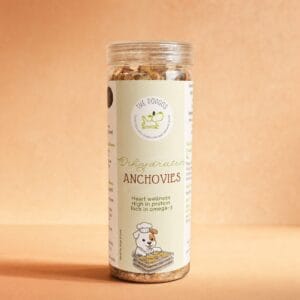
- The “heat from chicken” complaint, when it shows up in a Mudhol, is almost always Omega-6 inflammation, not thermal heat. Commercial Indian chicken is corn and soy fed, pushing Omega 6:3 to 20:1 or 30:1. The fix is to add hemp seed oil or dehydrated anchovies to every chicken meal, not to drop the chicken.
- Hydration matters. A fresh-fed Mudhol naturally drinks less than a kibble-fed Mudhol (fresh food is 70% water), and this is normal kidney-friendly behaviour. On a 40°C Bagalkot afternoon, refill a clean second bowl and check gum colour if the dog goes off food.
The Joint Protocol: Why Mutton Trotters Is the Anchor
This is the part most generic Mudhol content gets wrong.
A sighthound shoulder, hip, and stopper-pad take repeated high-velocity impact every time the dog turns at speed or lands from a stride. Cartilage wear is the long-term injury risk, and acute muscle and tendon strains are the short-term one. The food you put in the bowl is half the orthopaedic plan.
The Doggos joint protocol for a working or active Mudhol:
- Dehydrated mutton trotters, 1 trotter per 15 to 20 kg of body weight, 1 to 2 times a week. Goat trotters carry both Type I and Type II collagen, the structural proteins of tendon and cartilage. They also deliver roughly 3x the iron and 4x the zinc per 100 g of chicken, which matters for muscle repair, immune function, and skin barrier on this thin-skinned breed. Our deeper guide to mutton trotters for dogs walks through the collagen biology in detail.
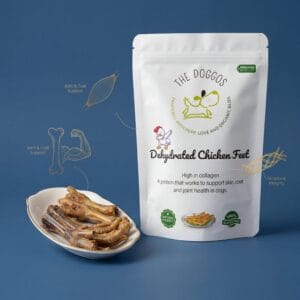
- Dehydrated chicken feet, 1 to 2 a day, for the glucosamine and chondroitin hit. Roughly 450 mg of glucosamine per foot, the closest thing to a natural joint capsule.
- Bone and Organ Boost, 1 tsp into the bowl daily, for the calcium, taurine, iron, manganese, and copper that a muscle-meat-and-rice bowl always under-supplies. Manganese in particular is a quiet hero, it is the trace mineral that protects cranial cruciate ligaments from rupture.
The reason mutton trotters is the anchor product for the Mudhol, and not chicken feet, is that this is a large, fast, high-impact breed. The dense collagen load of a goat trotter scales to the dog’s joint cross-section better than the lighter chicken-foot load. Chicken feet stay in the protocol, but the trotter is the centrepiece.
A Weekly Mudhol Meal Plan Using the Doggos Catalog
This is the template I hand most adult Mudhol clients. Assume a 25 kg working Mudhol, two meals a day, no medical conditions.
| Day | Morning bowl | Evening bowl | Chew or topper |
|---|---|---|---|
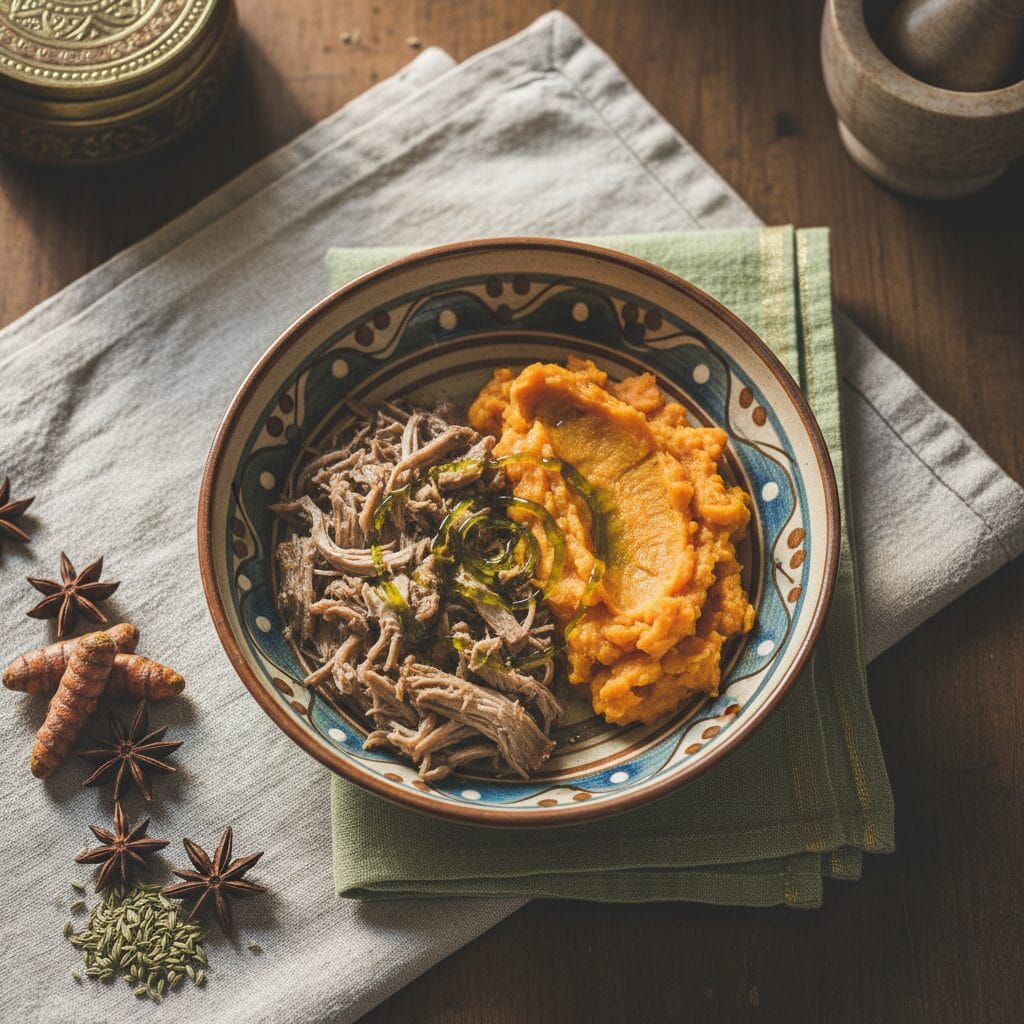
| Mon | Cooked goat curry-cut + pumpkin + Bone and Organ Boost (1.5 tsp) | Same | 1 dehydrated chicken foot |
| Tue | Cooked chicken thigh + sweet potato + 4 anchovies | Same | 1 dehydrated mutton trotter (in place of one evening meal portion) |
| Wed | Cooked goat + spinach + Bone and Organ Boost (1.5 tsp) | Whole dehydrated quail (full meal) | Hemp seed oil (4 ml) |
| Thu | Cooked chicken thigh + pumpkin + Bone and Organ Boost (1.5 tsp) | Same | 1 dehydrated chicken foot |
| Fri | Cooked goat + green beans + 4 anchovies | Same | 1 dehydrated mutton trotter |
| Sat | Cooked chicken thigh + sweet potato + Bone and Organ Boost (1.5 tsp) | Same | Hemp seed oil (4 ml) |
| Sun | Fasting morning (bone broth only) | Whole quail + steamed vegetables | None |
Notes that matter:
- Always debone after cooking. Cook the muscle meat, strip the bones out, never feed cooked bones. Cooked bones splinter into sharp jagged fragments that can perforate the intestines. The Bone and Organ Boost and dehydrated chicken feet supply the calcium safely.
- Rotate proteins. Goat, chicken, quail, fish. Three minimum, ideally four, to prevent the over-exposure that drives most Indian dog allergies.
- Vegetables are condiments, not meals. 10 to 15% of the bowl, max. Skip onion, garlic, raw potato, grapes.
- Seasonal adjustment. Push fat to the upper end (28 to 32% of dry matter) in winter and for working dogs. Pull it back to the lower end (22 to 25%) for hot Deccan summers and apartment Mudhols. Protein stays high all year.
From Mahiv’s practice: A 4-year-old working Mudhol named Bahadur, from a coursing household in Bagalkot district, came to me through a video consult with a recurring left-shoulder strain and a dull coat. He had been on a “high-energy” kibble for two years, the kind sold to Indian working-dog owners with a sled dog on the bag. We dropped the kibble. The new bowl was cooked goat and chicken alternating, Bone and Organ Boost daily, a dehydrated mutton trotter twice a week, and 5 ml of hemp seed oil per meal. Six weeks in, his shoulder was clean, his coat had a real shine, and his owner sent me a photo of him at the season’s first coursing trial, healthy. The food was half the rehab.
Common Indian Owner Mistakes for the Mudhol
These I see in nearly every Mudhol consultation.
- Kibble-only feeding, especially for working dogs. Working sighthounds on a cereal base hit a wall around 30 to 40 minutes of sustained effort, the carbohydrate engine simply does not deliver the sprint output the breed is built for. They look fine on a daily walk and they fail on a coursing day.
- Under-feeding fat. Most Indian owners are scared of fat and lean on lean chicken breast. A Mudhol on 8 to 12% dietary fat is running half-fuelled. Push to 22 to 32% with skin-on chicken thigh, goat curry-cut (not the very lean leg), and hemp or fish oils.
- Treating the Mudhol like a Lab in build. This is the killer. A correctly conditioned Mudhol shows the last two ribs and the hip points from above. Indian owners, trained by Labradors and Goldens, see this and panic. They overfeed to “fix the look”, and end up with an obese Mudhol whose joints fail at five. The dog is supposed to look like an arrow. Trust the breed standard, not the neighbourhood.
- Feeding raw from the wet market. The biology of raw feeding is sound, but the Indian wet-market supply chain combined with humidity is a cross-contamination risk for your kitchen. The Doggos method is “Cook the Meal, Dehydrate the Bone”, and the full argument lives in our raw food guide for India.
- Parle-G and Marie biscuits as training treats. Sugar and maida. A dehydrated chicken foot or two anchovies is the correct answer for a sighthound who needs a high-value reinforcer.
- Vegetarian feeding. Non-negotiable no. Sighthounds on vegetarian diets develop taurine deficiency and dilated cardiomyopathy faster than most breeds because of the high cardiac demand. Feed your Mudhol meat, or rehome the dog.
Life-Stage Adjustments
Puppies (8 weeks to 14 months). Mudhols grow tall fast. Protein stays high (40 to 50%), fat sits at the upper end, and bone calcium has to be measured, not piled. Too much calcium during growth is as harmful as too little. I lean on the Bone and Organ Boost daily, half a chicken foot two or three times a week from 16 weeks, and skip whole pig bone until the adult teeth are fully in. Three meals a day until 6 months, then two.
Adults (1 to 8 years). The weekly meal plan above. Working dogs run on the higher fat end, companion dogs on the lower. Watch waist visibility weekly.
Seniors (8+). Slightly more fat (joint cushioning, brain function), slightly less hard bone (older teeth), more omega-3 from anchovies. The Bone and Organ Boost stays daily, in fact it becomes more useful with age because the dehydrated organ is easy on senior digestion while still delivering taurine and iron. Indigenous breeds like the Mudhol often live well past 12 years on the right diet, longer than the typical Indian Lab.
Cross-Breed Context: Mudhol, Rajapalayam, Indie
The Mudhol shares the indigenous-Indian-sighthound metabolic profile with the Rajapalayam, Tamil Nadu’s white sighthound. Both diets converge on the same macro target: high protein, high fat, low carb, dense joint support, and rotation of proteins. The Mudhol’s specific differentiator is the Army-service-dog status and the slightly heavier working build.
The Indie or Indian Pariah Dog sits in a different niche, opportunistic carnivore-scavenger rather than coursing sighthound, but the underlying philosophy is the same, fresh food, cooked meat, dehydrated bone, organ daily.
If you are feeding any indigenous Indian breed, you are feeding a dog whose digestive tract has been calibrated for tens of thousands of years to process meat, organ, scavenged bone, and incidental plant matter. The pancreas was not built for puffed maize. Honour the biology.
Frequently Asked Questions
Are Mudhol Hounds vegetarian?
No. Mudhol Hounds are sighthounds, descended from working coursing dogs, with high cardiac demand and a metabolic profile that runs on protein and fat. Vegetarian feeding causes taurine deficiency, dilated cardiomyopathy, and dramatically shortened working life. There is no canine biology that supports a vegetarian diet for this breed.
What is the typical Mudhol Hound lifespan?
Well-fed Mudhols routinely live 12 to 15 years, with working lines often outlasting heavier show lines. Indigenous breeds carry less inbreeding burden than imported pedigrees, which helps. Diet plays a meaningful role, a Mudhol on a fresh biologically appropriate diet typically outlives a kibble-fed Mudhol by 2 to 3 years in my consulting experience.
Why is the Indian Army adoption of the Mudhol significant?
In 2017 the Indian Army inducted the Mudhol Hound as an official service dog after trials at the Remount Veterinary Corps in Meerut, sourcing initial dogs from the Karnataka Mudhol Hound Research and Information Centre. This is the first time an indigenous Indian breed received that posting, and it has driven a small revival in serious Mudhol breeding and feeding. Owners increasingly recognise the breed as nationally significant rather than a regional curiosity.
Should a Mudhol look this thin?
Yes. A correctly conditioned Mudhol shows the last two ribs and the hip points from above, with a visible tuck behind the ribcage from the side. This is the sighthound build, the same body composition you see on a working Greyhound or Saluki. Owners trained by Labradors and Goldens often misread this as undernutrition and overfeed, leading to obesity and joint failure. Trust the breed standard, not the neighbourhood.
Can I feed my Mudhol raw meat?
The biological argument for raw is sound, but Indian wet-market supply combined with humidity is a real cross-contamination risk for an Indian kitchen. The Doggos method is to cook the muscle meat to kill pathogens and supply bone calcium through dehydrated products, where low-temperature drying retains nutrients without the splintering risk of cooked bones.
How many dehydrated mutton trotters per week for a Mudhol?
For a 22 to 28 kg adult Mudhol, 1 trotter per 15 to 20 kg of body weight, 1 to 2 times a week. That works out to 1 trotter twice a week for most adult Mudhols, paired with daily Bone and Organ Boost and 1 to 2 chicken feet a day for the glucosamine layer. Skip for dogs with pancreatitis history or certain renal cases.
Is the Mudhol Hound the same as a Caravan Hound or a Karwani?
Yes. Mudhol Hound, Caravan Hound, Karwani, and Pashmi are different names for the same breed. The Pashmi specifically refers to the feathered-coat variant, while smooth-coated dogs are usually just called Mudhol or Caravan. All carry the same sighthound diet requirements.
About the Author
Mahiv Amit Chhabra is a Certified Canine Nutritionist and author of The Desi Carnivore: The Indian Pet Parent’s Guide to Real Meat, Whole Prey, and Ancient Superfoods. He runs The Doggos from Thane, Maharashtra, alongside his dogs Tony and Toughie, the brand’s longest-serving quality-control team. Read more about Mahiv.